

 プレビュー
プレビュー
 シェアする
シェアする シェアする
シェアする
 詳細を見る
詳細を見る

 ダウンロード
 似ている作品
 X線調査
X線調査 スライドショー
 統計情報
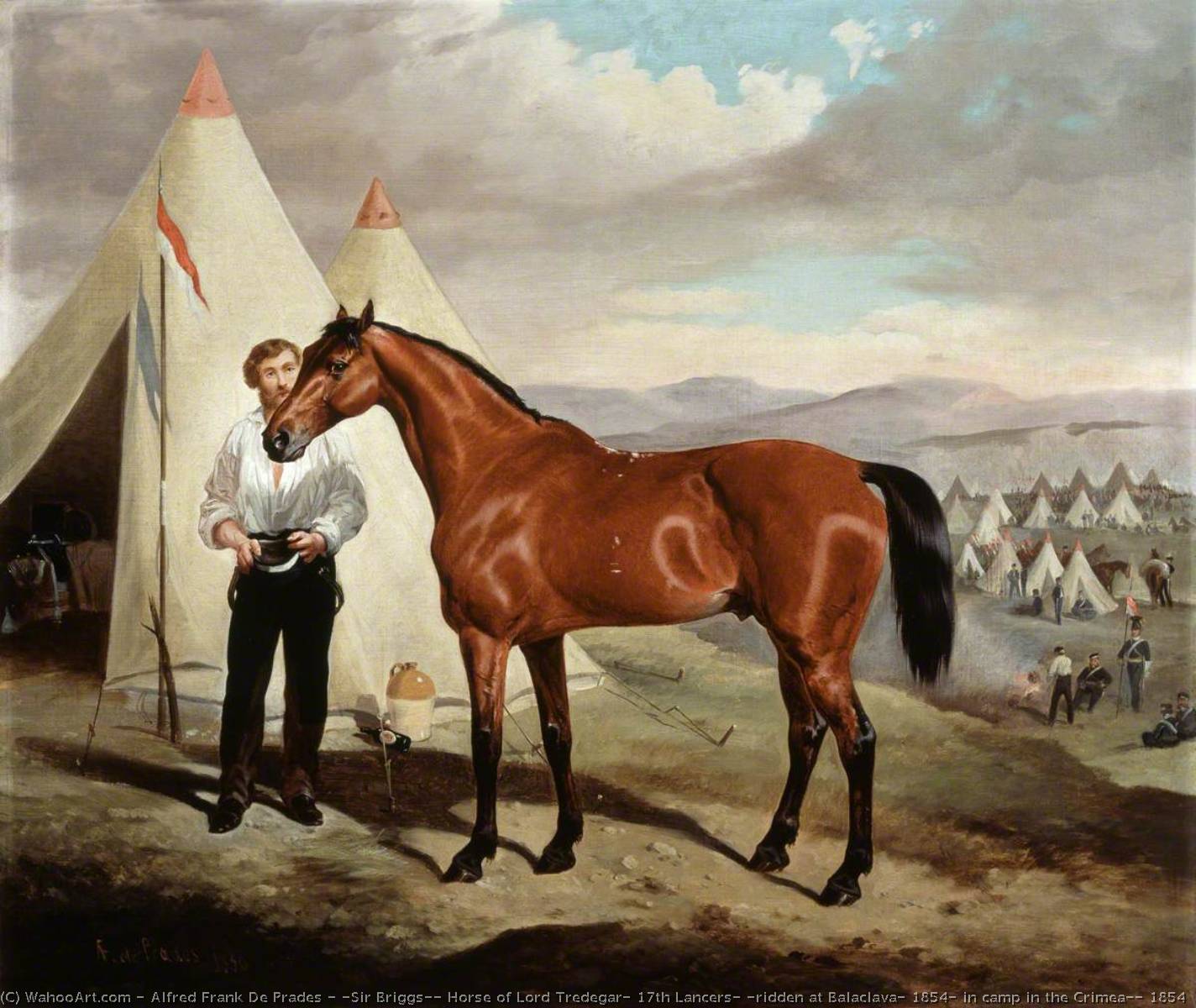
統計情報'Sir Briggs', Horse of Lord Tredegar, 17th Lancers, (ridden at Balaclava, 1854, in camp in the Crimea), 1854
 1856
1856 64.0 x 76.0 cm
 詳細を見る
詳細を見る
ジークレー/アートプリント
迅速な制作と多彩な仕上げオプションを備えた、ミュージアムクオリティのジークレーまたはキャンバスプリント。 ( 手描きの絵画を購入 デジタル画像販売へ切り替え)




































作品のオリジナル比率に合わせた、当店の規定サイズからお選びください。

特定のフレームやスペースに合わせて、ご自身でサイズを指定することも可能です。選択されたサイズが元の画像の比率と一致しない場合、作品をトリミングするか、鏡面反射または単色での塗りつぶしによって画像を拡張いたします。制作を開始する前に、ご確認用のデジタルモックアップをお送りいたします。
画面上のプレビューには、実際のトリミングや拡張は反映されませんのでご注意ください。最終的な構図を正確に確認できるのは、モックアップのみとなります。
カスタムサイズも承っておりますが、元の比率を維持するためには、あらかじめ用意されたリストからサイズを選択することをお勧めいたします。


 ガラスオプションは、110cm未満のサイズでのみご利用いただけます。

'Sir Briggs', Horse of Lord Tredegar, 17th Lancers, (ridden at Balaclava, 1854, in camp in the Crimea), 1854
ジークレー/アートプリント
複製画のサイズ
-


合計金額
$ 62
関連作品










アーティストの略歴
The Equestrian Visionary: The Life and Legacy of Alfred Frank de Prades
In the golden age of Victorian sporting art, few names resonated with the same anatomical precision and romantic vigor as Alfred Frank de Prades. A master of the animalier tradition, de Prades possessed a rare ability to breathe life into canvas, transforming static depictions of horses and military figures into breathing, pulsing scenes of historical drama. Though born in Lunel, Hérault, France, his artistic soul was deeply entwined with the landscape and culture of England. This unique duality—a French sensibility meeting British sporting passion—allowed him to capture the grandeur of the equestrian world with a nuance that captivated the noble British aristocracy and established him as one of the most sought-after painters of his era.
The foundations of his talent were laid in a childhood marked by movement and transition. Following a dramatic separation between his parents, de Prades relocated to London at the age of sixteen. This early immersion in British society proved pivotal; the sights of the English countryside and the prestige of the local racing culture became the primary muses for his developing eye. While much of his formal training remains shrouded in the mists of history, his innate grasp of equine anatomy suggests a profound, perhaps self-taught, dedication to the study of nature. Even as a young prodigy, his work displayed an uncanny ability to replicate the tension of a muscle or the frantic energy of a gallop, a skill famously evidenced by his early piece, “Down the Stretch,” painted when he was a mere thirteen years old.
A Legacy of Precision and Patronage
As de Prades matured, his artistic lineage became increasingly clear. He worked within the prestigious tradition established by George Stubbs, adopting a style characterized by scientific accuracy and emotional depth. This connection to the great masters of equine art allowed him to navigate the elite circles of London’s Covent Garden, where he became a fixture in the exhibitions of the British Institution and the Royal Academy of Arts. His work was not merely decorative; it was an exploration of power, nobility, and the symbiotic relationship between man and beast. The British sporting set, driven by a passion for hunting, racing, and military prowess, found in de Prades a chronicler who could immortalize their finest steeds and most heroic officers.
His oeuvre is marked by several defining characteristics that elevate his work above mere portraiture:
- Anatomical Realism: A relentless pursuit of truth in the depiction of equine musculature, bone structure, and movement.
- Military Grandeur: The ability to blend the elegance of cavalry uniforms with the raw energy of battle or parade scenes.
- Atmospheric Depth: Using light and shadow to create a sense of place, whether in the snowy expanses of a mail coach journey or the dusty heat of a military camp.
Through his brush, historical figures were rendered not just as icons, but as living participants in their time. His portraits of high-ranking officers, such as the 7th Earl of Cardigan, serve as vital windows into the Victorian era, capturing the intricate details of Hungarian attire and the spirited temperament of the horses they rode. De Prades did more than paint animals; he painted the very essence of an age defined by expansion, cavalry charges, and the romanticized glory of the hunt.
The Enduring Impression of a Master
Though his life came to an end in 1885, the impact of Alfred Frank de Prades continues to resonate within the halls of art history. He remains a pivotal figure for those studying the evolution of animalier painting, representing a bridge between the classical anatomical studies of the eighteenth century and the more dramatic, narrative-driven styles of the late nineteenth century. His ability to command the viewer's attention through the sheer vitality of his subjects ensures that his works remain much more than historical artifacts; they are enduring celebrations of motion, strength, and the timeless beauty of the equine form.
alfred frank de prades
1825 - 1885
基本情報
- Artistic Movement Or Style: Victorian Equestrian Art
- Artists Or Movements Influenced By This Artist: ['Victorian Painting']
- Artists Who Influenced This Artist: ['George Stubbs']
- Date Of Birth: March 24, 1825
- Date Of Death: July 7, 1885
- Full Name: Alfred Frank de Prades
- Nationality: French
- Notable Artworks:
- Horses Pulling a Flatboat Barge
- On the Heights Near Boulogne
- Fairplay
- Place Of Birth: Lunel, France