

 プレビュー
プレビュー
 プリントを購入
 シェアする
シェアする シェアする
シェアする
 詳細を見る
詳細を見る

 ダウンロード
 似ている作品
 X線調査
X線調査 スライドショー
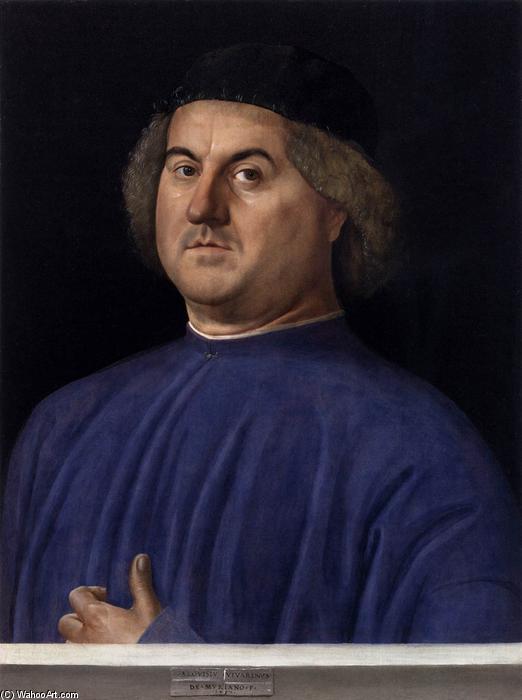
Portrait of a Man
 Acrylic On Canvas
- WallArt
- Early Renaissance
 1497
1497 63.0 x 47.0 cm
 ナショナル・ギャラリー
 詳細を見る
詳細を見る




P118B $10

P118H $10

P118W $10

P438Z $10

P508JH $12

P508YH $12

P805H $10

P805Z $10

P919BZ $10

P919G $10

P919XJ $10

P959ZH $10

P968JZ $12

W106C $8

W218G $10

W218JH $8

W218Y $10

W307PJ $10

W316G $10

W316PJ $8

W316Y $10

W398PJ $8

W4111J $10

W500HY $15

W500JH $15

W692G $12

W849H $8

W940BG $15

W953PJ $8




作品のオリジナル比率に合わせた、当店の規定サイズからお選びください。

特定のフレームやスペースに合わせて、ご希望のサイズをご入力いただけます。選択されたサイズが元の画像の比率と異なる場合、アートワークをトリミングするか、手描きで要素を追加して絵画を拡張いたします。デジタルモックアップ を制作し、制作開始前にご確認(承認)をいただきます。
画面上のプレビューは、実際のトリミングや拡張を正確に反映しているものではありません。最終的な構図は、モックアップによってのみ正確にご確認いただけます。
カスタムサイズもご利用いただけますが、元の比率を維持するためには、あらかじめ用意されたリストからサイズを選択することをお勧めいたします。
ご注文後、ArtsDot.com チームより詳細な指示をお送りするとともに、仕上がりイメージ(モックアップ)をご提供いたします。


 ガラスオプションは、110cm未満のサイズでのみご利用いただけます。

Portrait of a Man
複製技法
複製画のサイズ
-


合計金額
$ 263
作品解説
A Window Into Venetian Renaissance Splendor: Exploring Vivarini’s Portrait of a Man
The painting “Portrait of a Man,” attributed to Alvise Vivarini (Luigi Vivarini), transcends mere representation; it embodies the spirit of Venice during its golden age—a city pulsating with artistic fervor and intellectual curiosity. Executed in 1497, this masterpiece resides within the esteemed National Gallery in London, offering visitors an unparalleled glimpse into the aesthetic sensibilities of a transformative era.- Subject Matter & Context: The portrait depicts a gentleman dressed in opulent attire—a blue robe adorned with intricate folds and embellished with subtle shading—against a dark background that serves to amplify the luminosity of his face. Such portraits were commonplace during the Renaissance, reflecting the burgeoning interest in humanist ideals and celebrating individual achievement within the aristocratic circles of Venice. Vivarini’s work speaks directly to the patronage system prevalent at the time, where wealthy families commissioned artists to commemorate their status and lineage.
- Style & Technique: Vivarini's artistic style aligns seamlessly with Bellini’s influence—characterized by a masterful manipulation of color and light. The artist employs meticulous brushwork, capturing the delicate nuances of skin tone and fabric texture with remarkable precision. Notice the soft illumination emanating from the left side, casting gentle shadows that sculpt the contours of the man’s face, creating an illusion of depth and realism rarely achieved in earlier Venetian art.
- Color Palette & Symbolism: The predominantly cool blues of the robe evoke tranquility and nobility—colors frequently associated with royalty and spiritual contemplation. These hues resonate with the broader artistic trends of the period, where artists sought to convey moral virtue and intellectual enlightenment through their compositions. Furthermore, the dark background serves as a foil to the figure’s vibrancy, emphasizing his presence and highlighting the artist's skillful use of tonal contrast.
- Emotional Impact: Beyond its formal beauty, “Portrait of a Man” communicates an aura of dignified introspection. The man’s gaze—slightly tilted upward—suggests thoughtfulness and contemplation, inviting viewers to engage in a silent dialogue with the subject. Vivarini's ability to capture psychological nuance underscores the Renaissance preoccupation with human emotion and elevates the portrait beyond mere visual spectacle.
- Legacy & Significance: Vivarini’s contribution to Venetian painting is undeniable. He stands as one of the foremost innovators of his time, pushing the boundaries of artistic convention while upholding the traditions of Bellini's workshop. “Portrait of a Man” remains an enduring testament to Venetian artistry—a captivating emblem of humanist ideals and a timeless celebration of human dignity that continues to inspire admiration centuries later.
関連作品

アーティストの略歴
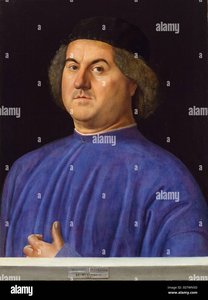
The Radiant Legacy of Alvise Vivarini
In the shimmering, water-bound world of the Venetian Renaissance, few names evoke the luminous splendor of the era quite like Alvise Vivarini, often known to history as Luigi Vivarini. Born in Venice around 1446, Vivarini was not merely a painter but a vital architect of color during a period of profound artistic transformation. Emerging from a lineage deeply embedded in the Venetian tradition—most notably under the influence of his relative, Castagno Vivarini—Alvise possessed an innate understanding of the city's unique light and its ability to dance across surfaces. His early years were defined by a rigorous pursuit of mastery, shaped significantly by his time in the orbit of Giovanni Bellini. This mentorship was transformative, gifting Vivarini with a sophisticated grasp of tonal harmony and a sensitivity to the subtle gradations of light that would become the hallmark of his mature style.
As his career flourished, Vivarini established a workshop that became a beacon of innovation within the Venetian Republic. While many of his contemporaries adhered to more muted, somber palettes, Alvise dared to embrace a vibrant, almost electric spectrum of color. He was a master of the glazing technique, a painstaking process involving the application of multiple translucent layers of pigment. This method allowed light to penetrate the paint and reflect back from the underlying layers, creating an internal glow that gave his works an unparalleled depth and brilliance. Whether depicting the divine or the earthly, his canvases possessed a rhythmic vitality, characterized by a bold departure from tradition that signaled the approaching dawn of a new aesthetic era.
Devotion and Mastery in Form
The breadth of Vivarini’s oeuvre reflects the dual nature of Renaissance life: the profound spiritual devotion of the age and the rising prestige of the Venetian merchant class. His commissions were often grand in scale and deeply religious in intent, designed to inspire awe within the sacred spaces of Venice and beyond. Through his hands, biblical narratives were transformed into immersive visual experiences. In works such as St Matthew, one can witness his ability to capture a sense of divine serenity through meticulous detail and a commanding presence that commands the viewer's attention. His religious compositions, including tender depictions like Mary with the Child, demonstrate a profound empathy, using soft light and rich textures to evoke the tenderness of the Madonna.
Beyond the realm of the sacred, Vivarini’s skill extended into the intimate sphere of portraiture, where he captured the very essence of the Venetian soul. His Portrait of a Man, created in 1497, stands as a testament to his technical prowess and psychological insight. In this masterpiece, the interplay of light and shadow—the chiaroscuro—is used not just to define form, but to suggest the character and status of the sitter. The rich textures of fabric and the astute observation of human features reveal an artist who was as much a chronicler of humanity as he was a painter of saints.
A Lasting Impression on Venetian Art
The historical significance of Alvise Vivarini lies in his role as a bridge between the structured traditions of the early Quattrocento and the more fluid, atmospheric innovations of the High Renaissance. His ability to secure prestigious patronage from influential families such as the Mocenigo and Dorsoduro clans speaks to his standing as a premier artist of his time. His influence stretched far beyond the borders of Venice; his frescoes in Rome, specifically within San Luigi dei Francesi, showcased a monumental capability that resonated with the evolving tastes of the Italian peninsula.
Ultimately, Vivarini’s contribution to art history is measured by his mastery of light and his fearless use of color. He helped define the "Venetian School" as one characterized by colore—the primacy of color and light over the strict disegno (drawing) favored in Florence. By layering pigment to achieve a luminous, breathing surface, he paved the way for future masters to explore the emotive power of the palette. Today, his works remain enduring symbols of an era when art, faith, and the unique atmosphere of Venice converged to create something truly eternal.
alvise vivarini (luigi vivarini)
1446 - 1502 , Italy
基本情報
- Artistic Movement Or Style: Early Renaissance
- Artists Who Influenced This Artist: ['Castagno Vivarini']
- Date Of Birth: 1446
- Full Name: Luigi Vivarini
- Nationality: Italian
- Notable Artworks:
- Portrait of a Man
- Mary and Child with Sts Mary Magdalene and Catherine
- Altarpiece of St Ambrose (detail)
- Place Of Birth: Venice, Italy
関連記事
High Medieval Art: 10 Masterpieces That Shaped an Era | ArtsDot
Journey through High Medieval Art! Explore 10 iconic masterpieces – from Giotto's frescoes to stunning Gothic cathedrals. Discover the stories behind these timeless paintings, sculptures & illuminated manuscripts. Find museum-quality art reproductions at ArtsDot.com.

ジャコポ・ティンコレット:至高の25選 – ヴェネツィア巨匠のドラマと光の世界 | ArtsDot
ジャコポ・ティンコレットの至高の25選。ドラマと光の世界を彩るヴェネツィア派巨匠の名画を紐解きます。ルネサンス絵画からバロック絵画まで、ArtsDotで高品質な複製画やインテリアアートを見つけましょう。傑作コレクションをオンラインで探求してください。
The Enduring Legacy of Formal Portraiture: Power, Identity & Artistic Exploration
Explore the rich history of formal portraiture & its enduring power to capture identity and shape perception. Discover investment-worthy artworks, expert appraisals, and custom reproduction services at ArtsDot.

Late Medieval Masterpieces: 10 Artworks That Defined an Era | ArtsDot
Journey through 10 defining Late Medieval masterpieces – from Giotto's frescoes to Jan van Eyck’s realism. Explore the stories, techniques & vibrant colors of Gothic art. Find museum-quality reproductions and elevate your home decor with ArtsDot.com! Discover all masterpieces on ArtsDot.com
Early Medieval Art: 10 Masterpieces That Shaped a New World | ArtsDot
Journey through 10 stunning Early Medieval masterpieces – from the Book of Kells to Carolingian mosaics. Explore art history, symbolism & find museum-quality reproductions for your home at ArtsDot.com. Discover all masterpieces online!

