

![Scenes From The Passion Of Christ: The Crucifixion [middle Panel] — Andrea Di Vanni D'andrea](/media/artworks/images-full/89/82/898286e6087c75fc2f637fd4a77918f2.jpg)
 プレビュー
プレビュー
 シェアする
シェアする シェアする
シェアする
 詳細を見る
詳細を見る

 ダウンロード
 似ている作品
 X線調査
X線調査 スライドショー
Scenes from the Passion of Christ: The Crucifixion [middle panel]
 Tempera On Panel
 1380
1380- Late Medieval
 57.0 x 58.0 cm
 詳細を見る
詳細を見る
ジークレー/アートプリント
迅速な制作と多彩な仕上げオプションを備えた、ミュージアムクオリティのジークレーまたはキャンバスプリント。 ( 手描きの絵画を購入 画像を購入)




P118B $10

P118H $10

P118W $10

P438Z $10

P508JH $12

P508YH $12

P805H $10

P805Z $10

P919BZ $10

P919G $10

P919XJ $10

P959ZH $10

P968JZ $12

W106C $8

W218G $10

W218JH $8

W218Y $10

W307PJ $10

W316G $10

W316PJ $8

W316Y $10

W398PJ $8

W4111J $10

W500HY $15

W500JH $15

W692G $12

W849H $8

W940BG $15

W953PJ $8




作品のオリジナル比率に合わせた、当店の規定サイズからお選びください。

特定のフレームやスペースに合わせて、ご自身でサイズを指定することも可能です。選択されたサイズが元の画像の比率と一致しない場合、作品をトリミングするか、鏡面反射または単色での塗りつぶしによって画像を拡張いたします。制作を開始する前に、ご確認用のデジタルモックアップをお送りいたします。
画面上のプレビューには、実際のトリミングや拡張は反映されませんのでご注意ください。最終的な構図を正確に確認できるのは、モックアップのみとなります。
カスタムサイズも承っておりますが、元の比率を維持するためには、あらかじめ用意されたリストからサイズを選択することをお勧めいたします。


 ガラスオプションは、110cm未満のサイズでのみご利用いただけます。

Scenes from the Passion of Christ: The Crucifixion [middle panel]
ジークレー/アートプリント
複製画のサイズ
-


合計金額
$ 62
The Composition
The painting measures 57 x 58 cm and is executed in tempera on panel. It presents a dramatic scene of crucifixion, with three men hanging from wooden crosses. The central figure, Jesus Christ, is easily identifiable by the halo surrounding his head and the ring of thorns in his long, red hair. Blood trickles down his forehead and drips from the nails driven through his hands and feet, as well as from a gash over his right ribs. Four miniature, winged angels are painted entirely in tones of dark cobalt blue, flying in pairs on either side of Jesus' body. The inscription "INRI" is written in gold letters against a red field above the cross. The other two men on the crosses are tied with their elbows hooked unnaturally back over the crossbeams, and wounds on their broken shins pour blood.Symbolism and Details
The painting is rich in symbolism and detail. In the bottom left corner, a group of four women comfort a recumbent woman with long blond hair wearing a blue cloak. This scene likely represents the Virgin Mary and her companions mourning Jesus' fate. On the right side, three men tug at a blue tunic as they draw straws from one man's fist, symbolizing the soldiers who gambled for Jesus' garments. Other figures in the painting include men and women with gold halos, indicating their saintly status, and various birds scattered throughout the scene. These elements add depth and visual interest to the composition.Artistic Significance
"Scenes from the Passion of Christ: The Crucifixion" is a significant work in the history of Christian art. It showcases D'Andrea's ability to convey intense emotion and religious fervor through his use of color, composition, and detail. This painting is a powerful representation of one of the most pivotal events in Christian history. For those interested in exploring more works by Andrea Di Vanni D'Andrea or similar pieces from the same period, ArtsDot offers high-quality, handmade oil painting reproductions. Their collection includes a wide range of religious and historical artworks that can be appreciated for their artistic value and emotional impact. In conclusion, "Scenes from the Passion of Christ: The Crucifixion" by Andrea Di Vanni D'Andrea is a masterpiece that captures the essence of Christian art during the 14th century. Its detailed composition, rich symbolism, and emotional depth make it a compelling piece for both art enthusiasts and those interested in religious history.- ArtsDot - For handmade oil painting reproductions of famous artworks.
- Andrea Di Vanni D'Andrea - Italian artist known for his religious paintings.
- Scenes from the Passion of Christ: The Crucifixion - A painting depicting the crucifixion of Jesus Christ.
関連作品


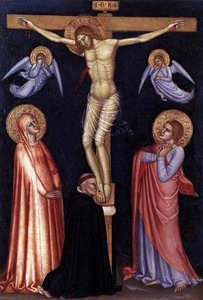
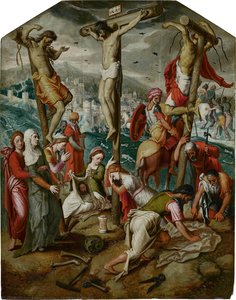
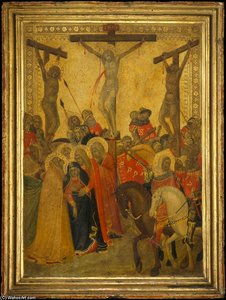
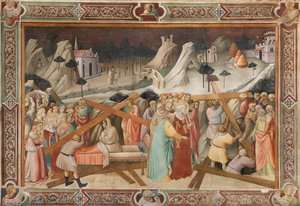
アーティストの略歴
The Sienese Master: The Life and Legacy of Andrea di Vanni
In the golden light of the fourteenth century, within the winding, terracotta-hued streets of Siena, a painter emerged whose brush would capture the spiritual essence of the Early Renaissance. Andrea di Vanni d'Andrea, known simply as Andrea di Vanni, was more than just a practitioner of religious iconography; he was a man deeply woven into the very fabric of his city’s civic and spiritual identity. Born around 1332, Vanni’s life unfolded during a transformative era for Italian art, a period where the delicate elegance of the Gothic tradition began to meet the burgeoning structural ambitions of the Renaissance.
While historical records regarding his earliest years remain somewhat veiled in mystery, we first encounter his presence in the artistic landscape around 1353. During this formative period, he was associated with the esteemed painter Bartolo di Fredi, a connection that likely provided him with the technical foundation necessary to navigate the demanding workshops of Siena. However, Vanni was not merely a man of the studio; his life was marked by a remarkable duality between artistic creation and civic duty. He played an active role in the governance of Siena, holding prestigious offices such as gonfaloniero and serving as an envoy to the Papal court. This unique position allowed him to exist at the intersection of political power and religious devotion, a vantage point that undoubtedly informed the gravity and importance found within his compositions.
A Tapestry of Influence and Technique
To understand the visual language of Andrea di Vanni, one must look toward the masters who preceded him. His style breathes with the lingering grace of Simone Martini and Pietro Lorenzetti, the titans of Sienese painting. From Martini, Vanni inherited a penchant for lyrical lines and a certain ethereal quality, while from Lorenzetti, he drew a sense of weight and emotional presence. His work often eschews the heavy use of chiaroscuro—the dramatic play of light and shadow—in favor of a striking, almost silhouette-like design. This technique creates a powerful graphic impact, particularly when set against the luminous, unyielding gold backgrounds so characteristic of Sienese devotional art.
One of his most breathtaking achievements is the polyptych housed in the church of Santo Stefano alla Lizza. In this masterpiece, the viewer is confronted with a central portrait of the Virgin and Child that commands the space through sheer coloristic brilliance. The Madonna is rendered as a dark, elegant pattern against her gilded throne, creating a visual rhythm that feels both ancient and strikingly modern. This ability to balance intricate ornamentation with bold, simplified forms allowed his work to resonate deeply within the liturgical spaces of his era.
Fragments of a Vanished Splendor
The true breadth of Vanni’s oeuvre remains a poignant subject for art historians, as much of his legacy has been lost to the ravages of time. Many of his most ambitious projects, including portraits of Saint Catherine of Siena and scenes from the life of Saint James, have disappeared into the shadows of history. Yet, the fragments that remain—such as the Enthroned Madonna in the transept of San Francesco or the fragmented Crucifixion now held in the Istituto delle Belle Arti—serve as vital windows into his creative soul.
Even in these surviving pieces, we see a painter dedicated to the commemorative and the sacred. His work was often commissioned to honor saints and celebrate the continuity of faith within the Sienese community. Though he may not possess the global fame of some of his contemporaries, Andrea di Vanni d'Andrea remains an indispensable figure for understanding the evolution of the Sienese school. He stands as a testament to an era where art, politics, and piety were inextricably linked, leaving behind a visual heritage that continues to whisper the glories of the early Italian Renaissance.
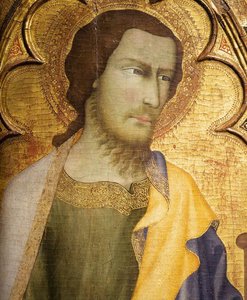
andrea di vanni d'andrea
1332 - 1414 , Italy
基本情報
- Artistic Movement Or Style: Early Renaissance
- Artists Who Influenced This Artist:
- Simone Martini
- Pietro Lorenzetti
- Date Of Birth: 1332
- Date Of Death: 1414
- Full Name: Andrea di Vanni d'Andrea
- Nationality: Italian
- Notable Artworks:
- Enthroned Madonna
- St. Paul
- Portrait of St. Catherine of Siena
- Polyptych in Santo Stefano alla Lizza
- Place Of Birth: Siena, Italy
関連記事

Slate Blue Masterpieces: 10 Iconic Paintings & Timeless Home Decor Ideas
Immerse yourself in the captivating world of slate blue! Explore 10 iconic paintings by Monet, Van Gogh & Renoir. Discover their stories, techniques & find museum-quality art reproductions for your home at .
Celestial Messengers: Angels in Painting – A Historical & Artistic Exploration
Explore the captivating history of angels in painting! Discover symbolism, iconic Renaissance & Byzantine masterpieces, and renowned artists. Expert insights for art lovers & collectors at ArtsDot.

Celestial Messengers: A Comprehensive Exploration of Angelic Representation in Art History
Explore the captivating history of angels in art! Discover symbolism, iconic Renaissance masterpieces & renowned artists. Expert insights for art lovers & collectors at ArtsDot.
The Allure of Azure: Exploring the Symbolic & Aesthetic Depths of Blue in Art History
Explore the rich history of blue in art! Discover its symbolism, from ancient pigments to modern masterpieces by Kandinsky & Seurat. Uncover the psychological impact and cultural meanings behind this captivating hue.
Illuminating History: A Comprehensive Exploration of Tempera Painting Techniques & Artistic Legacy
Explore the rich history & techniques of tempera painting! Discover Renaissance masters like Botticelli & Fra Angelico, conservation insights, and the enduring legacy of this captivating art form.

