

 プレビュー
プレビュー
 プリントを購入
 シェアする
シェアする シェアする
シェアする
 詳細を見る
詳細を見る

 ダウンロード
 似ている作品
 X線調査
X線調査 スライドショー
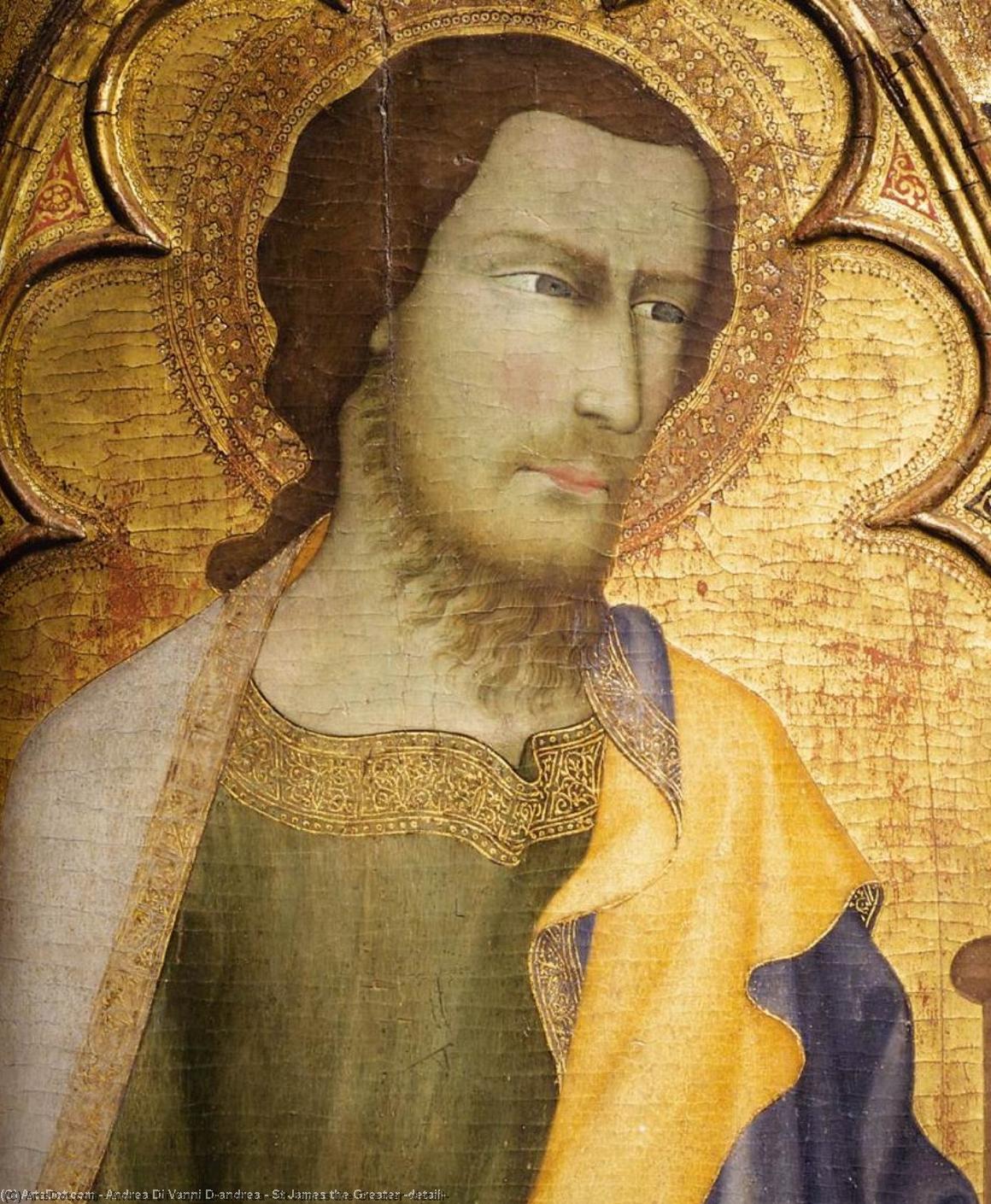
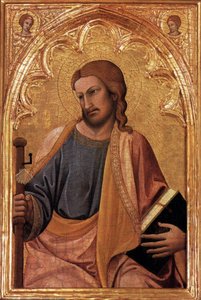
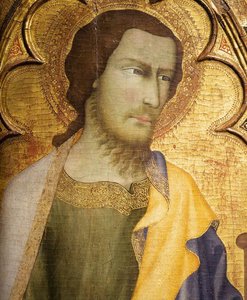
St James the Greater (detail)


 詳細を見る
詳細を見る




P118B $10

P118H $10

P118W $10

P438Z $10

P508JH $12

P508YH $12

P805H $10

P805Z $10

P919BZ $10

P919G $10

P919XJ $10

P959ZH $10

P968JZ $12

W106C $8

W218G $10

W218JH $8

W218Y $10

W307PJ $10

W316G $10

W316PJ $8

W316Y $10

W398PJ $8

W4111J $10

W500HY $15

W500JH $15

W692G $12

W849H $8

W940BG $15

W953PJ $8




作品のオリジナル比率に合わせた、当店の規定サイズからお選びください。

特定のフレームやスペースに合わせて、ご希望のサイズをご入力いただけます。選択されたサイズが元の画像の比率と異なる場合、アートワークをトリミングするか、手描きで要素を追加して絵画を拡張いたします。デジタルモックアップ を制作し、制作開始前にご確認(承認)をいただきます。
画面上のプレビューは、実際のトリミングや拡張を正確に反映しているものではありません。最終的な構図は、モックアップによってのみ正確にご確認いただけます。
カスタムサイズもご利用いただけますが、元の比率を維持するためには、あらかじめ用意されたリストからサイズを選択することをお勧めいたします。
ご注文後、ArtsDot.com チームより詳細な指示をお送りするとともに、仕上がりイメージ(モックアップ)をご提供いたします。


 ガラスオプションは、110cm未満のサイズでのみご利用いただけます。

St James the Greater (detail)
複製技法
複製画のサイズ
-


合計金額
$ 263
作品解説
A Glimpse of Saint James: Andrea di Vanni D’Andrea's Timeless Masterpiece
The world of 14th-century Siena pulsates with vibrant color and fervent devotion, a spirit captured in remarkable detail within Andrea di Vanni D’Andrea’s “St. James the Greater (detail).” This tempera panel painting, currently residing at the Museo Nazionale di Capodimonte in Naples, offers more than just a depiction of a revered biblical figure; it's a window into a specific moment in time – a testament to artistic skill, religious belief, and the burgeoning cultural landscape of Italy. The work immediately draws the eye with its rich palette, dominated by deep blues and golds that evoke both the solemnity of faith and the opulence associated with nobility.
D’Andrea's style skillfully blends elements of the late Gothic and early Renaissance, a period marked by experimentation and a renewed interest in classical forms. The meticulous rendering of St. James’s features – his beard meticulously sculpted, his gaze directed slightly off-center – speaks to the artist’s dedication to realism, yet simultaneously imbues the figure with an aura of dignified contemplation. Note the subtle folds of his robe, rendered with remarkable precision, and the way the light catches on the gold trim, hinting at the saint's elevated status within the Christian hierarchy. The background, a wash of golden hues, isn’t merely decorative; it subtly suggests a celestial realm, reinforcing the painting’s spiritual purpose.
The Techniques of Tempera: A Medium for Devotion
The choice of tempera on panel was particularly significant during this era. Unlike oil paints, which offered greater flexibility and luminosity, tempera provided a more durable and archival medium, ideal for religious works intended to endure for centuries. The layering technique employed by D’Andrea – applying thin washes of color over dried layers – created a remarkable depth and richness of tone. The artist's mastery is evident in the smooth transitions between colors and the subtle gradations of light and shadow, contributing to the painting’s overall sense of realism and three-dimensionality. The panel itself, likely poplar wood, provided a stable support for this delicate medium.
Symbolism and Spiritual Significance
Beyond its technical brilliance, “St. James the Greater” is laden with symbolic meaning. St. James himself represents faith, perseverance, and leadership within the Christian community. His beard and mustache, often associated with maturity and wisdom, underscore his role as a guide for believers. The gesture of his hand, slightly raised in what could be interpreted as prayer or blessing, invites contemplation on themes of divine grace and spiritual devotion. The inclusion of gold – a costly pigment reserved for important figures – further elevates St. James’s status, signifying his importance within the Christian narrative.
A Legacy Preserved: The Painting's Historical Context
Created in 1355, this painting reflects the vibrant artistic and social climate of Siena during the 14th century. Siena was a powerful city-state known for its wealth, political independence, and thriving art scene. D’Andrea’s work is part of a broader trend towards greater realism and naturalism in Italian painting, influenced by both Byzantine traditions and emerging classical ideals. The painting's eventual journey to the Museo Nazionale di Capodimonte speaks to the enduring value placed on this artwork throughout history. Further research reveals that similar panels were found in the Castle of Casaluce near Aversa, suggesting a possible origin point for this particular piece.
Bringing the Masterpiece Home: Reproductions and Beyond
For those captivated by the beauty and historical significance of “St. James the Greater,” high-quality reproductions offer an accessible way to experience this remarkable artwork firsthand. WGA’s image provides a detailed view, while other resources like Alamy showcase the painting's rich colors and intricate details. Consider commissioning a handmade oil painting reproduction – a faithful recreation that captures the essence of D’Andrea’s original masterpiece, allowing you to bring a touch of medieval artistry into your own space.
関連作品



アーティストの略歴
The Sienese Master: The Life and Legacy of Andrea di Vanni
In the golden light of the fourteenth century, within the winding, terracotta-hued streets of Siena, a painter emerged whose brush would capture the spiritual essence of the Early Renaissance. Andrea di Vanni d'Andrea, known simply as Andrea di Vanni, was more than just a practitioner of religious iconography; he was a man deeply woven into the very fabric of his city’s civic and spiritual identity. Born around 1332, Vanni’s life unfolded during a transformative era for Italian art, a period where the delicate elegance of the Gothic tradition began to meet the burgeoning structural ambitions of the Renaissance.
While historical records regarding his earliest years remain somewhat veiled in mystery, we first encounter his presence in the artistic landscape around 1353. During this formative period, he was associated with the esteemed painter Bartolo di Fredi, a connection that likely provided him with the technical foundation necessary to navigate the demanding workshops of Siena. However, Vanni was not merely a man of the studio; his life was marked by a remarkable duality between artistic creation and civic duty. He played an active role in the governance of Siena, holding prestigious offices such as gonfaloniero and serving as an envoy to the Papal court. This unique position allowed him to exist at the intersection of political power and religious devotion, a vantage point that undoubtedly informed the gravity and importance found within his compositions.
A Tapestry of Influence and Technique
To understand the visual language of Andrea di Vanni, one must look toward the masters who preceded him. His style breathes with the lingering grace of Simone Martini and Pietro Lorenzetti, the titans of Sienese painting. From Martini, Vanni inherited a penchant for lyrical lines and a certain ethereal quality, while from Lorenzetti, he drew a sense of weight and emotional presence. His work often eschews the heavy use of chiaroscuro—the dramatic play of light and shadow—in favor of a striking, almost silhouette-like design. This technique creates a powerful graphic impact, particularly when set against the luminous, unyielding gold backgrounds so characteristic of Sienese devotional art.
One of his most breathtaking achievements is the polyptych housed in the church of Santo Stefano alla Lizza. In this masterpiece, the viewer is confronted with a central portrait of the Virgin and Child that commands the space through sheer coloristic brilliance. The Madonna is rendered as a dark, elegant pattern against her gilded throne, creating a visual rhythm that feels both ancient and strikingly modern. This ability to balance intricate ornamentation with bold, simplified forms allowed his work to resonate deeply within the liturgical spaces of his era.
Fragments of a Vanished Splendor
The true breadth of Vanni’s oeuvre remains a poignant subject for art historians, as much of his legacy has been lost to the ravages of time. Many of his most ambitious projects, including portraits of Saint Catherine of Siena and scenes from the life of Saint James, have disappeared into the shadows of history. Yet, the fragments that remain—such as the Enthroned Madonna in the transept of San Francesco or the fragmented Crucifixion now held in the Istituto delle Belle Arti—serve as vital windows into his creative soul.
Even in these surviving pieces, we see a painter dedicated to the commemorative and the sacred. His work was often commissioned to honor saints and celebrate the continuity of faith within the Sienese community. Though he may not possess the global fame of some of his contemporaries, Andrea di Vanni d'Andrea remains an indispensable figure for understanding the evolution of the Sienese school. He stands as a testament to an era where art, politics, and piety were inextricably linked, leaving behind a visual heritage that continues to whisper the glories of the early Italian Renaissance.
andrea di vanni d'andrea
1332 - 1414 , Italy
基本情報
- Artistic Movement Or Style: Early Renaissance
- Artists Who Influenced This Artist:
- Simone Martini
- Pietro Lorenzetti
- Date Of Birth: 1332
- Date Of Death: 1414
- Full Name: Andrea di Vanni d'Andrea
- Nationality: Italian
- Notable Artworks:
- Enthroned Madonna
- St. Paul
- Portrait of St. Catherine of Siena
- Polyptych in Santo Stefano alla Lizza
- Place Of Birth: Siena, Italy
関連記事
ジョット・ディ・ボンドーネ:至高の25選 - ルネサンスの夜明けを彩る傑作たち | ArtsDot
ジョット・ディ・ボンドーネの至高の25選。ルネサンス美術を牽引した巨匠の傑作と、その感動的な物語を紐解きます。高品質な絵画複製やインテリアアートで、名画の世界をあなたの空間に。ArtsDot.com でコレクションをご覧ください。

ジェームズ・マクニール・ホイストラー:至高の25選 - 美と調和を求めた芸術家の軌跡 | ArtsDot
ジェームズ・マクニール・ホイストラーの至高の25選。ノクターン、印象派、美しい色彩に満ちた作品群を紐解きます。ArtsDotで高品質なアートプリントとインテリアをお楽しみください。名画の世界へ – ArtsDot.com

Sir Alfred Munnings' Masterpieces: 25 Paintings That Define Equine Art | ArtsDot
Explore 25 iconic Sir Alfred Munnings paintings! Discover the beauty of British Impressionism, equine art & rural England. Find museum-quality reproductions and elevate your home decor with ArtsDot. Explore the full collection online.
Illuminating Surfaces: A Comprehensive Exploration of Tempera on Panel Painting Techniques & Historical Significance
Explore the rich history & techniques of tempera painting! Discover Renaissance masters like Botticelli & Fra Angelico, conservation insights, and the enduring legacy of this captivating art form. Learn more now!
Illuminating History: A Comprehensive Exploration of Tempera Painting Techniques & Artistic Legacy
Explore the rich history & techniques of tempera painting! Discover Renaissance masters like Botticelli & Fra Angelico, conservation insights, and the enduring legacy of this captivating art form.

