

 プレビュー
プレビュー
 プリントを購入
 シェアする
シェアする シェアする
シェアする
 詳細を見る
詳細を見る

 ダウンロード
 似ている作品
 X線調査
X線調査 スライドショー
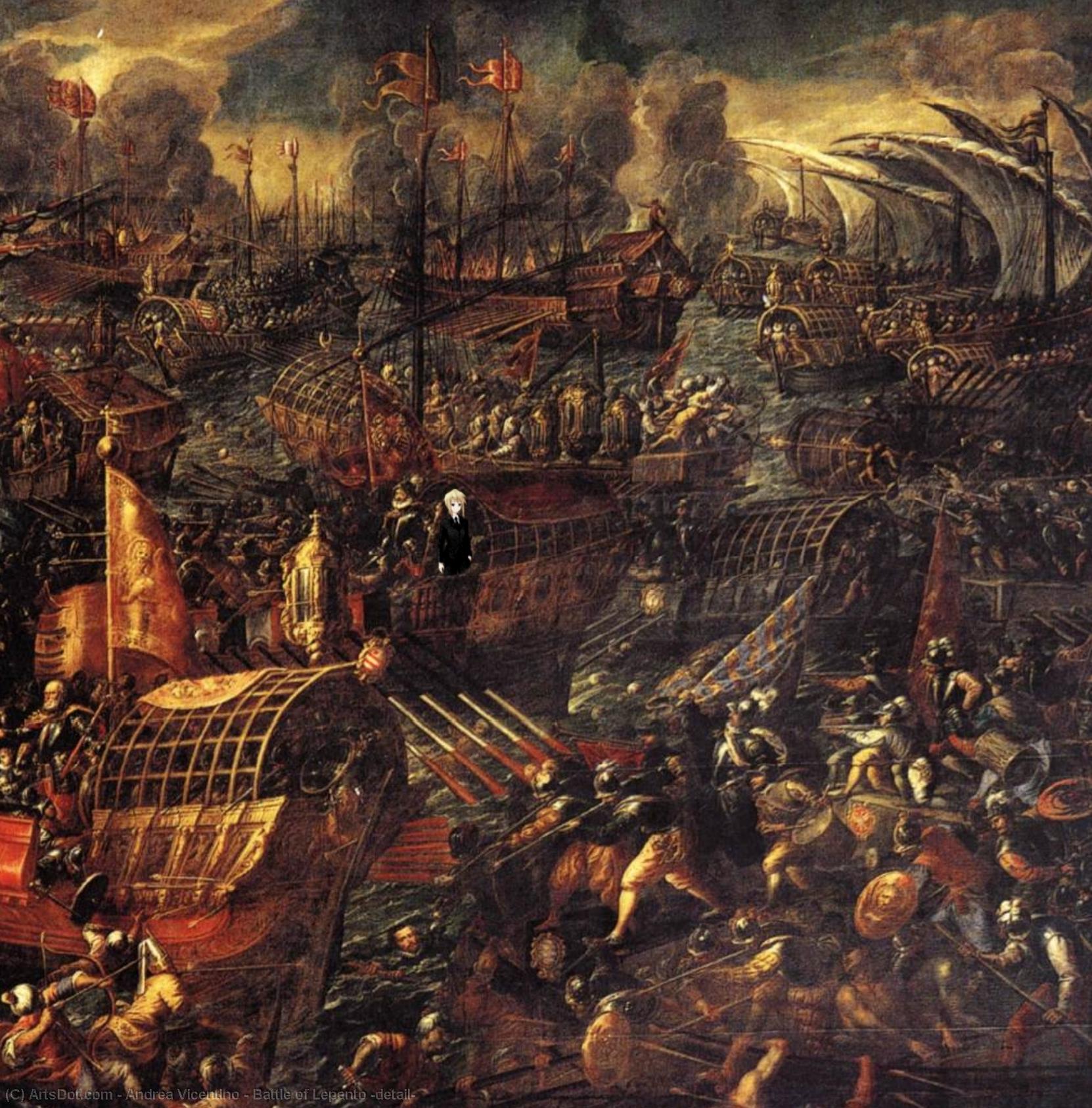
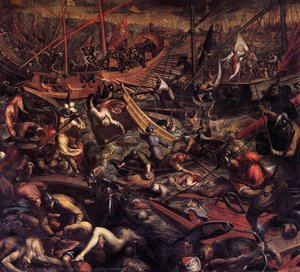
Battle of Lepanto (detail)


 詳細を見る
詳細を見る




































作品のオリジナル比率に合わせた、当店の規定サイズからお選びください。

特定のフレームやスペースに合わせて、ご希望のサイズをご入力いただけます。選択されたサイズが元の画像の比率と異なる場合、アートワークをトリミングするか、手描きで要素を追加して絵画を拡張いたします。デジタルモックアップ を制作し、制作開始前にご確認(承認)をいただきます。
画面上のプレビューは、実際のトリミングや拡張を正確に反映しているものではありません。最終的な構図は、モックアップによってのみ正確にご確認いただけます。
カスタムサイズもご利用いただけますが、元の比率を維持するためには、あらかじめ用意されたリストからサイズを選択することをお勧めいたします。
ご注文後、ArtsDot.com チームより詳細な指示をお送りするとともに、仕上がりイメージ(モックアップ)をご提供いたします。


 ガラスオプションは、110cm未満のサイズでのみご利用いただけます。

Battle of Lepanto (detail)
複製技法
複製画のサイズ
-


合計金額
$ 263
関連作品




アーティストの略歴
The Venetian Master of Mannerist Grandeur
Andrea Vicentino, a name that echoes through the corridors of the late Renaissance, stands as a pivotal figure in the Venetian artistic landscape. Born in the architecturally rich city of Vicenza around 1542, his early life was shaped by the profound traditions of the Maganza School. Under the watchful eye and expert tutelage of Giovanni Battista Maganza, Vicentino developed a command over monumental compositions and refined aesthetics that would later define his career. This formative period provided him with more than just technical skill; it instilled in him a deep understanding of how art could serve as a vessel for both civic pride and religious devotion.
As he matured, the artist’s identity became as fluid and vibrant as the Venetian art world itself. Known variously as Andrea Michieli or Michelli, his movement toward Venice in the mid-1570s marked a transformative era in his development. By 1583, he had officially registered with the Fraglia, the prestigious Venetian guild of painters. This affiliation was not merely a professional milestone but a gateway to the most influential circles of patronage in the Republic, allowing him to weave his brushstrokes into the very fabric of Venetian political and spiritual life.
A Legacy Written in the Palazzo Ducale
The true magnitude of Vicentino’s talent is perhaps best witnessed in his monumental collaborations within the Palazzo Ducale. Working alongside the legendary Tintoretto, Vicentino contributed to some of the most significant decorative programs of the era. His hand is visible in the grandeur of The Arrival of Henry III at Venice, a masterpiece located in the Sala delle Quattro Porte that captures the historical weight of the Habsburg monarch's visit. Through his work, the halls of the palace—including the Sala del Senato and Sala dello Scrutinio—were transformed into theatrical stages where history and myth converged.
His ability to navigate the complexities of Mannerism allowed him to master a style characterized by:
- Dramatic Composition: The use of elongated forms and intricate arrangements to create a sense of intellectual complexity.
- Luminous Coloration: A mastery of light and pigment that reflected the rich, atmospheric traditions of the Venetian school.
- Narrative Depth: An ability to blend historical accuracy with an almost cinematic sense of movement and emotion.
The Intersection of Devotion and Epic Drama
Beyond the political splendor of Venice, Vicentino’s oeuvre reached into the sacred heart of Italy. His ambitious undertaking at the Treviso Cathedral, the Madonna of the Rosary, serves as a testament to his capacity for profound religious expression. In this work, the artist moved away from the chaotic energy of battle to embrace a more intimate, devotional language, utilizing intricate detail and a soft, luminous glow to inspire piety in the faithful.
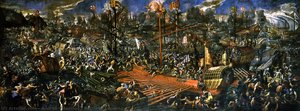
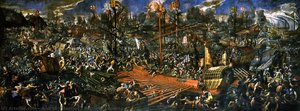
Yet, he was equally capable of capturing the visceral chaos of conflict. His 1603 depiction of the Battle of Lepanto remains one of his most evocative achievements. In this oil on canvas, the viewer is swept into a torrent of salt spray, gunpowder smoke, and the desperate cries of combatants. It is here that Vicentino’s Mannerist roots meet the raw energy of the late Renaissance, creating a visual echo of the clash between the Christian Holy League and the Ottoman fleet. Through his brush, the historical event transcends mere documentation to become an epic drama of human struggle and religious fervor.
Ultimately, the significance of Andrea Vicentino lies in his role as a bridge between eras. He carried the refined elegance of the Maganza tradition into the high-stakes, dramatic world of Venetian Mannerism, leaving behind a legacy of works that continue to command reverence for their technical brilliance and emotional resonance.
Andrea Vicentino
1542 - 1617 , Italy
基本情報
- Artistic Movement Or Style: Late Renaissance/Mannerist
- Artists Or Movements Influenced By This Artist: ['Tintoretto']
- Artists Who Influenced This Artist: ['Giovanni Battista Maganza']
- Date Of Birth: ca. 1542
- Date Of Death: ca. 1617
- Full Name: Andrea Vicentino
- Nationality: Italian
- Notable Artworks:
- Battle of Lepanto
- Virgin and Child entroned, with St Francis of Assisi, John the Baptist and a St. Bishop
- Place Of Birth: Vicenza, Italy

