

 プレビュー
プレビュー
 シェアする
シェアする シェアする
シェアする
 詳細を見る
詳細を見る

 ダウンロード
 似ている作品
 X線調査
X線調査 スライドショー
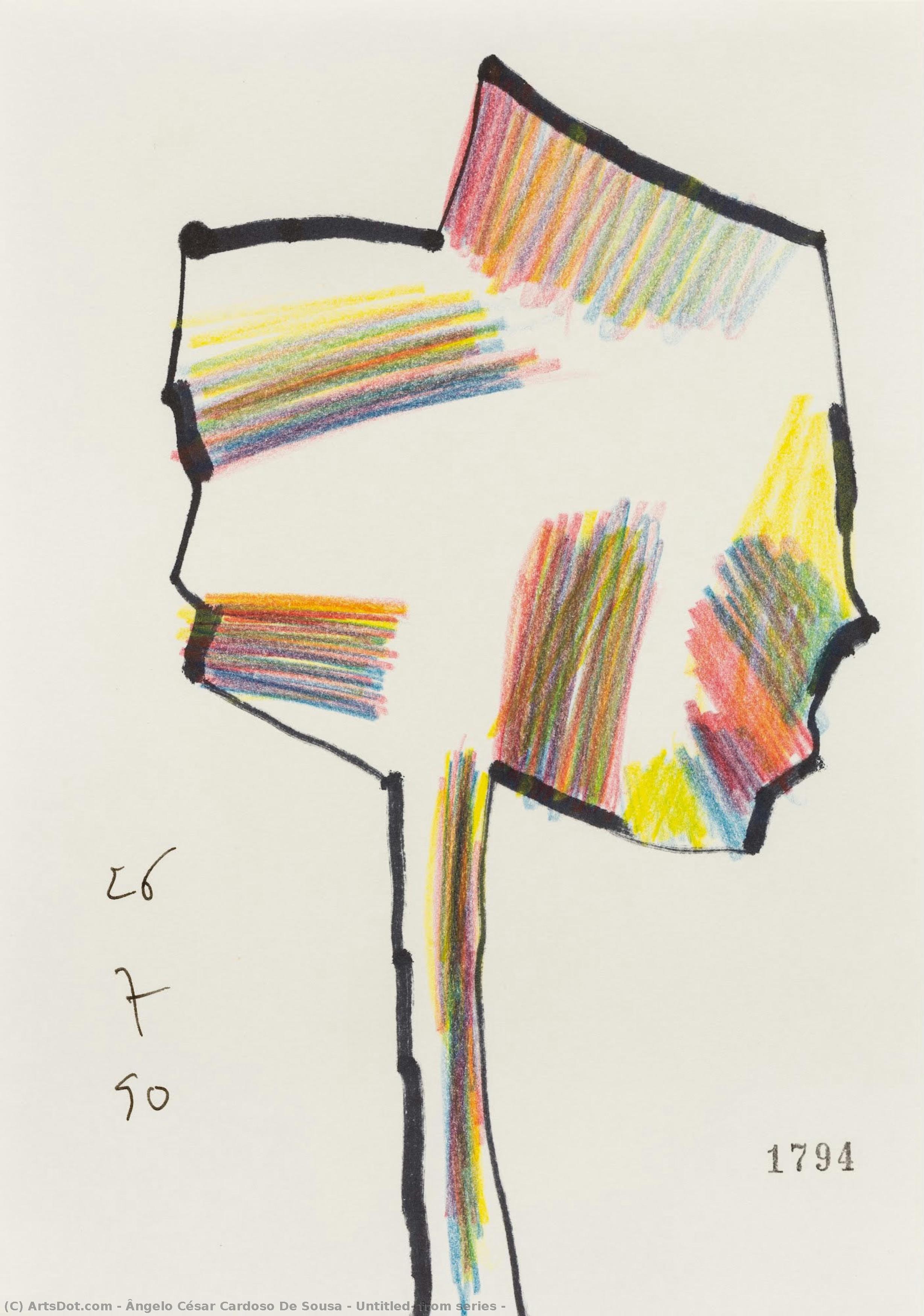
Untitled, from series
 Acrylic On Canvas
- WallArt
- Portuguese Minimalism
 1990
1990 21.0 x 15.0 cm
 Culturgest - Fundação Caixa Geral de Depósitos
 詳細を見る
詳細を見る
ジークレー/アートプリント
迅速な制作と多彩な仕上げオプションを備えた、ミュージアムクオリティのジークレーまたはキャンバスプリント。 ( 手描きの絵画を購入 画像を購入)




P118B $10

P118H $10

P118W $10

P438Z $10

P508JH $12

P508YH $12

P805H $10

P805Z $10

P919BZ $10

P919G $10

P919XJ $10

P959ZH $10

P968JZ $12

W106C $8

W218G $10

W218JH $8

W218Y $10

W307PJ $10

W316G $10

W316PJ $8

W316Y $10

W398PJ $8

W4111J $10

W500HY $15

W500JH $15

W692G $12

W849H $8

W940BG $15

W953PJ $8




作品のオリジナル比率に合わせた、当店の規定サイズからお選びください。

特定のフレームやスペースに合わせて、ご自身でサイズを指定することも可能です。選択されたサイズが元の画像の比率と一致しない場合、作品をトリミングするか、鏡面反射または単色での塗りつぶしによって画像を拡張いたします。制作を開始する前に、ご確認用のデジタルモックアップをお送りいたします。
画面上のプレビューには、実際のトリミングや拡張は反映されませんのでご注意ください。最終的な構図を正確に確認できるのは、モックアップのみとなります。
カスタムサイズも承っておりますが、元の比率を維持するためには、あらかじめ用意されたリストからサイズを選択することをお勧めいたします。


 ガラスオプションは、110cm未満のサイズでのみご利用いただけます。

Untitled, from series
ジークレー/アートプリント
複製画のサイズ
-


合計金額
$ 62
Angelo César Cardoso de Sousa: A Pioneer of Portuguese Minimalism
Angelo César Cardoso de Sousa, affectionately known as Ângelo de Sousa, stands as an undeniable cornerstone of Portuguese art history—a figure whose prolific output cemented his place within the canon of Minimalist painting. Born in February 2nd, 1938, in Lourenço Marques (now Maputo), Mozambique, he embarked on a remarkable artistic journey that began amidst the vibrant tapestry of African culture before finding its formal grounding in the academic rigor of Portugal.
Early Influences and Artistic Formation
His formative years instilled within him an unwavering appreciation for color and texture—sensibilities that would subsequently permeate his oeuvre. Moving to Porto in 1955, he enrolled at the School of Fine Arts, swiftly establishing himself as a prodigious talent distinguished by his exceptional grasp of traditional techniques. However, unlike many artists of his era who merely replicated established styles, Angelo de Sousa possessed an unparalleled capacity for absorption and dissection—a willingness to transcend convention and forge new paths.
The Minimalist Aesthetic: A Radical Departure
Graduating summa cum laude – a testament to his unwavering dedication – he embraced Minimalism as his artistic manifesto. This stylistic choice represented a profound rejection of representational art, prioritizing geometric forms and reductive palettes to convey essential visual information. Angelo de Sousa’s canvases became meditations on simplicity itself—spaces devoid of extraneous detail where the interplay of light and shadow sculpted pure shapes into evocative compositions.
Notable Works: Exploring Themes of Resilience and Transformation
Among his most celebrated pieces are “Untitled” (1989), a striking black and white drawing depicting a tree with a face drawn on it. The image captures the essence of Portuguese Minimalism, utilizing a monochromatic scale to emphasize form and texture. The deliberate inclusion of numbers in the lower left corner adds an element of intellectual curiosity—a subtle nod to the artist’s engagement with conceptual art.
- “Untitled” (1989): A masterful depiction of resilience, symbolizing growth amidst adversity through simplified geometric forms and tonal variations.
- “Untitled” (1990): Exploring themes of transformation, this artwork utilizes subtle shading to create depth and dimension within a minimalist framework.
Legacy and Enduring Relevance
Angelo César Cardoso de Sousa’s artistic legacy extends far beyond the confines of Portugal—inspiring artists globally with his unwavering commitment to stylistic innovation. His work continues to resonate powerfully today, serving as a beacon of inspiration for interior designers seeking to infuse their spaces with understated elegance and intellectual depth.
関連作品


アーティストの略歴
A Life Immersed in Color and Form
Ângelo César Cardoso de Sousa, known simply as Ângelo de Sousa, was a pivotal figure in Portuguese art, a restless innovator whose career spanned decades of relentless experimentation. Born in 1938 in Lourenço Marques – now Maputo, Mozambique – his artistic journey began under the vibrant skies and diverse cultural currents of Africa before blossoming within the academic traditions of Portugal. This early exposure to a world brimming with color and texture profoundly shaped his aesthetic sensibility, instilling a lifelong fascination with light, form, and the expressive potential of materials. The move to Porto in 1955 marked a turning point, as he immersed himself in formal training at the School of Fine Arts, quickly distinguishing himself as an exceptional talent. He didn’t merely master traditional techniques; he absorbed them, dissected them, and prepared to transcend their boundaries. Graduating with the highest possible mark – a testament to his dedication and skill – de Sousa soon found himself among “Os Quatro Vintes,” a collective of academically gifted artists who would become influential forces in the Portuguese art scene.The Evolution of an Artistic Vision
De Sousa’s artistic path was one of continuous exploration, defying easy categorization. After establishing himself as a promising painter, he embraced sculpture, drawing, photography, film, and video, demonstrating a remarkable versatility that set him apart. From 1962 to 2000, his tenure as a professor at the University of Porto’s Faculty of Fine Arts wasn't simply an occupation; it was a vital component of his artistic practice. He nurtured generations of artists while simultaneously refining his own vision, fostering an environment where experimentation and critical thinking flourished. His work is immediately recognizable for its bold use of color – often primary hues deployed with striking intensity – and a willingness to challenge conventional approaches. He wasn’t content to simply represent the world; he sought to *interpret* it through abstract forms and innovative techniques. Influences were wide-ranging, from the emotional power of Expressionism to the geometric precision of Oriental art, the raw energy of primitive arts and Art Brut, the expansive fields of Colour Field painting, the cool detachment of Post Painterly Abstraction, the optical illusions of Op Art, and the playful accessibility of Pop Art. He absorbed these diverse currents not as imitation but as fuel for his own unique artistic language.Recognition and Accolades
The recognition of de Sousa’s talent came steadily throughout his career. His first solo exhibition in 1959 offered a glimpse of the innovative spirit that would define his work, while his participation in numerous group shows solidified his presence within the Portuguese art community. However, it was the International Prize awarded at the prestigious São Paulo Art Biennial in 1975 that truly propelled him onto the international stage. This accolade affirmed his standing as a significant contemporary artist and opened doors to exhibitions worldwide. His work found its way into museum collections, including the National Museum of Fine Arts in La Valletta, Malta, demonstrating the broad appeal and enduring quality of his artistic vision. The culmination of a lifetime dedicated to art came with the Gulbenkian Prize in 2007 – a prestigious honor recognizing his profound contribution to Portuguese culture. This award wasn’t merely a celebration of past achievements; it was an acknowledgement of his ongoing influence on the artistic landscape.A Lasting Legacy
Ângelo de Sousa's impact extends far beyond his own body of work. He inspired countless artists with his unwavering commitment to experimentation, his fearless exploration of new techniques, and his ability to synthesize diverse influences into a cohesive and compelling aesthetic. He was, at heart, a scholar of light and color, relentlessly pursuing minimalist expressions that resonated with profound emotional depth. His legacy lies not in adherence to any single style or movement but in the spirit of inquiry he embodied – a constant questioning of boundaries, a refusal to be constrained by convention, and an unwavering belief in the power of art to transform our perception of the world. His work continues to challenge and inspire new generations of artists, ensuring that his innovative spirit will endure for years to come. He remains a beacon for those who seek to push the limits of artistic expression.Key Achievements
- 1959: First solo exhibition, marking the beginning of his public career.
- 1975: International Prize at the 13th São Paulo Art Biennial – a pivotal moment in his international recognition.
- 2007: Gulbenkian Prize, acknowledging his significant contribution to Portuguese culture.
- Throughout his career: Extensive exhibitions in museums and collections worldwide, solidifying his global presence.
- 1962-2000: Dedicated teaching at the University of Porto, shaping generations of artists.
Ângelo César Cardoso de Sousa
1938 - 2011 , Mozambique
基本情報
- Artistic Movement Or Style: Expressionism, Minimalism
- Artists Or Movements Influenced By This Artist: ['New generations of artists']
- Artists Who Influenced This Artist:
- Klee
- Kandinsky
- Date Of Birth: 1938
- Date Of Death: 2011
- Full Name: Ângelo César Cardoso de Sousa
- Nationality: Portuguese
- Notable Artworks:
- Untitled
- Sem título (Geométrico grande)
- Place Of Birth: Maputo, Mozambique
関連記事

White on Canvas: 10 Masterpieces & Timeless Elegance for Your Home Decor
Explore 10 iconic white paintings by Monet, Whistler & Rothko! Discover the stories behind these serene masterpieces and their impact on art history. Find museum-quality reproductions for your home decor at .

Dark Masterpieces: 10 Iconic Paintings Dominated by Black Tones |
Explore 10 iconic paintings dominated by black tones, from Rembrandt’s chiaroscuro to Goya's dark expressions. Discover the stories behind these masterpieces & find museum-quality art reproductions for your home at .

Monochrome Visions: Exploring the Aesthetic & Historical Significance of Black & White Photography
Explore the rich history & artistic power of black and white photography. From early techniques to iconic masters like Ansel Adams, discover why monochrome continues to captivate art lovers today. Expert insights for collectors.
Arboreal Echoes: A Historical & Artistic Exploration of Trees in Painting
Explore the rich history of trees in painting! Discover symbolism, Romantic masterpieces by Caspar David Friedrich & beyond. A curated journey for art enthusiasts.
Arboreal Echoes: A Historical & Artistic Exploration of Trees in Painting
Explore the rich history of trees in painting! Discover symbolism, Romantic masterpieces by Caspar David Friedrich & beyond. A curated journey for art enthusiasts.