

 シェアする
シェアする シェアする
シェアする
 詳細を見る
詳細を見る

 ダウンロード
 似ている作品
 スライドショー
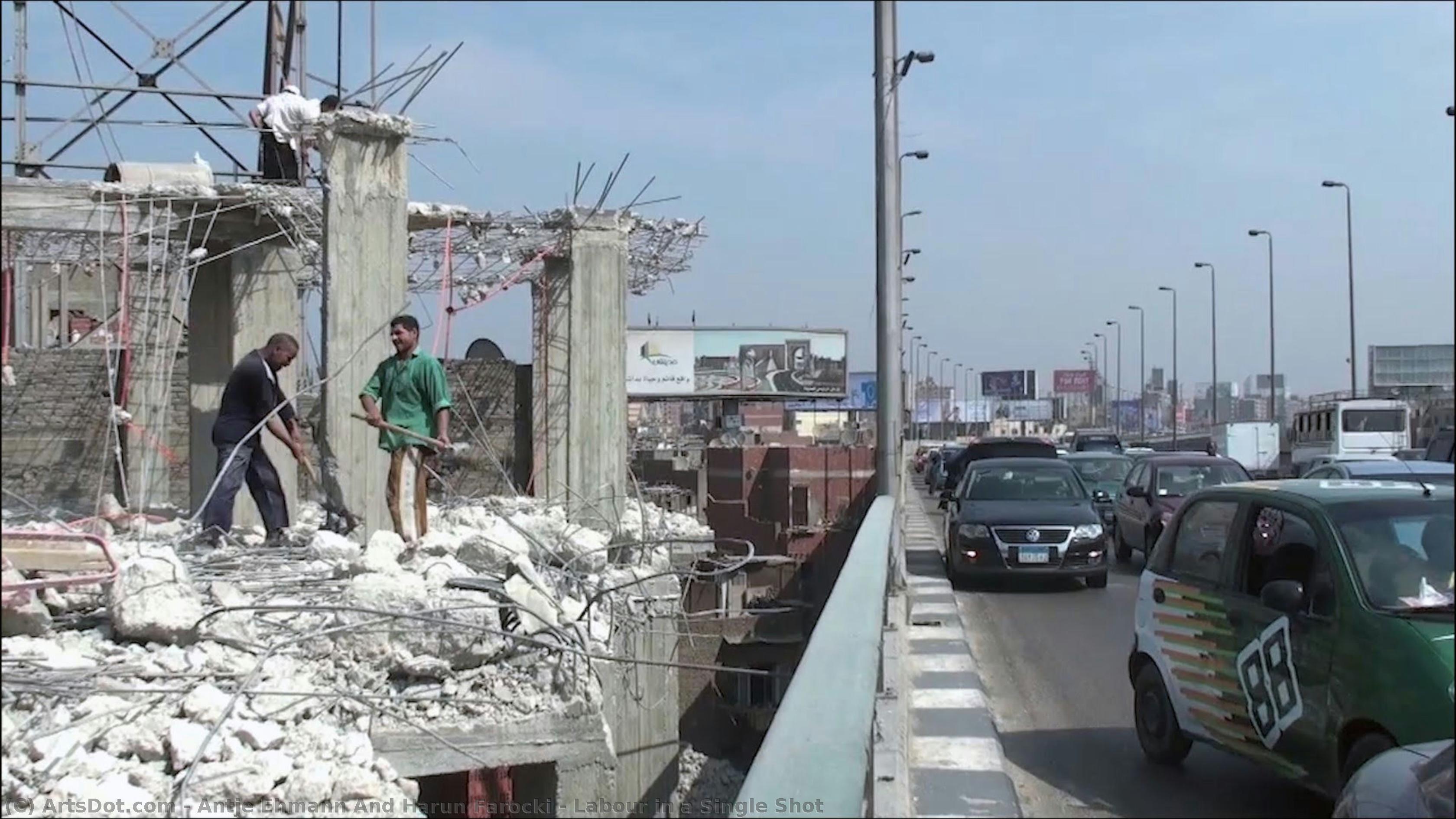
Labour in a Single Shot


 詳細を見る
詳細を見る
ジークレー/アートプリント
迅速な制作と多彩な仕上げオプションを備えた、ミュージアムクオリティのジークレーまたはキャンバスプリント。 ( 手描きの絵画を購入 画像を購入)




































作品のオリジナル比率に合わせた、当店の規定サイズからお選びください。

特定のフレームやスペースに合わせて、ご自身でサイズを指定することも可能です。選択されたサイズが元の画像の比率と一致しない場合、作品をトリミングするか、鏡面反射または単色での塗りつぶしによって画像を拡張いたします。制作を開始する前に、ご確認用のデジタルモックアップをお送りいたします。
画面上のプレビューには、実際のトリミングや拡張は反映されませんのでご注意ください。最終的な構図を正確に確認できるのは、モックアップのみとなります。
カスタムサイズも承っておりますが、元の比率を維持するためには、あらかじめ用意されたリストからサイズを選択することをお勧めいたします。


 ガラスオプションは、110cm未満のサイズでのみご利用いただけます。

Labour in a Single Shot
ジークレー/アートプリント
複製画のサイズ
-


合計金額
$ 62
The Weight of Labor: Deconstructing Modernity Through ‘Labour in a Single Shot’
Antje Ehmann and Harun Farocki's “Labour in a Single Shot” isn’t merely a collection of short films; it’s a meticulously constructed, profoundly unsettling meditation on the nature of work itself. Born from a deceptively simple premise – filmmakers tasked with capturing one to two minutes of labor within a single shot, devoid of any cuts – this project exploded into a global phenomenon, yielding over 550 distinct videos that document the diverse and often brutal realities of contemporary employment. Farocki, a pioneer in operational image cinema, coupled his technical expertise with Ehmann’s curatorial vision to create an artwork that transcends traditional documentary filmmaking, forcing viewers to confront the hidden mechanics and emotional toll embedded within seemingly mundane activities.
The project's roots lie deep within cinematic history. Farocki deliberately referenced Lumière’s “Workers Leaving the Lumière Factory” (1895), a seminal early film that captured the nascent days of cinema. By imposing similar constraints – a single shot, no editing – on contemporary filmmakers across fifteen cities and five continents, he sought to strip away the seductive illusions of narrative and expose the raw, unvarnished truth of labor. This wasn’t about romanticizing or glorifying work; it was an interrogation, a deliberate attempt to reveal the underlying power dynamics and social conditions that shape our working lives.
A Global Tapestry of Faces and Spaces
What distinguishes “Labour in a Single Shot” is its astonishing breadth. The resulting videos offer a kaleidoscopic view of labor across cultures and industries – from textile factories in Bangladesh to construction sites in China, from call centers in India to shipping docks in Europe. Each film presents a fleeting moment captured with stark realism: the sweat-drenched brow of a seamstress, the weary hands of a dockworker, the vacant stare of an office employee. The visual language is deliberately unadorned; the camera often fixed, emphasizing the immediacy and intensity of the scene. This simplicity serves to amplify the emotional impact, forcing viewers to confront the human cost of production without the distraction of elaborate storytelling.
The project’s geographic diversity is equally compelling. The filmmakers weren't simply documenting work in developed nations; they ventured into some of the world’s most economically vulnerable regions, capturing scenes of precarious employment and often exploitative conditions. These images aren’t pretty or comforting; they are a direct challenge to our assumptions about progress and prosperity, revealing the dark underbelly of globalization.
Technique and Symbolism: The Language of Operational Image
Farocki's signature technique – operational image – is central to “Labour in a Single Shot.” This approach prioritizes the mechanics of filmmaking itself, emphasizing the process of capturing an image rather than its narrative content. By eliminating editing, he compels viewers to engage with each frame as a discrete unit, analyzing the composition, lighting, and movement within that single shot. The absence of cuts creates a sense of temporal compression, intensifying the feeling of immediacy and forcing us to confront the present moment.
The project is rich in symbolism. The constraint of “one shot” represents a deliberate rejection of traditional cinematic storytelling, suggesting that labor itself is often fragmented, repetitive, and devoid of narrative arc. The fixed camera positions can be interpreted as a form of surveillance, reflecting the constant monitoring and control inherent in many workplaces. Furthermore, the diverse range of subjects – from factory workers to service providers – highlights the universality of labor as a fundamental aspect of human existence.
A Legacy of Critical Inquiry
“Labour in a Single Shot” remains a profoundly relevant artwork today, particularly in an era defined by automation, precarious employment, and widening economic inequality. It’s not simply a historical document; it's a call to action, urging us to critically examine the systems that shape our working lives and to demand greater justice and dignity for all laborers. The project’s legacy extends beyond its visual impact, inspiring countless artists and filmmakers to explore the complex relationship between labor, technology, and society. Reproductions of these powerful images offer a potent reminder of the human cost of progress and the urgent need for social change.
関連作品
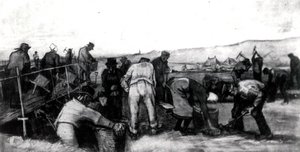
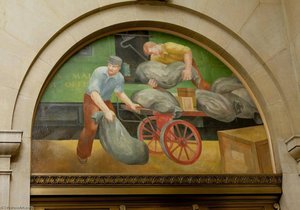
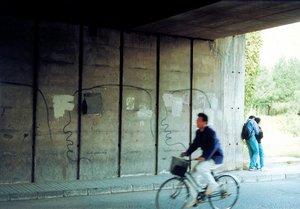
アーティストの略歴
Antje Ehmann & Harun Farocki: A Collaborative Vision of Image and Reality
The artistic partnership between Antje Ehmann and Harun Farocki, a German filmmaker and theorist who tragically passed away in 2014, represents a profoundly unique and intellectually rigorous approach to visual media. Their work, spanning decades of experimentation and critical engagement with the nature of film, photography, and increasingly, digital technologies, continues to resonate today as it challenges viewers to reconsider their relationship with images and the systems that produce them. Born in Berlin – Ehmann in 1960 and Farocki in 1944 – their collaboration wasn’t simply a pairing of two artists; it was the convergence of distinct yet complementary perspectives, resulting in a body of work characterized by its unsettling honesty, meticulous detail, and unwavering commitment to exposing the underlying structures of power and perception.
Harun Farocki's early career laid the groundwork for this distinctive approach. Initially trained as a filmmaker, he quickly moved beyond conventional narrative storytelling, embracing experimental techniques and documentary forms that prioritized direct observation and critical analysis. Influenced by figures like Bertolt Brecht and Jean-Luc Godard, Farocki sought to use film not merely to represent reality but to actively interrogate it – to reveal the ideological forces shaping our understanding of the world. This commitment to deconstruction and critique became a cornerstone of his work, informing every aspect of his filmmaking process. Ehmann’s background as an artist and curator brought a crucial element of contextualization and critical engagement to their collaborative efforts, ensuring that their projects were not simply aesthetic exercises but rather deeply rooted in social and political concerns.
The ‘Labour in a Single Shot’ Project: A Global Exploration
Perhaps the most significant manifestation of Ehmann and Farocki's collaborative vision is the “Labour in a Single Shot” project, initiated in 2011 and culminating in a vast archive of over 550 short films. This ambitious undertaking involved organizing workshops around the world where participants – often individuals directly engaged in labor – were tasked with creating concise videos capturing their work. The deceptively simple premise—to distill the essence of a job into a single, unbroken shot—yielded extraordinary results. As documented by Gregory H. Williams and colleagues in “Critical Perspectives on Antje Ehmann and Harun Farocki’s Global Video Project,” the project was conceived as an extension of the historical tradition of left-wing educational workshops, aiming to empower individuals through direct engagement with visual media.
The resulting films are not polished documentaries; they are raw, immediate glimpses into the realities of work in the 21st century – from demolition sites and factories to agricultural fields and construction zones. The project’s power lies in its ability to strip away romanticized notions of labor, presenting instead a stark and often unsettling portrait of repetitive tasks, precarious conditions, and the dehumanizing effects of industrialization. The work was showcased internationally, including at the Venice Biennale, cementing its place as a landmark achievement in contemporary art and documentary filmmaking. The project’s open-source distribution further amplified its impact, ensuring that these powerful visual testimonies would be accessible to a global audience.
Aesthetic Style & Critical Themes
Ehmann and Farocki's aesthetic is characterized by a deliberate rejection of conventional cinematic techniques. They frequently employed static camera positions, minimal editing, and a focus on close-ups, forcing viewers to confront the details of labor with an almost unbearable intensity. Sound design played a crucial role, often utilizing industrial noises and ambient sounds to amplify the sense of immediacy and disorientation. Their films are not designed to entertain; they are intended to provoke thought and challenge assumptions about work, technology, and the human condition.
Central themes explored in their work include the relationship between image and reality, the power of visual representation, and the pervasive influence of capitalism on contemporary society. Farocki’s concept of “operational images” – images that function as direct instructions or commands – highlights the way in which film can be used to manipulate perception and control behavior. Ehmann's curatorial work consistently underscored this critical perspective, ensuring that their projects engaged with pressing social and political issues.
Legacy & Influence
The impact of Antje Ehmann and Harun Farocki’s collaborative work extends far beyond the realm of art history. Their films have influenced a generation of filmmakers, artists, and theorists who are grappling with the challenges of the digital age. Farocki's pioneering use of video as a tool for critical analysis paved the way for new forms of documentary filmmaking and media activism. Ehmann’s commitment to social engagement and her ability to translate complex theoretical ideas into accessible visual narratives have made her a leading figure in contemporary art curation.
Their legacy continues through the “Labour in a Single Shot” archive, which serves as a valuable resource for researchers, educators, and anyone interested in understanding the realities of work in the 21st century. The collaborative spirit that defined their partnership—a fusion of artistic vision and critical inquiry—remains a powerful model for creative engagement with the world around us.

antje ehmann and harun farocki
1960 - 2014 , Germany
基本情報
- Artistic Movement Or Style: Collaborative film/art
- Artists Or Movements Influenced By This Artist:
- Kodwo Eshun
- Stuart Comer
- Artists Who Influenced This Artist:
- Bertolt Brecht
- Jean-Luc Godard
- Date Of Birth: 1960 Berlin Germany
- Date Of Death: 2014
- Full Name: antje ehmann & harun farocki
- Nationality: German
- Notable Artworks:
- Labour in a Single Shot
- The leading role
- Place Of Birth: Berlin Germany
関連記事
Echoes of Rural Life: Nostalgia, Labor & Identity in Art History
Explore the rich history of rural life in art! Discover how Realism captured labor & identity through masterpieces by Van Gogh, Millet & more. Expert analysis for collectors and enthusiasts.
Jean-François Millet: Realism, Rural Life & the Poetic Depiction of Labor
Explore the life & work of Jean-François Millet, a founder of Realism. Discover his poignant depictions of rural France, iconic paintings like 'The Angelus,' and lasting influence on art history. Learn more at ArtsDot.
American Regionalism: A Crucible of Identity – Exploring Themes of Place, Labor & Social Commentary
Explore American Regionalism's powerful depiction of the American heartland during the Great Depression. Discover Grant Wood, Thomas Hart Benton & more. Expert analysis & high-quality art reproductions at ArtsDot.

ArtsDot.com FAQ:複数写真の融合による唯一無二の傑作制作 – 富裕層コレクターのためのガイド
ArtsDot.comでは、複数写真の融合による唯一無二のアート作品を制作いたします。富裕層コレクター様へ、専門家がお客様の想いを形にするパーソナライズされたアート体験を提供。高品質な油絵複製、肖像画制作、美術品鑑定など、特別なサービスをご用意しております。
American Realism's Defining Works: 10 Masterpieces for Your Home
Explore 10 defining American Realism masterpieces – Hopper, Homer & more. Discover the stories behind these iconic paintings and bring timeless art to your home with ArtsDot's museum-quality reproductions. Explore the full collection online.