

 プレビュー
プレビュー
 プリントを購入
 シェアする
シェアする シェアする
シェアする
 詳細を見る
詳細を見る

 ダウンロード
 似ている作品
 X線調査
X線調査 スライドショー
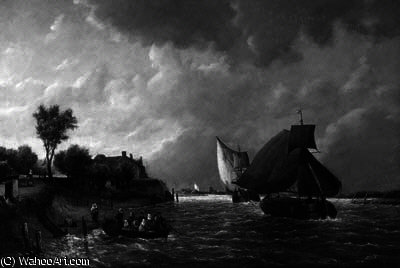
A river landscape with barges at full sail and townsfolk in the foreground

 詳細を見る
詳細を見る




































作品のオリジナル比率に合わせた、当店の規定サイズからお選びください。

特定のフレームやスペースに合わせて、ご希望のサイズをご入力いただけます。選択されたサイズが元の画像の比率と異なる場合、アートワークをトリミングするか、手描きで要素を追加して絵画を拡張いたします。デジタルモックアップ を制作し、制作開始前にご確認(承認)をいただきます。
画面上のプレビューは、実際のトリミングや拡張を正確に反映しているものではありません。最終的な構図は、モックアップによってのみ正確にご確認いただけます。
カスタムサイズもご利用いただけますが、元の比率を維持するためには、あらかじめ用意されたリストからサイズを選択することをお勧めいたします。
ご注文後、ArtsDot.com チームより詳細な指示をお送りするとともに、仕上がりイメージ(モックアップ)をご提供いたします。


 ガラスオプションは、110cm未満のサイズでのみご利用いただけます。

A river landscape with barges at full sail and townsfolk in the foreground
複製技法
複製画のサイズ
-


合計金額
$ 388
関連作品
アーティストの略歴
Early Life and Artistic Beginnings
Anthonie Waldorp, born Antoine de Saaijer Waldorp on March 28th, 1803, in The Hague, Netherlands, emerged from a family deeply intertwined with the burgeoning Dutch art world. His father, Abel de Saaijer Waldorp, served as keeper of the National Art Gallery—a position that placed young Anthonie directly within a sphere of artistic inspiration during a period when the nation was actively reorganizing its collections after the Napoleonic era. This early exposure to masterpieces undoubtedly sparked his initial fascination with visual expression. Though details regarding his immediate family’s direct involvement in art remain scarce, the household's connection to gallery operations provided invaluable access to both decorative and curatorial practices common within 19th-century artistic circles.
The Hague itself was a vibrant cultural hub during Waldorp’s formative years—the political seat of the Dutch monarchy and government attracted artists, collectors, and institutions that solidified its status as a center for Dutch creativity. Initially, Waldorp embarked on an apprenticeship with Joannes Breckenheimer Jr., a well-known stage scenery painter in The Hague. This foundational training instilled in him a keen understanding of composition, perspective, and the dramatic use of light—skills he would later translate into his fine art endeavors.
Transition to Landscape Painting & Early Influences
Shortly after reaching his twenty-third year, Waldorp committed himself fully to a career as a painter. He quickly distinguished himself as one of the precursors to the celebrated Hague School, a movement known for its realistic depictions of Dutch landscapes and seascapes. His early work reflected this transition, initially focusing on stage sceneries reminiscent of his grandfather’s profession before evolving towards domestic interiors and portraits—often depicting figures in 17th-century attire. However, it was his eventual specialization in landscapes, river scenes, and marine paintings that truly defined his artistic trajectory.
A pivotal moment in Waldorp's development came with a journey through France, Belgium, and Germany in 1833 alongside fellow artist Wijnand Nuyen. This expedition exposed him to diverse artistic styles and broadened his perspective on landscape painting. He began to blend romantic idealism with meticulous observational detail, creating compositions that resonated with contemporary audiences. During this period, Waldorp also took on the role of tutor, sharing his knowledge with aspiring artists such as C.P. 't Hoen, J.C. Hofman, C. Rochussen, and Jan Hendrik Weissenbruch—contributing to the growth of landscape painting within the Netherlands.
Mature Style & International Recognition
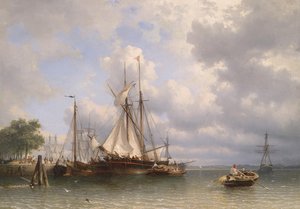
Waldorp’s mature style was characterized by serene seascapes and river views that captured the subtle nuances of light and atmosphere. His paintings often featured calm waters, billowing clouds, and meticulously rendered ships—evoking a sense of tranquility and harmony. He wasn't afraid to experiment with lithography as well, expanding his artistic reach beyond traditional oil painting.
His dedication to his craft yielded significant international recognition. Waldorp’s works found favor among the royal courts of Germany, the Netherlands, and France—a testament to their aesthetic appeal and technical skill. This acclaim solidified his position as a leading figure in Dutch landscape painting and paved the way for further artistic exploration.
Legacy & Historical Significance
In 1857, Waldorp relocated to Amsterdam, joining the prestigious Royal Academy and continuing to refine his technique. He received numerous accolades throughout his career, including appointments as a Knight of the Order of Leopold by the Belgian king in 1845, a Knight in the Order of the Dutch Lion in 1847, and a Knight in the Order of the Oak Crown in 1849. His contributions to the art world were further acknowledged through streets named in his honor within both The Hague and Amsterdam.
Anthonie Waldorp’s significance lies not only in the beauty of his paintings but also in his role as a bridge between neoclassical traditions and the emerging realism of the Hague School. He paved the way for future generations of Dutch landscape painters, inspiring them to embrace observational detail while maintaining a sense of romantic idealism. His serene seascapes and river views continue to captivate audiences today, offering a glimpse into the tranquil beauty of 19th-century Netherlands.
antoine de saaijer waldorp
1803 - 1866 , Netherlands
基本情報
- Artistic Movement Or Style: Hague School forerunner
- Artists Or Movements Influenced By This Artist: ['Hague School']
- Artists Who Influenced This Artist:
- Joannes Breckenheimer Jr.
- Andreas Schelfhout
- Date Of Birth: March 28, 1803
- Date Of Death: October 12, 1866
- Full Name: Anthonie Waldorp
- Nationality: Dutch
- Notable Artworks:
- River landscapes
- Seascapes
- Portraits
- Interiors
- Place Of Birth: The Hague, Netherlands
関連記事

White on Canvas: 10 Masterpieces & Timeless Elegance for Your Home Decor
Explore 10 iconic white paintings by Monet, Whistler & Rothko! Discover the stories behind these serene masterpieces and their impact on art history. Find museum-quality reproductions for your home decor at .

配送と返品
APS は、博物館級のケア、完全な追跡、そして30日間の返金保証を備えた、世界規模のアート輸送の専門サービスを提供します。関税サポートから Priority Production まで、透明性の高いサービス、安全な梱包、そしてコレクター、デザイナー、ギャラリー向けの信頼性の高い配送をお届けします。

Dark Masterpieces: 10 Iconic Paintings Dominated by Black Tones |
Explore 10 iconic paintings dominated by black tones, from Rembrandt’s chiaroscuro to Goya's dark expressions. Discover the stories behind these masterpieces & find museum-quality art reproductions for your home at .

ロマン派ランドスケープ:時代を彩る巨匠の10選|アートとインテリアの世界
ロマン派絵画の時代を彩る10選。巨匠たちの風景が織りなす感動の世界へ。ターナー、ルーベンスなど、名作の裏話と高精細複製でアートをお部屋に。ArtsDot.comで至福のアート体験を。

Evocations of Place: A Historical Journey Through Landscape Art
Explore the rich history of landscape art with ArtsDot. Discover renowned artists, movements like Impressionism & Romanticism, and expert guidance for collecting timeless pieces. Find your perfect serene escape today!

