

 プレビュー
プレビュー
 プリントを購入
 シェアする
シェアする シェアする
シェアする
 詳細を見る
詳細を見る

 ダウンロード
 似ている作品
 X線調査
X線調査 スライドショー
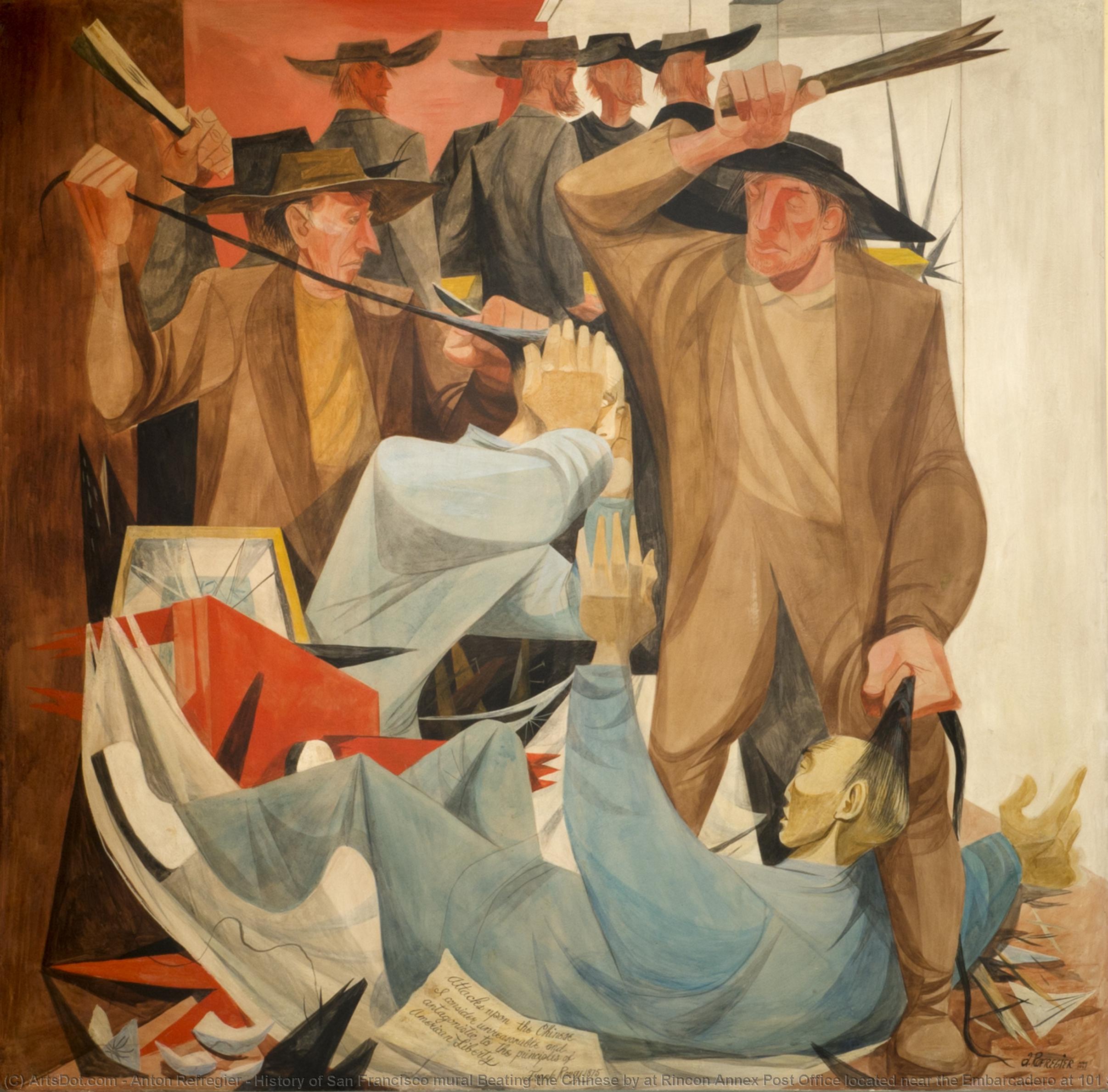
History of San Francisco mural Beating the Chinese by at Rincon Annex Post Office located near the Embarcadero at 101 Spear Street, San Francisco, California


 詳細を見る
詳細を見る




P118B $10

P118H $10

P118W $10

P438Z $10

P508JH $12

P508YH $12

P805H $10

P805Z $10

P919BZ $10

P919G $10

P919XJ $10

P959ZH $10

P968JZ $12

W106C $8

W218G $10

W218JH $8

W218Y $10

W307PJ $10

W316G $10

W316PJ $8

W316Y $10

W398PJ $8

W4111J $10

W500HY $15

W500JH $15

W692G $12

W849H $8

W940BG $15

W953PJ $8




作品のオリジナル比率に合わせた、当店の規定サイズからお選びください。

特定のフレームやスペースに合わせて、ご希望のサイズをご入力いただけます。選択されたサイズが元の画像の比率と異なる場合、アートワークをトリミングするか、手描きで要素を追加して絵画を拡張いたします。デジタルモックアップ を制作し、制作開始前にご確認(承認)をいただきます。
画面上のプレビューは、実際のトリミングや拡張を正確に反映しているものではありません。最終的な構図は、モックアップによってのみ正確にご確認いただけます。
カスタムサイズもご利用いただけますが、元の比率を維持するためには、あらかじめ用意されたリストからサイズを選択することをお勧めいたします。
ご注文後、ArtsDot.com チームより詳細な指示をお送りするとともに、仕上がりイメージ(モックアップ)をご提供いたします。


 ガラスオプションは、110cm未満のサイズでのみご利用いただけます。

History of San Francisco mural Beating the Chinese by at Rincon Annex Post Office located near the Embarcadero at 101 Spear Street, San Francisco, California
複製技法
複製画のサイズ
-


合計金額
$ 263
作品解説
A Chronicle in Color: Unveiling Refregier’s “History of San Francisco”
Anton Refregier's monumental mural, "History of San Francisco," residing within the Rincon Annex Post Office near Fisherman’s Wharf, isn’t merely a depiction of a city; it’s a visceral narrative etched onto plaster and casein tempera. Completed between 1940 and 1948 during the height of the Works Progress Administration, this sprawling artwork offers a starkly honest – and often unsettling – portrayal of San Francisco's past, specifically its fraught relationship with the Chinese immigrant community. The mural’s scale—spanning over 2,457 square feet—demands attention, pulling viewers into a dramatic sequence of events that resonate far beyond a simple historical record.
Refregier’s style firmly anchors itself within the tenets of social realism, a movement dedicated to portraying everyday life and societal issues with unflinching accuracy. He eschews romanticism or idealization, instead presenting scenes of struggle, displacement, and violence with a directness that can be profoundly uncomfortable. The color palette is deliberately muted – predominantly browns, grays, and ochres—reflecting the gritty reality of the depicted era. However, strategically placed bursts of red and yellow punctuate the composition, drawing attention to moments of intense conflict or symbolic significance. This restrained yet powerful use of color contributes significantly to the mural’s overall emotional impact.
The Shadowed Past: A Confrontation with History
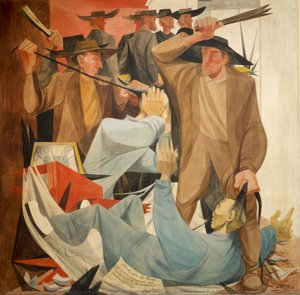
Central to the mural's power is its unflinching depiction of the 1877 anti-Chinese Sand Lot riots, a pivotal and shameful chapter in San Francisco’s history. The scene portrays a brutal assault on Chinese immigrants by a mob of white men wielding sticks and other makeshift weapons. While the exact number of victims remains disputed, the mural powerfully conveys the atmosphere of terror and injustice that permeated this event. Refregier doesn't shy away from depicting the violence; the figures are rendered with a raw intensity, capturing the desperation and brutality of the attack.
Beyond this singular, harrowing scene, the mural unfolds across twenty-seven panels, charting key moments in San Francisco’s development – from early Spanish settlements to labor disputes and social unrest. The inclusion of details like a bottle, a bowl, and two books within the composition subtly suggests the everyday lives disrupted by these historical events, grounding the narrative in human experience. The artist's choice to include these seemingly mundane objects serves as a poignant reminder that history isn’t just about grand political movements; it’s also about the quiet struggles of ordinary people.
Symbolism and Social Commentary
Refregier masterfully employs symbolism throughout the mural, layering meaning beneath the surface narrative. The positioning of figures within each panel—some standing as aggressors, others lying defeated—reflects a broader commentary on power dynamics and social inequality. The inclusion of objects like the bottle and bowl can be interpreted as symbols of cultural exchange and the challenges faced by immigrant communities attempting to maintain their traditions in a new land. The very act of depicting such a controversial event within a public space underscores the mural’s role as a form of historical reckoning, prompting viewers to confront uncomfortable truths about San Francisco's past.
A Legacy of Witness: Reproduction and Interpretation
Created during a period of immense social upheaval, “History of San Francisco” remains a potent symbol of both resilience and injustice. Today, reproductions offer an accessible way to engage with this powerful artwork, allowing viewers to contemplate its complex themes and historical context. When selecting a reproduction, consider the quality of materials used – a faithful rendering will capture the mural’s rich color palette and textural details. More importantly, remember that Refregier's work is not simply a historical record; it’s a call to reflection—a reminder of the importance of acknowledging difficult truths and striving for a more just future.
Resources:
関連作品





アーティストの略歴
A Visionary of Social Realism and San Francisco’s History
Anton Refregier stands as a monumental figure in the tapestry of American art history, a painter whose brushstrokes captured the very soul and struggle of a nation in transition. Born in Moscow on March 20, 1905, Refregier’s journey was one of profound migration and cultural synthesis. Emigrating to the United States in 1920, he brought with him a perspective shaped by the vastness of his origins and a hunger for the artistic possibilities of his adopted home. His early years were defined by a rigorous pursuit of mastery, beginning with a transformative scholarship to the Rhode Island School of Design in 1921. This formal training provided him with a classical foundation, yet it was his later encounters with the avant-garde that would truly ignite his creative spirit.
The trajectory of Refregier’s career was marked by an extraordinary ability to blend meticulous craftsmanship with the raw, emotive power of modern movements. In New York City during the mid-1920s, he honed a delicate skill for replicating the works of masters such as François Boucher and Jean-Honoré Fragonard, an endeavor that instilled in him a deep reverence for artistic heritage. However, his 1927 travels to Munich introduced him to the burgeoning influences of Abstract Expressionism under the legendary mentorship of Hans Hofmann. This exposure to more fluid, expressive forms allowed Refregier to expand his stylistic horizons, ensuring that even his most grounded social realist works possessed a dynamic, modern vitality.
The Pulse of the Great Depression and the WPA
As the shadows of the Great Depression descended upon America, Refregier’s art found its true purpose. Living within the Mount Airy Artists' Colony in Croton-on-Hudson, he became a witness to the widespread hardships of the era. This period of economic upheaval deeply informed his humanist philosophy; he famously observed that as people grew poorer in possessions, they became poorer in their ability to enjoy life. This empathy for the common man became the heartbeat of his work. Through the auspices of the Works Progress Administration (WPA) Federal Art Project, Refregier found a platform to translate these societal struggles into large-scale narratives that demanded public attention.
His involvement with the WPA allowed him to move beyond the canvas and onto the walls of the American landscape. His work during this time was characterized by Social Realism, a movement dedicated to portraying everyday life and systemic injustices with unflinching accuracy. He eschewed the comforts of romanticized imagery, choosing instead to present scenes of labor, displacement, and community strength. This commitment to truth-telling through art solidified his reputation as an artist who did not merely observe history but actively participated in its documentation.
The Legacy of the Rincon Center Murals
Perhaps Refregier’s most enduring achievement is the monumental mural series, The History of San Francisco. Commissioned in 1941 and executed between 1940 and 1948, this sprawling epic consists of twenty-seven panels located within the Rincon Annex Post Office. Using casein tempera on white gesso over plaster, Refregier created a visceral narrative that spans centuries of the city's complex evolution. The scale of the work—covering over 2,457 square feet—is matched only by its emotional depth and historical bravery.
The murals are celebrated for their stark honesty, particularly in their depiction of San Francisco’s fraught relationship with marginalized communities. One of the most poignant and unsettling panels portrays the 1877 anti-Chinese Sand Lot riots, capturing a moment of intense violence and injustice with a muted palette of browns, grays, and ochres. Yet, within this grit, Refregier utilized strategic bursts of red and yellow to punctuate moments of profound symbolic significance. This series was not without controversy; in the 1950s, it faced congressional scrutiny over themes deemed inconsistent with certain American ideals, yet the murals survived as a testament to the artist's courage.
Refregier’s life and work represent a bridge between the classical traditions of Europe and the gritty, democratic spirit of mid-century America. His ability to weave together personal experience, historical record, and social critique ensures that his legacy remains as vibrant and essential today as it was during the height of the WPA era.
Anton Refregier
1905 - 1979
基本情報
- Artistic Movement Or Style: Social realism
- Artists Or Movements Influenced By This Artist: ['Abstract Expressionism']
- Artists Who Influenced This Artist: ['Hans Hofmann']
- Date Of Birth: 1905
- Date Of Death: 1979
- Full Name: Anton Refregier
- Nationality: Russian
- Notable Artworks: ['The History of California mural']
- Place Of Birth: Moscow
関連記事

Elevating Interiors: How Murals are Redefining Kitchens and Bathrooms
Transform your kitchen & bathroom with stunning murals! Explore design trends, durable materials & expert advice. Elevate your interiors with 's bespoke mural solutions.

ゴヤ傑作25選:スペインの魂を揺さぶる、深遠な芸術の世界 | ArtsDot
ゴヤ傑作25選:ロマン主義を代表するスペインの巨匠、フランシスコ・デ・ゴヤの世界へ。黒衣の女からマハまで、魂を揺さぶる絵画の物語と技法を紐解きます。ArtsDotで高品質なアートレプリカを見つけ、インテリアに深みと風格を。今すぐコレクションをご覧ください。

現代ホテルの壁を彩るムラルの潮流:ジャングル風景から金箔幾何学模様まで、空間デザインの最新トレンド
現代ホテルの壁を彩るムラルの最新トレンドを徹底解説。ジャングル風景から金箔幾何学模様まで、空間デザインのプロが選ぶアートコンサルティング情報や事例をご紹介。ArtsDotで理想のホテル空間を実現。

ホテル空間の基盤:壁画デザインが演出するテーマ性と印象形成 – 内装における総合的研究
ホテル空間の基盤となる壁画デザインについて、歴史的背景から現代事例、顧客体験への影響までを網羅的に解説。テーマ設定や色彩計画など、成功のための戦略と技術革新をご紹介します。
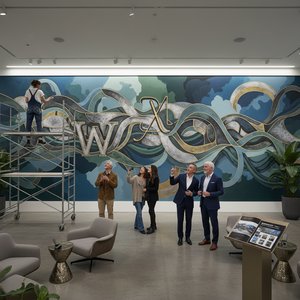
ブランドアイデンティティを創造する:カスタム壁画が顧客体験を向上させる視覚的戦略
ホテルデザインの壁画活用戦略を徹底解説。ブランドアイデンティティ向上、顧客体験価値の最大化を実現します。プロのアートコンサルティングで最適な壁画制作をサポート。事例や価格もご紹介。

