

 プレビュー
プレビュー
 シェアする
シェアする シェアする
シェアする
 詳細を見る
詳細を見る

 ダウンロード
 似ている作品
 X線調査
X線調査 スライドショー
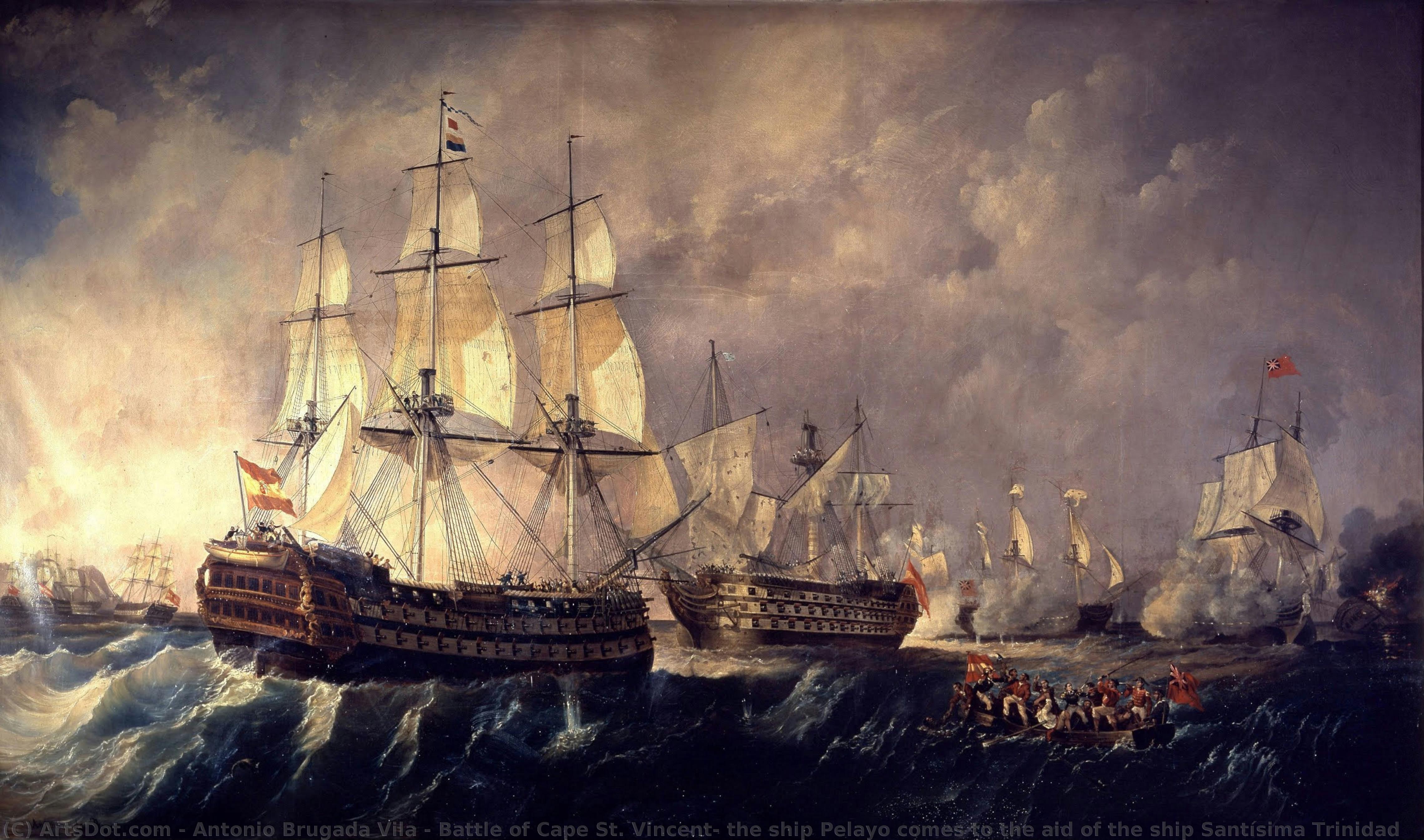
Battle of Cape St. Vincent: the ship Pelayo comes to the aid of the ship Santísima Trinidad

 詳細を見る
詳細を見る
ジークレー/アートプリント
迅速な制作と多彩な仕上げオプションを備えた、ミュージアムクオリティのジークレーまたはキャンバスプリント。 ( 手描きの絵画を購入 画像を購入)




































作品のオリジナル比率に合わせた、当店の規定サイズからお選びください。

特定のフレームやスペースに合わせて、ご自身でサイズを指定することも可能です。選択されたサイズが元の画像の比率と一致しない場合、作品をトリミングするか、鏡面反射または単色での塗りつぶしによって画像を拡張いたします。制作を開始する前に、ご確認用のデジタルモックアップをお送りいたします。
画面上のプレビューには、実際のトリミングや拡張は反映されませんのでご注意ください。最終的な構図を正確に確認できるのは、モックアップのみとなります。
カスタムサイズも承っておりますが、元の比率を維持するためには、あらかじめ用意されたリストからサイズを選択することをお勧めいたします。


 ガラスオプションは、110cm未満のサイズでのみご利用いただけます。

Battle of Cape St. Vincent: the ship Pelayo comes to the aid of the ship Santísima Trinidad
ジークレー/アートプリント
複製画のサイズ
-


合計金額
$ 62
関連作品










アーティストの略歴
The Dramatic Horizons of Antonio Brugada Vila
In the annals of nineteenth-century Spanish art, few names evoke the turbulent beauty of the Atlantic as poignantly as Antonio Brugada Vila. Born in Madrid in 1804, Brugada’s life was a journey shaped by political upheaval and profound artistic encounters. His early years were defined by rigorous academic discipline at the prestigious School of Fine Arts of San Fernando in Madrid, where he studied between 1818 and 1821. This foundational training provided him with the technical mastery required to capture the raw, elemental power of nature. However, his path was not merely one of quiet study; from 1820 to 1823, Brugada served within the National Military of Madrid, an experience that likely instilled in him a sense of discipline and a keen eye for the structural grandeur found in both landscapes and maritime scenes.
The trajectory of his life shifted dramatically following the political shifts of 1823, when he sought asylum in France. Settling in Bordeaux, Brugada entered a transformative period of his career, characterized by his proximity to one of history's most formidable artistic shadows: Francisco Goya. This encounter was more than a mere meeting of contemporaries; Brugada played a vital role in the scholarly preservation of art history, assisting in the cataloging and identification of various mythological figures within Goya’s haunting Black Paintings series. This connection to the Spanish Romantic tradition deeply informed his sensibilities, infusing his later works with a sense of psychological depth and dramatic tension.
A Mastery of Sea and Storm
As Brugada matured as an artist, he moved away from the traditional constraints of his early training to embrace a style that was uniquely his own. He became a master of the seascape, a genre that allowed him to explore the intersection of light, motion, and chaos. His brushwork was often characterized by sweeping, energetic strokes and a bold use of color, designed to evoke the salt spray and the churning depths of the ocean. Inspired by his time spent observing the rugged coastlines, his paintings frequently feature stormy seas and dramatic, windswept cliffs that seem to vibrate with life.
His technical prowess was most evident in his meticulous attention to detail, particularly when rendering the complex rigging of ships or the delicate play of light on coastal sands. Some of his most celebrated contributions to the art world include:
- View of Ciboure: A breathtaking oil on canvas that showcases his ability to capture atmospheric perspective and the serene yet powerful presence of the sea, currently held within the Gipuzkoa Heritage Collection Centre.
- Coastal Narratives: Works that utilize dramatic lighting to create a sense of movement, making the viewer feel as though they are standing upon the very edge of a precipice.
Legacy and Historical Significance
The legacy of Antonio Brugada Vila resides in his ability to translate the ephemeral nature of the sea into permanent, emotive compositions. While he is often categorized within the Romantic movement, his work transcends simple period labeling through its intense focus on the elemental struggle between man and nature. He did not merely paint landscapes; he painted the very soul of the maritime experience.
Throughout the nineteenth century, Brugada stood as a bridge between the classical traditions of Madrid and the burgeoning Romanticism of France. His contributions to the study of Goya’s work ensure his place in the historical record as both a creator and a custodian of Spanish heritage. Today, his dramatic seascapes continue to resonate with modern audiences, offering a window into a period where art was used to confront the sublime, terrifying, and beautiful mysteries of the natural world.
antonio brugada vila
1804 - 1863 , Spain
基本情報
- Artistic Movement Or Style: Romanticism; dramatic seascapes
- Artists Who Influenced This Artist: ['Francisco Goya']
- Date Of Birth: 1804
- Date Of Death: 1863
- Full Name: Antonio Brugada Vila
- Nationality: Spanish
- Notable Artworks: ['View of Ciboure']
- Place Of Birth: Madrid, Spain

