

 プレビュー
プレビュー
 シェアする
シェアする シェアする
シェアする
 詳細を見る
詳細を見る

 ダウンロード
 似ている作品
 X線調査
X線調査 スライドショー
 統計情報
統計情報Harpsichord


 詳細を見る
詳細を見る
オンラインプレビューをはるかに凌ぐ、高解像度で鮮明なデジタル画像をご購入いただけます。
各ファイルは、社内の専門家が高度なツールと熟練した手作業によるレタッチを用いて、細心の注意を払って準備されています。すべての画像において、卓越した鮮明度、正確な色彩再現性、そして繊細なディテールを保証いたします。
最終ファイルは、プロフェッショナルな編集・印刷環境ですぐにご利用いただけるよう最適化された状態で、72時間以内にメールにてお届けいたします。これは、一流のデザインスタジオ、出版社、ギャラリーから信頼されているものと同等の品質です。
デジタルアート
個人での鑑賞、印刷、クリエイティブなプロジェクト用に、高解像度ファイルをダウンロードできます。 ( プリント版に切り替え 手描きの絵画を購入)
デジタル画像のご注文に付随する特典
高品質なデジタル画像配信を、確かな品質で。
ArtsDot.com を選ぶことは、単に画像を手に入れることではありません。それは、プロの手によって精密に仕上げられ、満足保証が付いた高品質なデジタルアートワークを受け取ることを意味します。ご注文いただいた際に自動的に付随する内容は、以下の通りです:

メールですぐにお届け
ご注文から72時間以内に、高解像度のデジタル画像ファイルがメールでお手元に届きます。すぐにそのままご利用いただけます。

AI技術で最適化されたデジタルファイル
お客様の作品は、高度なAIツールと専門家による手作業の編集を組み合わせてプロフェッショナルに最適化されており、細部のディテール、鮮明さ、そして正確な色再現性を最大限に引き出しています。

一生涯無料の再送サービス
ファイルを誤って削除したり、紛失してしまったりしましたか?ご安心ください。いつでも無料で再送いたします。

輸入手数料は一切かかりません
関税や手数料、配送料を気にすることなく、お気に入りのアートワークをすぐにお楽しみいただけます。デジタルダウンロードは常に免税です。

色彩再現の保証
プロ仕様のツールとカラーマネジメント技術を用いることで、デジタル画像が元の色を最大限に忠実に再現することを保証いたします。

100日間満足保証
ご購入いただいたデジタル画像にご満足いただけない場合は、100日以内であれば、理由を問わず修正または100%の返金対応をさせていただきます。

100% 返金保証
ご満足いただけない場合は、デジタルファイルを受け取ってから100日以内であれば、理由を問わず全額返金いたします。

まとめ買い割引
3枚購入で10%OFF - 5枚購入で15%OFF - 10枚以上購入で20%OFF。クリエイティブなプロジェクト、ギャラリー、エージェンシーに最適です。
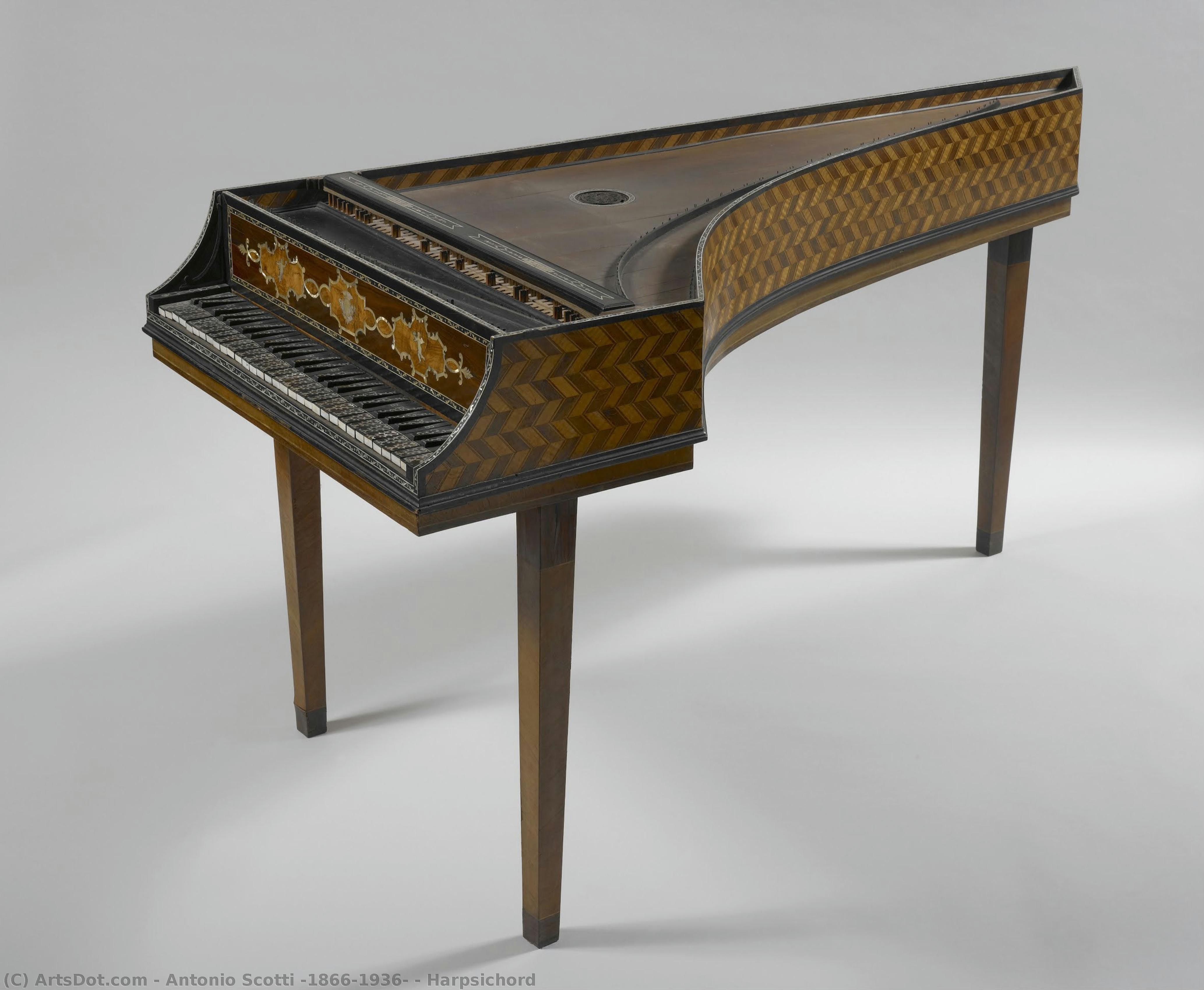
A Symphony in Wood and Ivory: Antonio Scotti’s Harpsichord
The harpsichord stands as an emblem of Baroque elegance—a testament to meticulous craftsmanship and a conduit for musical expression that transcends time. This particular instrument, attributed to the Milanese maestro Antonio Scotti (1866-1936), embodies the spirit of its era with breathtaking detail, inviting contemplation on both its artistic merit and its place within the broader history of music. Its presence commands attention not merely as an object of beauty but as a tangible link to a period defined by opulent ornamentation and intellectual fervor.The Instrument’s Anatomy: A Celebration of Marquetry
At first glance, the harpsichord captivates with its rich visual vocabulary. The case itself is constructed from maple and walnut, meticulously joined in herringbone marquetry—a technique that elevates the wood grain into intricate geometric patterns. This masterful inlay extends seamlessly across the sides of the instrument, demonstrating a dedication to precision and artistry that speaks volumes about Scotti’s skill as a builder. But it's the nameboard – crafted from ebony, mother-of-pearl, and walnut burl – which truly proclaims its grandeur. The swirling patterns of walnut burl create an organic counterpoint to the polished sheen of mother-of-pearl, resulting in a harmonious blend of textures and colors that draws the eye inward. Furthermore, an ebony frame encircles the instrument’s perimeter, reinforcing its structural integrity while adding another layer of visual sophistication.A Delicate Balance: Ebony Jackrail and Palm Leaf Inlays
The harpsichord's interior is equally impressive. The ebony jackrail—the strip of wood that supports the jacks—is adorned with intricate mother-of-pearl inlay, mirroring the decorative motifs found on the nameboard. This painstaking detail underscores Scotti’s commitment to elevating every element of the instrument’s design. Perhaps most striking are the palm leaf inlays that embellish the instrument's profile – stylized representations of tropical foliage meticulously inlaid into the wood surface. These delicate patterns evoke images of lush gardens and serene landscapes, subtly hinting at the musical atmosphere intended for this instrument.The Keyboard: A Stylistic Echo of Baroque Ornamentation
While the keyboard itself doesn’t appear to be original—a fact that lends an air of scholarly intrigue—it adheres faithfully to the stylistic conventions of its time. The keys are ivory, reflecting the prevailing preference for luminous materials during the Baroque period. Their smooth surface and subtle sheen contribute to the instrument's overall aesthetic appeal, mirroring the polished surfaces characteristic of furniture and decorative arts from the era. The keyboard’s design embodies a broader preoccupation with symmetry and proportion—principles that underpinned much of Baroque artistic expression.A Legacy of Sound: Giovanni Antonio Scotti’s Contribution to Musical History
The attribution to Giovanni Antonio Scotti is significant, placing this harpsichord within the context of Milanese musical culture during the mid-18th century. Scotti was a prominent figure in his time—a composer and instrument maker who helped establish opera as a globally recognized art form. This particular harpsichord represents not only a masterpiece of craftsmanship but also a tangible embodiment of Scotti’s artistic vision, inviting listeners to imagine the music that once resonated from its strings. It stands as a poignant reminder of a bygone era—a time when beauty and intellect intertwined to create works of enduring artistic power.関連作品



作家の略歴
A Voice of Elegance and Dramatic Power
Antonio Scotti, born in the vibrant musical heart of Naples in 1866, stands as a monumental figure in the history of Italian opera—a baritone whose resonant voice captivated audiences across Europe and America for over three decades. More than just a singer, Scotti embodied the spirit of his era, representing a period defined by immense artistic ambition and refined musical sensibilities. His legacy resides not only in his impressive repertoire but also in his profound contribution to establishing opera as a globally recognized art form, bridging the gap between traditional Italian mastery and the burgeoning international stage.
Scotti’s formative years were deeply steeped in the rich musical traditions of his homeland. Encouraged by parents who were themselves musicians, he received an exceptional vocal education under the guidance of Esther Trifari-Paganini and Vincenzo Lombardi. These mentors instilled in him a rigorous understanding of technique and a deep sense of artistry, shaping him into an instrument of extraordinary power and beauty. His early performances at Malta’s Theatre Royal in 1889 marked the beginning of his ascent to fame, establishing him as a performer destined for greatness—a role he would inhabit with unparalleled distinction throughout his long career.
The International Stage and Operatic Mastery
The trajectory of Scotti's career was marked by a series of triumphs that solidified his reputation as a prodigious talent. His debut in Verdi’s Aida served as a powerful introduction to the operatic world, setting the stage for an extensive international tour. As he traveled through Spain, Portugal, Russia, and South America, Scotti did more than merely perform; he honed his skills and broadened his artistic perspective, enriching his repertoire with the diverse musical influences of the globe. A pivotal moment in his career arrived in 1898, when he debuted at the legendary La Scala in Milan with Verdi’s Falstaff, showcasing a versatility that would become synonymous with his name.
His ability to navigate the complexities of various operatic styles allowed him to master roles ranging from the dramatic intensity of Puccini’s Tosca to the nuanced characterizations in Mozart's Don Giovanni and Giordano’s Fedora. This mastery was not merely vocal but theatrical, as he possessed a rare ability to inhabit his characters with a dramatic presence that moved audiences to tears. His engagements at prestigious venues such as the Metropolitan Opera and Covent Garden cemented his position as one of the foremost singers of his generation, making him a household name in the world of classical music.
Legacy and Historical Significance
The historical significance of Antonio Scotti extends far beyond the notes he sang. He was a vital link in the evolution of the baritone repertoire, helping to define the standard for dramatic excellence in the late 19th and early 20th centuries. His career spanned an era of transition in opera, and his ability to maintain vocal prowess while embracing the changing demands of the stage ensured his enduring relevance. Even today, his recordings serve as a window into a bygone era of operatic grandeur, preserving the echoes of a voice that once commanded the world's greatest stages.
Reflecting on his life and achievements, several key elements define his impact:
- Vocal Pedigree: His training under masters like Trifari-Paganini provided the technical foundation for his legendary resonance.
- Global Reach: His tours through South America and Europe helped spread the influence of Italian operatic tradition worldwide.
- Repertoire Versatility: His success in roles from Verdi to Puccini demonstrated a rare ability to balance power with nuance.
- Cultural Iconography: He remains a symbol of the golden age of opera, representing the peak of vocal artistry and dramatic storytelling.

antonio scotti (1866-1936)
1866 - 1936 , Italy
プロフィール概要
- Artistic Movement Or Style: Opera Vocals
- Artists Or Movements Influenced By This Artist: ['Verdi']
- Artists Who Influenced This Artist:
- Esther Trifari-Paganini
- Vincenzo Lombardi
- Date Of Birth: January 25, 1866
- Date Of Death: February 26, 1936
- Full Name: Antonio Scottti
- Nationality: Italian
- Notable Artworks:
- La gioconda
- Madama Butterfly
- Carmen
- Place Of Birth: Naples, Italy