


 プレビュー
プレビュー
 プリントを購入
 シェアする
シェアする シェアする
シェアする
 詳細を見る
詳細を見る

 ダウンロード
 似ている作品
 X線調査
X線調査 スライドショー
Cocktails


 詳細を見る
詳細を見る




P118B $10

P118H $10

P118W $10

P438Z $10

P508JH $12

P508YH $12

P805H $10

P805Z $10

P919BZ $10

P919G $10

P919XJ $10

P959ZH $10

P968JZ $12

W106C $8

W218G $10

W218JH $8

W218Y $10

W307PJ $10

W316G $10

W316PJ $8

W316Y $10

W398PJ $8

W4111J $10

W500HY $15

W500JH $15

W692G $12

W849H $8

W940BG $15

W953PJ $8




作品のオリジナル比率に合わせた、当店の規定サイズからお選びください。

特定のフレームやスペースに合わせて、ご希望のサイズをご入力いただけます。選択されたサイズが元の画像の比率と異なる場合、アートワークをトリミングするか、手描きで要素を追加して絵画を拡張いたします。デジタルモックアップ を制作し、制作開始前にご確認(承認)をいただきます。
画面上のプレビューは、実際のトリミングや拡張を正確に反映しているものではありません。最終的な構図は、モックアップによってのみ正確にご確認いただけます。
カスタムサイズもご利用いただけますが、元の比率を維持するためには、あらかじめ用意されたリストからサイズを選択することをお勧めいたします。
ご注文後、ArtsDot.com チームより詳細な指示をお送りするとともに、仕上がりイメージ(モックアップ)をご提供いたします。


 ガラスオプションは、110cm未満のサイズでのみご利用いただけます。

Cocktails
複製技法
複製画のサイズ
-


合計金額
$ 263
A Symphony of Spirit: The Vibrant Pulse of Chicago’s Jazz Age
In the heart of 1926, amidst the rhythmic pulse of Chicago’s burgeoning Black Renaissance, Archibald John Motley Jr. captured a moment that transcends mere social gathering to become an enduring icon of American modernism. “Cocktails” is not simply a painting of a room; it is a sensory immersion into the electric atmosphere of the Jazz Age. As the eye wanders through this large-scale oil on canvas, one is immediately swept up in a celebration of camaraderie and social aspiration. The scene unfolds within a space bathed in warm pinks, magentas, and glowing rose hues, where elegantly dressed figures congregate around a dining table. There is an unmistakable sense of movement and life—a snapshot of a community asserting its presence, joy, and sophistication during the height of the Prohibition era.
Motley’s mastery lies in his ability to weave together the personal and the political through a lens of profound beauty. While the surface of the painting offers a jovial social scene, there is an underlying layer of complexity reflecting the New Negro Movement. This was a period of intense intellectual and creative flowering, where artists sought to reclaim Black identity from the grip of derogatory stereotypes. In “Cocktails,” Motley rejects the idealized or the tragic, opting instead for an unflinching, vibrant portrayal of everyday urban life. The figures, engaged in spirited conversation and enjoying their drinks, represent a reclamation of agency and a celebration of Black sociality that was both provocative and deeply empowering.
Technique and Light: A Modernist Masterclass
To behold “Cocktails” is to witness the brilliance of Motley’s unique stylistic evolution. Moving away from the rigid constraints of academic realism, the artist embraced a flattened perspective that echoes the energy of Cubism while remaining intimately connected to his subject matter. He eschewed traditional illusionistic depth in favor of bold, saturated color palettes and simplified forms that create an immediate visual impact. The composition is dynamic, utilizing exaggerated proportions and stylized poses to convey the kinetic energy of a crowded room. This technique ensures that the viewer does not merely look at the painting but feels the very vibration of the music and the laughter contained within the frame.
The interplay of light in this masterpiece is nothing short of transformative. Motley employs a sophisticated use of color temperature to guide the emotional journey of the observer. A ray of cool, blue light spills from a large window, providing a striking contrast to the warm, amber glow of the interior lamps. This juxtaposition illuminates the cheekbones, necks, and shoulders of the women with brilliant orange and pink highlights, lending the skin a luminous, almost ethereal quality. Such careful manipulation of light does more than define form; it imbues the scene with a sense of intimacy and warmth, making the viewer feel like an unobserved guest at this very prestigious gathering.
An Enduring Legacy for the Discerning Collector
For the art lover, the collector, or the interior designer, “Cocktails” offers much more than aesthetic pleasure; it provides a profound connection to a pivotal chapter in American history. The painting serves as a window into the soul of Chicago’s South Side, capturing the resilience and exuberance of a culture in motion. Its bold color palette—dominated by reds, yellows, and deep blues—makes it a commanding presence in any space, capable of injecting both warmth and intellectual depth into a room. Whether placed in a contemporary gallery setting or a classic study, the work acts as a conversation piece that invites reflection on identity, history, and the enduring power of community.
Investing in a high-quality reproduction of this masterpiece allows one to bring the spirit of the Jazz Age into the modern home. The texture of the oil on canvas and the richness of Motley’s pigments are preserved to ensure that the painting's emotional impact remains as potent today as it was in 1926. Owning a piece of this legacy means more than decorating a wall; it is about curating an environment of inspiration, celebrating the triumph of the human spirit, and honoring the vibrant tapestry of the American experience.
関連作品




アーティストの略歴
Archibald John Motley Jr.: A Life in Color
Early Life and Education
- Born October 7, 1891, in New Orleans, Louisiana, Archibald John Motley Jr. was a pivotal figure in American art.
- His family relocated to Chicago in 1894, where his father worked as a Pullman car porter. This move profoundly shaped Motley’s life and artistic perspective.
- Motley attended the School of the Art Institute of Chicago during the 1910s, graduating in 1918. He received classical training but soon developed a unique modernist style.
- Early experiences, including accompanying his father on railroad journeys and witnessing racial prejudice firsthand, deeply influenced his artistic vision.
Artistic Development and Influences
- Motley’s work was significantly impacted by the New Negro Movement, a cultural flowering of African American art and intellectual thought.
- He drew inspiration from artists like W.E.B. Du Bois and Alain Locke, who championed Black representation in the arts.
- His style evolved from academic realism to a vibrant, modernist approach characterized by bold colors and dynamic compositions.
- Motley’s exploration of skin tone and his nuanced portrayal of African American life set him apart from many contemporaries.
Themes and Style
- Motley is renowned for his colorful chronicling of the African American experience in Chicago during the 1920s and 1930s.
- His paintings often depicted jazz culture, social gatherings, and everyday life within the Black community.
- He explored themes of race, identity, class, and cultural pride with both sensitivity and critical insight.
- Motley’s use of color was deliberate and expressive, reflecting the vibrancy and complexity of his subjects.
Major Achievements and Recognition
- He gained recognition early in his career, participating in exhibitions at the Art Institute of Chicago and receiving a Guggenheim Fellowship in 1926.
- His solo exhibition at the New Gallery in New York City in 1928 was a significant milestone for an African American artist during that era.
- Motley received the Harmon Foundation gold medal in fine arts in 1928 for his painting The Octoroon Girl.
- He continued to exhibit and create art throughout his life, leaving behind a rich legacy of paintings and drawings.
Historical Significance
- Archibald Motley Jr. is considered one of the major contributors to both the Harlem Renaissance and the Chicago Black Renaissance.
- His work challenged prevailing stereotypes and offered a positive, multifaceted portrayal of African American life.
- He paved the way for future generations of Black artists and helped to broaden the scope of American art history.
- Motley’s paintings provide valuable insights into the social, cultural, and political landscape of the early 20th century.
- Died January 16, 1981, in Chicago, Illinois, leaving behind a lasting impact on the world of art.
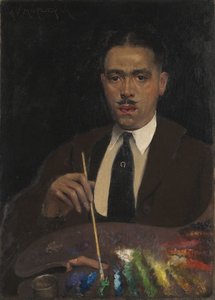
archibald john motley jr.
1891 - 1981 , United States of America
基本情報
- Birth Date: October 7, 1891
- Birth Place: New Orleans, Louisiana, U.S.
- Death Date: January 16, 1981
- Influenced By:
- W.E.B. Du Bois
- Alain Locke
- Movement:
- Harlem Renaissance
- Chicago Black Renaissance
- Modernism
- Name: Archibald John Motley Jr.
- Nationality: American
- Notable Works:
- Hot Rhythm
- Cocktails
- Portrait of My Grandmother
関連記事
The Gilded Age Revisited: Art Deco's Modernity & Luxury
Explore the captivating world of Art Deco paintings & the Gilded Age's enduring legacy. Discover iconic artists like Tamara de Lempicka & invest in museum-quality reproductions with ArtsDot.
The Gilded Age Reimagined: Exploring the Aesthetic Principles & Enduring Legacy of Art Deco
Explore the captivating world of Art Deco! Discover its origins, defining features, cultural impact & enduring legacy. Expert insights for collectors and design enthusiasts. Shop handmade reproductions at ArtsDot.
Stuart Davis: Modernist Abstraction & the Vibrant Spirit of the Jazz Age
Explore the vibrant world of Stuart Davis, a pioneer of American Modernism. Discover his jazz-inspired paintings, signature style & investment potential. Expert insights for art collectors.
The Gleaming Geometry of Desire: Exploring Art Deco's Enduring Influence on Visual Culture
Explore the captivating world of Art Deco! Discover its history, key characteristics, enduring influence on design & collecting with expert insights from ArtsDot.com.
The Jazz Age Canvas: Exploring Artistic Responses to Societal Shifts in 1920s America
Explore the artistic brilliance of the Jazz Age! Discover Art Deco's influence, Modernism’s impact & iconic artists like Tamara de Lempicka. Find museum-quality reproductions and expert art consultation at ArtsDot.