

![[nude Resting Head On Hand] — Arno Nadel](/media/artworks/images-full/23/dc/23dc7fd0cf3f5bcff7ab6cb87938a89c.jpg)
 プレビュー
プレビュー
 プリントを購入
 シェアする
シェアする シェアする
シェアする
 詳細を見る
詳細を見る

 ダウンロード
 似ている作品
 X線調査
X線調査 スライドショー
[Nude resting head on hand]
 Drawing
- WallArt
 1935
1935- Modern
 73.0 x 95.0 cm
 Leo Baeck Institute
 詳細を見る
詳細を見る
オンラインプレビューをはるかに凌ぐ、高解像度で鮮明なデジタル画像をご購入いただけます。
各ファイルは、社内の専門家が高度なツールと熟練した手作業によるレタッチを用いて、細心の注意を払って準備されています。すべての画像において、卓越した鮮明度、正確な色彩再現性、そして繊細なディテールを保証いたします。
最終ファイルは、プロフェッショナルな編集・印刷環境ですぐにご利用いただけるよう最適化された状態で、72時間以内にメールにてお届けいたします。これは、一流のデザインスタジオ、出版社、ギャラリーから信頼されているものと同等の品質です。
デジタル画像のご注文に付随する特典
高品質なデジタル画像配信を、確かな品質で。
ArtsDot.com を選ぶことは、単に画像を手に入れることではありません。それは、プロの手によって精密に仕上げられ、満足保証が付いた高品質なデジタルアートワークを受け取ることを意味します。ご注文いただいた際に自動的に付随する内容は、以下の通りです:

メールですぐにお届け
ご注文から72時間以内に、高解像度のデジタル画像ファイルがメールでお手元に届きます。すぐにそのままご利用いただけます。

AI技術で最適化されたデジタルファイル
お客様の作品は、高度なAIツールと専門家による手作業の編集を組み合わせてプロフェッショナルに最適化されており、細部のディテール、鮮明さ、そして正確な色再現性を最大限に引き出しています。

一生涯無料の再送サービス
ファイルを誤って削除したり、紛失してしまったりしましたか?ご安心ください。いつでも無料で再送いたします。

輸入手数料は一切かかりません
関税や手数料、配送料を気にすることなく、お気に入りのアートワークをすぐにお楽しみいただけます。デジタルダウンロードは常に免税です。

色彩再現の保証
プロ仕様のツールとカラーマネジメント技術を用いることで、デジタル画像が元の色を最大限に忠実に再現することを保証いたします。

100日間満足保証
ご購入いただいたデジタル画像にご満足いただけない場合は、100日以内であれば、理由を問わず修正または100%の返金対応をさせていただきます。

100% 返金保証
ご満足いただけない場合は、デジタルファイルを受け取ってから100日以内であれば、理由を問わず全額返金いたします。

まとめ買い割引
3枚購入で10%OFF - 5枚購入で15%OFF - 10枚以上購入で20%OFF。クリエイティブなプロジェクト、ギャラリー、エージェンシーに最適です。
A Study in Solitude: The Raw Emotion of Arno Nadel
In the quiet, evocative lines of Nude resting head on hand, we encounter a moment of profound vulnerability that transcends the boundaries of time. Created in 1935, this poignant work by Arno Nadel serves as more than just a study of the human form; it is an intimate window into a psyche caught in a state of weary contemplation. The subject, a woman leaning against a wall with her head supported by her hand, embodies a sense of heavy stillness. Her long hair cascades down her back, framing a face marked by visible wrinkles and an expression that oscillates between deep distress and quiet resignation. There is an undeniable weight to her posture, a physical manifestation of internal struggle that draws the viewer into her private sphere of discomfort.
The technique employed in this piece suggests the raw, unvarnished energy of a sketch or a preparatory study. Nadel utilizes a delicate yet purposeful line to capture the nuances of skin, bone, and fabric, allowing the texture of the medium to contribute to the overall atmosphere of melancholy. The composition is strikingly intimate; by focusing so closely on the woman's form and her weary expression, Nadel strips away the distractions of the external world, leaving only the essential truth of human suffering and endurance. This mastery of line and shadow creates a tactile quality that makes the subject's fatigue feel almost palpable to the observer.
Historical Resonance and Artistic Legacy
To understand the depth of this work, one must consider the turbulent era in which it was conceived. As Nadel worked during the mid-19 30s, a period of immense geopolitical tension and rising shadows across Europe, the themes of isolation and distress within his art take on a haunting historical dimension. Nadel, a polymath whose life spanned the rich musical and literary traditions of Lithuania and Germany, possessed a unique ability to weave cultural heritage with deeply personal expression. This drawing, while appearing as a singular moment of repose, resonates with the broader human experience of navigating through periods of profound uncertainty.
For the discerning collector or interior designer, this piece offers a sophisticated focal point that brings intellectual and emotional depth to any space. Its monochromatic intensity and classical subject matter make it an ideal addition to a curated gallery wall or as a standalone statement in a room designed for reflection. A high-quality reproduction of this work allows the subtle textures and the somber beauty of Nadel's vision to be appreciated daily, serving as a constant reminder of the power of art to capture the most fleeting and fragile of human emotions.
関連作品
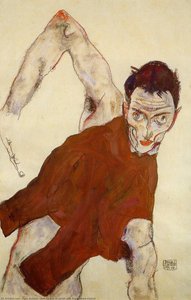
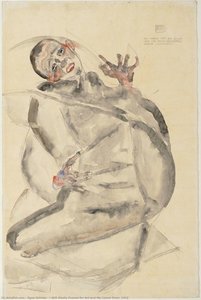
作家の略歴
The Multifaceted Legacy of Arno Nadel
The life of Arno Nadel (1878–1943) serves as a poignant tapestry woven from threads of profound musicality, scholarly devotion, and visual sensitivity. Born in the historic city of Vilnius, Lithuania, Nadel’s early years were deeply rooted in the rich traditions of Orthodox Jewish culture. This foundational heritage would later become the heartbeat of his creative output, providing him with a reservoir of spiritual and cultural themes that he would explore through various artistic mediums. His journey took him from the vibrant streets of Lithuania to the academic centers of Germany, where he pursued rigorous studies in musicology and pedagogy in Königsberg and Berlin. This period of intellectual formation instilled in him a unique ability to blend technical precision with an emotive, almost spiritual, approach to art.
Nadel’s artistic evolution is marked by a remarkable transition from the auditory to the visual. While he first gained recognition as a scholar and composer dedicated to preserving Jewish liturgical music, his creative spirit eventually found expression on canvas and paper. In 1922, Nadel embarked on a significant new chapter, turning his attention toward painting and drawing. This shift was not a departure from his musical roots but rather an extension of them; the rhythms, textures, and harmonies he understood through sound began to manifest in his visual compositions. His work often sought to capture the ephemeral—the way light filters through a landscape or the weight of a human expression—mirroring the transient yet eternal nature of melody.
Artistic Style and Symbolic Depth
The visual language of Arno Nadel is characterized by an evocative blend of Impressionistic softness and Expressionist intensity. His early works, such as his 1900 pastel crayon drawing Park, reveal a dreamy, almost naive charm, where statues in nature are rendered with a focus on textural beauty and symbolic depth. In other pieces, like the hauntingly atmospheric Fog, Nadel demonstrates a mastery of mood, using thick mists and bare trees to create an eerie, mysterious forest that speaks to the deeper, often obscured, layers of the human psyche. His ability to manipulate atmosphere allows his viewers to step into a world that feels both intimately personal and universally resonant.
As his career progressed, Nadel’s work took on more somber and introspective tones. This is perhaps most profoundly seen in his 1943 masterpiece, Man with Bent Thumb. In this portrait, the artist utilizes detailed textures to capture a sense of profound contemplation and the heavy weight of existence. The piece stands as a testament to his ability to use the human form as a vessel for complex emotion, reflecting the turbulent era in which he lived. His art was never merely decorative; it was an exploration of identity, heritage, and the enduring strength of the human spirit amidst historical upheaval.
Cultural Significance and Historical Memory
Beyond his individual paintings and drawings, Nadel’s contribution to cultural preservation remains one of his most significant achievements. His monumental work, Kompendium Hallelujah!: Gesänge für den jüdischen Gottesdienst, published in 1938, stands as a vital scholarly achievement. Through meticulous research, he documented the rich tapestry of Jewish musical heritage, ensuring that these sacred melodies were not lost to time. This dedication to cultural restoration mirrors his visual art's focus on memory and tradition.
The tragic conclusion of Nadel’s life in Auschwitz in 1943 adds a layer of profound sorrow to his artistic legacy. He was an artist whose light was extinguished by the darkest chapter of the twentieth century, yet his work continues to shine as a testament to resilience. Today, Nadel is remembered not only as a versatile creator across music, literature, and visual arts but as a vital figure in the preservation of Lithuanian and Jewish cultural identity. His life’s work remains a bridge between the academic rigor of musicology and the raw, emotive power of fine art.
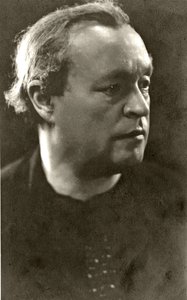
arno nadel
1878 - 1943 , Lithuania
プロフィール概要
- Artistic Movement Or Style: Expressionism
- Artists Or Movements Influenced By This Artist: ['Jewish heritage art']
- Artists Who Influenced This Artist:
- Jewish musical traditions
- Early 20th-century art movements
- Date Of Birth: October 5, 1878
- Date Of Death: March 1943
- Full Name: Arno Nadel
- Nationality: Lithuanian
- Notable Artworks:
- Woman Praying
- Park
- Place Of Birth: Vilnius, Lithuania