 プレビュー
プレビュー
 プリントを購入
 シェアする
シェアする シェアする
シェアする
 詳細を見る
詳細を見る

 ダウンロード
 似ている作品
 X線調査
X線調査 スライドショー
Piano Piece, op. 19/6
 Acrylic On Canvas
- WallArt
- Expressionist Modernism
 1911
1911 25.0 x 32.0 cm
 Arnold Schönberg Center
 詳細を見る
詳細を見る




P118B $10

P118H $10

P118W $10

P438Z $10

P508JH $12

P508YH $12

P805H $10

P805Z $10

P919BZ $10

P919G $10

P919XJ $10

P959ZH $10

P968JZ $12

W106C $8

W218G $10

W218JH $8

W218Y $10

W307PJ $10

W316G $10

W316PJ $8

W316Y $10

W398PJ $8

W4111J $10

W500HY $15

W500JH $15

W692G $12

W849H $8

W940BG $15

W953PJ $8




作品のオリジナル比率に合わせた、当店の規定サイズからお選びください。

特定のフレームやスペースに合わせて、ご希望のサイズをご入力いただけます。選択されたサイズが元の画像の比率と異なる場合、アートワークをトリミングするか、手描きで要素を追加して絵画を拡張いたします。デジタルモックアップ を制作し、制作開始前にご確認(承認)をいただきます。
画面上のプレビューは、実際のトリミングや拡張を正確に反映しているものではありません。最終的な構図は、モックアップによってのみ正確にご確認いただけます。
カスタムサイズもご利用いただけますが、元の比率を維持するためには、あらかじめ用意されたリストからサイズを選択することをお勧めいたします。
ご注文後、ArtsDot.com チームより詳細な指示をお送りするとともに、仕上がりイメージ(モックアップ)をご提供いたします。


 ガラスオプションは、110cm未満のサイズでのみご利用いただけます。

Piano Piece, op. 19/6
複製技法
複製画のサイズ
-


合計金額
$ 263
作品解説
A Moment of Reflection: Schönberg's "Piano Piece, op. 19/6" – A Window into Grief and Innovation
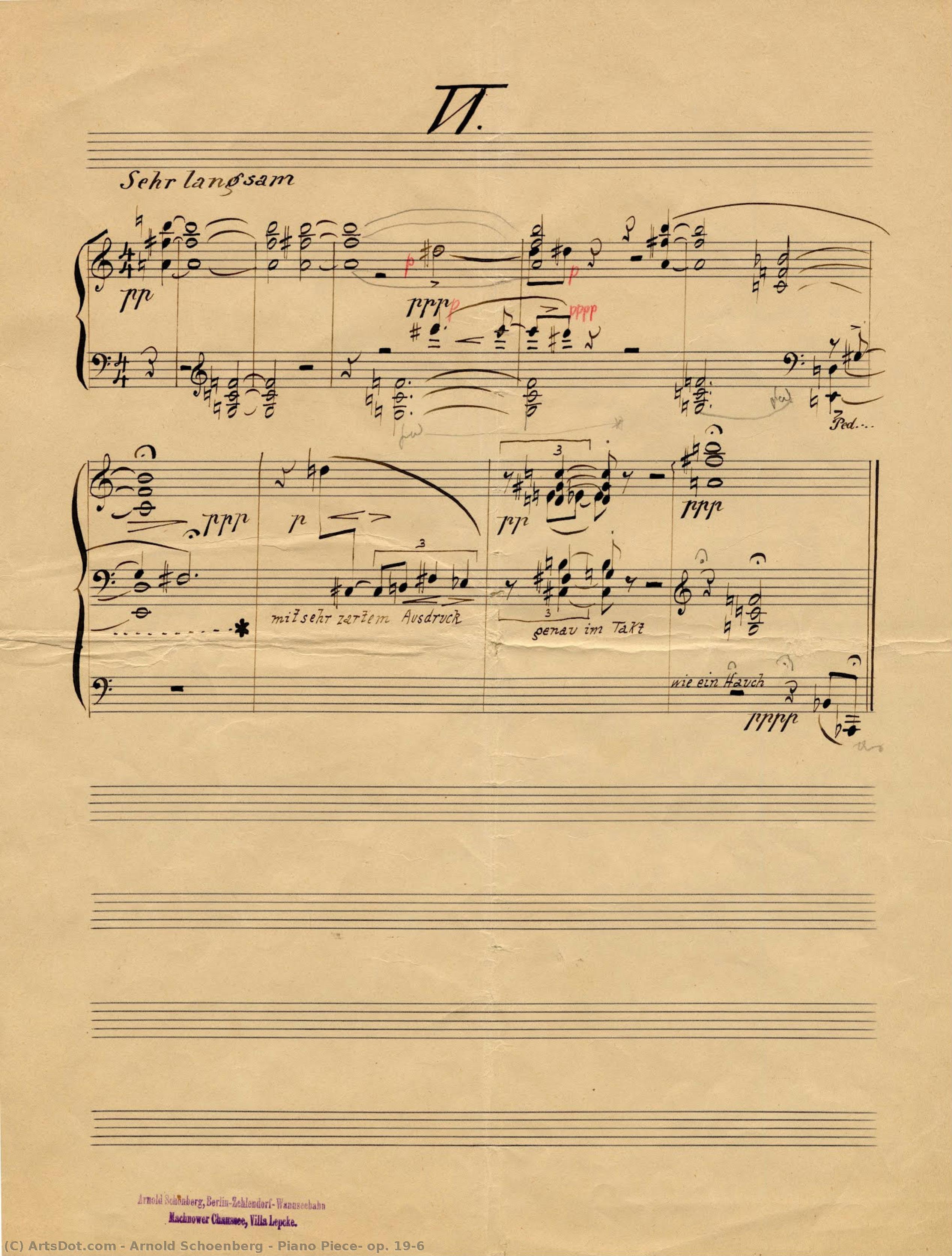
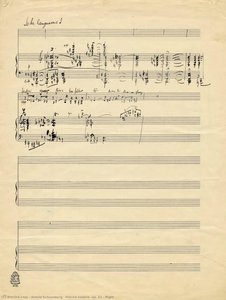
This meticulously crafted hand-painted reproduction captures Arnold Schönberg’s poignant “Piano Piece, op. 19/6,” a deceptively simple work born from a moment of profound grief and artistic experimentation. Created in 1911, shortly after the death of Gustav Mahler – a figure Schönberg deeply revered as both mentor and friend – the piece offers a rare glimpse into the composer’s emotional landscape during a period of intense creative upheaval. The image presented here isn't merely a musical score; it’s a tangible echo of a time when atonality was being forged, and the very foundations of Western harmony were being challenged.
- Historical Context: 1911 Vienna was a crucible of artistic innovation. Schönberg, along with Alban Berg and Anton Webern, spearheaded the Second Viennese School, rejecting traditional tonal structures in favor of new approaches to composition. Mahler’s untimely death deeply affected Schönberg, prompting this intensely personal response.
- The Miniature's Significance: The “Piano Pieces, op. 19” are remarkable for their brevity and aphoristic nature. Schönberg himself described them as a necessary space for Webern to "have time" to compose, highlighting the importance of dedicated creative periods. These pieces represent a crucial transitional phase in Schönberg’s career, foreshadowing his later dodecaphonic works while retaining a melodic sensibility.
- Technique and Detail: The reproduction faithfully recreates the original music sheet – a pale yellow expanse punctuated by meticulously rendered black musical notes. The inclusion of a stylized piano keyboard adds another layer of visual interest, emphasizing the intimate nature of the composition. The handwritten aesthetic lends an air of authenticity and invites the viewer to imagine Schönberg’s hand guiding the pen across the paper.
A Symphony of Emotion – Decoding the Symbolism
Beyond its musical merit, “Piano Piece, op. 19/6” is laden with symbolic weight. The piece's creation coincided with Mahler’s death, a loss that profoundly impacted Schönberg. The miniature format and fragmented melodies can be interpreted as reflections of grief – a scattering of memories and emotions struggling to coalesce into a coherent whole. The shift from expansive harmonies to epigrammatic forms mirrors the composer’s evolving artistic philosophy, moving away from grand symphonic structures towards more concise and emotionally direct expressions.
- Mahler's Influence: Schönberg’s deep respect for Mahler is evident throughout this work. The piece can be seen as a subtle homage to Mahler’s legacy, particularly his willingness to push boundaries and challenge conventional musical norms.
- Atonality as Expression: The use of atonality in the “Piano Pieces” wasn't simply an intellectual exercise; it was a deliberate attempt to convey emotional intensity without relying on traditional harmonic resolutions. This reflects Schönberg’s belief that music could express profound feelings beyond the limitations of established tonal systems.
Artistic Reproduction – Quality and Craftsmanship
This hand-painted reproduction is more than just an image; it's a meticulously crafted work of art in its own right. Utilizing traditional painting techniques, each detail—from the texture of the paper to the delicate rendering of the musical notes—is faithfully reproduced with exceptional accuracy. The size of 25 x 32 cm makes this piece ideal for display on a desk, shelf, or as part of a larger collection of classical music memorabilia.
- Materials: Printed on high-quality archival paper to ensure lasting vibrancy and color fidelity.
- Hand-Painted Detail: Each reproduction is painstakingly hand-painted by skilled artisans, guaranteeing a level of detail and nuance unattainable through digital printing methods.
- Perfect for Collectors & Design: This artwork will be a stunning addition to any music lover's collection or a sophisticated accent piece in an interior design setting.
Specifications
Title: Piano Piece, op. 19/6Artist: Arnold Schönberg
Date: 1911
Size: 25 x 32 cm
Technique: Hand-Painted Reproduction
Materials: Archival Paper, Pigments
関連作品
アーティストの略歴
幼少期と音楽への第一歩
アルノルト・シェーンベルクは、オーストリア系アメリカ人の作曲家であり、1874年9月13日、オーストリアのウィーンに生を受けました。彼の幼少期は、靴屋を営む父のもと、決して裕福とは言えない質素な環境の中にありました。しかし、その内なる音楽への情熱は、彼を独学という険しい道へと駆り立て、自らの手で音楽の深淵へと踏み込ませたのです。音楽的進化と代表作
シェーンベルクの初期作品、例えば 『変容した夜』(1899年) は、ブラームスとワーグナーの様式を融合させた見事なシンセシスを示していました。やがて彼は、アントン・ヴェベルン や アルバン・ベルク と共に、新ウィーン楽派の中核を担う存在へと成長を遂げます。その後の 弦楽四重奏曲第2番 (1907–1908年)、『期待』(1909年)、そして 『ピエロ・ルナール』(1912年) といった作品群は、無調音楽への革新的なアプローチを象徴するものとなりました。教授活動と亡命、そして晩年
1933年、ナチスの台頭により、シェーンベルクの音楽は「退廃芸術」の烙印を押され、彼はプロイセン芸術アカデミーを辞任することを余儀なくされました。その後、彼はアメリカへと渡り、カリフォルニア大学ロサンゼルス校(UCLA)などで教鞭を執りました。現在、同大学の施設には彼の名を冠したものが存在しています。 [https://ArtsDot.com/@/arnold-sochenberg](ArtsDotでシェーンベルクの生涯と作品についてさらに詳しく知る)。- シェーンベルクは映画音楽の探求や、より調性的な音楽の作曲にも取り組み、1939年には 室内交響曲第2番 を完成させました。
- また、バイロンに倣い、『ナポレオンへの頌歌』(1942年) においてファシズムの暴君を風刺しました。
- 戦後のウィーンからは名誉市民権を贈られましたが、晩年は病に伏しており、その様子は 弦楽三重奏曲 (1946年) にも刻まれています。
遺産と影響力
ホロコーストの悲劇が世界に知れ渡る中、シェーンベルクは 『ワルシャワの生存者』(1947年) を通じて、犠牲者たちを追悼しました。1951年には、イスラエル・コンサバトリーおよび音楽院から名誉会長に選出されました。 [https://ArtsDot.com/@@/a@d3bqc7-the-museum-destroyed-by-fire-(united-states)](彼の作品が与えた影響についてArtsDotで詳しく学ぶ)。 重要なポイント:- シェーンベルクの革新的な音楽は、20世紀のクラシック音楽において最も影響力があり、かつ論争を巻き起こしたものの一つでした。
- 少なくとも三世代にわたる作曲家たちが、彼の形式的な原理を継承・発展させました。
- 彼の美学と音楽史的見解は、音楽学者のテオドール・W・アドルノやカール・ダールハウスにも多大な影響を与えました。
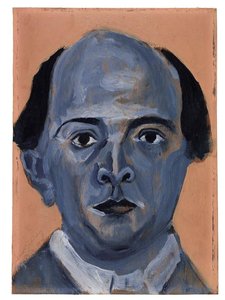
アーノルド・シェーンベルク
1874 - 1951 , オーストリア
基本情報
- Artistic Movement Or Style: 十二音技法、表現主義
- Artists Or Movements Influenced By This Artist:
- アントン・ウェーベルン
- アルバン・ベルク
- Artists Who Influenced This Artist:
- ヨハネス・ブラームス
- リヒャルト・ワーグナー
- Date Of Birth: 1874年9月13日
- Date Of Death: 1951年
- Full Name: アーノルド・シェーンベルク
- Nationality: オーストリア系アメリカ人
- Notable Artworks:
- 組曲 作品29
- ミュージック・タイプライター
- スタッフライナー
- Place Of Birth: オーストリア、ウィーン
関連記事

Victor Vasarely: Pioneering Op Art & Democratizing Visual Experience
Explore the revolutionary world of Victor Vasarely, father of Op Art. Discover his geometric masterpieces, artistic system, & lasting impact on modern design. A guide for discerning art collectors.
利用規約
手描きの再現画、版画、カスタム肖像画の明確で専門的な利用規約を見つけましょう。信頼できる、安全なお支払い、世界中への送料無料、30日間の返金保証、そして美術愛好家とコレクターのために設計された透明性の高いポリシー。

ArtsDot.com F.A.Q.: Hassle-Free International Customs & Duty Refunds
Discover ArtsDot.com's seamless international shipping solutions for elite collectors. Learn how we ensure a hassle-free experience with 100% customs and duty refunds, expert documentation, and secure global delivery of fine art reproductions.
洗練されたコレクターのための専門家による無料アートコンサルテーション:ArtsDot.com F.A.Q.
ArtsDot.comの無料アートコンサルテーションで、専門家があなたのコレクションを最適化。美術品投資、鑑定、カスタム制作など、洗練されたコレクターのための価値あるアドバイスを提供します。

ArtsDot.com F.A.Q.: グローバルアート輸送における費用構造:エリートコレクター向け戦略的分析と最適化
ArtsDot.com F.A.Q.: グローバルアート輸送の費用構造を徹底解説。エリートコレクター向けに、透明性の高いコスト内訳と最適化戦略を提供します。高品質な油絵カスタム制作から国際配送まで、安心・安全をお約束。