

 プレビュー
プレビュー
 プリントを購入
 シェアする
シェアする シェアする
シェアする
 詳細を見る
詳細を見る

 ダウンロード
 似ている作品
 X線調査
X線調査 スライドショー
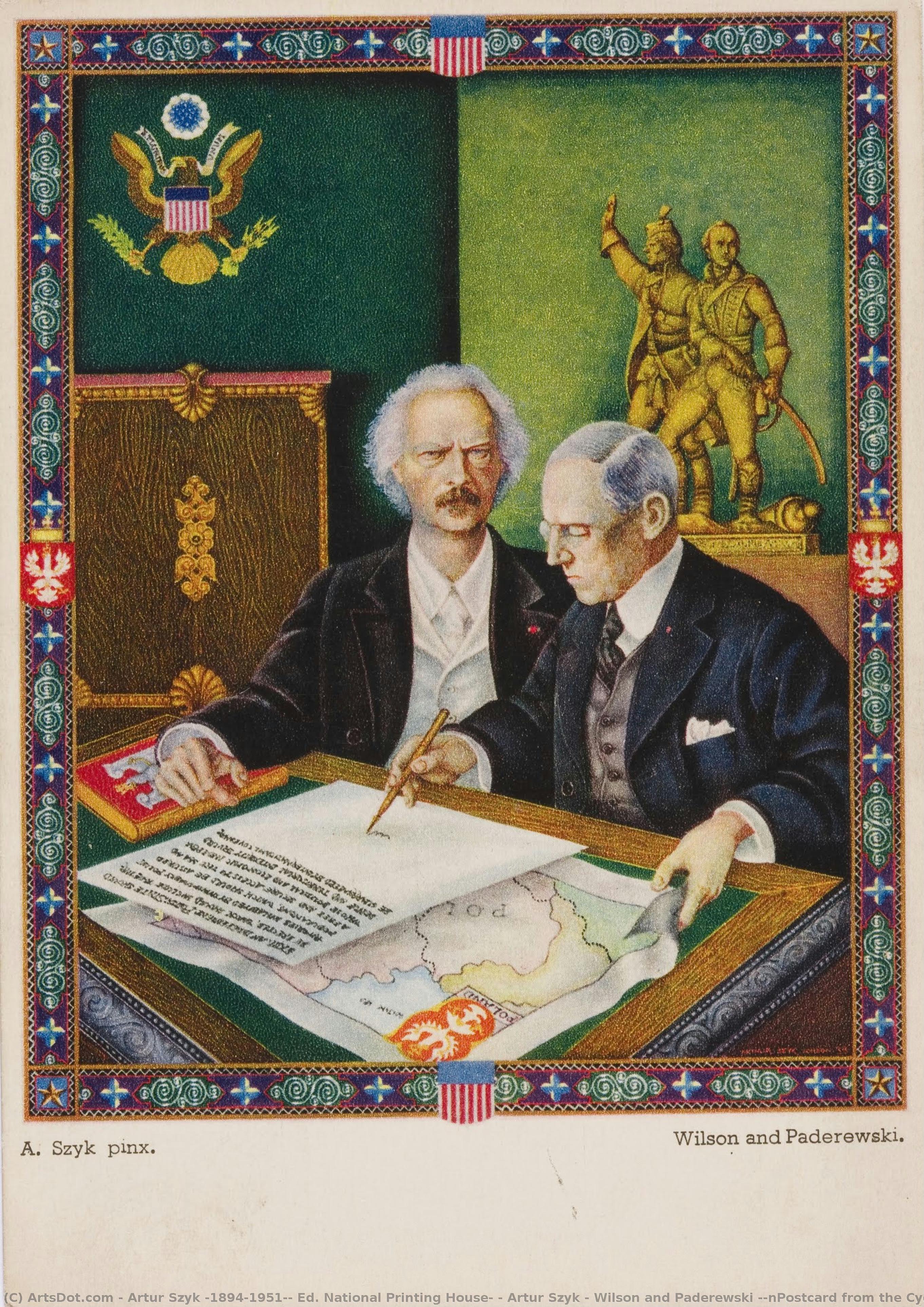
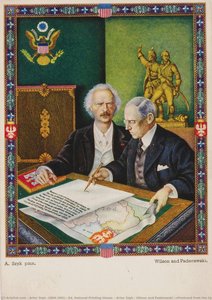
Wilson and Paderewski –\nPostcard from the Cycle: “Pictures from the\nGlorious Days of the Polish-American Fraternity”


 詳細を見る
詳細を見る




































作品のオリジナル比率に合わせた、当店の規定サイズからお選びください。

特定のフレームやスペースに合わせて、ご希望のサイズをご入力いただけます。選択されたサイズが元の画像の比率と異なる場合、アートワークをトリミングするか、手描きで要素を追加して絵画を拡張いたします。デジタルモックアップ を制作し、制作開始前にご確認(承認)をいただきます。
画面上のプレビューは、実際のトリミングや拡張を正確に反映しているものではありません。最終的な構図は、モックアップによってのみ正確にご確認いただけます。
カスタムサイズもご利用いただけますが、元の比率を維持するためには、あらかじめ用意されたリストからサイズを選択することをお勧めいたします。
ご注文後、ArtsDot.com チームより詳細な指示をお送りするとともに、仕上がりイメージ(モックアップ)をご提供いたします。


 ガラスオプションは、110cm未満のサイズでのみご利用いただけます。

Wilson and Paderewski –\nPostcard from the Cycle: “Pictures from the\nGlorious Days of the Polish-American Fraternity”
複製技法
複製画のサイズ
-


合計金額
$ 288
関連作品
アーティストの略歴
The Soldier in Art: The Life and Legacy of Artur Szyk
In the turbulent landscape of the twentieth century, few artists wielded a brush with as much moral ferocity and technical brilliance as Artur Szyk. Born in 1894 to a prosperous Jewish family in Łódź, Poland, Szyk’s early life was shaped by the vibrant, complex textures of a culture caught between empires. Though his childhood was marked by the sudden tragedy of his father’s blinding during a local insurrection, it was also defined by an extraordinary precocity; by the age of six, he was already capturing the drama of global conflicts like the Boxer Rebellion in sketches. This innate ability to translate human struggle onto paper would eventually transform him into one of the most influential political illustrators and book artists of his era.
Szyk’s artistic journey was a nomadic odyssey through the great cultural capitals of Europe. His studies at the Académie Julian in Paris exposed him to the cutting edge of modern trends, yet Szyk made a profound and deliberate choice to reject the burgeoning movement of abstraction. Instead, he looked backward to move forward, finding deep inspiration in the meticulous traditions of medieval and Renaissance art. He became a master of the illuminated manuscript style, breathing new life into the concept of miniature painting through intricate detail and luminous color. This reverence for tradition allowed him to create works that felt both ancient and urgently contemporary, bridging the gap between sacred history and modern political struggle.
A Brush Against Tyranny
As the shadows of totalitarianism lengthened across Europe in the 1930s, Szyk’s art transitioned from the beautiful to the incendiary. Moving through France and the United Kingdom before settling permanently in the United States in 1940, he became a vital voice against the rising tide of Nazism. His political caricatures were not merely drawings; they were weapons of conscience. With a sharp, satirical wit, he savaged the leaders of the Axis powers, using his mastery of form to expose the grotesque nature of hatred and bigotry. In the pages of prestigious periodicals like TIME, Collier’s, and Esquire, his work served as a rallying cry for human dignity and racial equality.
Beyond the political arena, Szyk’s devotion to his Jewish heritage produced some of the most breathtaking achievements in modern Judaica. His most celebrated masterpiece, the illuminated Passover Haggadah, stands as a testament to his ability to marry religious devotion with unparalleled artistry. Through vibrant illustrations and delicate ornamentation, he transformed liturgical texts into visual epic poems. This period of his work reflected a deep commitment to Zionist ideals and the preservation of Jewish identity in an age of unprecedented peril, cementing his reputation as an artist who fought for justice through every stroke of his pen.
An Enduring Vision
The significance of Artur Szyk lies in his refusal to separate art from activism. He lived a life framed by two World Wars and the birth of the State of Israel, and his oeuvre serves as a vivid, often harrowing, chronicle of these seismic historical shifts. His legacy is characterized by several enduring pillars:
- Technical Mastery: The seamless integration of Renaissance-style illumination with modern editorial illustration.
- Moral Courage: The use of caricature as a tool for social justice and the condemnation of tyranny.
- Cultural Synthesis: A unique artistic identity that proudly embraced both his Polish and Jewish roots.
- Historical Documentation: A prolific body of work that captures the profound human struggles of the twentieth century.
Though he passed away in 1951, Szyk’s spirit remains eternal through his "soldier in art" philosophy. His works continue to resonate in museums and collections worldwide, reminding us that even in the darkest chapters of history, the light of creativity can illuminate the path toward truth and human dignity.
基本情報
- Artistic Movement Or Style: Medieval and Renaissance illumination
- Artists Who Influenced This Artist: ['Teodor Axentowicz']
- Date Of Birth: June 3, 1894
- Date Of Death: September 13, 1951
- Full Name: Arthur Szyk
- Nationality: Polish and Jewish
- Notable Artworks:
- Passover Haggadah
- Andersen's Fairy Tales
- Place Of Birth: Łódź, Poland
関連記事

Giclée Prints: Archival Quality & Aesthetic Nuances for the Discerning Collector
Explore the world of giclée prints with ArtsDot. Learn about archival quality, aesthetic nuances & investment potential. Expert guidance for discerning art collectors seeking museum-quality reproductions and lasting value.
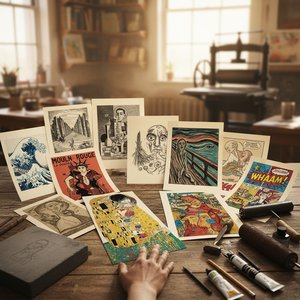
Top 10 Lithographs That Revolutionized Art | ArtsDot
Explore 10 legendary lithographs by Toulouse-Lautrec, Munch & Picasso that redefined art! Discover the stories behind these iconic prints and find museum-quality reproductions for your home decor at ArtsDot.com. Explore the full collection online.

The Enduring Legacy of Fine Art Prints: Technique, History & Aesthetic Impact
Explore the rich history & techniques of fine art prints. Discover investment potential, assess authenticity, and learn how to preserve your collection with expert guidance. Trusted insights for discerning collectors.

Echoes of Time: Exploring the Enduring Appeal & Historical Context of Vintage Art Prints
Explore the captivating world of vintage art prints! Discover their history, collecting tips & enduring appeal. Expert insights on chromolithography and building a legacy collection with ArtsDot.
The Enduring Legacy of Printmaking: Techniques, Themes & Artistic Innovation Across Centuries
Explore the rich history of printmaking with ArtsDot. Discover techniques from intaglio to lithography, learn about collecting valuable prints & find museum-quality reproductions. Expert insights for art enthusiasts and collectors.

