

 プレビュー
プレビュー
 プリントを購入
 シェアする
シェアする シェアする
シェアする
 詳細を見る
詳細を見る

 ダウンロード
 似ている作品
 X線調査
X線調査 スライドショー
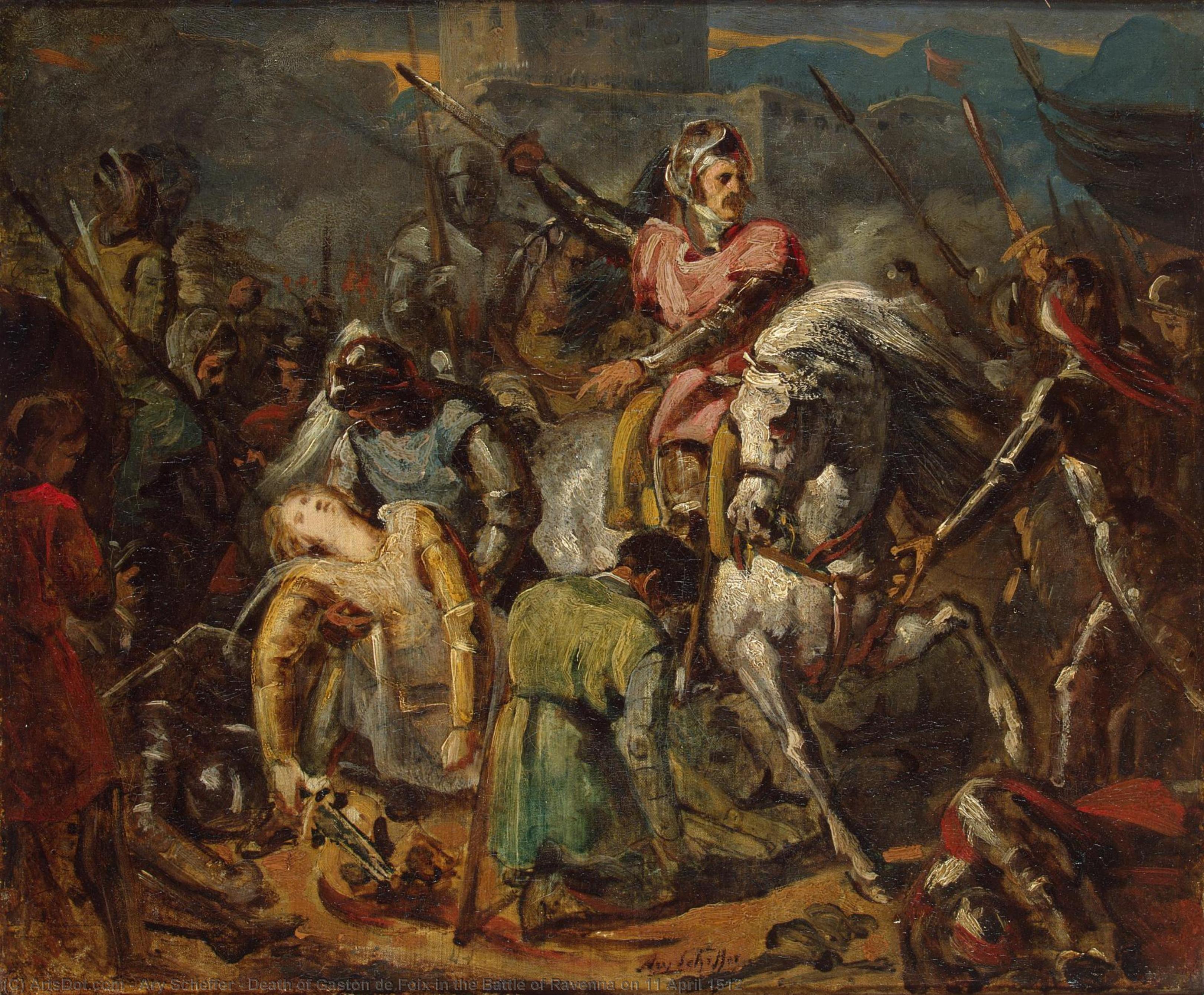
Death of Gaston de Foix in the Battle of Ravenna on 11 April 1512
 Oil On Canvas
- WallArt
- Romanticism
 1824
1824- 19th Century
 38.0 x 46.0 cm
 エルミタージュ美術館
 詳細を見る
詳細を見る




P118B $10

P118H $10

P118W $10

P438Z $10

P508JH $12

P508YH $12

P805H $10

P805Z $10

P919BZ $10

P919G $10

P919XJ $10

P959ZH $10

P968JZ $12

W106C $8

W218G $10

W218JH $8

W218Y $10

W307PJ $10

W316G $10

W316PJ $8

W316Y $10

W398PJ $8

W4111J $10

W500HY $15

W500JH $15

W692G $12

W849H $8

W940BG $15

W953PJ $8




作品のオリジナル比率に合わせた、当店の規定サイズからお選びください。

特定のフレームやスペースに合わせて、ご希望のサイズをご入力いただけます。選択されたサイズが元の画像の比率と異なる場合、アートワークをトリミングするか、手描きで要素を追加して絵画を拡張いたします。デジタルモックアップ を制作し、制作開始前にご確認(承認)をいただきます。
画面上のプレビューは、実際のトリミングや拡張を正確に反映しているものではありません。最終的な構図は、モックアップによってのみ正確にご確認いただけます。
カスタムサイズもご利用いただけますが、元の比率を維持するためには、あらかじめ用意されたリストからサイズを選択することをお勧めいたします。
ご注文後、ArtsDot.com チームより詳細な指示をお送りするとともに、仕上がりイメージ(モックアップ)をご提供いたします。


 ガラスオプションは、110cm未満のサイズでのみご利用いただけます。

Death of Gaston de Foix in the Battle of Ravenna on 11 April 1512
複製技法
複製画のサイズ
-


合計金額
$ 263
Ary Scheffer’s “Death of Gaston de Foix in the Battle of Ravenna on 11 April 1512” – A Dramatic Echo of Renaissance Tragedy
Ary Scheffer's "Death of Gaston de Foix in the Battle of Ravenna on 11 April 1512" stands as a cornerstone of Romantic painting, capturing not merely an historical event but also the profound emotional currents that defined its era. Created in 1824, this monumental canvas—measuring 38 x 46 cm and housed at The Hermitage Museum in St. Petersburg—captures the tragic demise of Gaston de Foix, Duke of Nemours, during the Battle of Ravenna on April 11th, 1512, a pivotal moment in the Italian Wars and a cornerstone of Romantic art history. Ary Scheffer’s sketch for a monumental painting embodies the spirit of his era—a fervent embrace of dramatic narrative and emotional expression—marking a decisive departure from the neoclassical preoccupation with idealized form and rational order.The Subject Matter: Gaston de Foix and the Battle of Ravenna
Ary Scheffer's depiction centers on Gaston de Foix, Duke of Nemours – a figure whose military prowess captivated the imagination of his contemporaries and whose untimely demise resonated throughout Europe. The artist meticulously portrays him astride a horse, wielding a sword with unwavering resolve, embodying the heroic spirit emblematic of the Renaissance era. Surrounding him are fellow soldiers clad in armor, reflecting the grandeur and solemnity of medieval warfare. Two swords dominate the composition—one held by Gaston de Foix himself, symbolizing courage and leadership, and another positioned centrally, representing the decisive confrontation between opposing forces. The painting’s stylistic approach aligns seamlessly with the Romantic movement's emphasis on dramatic emotion and expressive brushwork. Ary Scheffer skillfully employs loose, swirling strokes to convey the urgency of the battlefield scene—a deliberate departure from the precise realism favored by Neoclassical painters. The artist’s palette is dominated by muted browns, ochres, and reds, reflecting the grim realities of war while simultaneously capturing the grandeur of historical narrative.The Artist: Ary Scheffer
Ary Scheffer (1795-1858) stands as a pivotal figure in Romantic art—a movement characterized by fervent emotion, individualism, and an embrace of imagination over strict academic conventions. Born in Dordrecht, Netherlands, he inherited artistic talent from his parents, Johan Bernard Scheffer and Cornelia Lamme, both accomplished portraitists. This early exposure instilled in him a meticulous attention to detail and a profound understanding of visual representation—qualities that would characterize his entire oeuvre. His father’s influence was particularly notable; John Bernard Scheffer practiced the art of portraiture with unwavering precision, capturing likenesses with remarkable accuracy while simultaneously conveying subtle nuances of character. This dedication to realism would become a cornerstone of Ary Scheffer's artistic vision.The Birth of Romantic Painting: Gaston de Foix and Ary Scheffer’s Dramatic Vision
Ary Scheffer’s “Death of Gaston de Foix in the Battle of Ravenna on 11 April 1512” stands as a pivotal artwork, marking a decisive shift away from the rigid formalism of Neoclassicism toward the expressive fervor of Romanticism. Ary Scheffer's depiction captures not merely a historical event—the final confrontation between France and Spain during the War of the League of Cambrai—but also embodies the psychological complexities inherent in portraying mortality and heroism.The Scene: Ravenna, 1512 – A Moment Frozen in Time
Scheffer’s canvas portrays Gaston de Foix, Duke of Nemours, a young French military leader at the height of his ambition, facing imminent defeat during the Battle of Ravenna. The painting depicts him astride a horse, clutching a sword—a posture symbolizing courage and defiance—but with his head bowed in sorrow or resignation. Surrounding him are fellow soldiers clad in armor, creating a dramatic tableau that captures the tension and peril of warfare. Two swords dominate the composition: one held by Gaston de Foix himself, representing leadership and martial prowess, and another positioned prominently near the center, symbolizing victory and perhaps impending doom. The artist’s meticulous attention to detail—the textures of armor, the expressions on the faces of the figures—contributes to a dramatic portrayal of the event. Ary Scheffer's masterful brushstrokes convey both the physicality of battle and the psychological intensity of the moment.The Battle of Ravenna: A Pivotal Moment in Renaissance History
The painting “Death of Gaston de Foix in the Battle of Ravenna on 11 April 1512” by Ary Scheffer isn’t merely a depiction of a military event; it's a profound meditation on mortality and heroism within the turbulent backdrop of the Italian Wars. Created in 1824, this monumental canvas—measuring approximately 38 x 46 centimeters—holds its place prominently at The Hermitage Museum in St. Petersburg, Russia, cementing its status as an iconic representation of Romantic artistic expression.The Subject Matter: Gaston de Foix and the Battle of Ravenna
Ary Scheffer’s “Death of Gaston de Foix in the Battle of Ravenna on 11 April 1512” isn't merely a depiction of a military event; it’s an embodiment of Romantic drama. The painting portrays Gaston de Foix, Duke of Nemours—a young French commander who spearheaded a daring campaign against the Holy League during the Italian Wars—in his final moments. Captured in a dynamic pose atop a horse, he holds aloft a sword, symbolizing courage and leadership, while his head bows downwards, conveying defeat and sorrow. The scene unfolds amidst a backdrop of armored figures representing the opposing forces, emphasizing the drama of battle and highlighting the artist's masterful depiction of human emotion.The Battle of Ravenna: A Moment Frozen in Time
Ary Scheffer’s “Death of Gaston de Foix in the Battle of Ravenna on 11 April 1512” isn’t merely a historical painting; it’s an embodiment of the Romantic spirit—a visceral reaction to tragedy and a celebration of human emotion. Ary Scheffer, commissioned by Louis XIV for Versailles, captured not just a battlefield scene but also the profound sorrow of loss against a backdrop of political upheaval.The Battle of Ravenna: A Moment Frozen in Time
Scheffer’s “Death of Gaston de Foix in the Battle of Ravenna on 11 April 1512” isn't merely a depiction of a military event; it’s an encapsulation of Renaissance drama and aristocratic tragedy. The painting captures the final moments of Gaston de Foix, Duke of Nemours—a young commander who had ignited the Italian Wars with his audacious campaigns—as he succumbed to a fatal wound during the Battle of Ravenna on April 11th, 1512. Ary Scheffer’s sketch for this monumental composition encapsulates not merely a historical event but also embodies the spirit of Romantic art, marking a pivotal moment in European artistic history.The Scene: A Moment Frozen in Time
Ary Scheffer's "Death of Gaston de Foix in the Battle of Ravenna on 11 April 1512" depicts a dramatic confrontation between French and Spanish forces during the tumultuous Wars of Religion. The painting captures a pivotal moment—the fatal wounding of Gaston de Foix, Duke of Nemours—a young military leader who had spearheaded France’s ambitious campaign against Spain in Italy. Ary Scheffer's masterful depiction transcends mere historical record; it embodies the Romantic spirit, prioritizing emotional resonance over strict realism.The Scene: Drama and Symbolism Embodied
Scheffer captures a pivotal moment – the death of Gaston de Foix at Ravenna on April 11th, 1512 – not as a clinical recounting of battle but as a dramatic tableau brimming with emotion. The painting depicts Gaston riding his horse, sword in hand, head bowed in defeat, surrounded by fellow soldiers. This posture immediately conveys vulnerability and tragedy, reflecting the Romantic preoccupation with human suffering and mortality—a stark contrast to the idealized figures favored by Neoclassical artists. Scheffer’s masterful use of chiaroscuro – dramatic contrasts between light and dark – amplifies the emotional intensity of the scene, mirroring the turbulent spirit of the era. The composition itself is carefully balanced, guiding the viewer's eye towards Gaston de Foix, positioned centrally on horseback, conveying both nobility and vulnerability. His posture embodies courage yet also foreshadows his tragic fate—a poignant reminder of mortality amidst grandeur.The Artist’s Vision: Ary Scheffer and Romantic Expression
Ary Scheffer (1795-1858) stands as a pivotal figure in the transition from Neoclassicism to Romanticism, embodying the spirit of artistic innovation that characterized the early 19th century. Unlike his predecessors who prioritized rational idealism and formal precision—traits prevalent in the dominant aesthetic sensibilities of the time—Scheffer championed emotional expression and dramatic realism, marking a decisive break with neoclassical conventions. His canvases pulsated with palpable energy, conveying not merely visual information but profound psychological depth. This approach resonated powerfully with audiences eager for art that mirrored the complexities of human experience.The Birth of Romantic Painting: Ary Scheffer's Vision
Ary Scheffer’s “Death of Gaston de Foix in the Battle of Ravenna on 11 April 1512” stands as a pivotal moment in artistic history—the undisputed herald of French Romantic painting. Emerging from the shadow of Ne関連作品

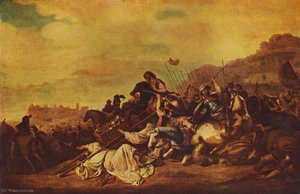
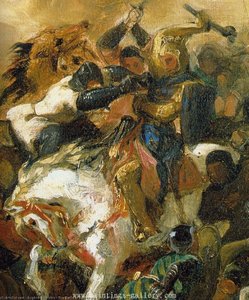
アーティストの略歴
二つの世界を繋ぐ生涯:アーリ・シェファーのロマン主義的ヴィジョン
ドラクロワやジェリコーといった同時代の巨匠たちに比べると、その名はすぐには結びつかないかもしれません。しかし、アーリ・シェファーは19世紀ヨーロッパ美術の風景において、極めて重要かつ魅力的な地位を占めています。1795年にオランダのドルトレヒトに生まれた彼は、母国の芸術的伝統と、フランスで胎動していたロマン主義運動の両方から深い影響を受けた人物でした。彼の歩んだ道は、単なる地理的な移動——1809年に父を亡くした後、母と共にオランダからパリへと移り住んだこと——に留まりません。それは芸術的な変遷の物語でもありました。画家であった両親から受け継いだ緻密な描写力と、ヨーロッパ全土を席巻していた新しい美意識である情熱的な感情表現の間を、彼は巧みに渡り歩いたのです。父ヨハン・ベルナルト・シェファーは肖像画家であり、母コルネリア・ランメは細密肖エポートレートを専門としていました。この幼少期の環境が、アーリの中に技術的な熟練と正確な表現に対する根源的な敬意を植え付けたのです。しかし、彼が真に独自の芸術的声を見出したのは、パリのエコール・デ・ボザールにおいてピエール=ナルシス・ゲランに師事した時でした。ザビエ・シガロン、ドラクロワ、ジェリコーといった先達の息吹を吸収しながら、彼は「冷徹な古典主義」とも形容される、一見矛盾を孕んだ独自のスタイルを築き上げました。そのパラドックスこそが、彼の作品の核心にある緊張感を示唆しているのです。文学的なキャンバス:主題と芸術的展開
シェファーのキャリアは数十年にわたり、文学、神話、宗教、そして肖像画といったテーマの絶え間ない探求によって彩られました。彼は単に物語を挿絵として描いたのではありません。物語の感情的な核を「視覚化」しようと試み、複雑な心理状態をキャンバスへと翻訳したのです。その傾向は、ダンテが描く禁じられた愛の悲劇「フランチェスカ・ダ・リムニ」の連作に顕著に表れています。彼は生涯を通じてこの主題に何度も向き合い、描き直すごとに、悲しみ、情熱、そして絶望をより繊細なニュアンスで掘り下げていきました。また、ゲーテの『ヴィルヘルム・マイスター』に触発された作品、特にミョンの描写も非常に魅力的です。故郷や天国への憧憬を抱く彼女の姿は、シェファー自身が感じていた喪失感や精神的な渇望と深く共鳴していました。慰めのキリスト(Christus Consolator)という力強い宗教画に見られるように、彼は信仰に伴う深い感情的・精神的な体験を伝えようと努めました。文学や宗教といった主題を超えて、シェファーは肖像画家としても大きな成功を収め、王族やフランス社会の著名人たちの姿を捉えました。その多才さは、彼の広範な人気を支える要因となりました。1837年の作品ニュアンスが定義する様式:古典主義とロマン主義の融合
シェファーのスタイルを定義することは容易ではありません。それは、一見相反するように見える力同士の魅力的な相互作用の中に存在しているからです。ロマン主義の感情的な熱狂に抗いがたい影響を受けながらも、彼の作品には常に、ドラクロワのようなより劇的な画家とは一線を画す、形式美と古典的な構造が保たれています。緻密に構成された画面には洗練された技法が宿り、光と影の情緒的な使い方は、深みと雰囲気を作り出します。衣装や背景の描写における驚くべき細部へのこだわりは、作品に歴史的な真実味を与えています。しかし、その細密さは決して冷淡でも無機質でもありません。むしろ、場面の感情的なインパクトを高める役割を果たしているのです。シェファーの作品の際立った特徴は、文学や宗教的テーマを情緒的、あるいは時にメロドラマ的な表現へと向かわせる傾向にあります。彼は感情を拒絶することはありませんでしたが、それを常に抑制と洗練というフィルターを通して提示しました。抑えられた色彩パレットへの好みも、この制御された感情性の一助となっており、視覚的に鮮烈でありながら、心に深く響く絵画を生み出しているのです。遺産と不朽の魅力
20世紀に入るとシェファーの人気はいくらか衰退したものの、後世の芸術家たちに与えた影響は否定しようがありません。ロマン主義と古典主義を融合させた彼の独自の試みは、同時代のより急進的なアプローチに対する、説得力のある選択肢を提示しました。今日、彼の作品はドルトレヒト美術館(彼のオランダのルーツを物語る場所)やボストン美術館など、世界中の美術館に収蔵されており、その国際的な評価を証明しています。パリのロマン主義生活美術館(Musée de la Vie Romantique)には、シェファーとジョルジュ・サンドに捧げられた特別なコレクションがあり、ロマン主義時代の知的・芸術的サークルにおける彼の重要性を物語っています。ArtsDotのようなプラットフォームを通じて提供される手作りの油彩複製画によって、彼の傑作は今もなお、多くの人々のインスピレーションを呼び起こし続けています。アーリ・シェファーの遺産は、単に絵画の美しさにあるのではありません。伝統と革新、理性と感情、そしてオランダの芸術的遺産と19世紀フランスの活気ある文化風景という、異なる世界を繋ぎ合わせたその力にこそ宿っているのです。ロマン主義芸術の複雑さとニュアンスを理解しようとする者にとって、彼は今もなお、抗いがたい魅力を放ち続ける存在なのです。
アーリ・シェフェール
1795 - 1858 , オランダ
基本情報
- Artistic Movement Or Style: ロマン主義と古典主義
- Artists Or Movements Influenced By This Artist: 後世の世代
- Artists Who Influenced This Artist:
- ギュラン
- ドラクロワ
- ジェリコー
- シガロン
- Date Of Birth: 1795年2月10日
- Date Of Death: 1858年6月15日
- Full Name: アーリ・シェフェール
- Nationality: オランダ系フランス人
- Notable Artworks:
- フランチェスカ・ダ・リミニ
- ミニョン
- 慰めのキリスト
- 星に導かれた羊飼い
- Place Of Birth: オランダ、ドルトレヒト
関連記事

ゴヤ傑作25選:スペインの魂を揺さぶる、深遠な芸術の世界 | ArtsDot
ゴヤ傑作25選:ロマン主義を代表するスペインの巨匠、フランシスコ・デ・ゴヤの世界へ。黒衣の女からマハまで、魂を揺さぶる絵画の物語と技法を紐解きます。ArtsDotで高品質なアートレプリカを見つけ、インテリアに深みと風格を。今すぐコレクションをご覧ください。

About Us
Discover our story! We bring world-class art into your life through expert curation, personalized creations, and free previews. Trusted by individuals and businesses since 2000.
Philip James de Loutherbourg: Romantic Visions of Maritime Life & the Sublime
Explore the dramatic naval scenes & landscapes of Philip James de Loutherbourg (1740-1812), a key figure in Romantic painting. Discover his legacy, theatrical innovations & iconic works like 'The Battle of the Nile' at ArtsDot.
Romantic Realism's Finest: 10 Masterpieces for Your Home | ArtsDot
Explore 10 defining masterpieces of Romantic Realism! Discover Courbet, Millet & Daumier's powerful paintings—capturing emotion and social realities. Find museum-quality reproductions for your home at ArtsDot.com.
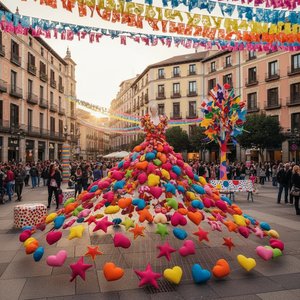
Águeda Ruiz de la Prada: A Study of Eclecticism & Emotional Resonance in Contemporary Spanish Painting
Discover the vibrant world of Ágatha Ruiz de la Prada, a leading figure in contemporary Spanish art. Explore her eclectic style, emotional depth & legacy – a must-read for discerning collectors.

