

 プレビュー
プレビュー
 シェアする
シェアする シェアする
シェアする
 詳細を見る
詳細を見る

 ダウンロード
 似ている作品
 X線調査
X線調査 スライドショー
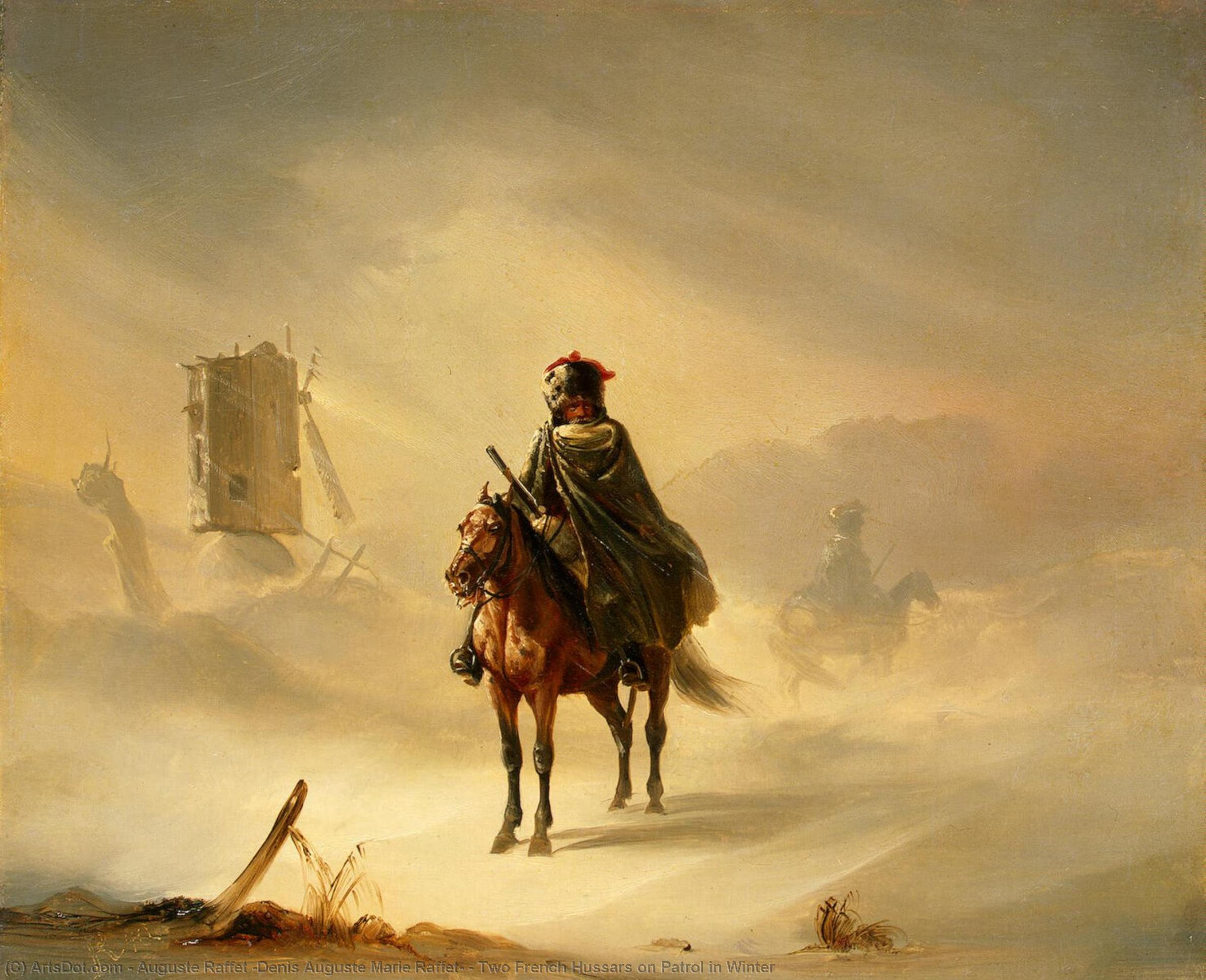
Two French Hussars on Patrol in Winter
 Oil
Oil- WallArt
- Romanticism
 19th Century
 45.0 x 54.0 cm
 エルミタージュ美術館
 詳細を見る
詳細を見る
ジークレー/アートプリント
迅速な制作と多彩な仕上げオプションを備えた、ミュージアムクオリティのジークレーまたはキャンバスプリント。 ( 手描きの絵画を購入 画像を購入)




































作品のオリジナル比率に合わせた、当店の規定サイズからお選びください。

特定のフレームやスペースに合わせて、ご自身でサイズを指定することも可能です。選択されたサイズが元の画像の比率と一致しない場合、作品をトリミングするか、鏡面反射または単色での塗りつぶしによって画像を拡張いたします。制作を開始する前に、ご確認用のデジタルモックアップをお送りいたします。
画面上のプレビューには、実際のトリミングや拡張は反映されませんのでご注意ください。最終的な構図を正確に確認できるのは、モックアップのみとなります。
カスタムサイズも承っておりますが、元の比率を維持するためには、あらかじめ用意されたリストからサイズを選択することをお勧めいたします。


 ガラスオプションは、110cm未満のサイズでのみご利用いただけます。

Two French Hussars on Patrol in Winter
ジークレー/アートプリント
複製画のサイズ
-


合計金額
$ 62
A Frozen Moment in Napoleonic Splendor
In the quiet, biting chill of a winter landscape, Two French Hussars on Patrol in Winter invites the viewer into a bygone era of military elegance and silent vigilance. The painting captures a profound sense of stillness, broken only by the rhythmic movement of two cavalrymen traversing a frost-covered terrain. One rider sits atop a sturdy brown horse, while his companion follows on a striking black steed, their silhouettes cutting through the muted tones of the season. This is not a scene of chaotic warfare, but rather one of the heavy, expectant atmosphere that precedes it. The presence of a distant windmill and a solitary bird in flight adds layers of life to the composition, suggesting that while these soldiers are on duty, the world continues its slow, wintry rotation around them.
The artistry of Auguste Raffet shines through in the meticulous attention to the textures of military life. As a master of the Romantic tradition, Raffet possessed an uncanny ability to blend scientific precision with deep emotional resonance. In this work, one can almost feel the crispness of the winter air and the weight of the heavy uniforms. The technique employs a delicate balance of light and shadow, where the soft, diffused light of an overcast sky illuminates the fine details of the hussars' helmets and the glint of their swords. For the discerning collector or interior designer, this piece offers a sophisticated interplay of earthy tones and dramatic contrasts, making it a commanding focal point for any space that values historical depth and classical beauty.
The Soul of the Battlefield Painter
To understand the gravity of this scene, one must look to the legacy of the artist himself. Denis Auguste Marie Raffet was often celebrated as the "Painter of Battle," a title earned through his unparalleled ability to document the Napoleonic era with both accuracy and soul. Trained under the rigorous standards of the École Polytechnique tradition, Raffet brought an anatomical and structural integrity to his work that few could match. However, he was far more than a mere chronicler of troop movements; he was a storyteller who captured the psychological weight of military service. In this particular patrol scene, the tension is palpable—a quiet, simmering energy that speaks to the loneliness and bravery inherent in the life of a hussar.
For those looking to adorn their homes with art that inspires conversation and reflection, this reproduction serves as a window into the 19th-century French spirit. The painting transcends simple historical illustration, offering instead a meditative study on duty, solitude, and the enduring majesty of the horse. Whether placed in a traditional library, a grand hallway, or a contemporary study, the work brings with it an aura of timelessness and a connection to the romanticized heroism of the past. It is a piece that does not merely decorate a wall but enriches the very atmosphere of a room, providing a sense of historical continuity and artistic prestige.
関連作品

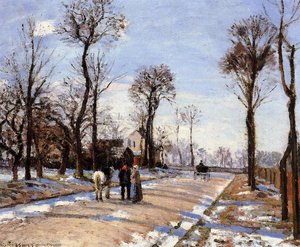
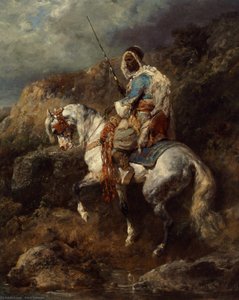
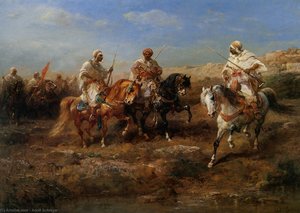
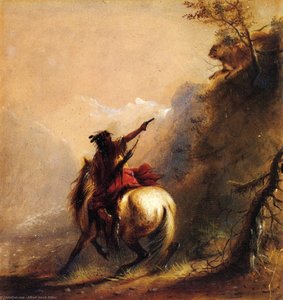
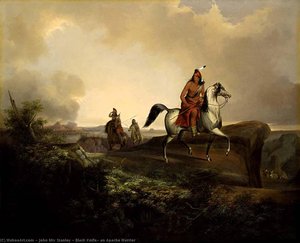
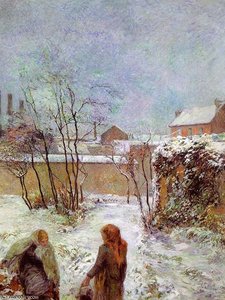
アーティストの略歴
The Painter of Battle: The Life and Legacy of Auguste Raffet
In the grand tapestry of 19th-century French Romanticism, few threads are as vibrant or as visceral as those woven by Denis Auguste Marie Raffet. Known to history as the "Painter of Battle," Raffet possessed a singular ability to transform the cold, strategic movements of infantry and cavalry into profound human dramas. Born in Paris in 1804, his early life was far removed from the gilded halls of the Academy; he began his journey apprenticed to a wood turner, a humble beginning that perhaps instilled in him the tactile appreciation for texture and detail that would later define his mastery. His true calling, however, emerged through evening classes where his raw talent met rigorous discipline, eventually leading him into the prestigious workshops of masters like Cabanel and Nicolas Toussaint Charlet.
Raffet’s artistic evolution was a fascinating marriage of scientific precision and romantic fervor. Under the tutelage of Charlet, he embraced the École Polytechnique tradition, a style that demanded anatomical accuracy and compositional balance. Yet, this technical rigor never stifled his emotional depth. He became a master of lithography, a medium that allowed him to capture the rapid, kinetic energy of war. Through his famous designs of the Napoleonic campaigns—ranging from the sands of Egypt to the blood-soaked fields of Waterloo—he achieved a level of fame that transcended mere illustration. His work did not simply document history; it resurrected it, allowing viewers to feel the heavy, expectant atmosphere of a battlefield before the first cannon fire erupted.
Technique and the Mastery of Light
The brilliance of Raffet’s oeuvre lies in his sophisticated command of disegno and olio nuovo. By blending the structural integrity of Italian-style drawing with a modern approach to oil painting, he achieved an astonishing realism that made his subjects appear almost tangible. He was a student of light, painstakingly layering pigments to capture the way a winter frost clings to a hussar’s uniform or how the sun glints off a polished saber. This meticulous attention to detail extended beyond the battlefield; Raffet also found profound beauty in the rugged landscapes of Algeria, where he departed from academic conventions to explore the evocative, sun-drenched terrains of North Africa.
His ability to manipulate shadow and luminosity allowed him to create works that were both atmospheric and psychologically charged. In his more quiet compositions, such as his depictions of cavalry on patrol, one can sense a profound stillness—a moment of silent vigilance where the world seems to hold its breath. This duality, the ability to pivot from the chaotic, thunderous energy of a retreating battalion to the serene, biting chill of a winter landscape, is what elevates Raffet from a mere chronicler of war to a true poet of the canvas.
Historical Significance and Enduring Impact
The historical importance of Auguste Raffet cannot be overstated. He served as a retrospective painter of the Empire, capturing the spirit of an era that was already passing into legend during the reign of Napoleon III. His work provided a visual vocabulary for French national identity, celebrating the heroism and tragedy of the Napoleonic era with an ardent patriotic enthusiasm. Through his lithographs and paintings, he bridged the gap between historical record and artistic myth-making.
Today, Raffet’s legacy survives in the profound emotional resonance of his work. He remains a pivotal figure for anyone studying the intersection of realism and Romanticism. His contributions can be summarized through several key pillars of his career:
- Mastery of Medium: His rise to fame through lithography revolutionized how military history was disseminated to the public.
- The Dual Influence: The seamless integration of scientific precision from the École Polytechnique with the emotional intensity of Romanticism.
- Versatility of Subject: An unparalleled ability to move between the monumental scale of epic battles and the intimate, evocative beauty of Algerian landscapes.
- Historical Documentation: His role as a vital visual chronicler of the Napoleonic era, preserving the textures and tensions of 19th-century warfare for posterity.
As we look upon his canvases, we do not merely see soldiers and horses; we see the pulse of history itself, captured with a hand that understood both the weight of the sword and the lightness of the morning mist.
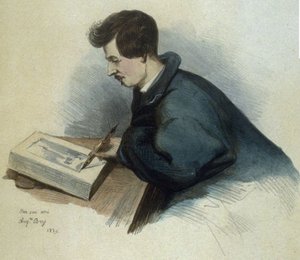
auguste raffet (denis auguste marie raffet)
1804 - 1860 , France
基本情報
- Artistic Movement Or Style: Napoleonic Art
- Artists Or Movements Influenced By This Artist: ['Romanticism']
- Artists Who Influenced This Artist: ['Nicolas Toussaint Charlet']
- Date Of Birth: Paris, France (1804)
- Full Name: Denis Auguste Marie Raffet
- Nationality: French
- Notable Artworks:
- Napoleon in Egypt
- Waterloo
- Place Of Birth: Paris
関連記事
Émile Jean Horace Vernet: Romantic Realism & Depicting 19th-Century Life
Explore the life & art of Émile Jean Horace Vernet, a master of Romantic Realism. Discover his captivating battle scenes, portraits, and Orientalist works – a window into 19th-century France. Learn about his techniques & enduring legacy.
Charles Le Brun: Master of French Baroque Classicism & His Enduring Legacy
Explore the life & art of Charles Le Brun, master of French Baroque Classicism. Discover his royal commissions, influence on Versailles, and enduring legacy through detailed analysis & stunning artworks.
Simon Vouet: A Baroque Master's Journey from Italian Influence to French Classicism
Explore the life & art of Simon Vouet, a pivotal French Baroque painter who introduced Italian styles to France. Discover his masterpieces and lasting influence on 17th-century art.
The Enduring Legacy of French Art: Movements, Masters & Cultural Impact
Explore the rich history of French art, from the Salon to Impressionism & beyond. Discover iconic masters, key movements, and expert guidance for collecting timeless masterpieces. ArtsDot.
Paul Huet: Capturing the Essence of French Romanticism Through Light and Landscape
Explore the captivating world of Paul Huet (1803-1869), a master of French Romantic landscape painting. Discover his influence on Barbizon & Impressionism, and browse high-quality reproductions at ArtsDot.

