

 プレビュー
プレビュー
 シェアする
シェアする シェアする
シェアする
 詳細を見る
詳細を見る

 ダウンロード
 似ている作品
 X線調査
X線調査 スライドショー
 統計情報
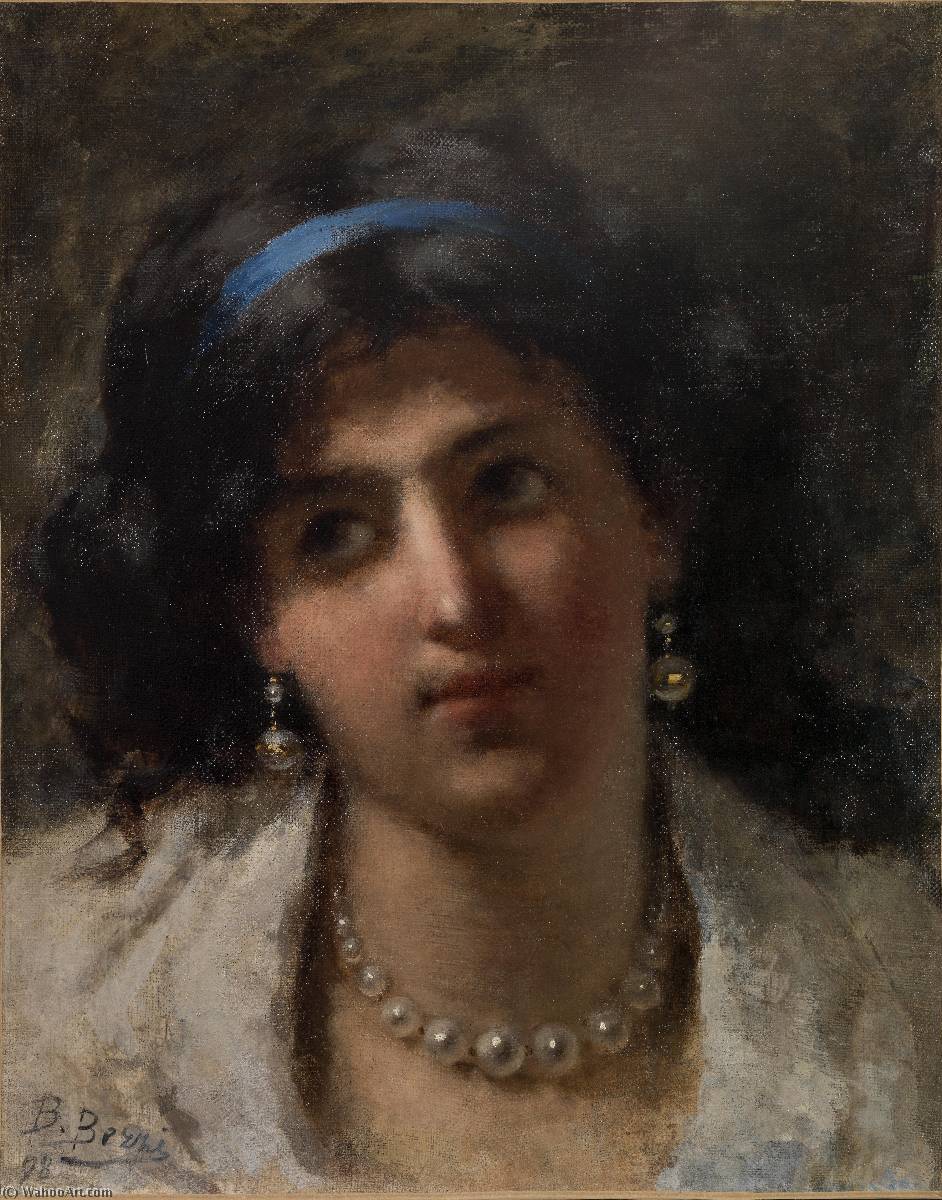
統計情報Italiano Ritratto femminile
 1898
1898 33.0 x 42.0 cm
 Museum of Modern and Contemporary Art of Trento and Rovereto
 詳細を見る
詳細を見る
手描き油彩複製画
当社のアーティストが、お客様のご希望のサイズと額縁に合わせて、キャンバスに手描きで制作する油彩画です。 ( プリント版に切り替え デジタル画像販売へ切り替え)




































作品のオリジナル比率に合わせた、当店の規定サイズからお選びください。

特定のフレームやスペースに合わせて、ご希望のサイズをご入力いただけます。選択されたサイズが元の画像の比率と異なる場合、アートワークをトリミングするか、手描きで要素を追加して絵画を拡張いたします。デジタルモックアップ を制作し、制作開始前にご確認(承認)をいただきます。
画面上のプレビューは、実際のトリミングや拡張を正確に反映しているものではありません。最終的な構図は、モックアップによってのみ正確にご確認いただけます。
カスタムサイズもご利用いただけますが、元の比率を維持するためには、あらかじめ用意されたリストからサイズを選択することをお勧めいたします。
ご注文後、ArtsDot.com チームより詳細な指示をお送りするとともに、仕上がりイメージ(モックアップ)をご提供いたします。


 ガラスオプションは、110cm未満のサイズでのみご利用いただけます。

Italiano Ritratto femminile
複製技法
複製画のサイズ
-


合計金額
$ 263
関連作品







アーティストの略歴
Bartolomeo Bezzi (1851 - 1923): A Lyrical Interpreter of Italian Landscapes and a Visionary of the Venice Biennale
Bartolomeo Bezzi (1851–1923) stands as a significant figure in late 19th and early 20th-century Italian art. Primarily celebrated as a landscape painter, his work captured the ethereal beauty of the Italian Alps and the evocative atmosphere of Venice. Beyond his artistic output, Bezzi played a crucial role in shaping the international art world as one of the principal founders of the Venice Biennale, an institution that continues to define contemporary art discourse. His journey from the rugged terrains of Trentino to the sophisticated art circles of Milan and Venice reflects a period of profound artistic and cultural transformation in Italy.Early Life and Artistic Awakening in Trentino
Bartolomeo Bezzi was born on February 6, 1851, in Fucine di Ossana (Trento), then in the Austrian Empire. Having lost his father as a child, Bezzi lived with an uncle and enrolled at the Brera Academy in Milan at the age of twenty, exhibiting for the first time in 1878. This Trentino region, with its unique cultural blend of Italian and Germanic influences, provided a distinct backdrop for Bezzi's formative years. The natural splendor surrounding him would later become a recurring motif in his oeuvre, rendered with a sensitivity that spoke of a deep, intrinsic connection to his homeland. While details of his earliest artistic endeavors are sparse, it is clear that his passion for art was nurtured from a young age, setting the stage for his formal training.Academic Foundations at the Brera Academy
In the early 1870s, Bartolomeo Bezzi moved to Milan to pursue formal art education at the prestigious Accademia di Belle Arti di Brera. This institution was a crucible of artistic thought in Italy, steeped in tradition yet increasingly open to new currents. At Brera, Bezzi studied under influential masters who shaped his technical skills and artistic vision. Among his most notable teachers were Giuseppe Bertini (1825-1898) and Filippo Carcano (1840-1914). Giuseppe Bertini was a prominent figure associated with late Romanticism and historical painting, known for his large-scale decorative works and stained glass designs. His emphasis on solid draftsmanship and compositional structure would have provided Bezzi with a strong academic grounding. Filippo Carcano, on the other hand, was a leading exponent of Lombard Naturalism. Carcano's dedication to depicting reality with truthfulness, particularly in landscape painting and scenes of rural life, profoundly influenced Bezzi. Carcano encouraged outdoor painting (en plein air), a practice that allowed artists to capture the fleeting effects of light and atmosphere directly from nature. This approach resonated deeply with Bezzi’s own inclinations.The Emerging Artist: Recognition and Early Successes
Bartolomeo Bezzi's talent began to gain recognition during his time at Brera. He quickly absorbed the lessons of his instructors, mastering techniques that would become hallmarks of his distinctive style. His early paintings demonstrate the influence of Filippo Carcano, reflecting a commitment to Naturalism’s principles—a movement that championed observation and accurate representation of the natural world. Bezzi's debut exhibition in 1878 garnered considerable acclaim, establishing him as a rising star within Milan’s artistic community. He swiftly secured prestigious commissions, furthering his reputation for capturing the sublime beauty of Alpine landscapes and Venetian vistas. The Fumagalli Prize awarded to Bezzi in 1882 solidified his position as one of Italy's most promising painters.Venetian Influence and Artistic Legacy
From 1890 onwards, Bezzi established himself in Venice, immersing himself in the city’s vibrant intellectual milieu—a hub for artistic innovation and cultural exchange. His presence at the inaugural Venice Biennale in 1895 signaled his commitment to fostering dialogue between artists and critics alike. He served as a member of the organizing committee for subsequent biennales, shaping the Biennale's trajectory and cementing its role as a cornerstone of modern art history. Bezzi’s international recognition extended beyond Venice; he received the gold medal at the International Exhibition in Munich in 1892 and the silver medal at the Exposition Universelle in Paris in 1900—testaments to his artistic prowess and enduring appeal. His work continues to inspire artists today, embodying a harmonious blend of Romantic lyricism and Naturalist observation.Notable Works
Bezzi’s oeuvre encompasses a diverse range of subjects, reflecting his versatility as an artist. Among his most celebrated paintings are “Mercato di Santa Margherita,” capturing the bustling energy of Venetian commerce; "Italiano Arco di Settimio Severo," presenting a masterful depiction of Roman antiquity; and “Venice Sleeping,” portraying the tranquil beauty of Venice at dusk—works that exemplify Bezzi’s signature style. His landscapes, imbued with atmospheric perspective and luminous color palettes, stand as enduring symbols of Italian artistic heritage.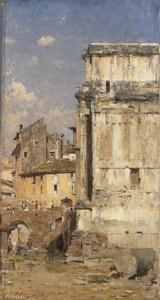
bartolomeo bezzi
1851 - 1923
基本情報
- Artistic Movement Or Style: Lyrical Naturalism
- Artists Or Movements Influenced By This Artist:
- Venetian Art
- Naturalism
- Artists Who Influenced This Artist:
- Filippo Carcano
- Giuseppe Bertini
- Date Of Birth: February 6, 1851
- Date Of Death: October 8, 1923
- Full Name: Bartolomeo Bezzi
- Nationality: Italian
- Notable Artworks:
- Mercato di Santa Margherita
- Italiano Arco di Settimio Severo
- Place Of Birth: Forges d'Ossana (Trentino)