

 プレビュー
プレビュー
 シェアする
シェアする シェアする
シェアする
 詳細を見る
詳細を見る

 ダウンロード
 似ている作品
 X線調査
X線調査 スライドショー
 統計情報
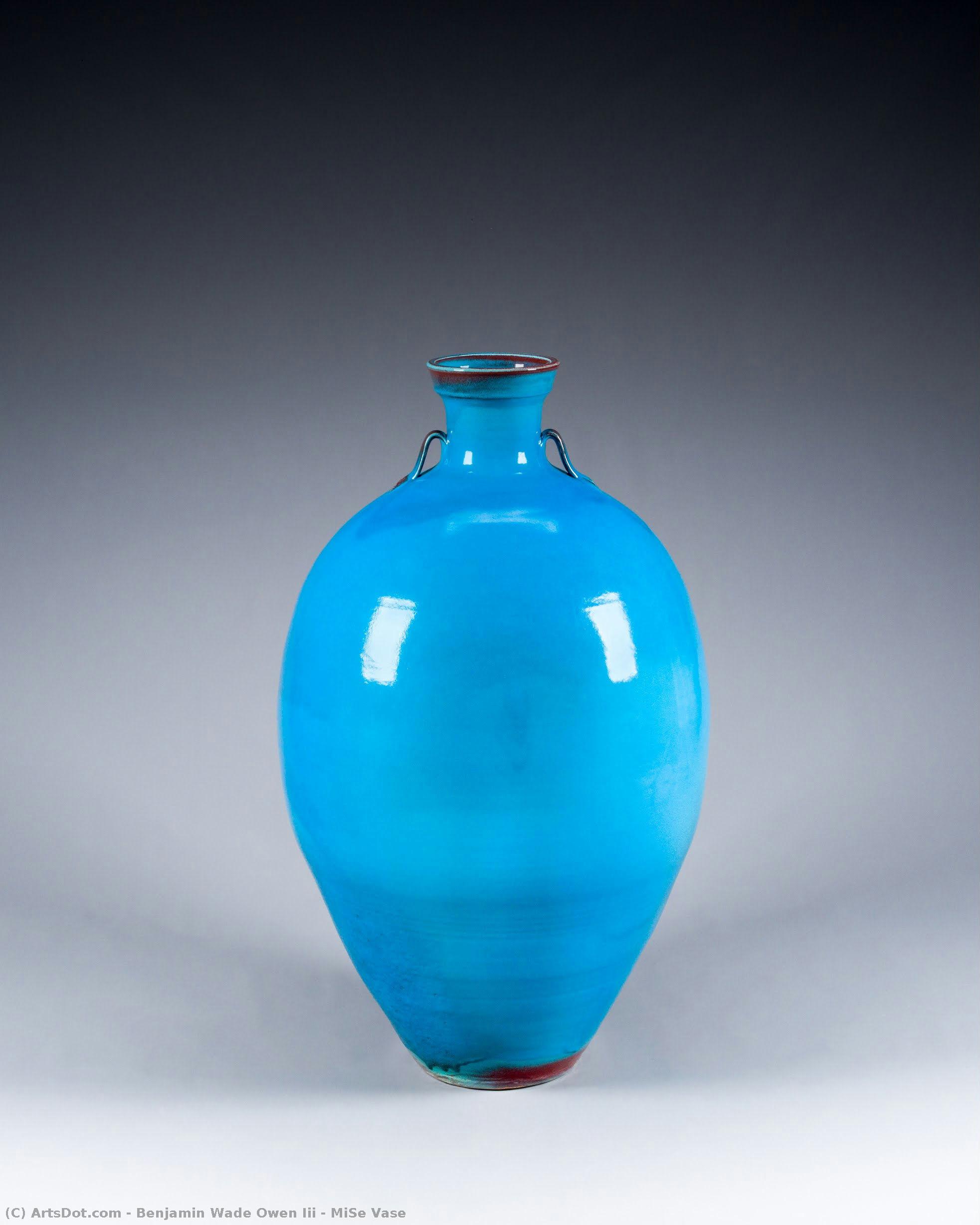
統計情報MiSe Vase

 詳細を見る
詳細を見る
手描き油彩複製画
当社のアーティストが、お客様のご希望のサイズと額縁に合わせて、キャンバスに手描きで制作する油彩画です。 ( プリント版に切り替え デジタル画像販売へ切り替え)




































作品のオリジナル比率に合わせた、当店の規定サイズからお選びください。

特定のフレームやスペースに合わせて、ご希望のサイズをご入力いただけます。選択されたサイズが元の画像の比率と異なる場合、アートワークをトリミングするか、手描きで要素を追加して絵画を拡張いたします。デジタルモックアップ を制作し、制作開始前にご確認(承認)をいただきます。
画面上のプレビューは、実際のトリミングや拡張を正確に反映しているものではありません。最終的な構図は、モックアップによってのみ正確にご確認いただけます。
カスタムサイズもご利用いただけますが、元の比率を維持するためには、あらかじめ用意されたリストからサイズを選択することをお勧めいたします。
ご注文後、ArtsDot.com チームより詳細な指示をお送りするとともに、仕上がりイメージ(モックアップ)をご提供いたします。


 ガラスオプションは、110cm未満のサイズでのみご利用いただけます。

MiSe Vase
複製技法
複製画のサイズ
-


合計金額
$ 263
関連作品









アーティストの略歴
A Legacy Forged in Clay: The Life and Art of Benjamin Wade Owen III
To understand the soul of North Carolina ceramics, one must look to the hands of Benjamin Wade Owen III, a master potter whose life work serves as a living bridge between ancestral American utility and the refined elegance of global ceramic traditions. Born in 1904 in Westmoreland County, Virginia, but deeply rooted in the fertile pottery soil of Seagrove, North Carolina, Owen’s identity was shaped by the rhythmic turning of the potter’s wheel and the heavy, honest scent of damp earth. His journey was not merely one of individual skill, but a continuation of a multi-generational saga, where the techniques of his forefathers were preserved, refined, and eventually elevated into a sophisticated art form that resonates far beyond the borders of Moore County.
The foundations of Owen’s artistry were laid in the intimate setting of his family workshop. Under the watchful eyes of his father, Rufus, and his grandfather, the legendary master potter Ben Owen Sr., he learned the fundamental language of clay. His earliest memories were steeped in the practicalities of the craft—kneading heavy clay, weighing out portions, and assisting with the lifting of warm jars from the kiln. This period of apprenticeship was characterized by a seamless blend of labor and learning; between the seasonal demands of farming life, Owen mastered the creation of utilitarian vessels such as salt-glazed stoneware jars, milk crocks, and flowerpots. These early works, though functional, carried the weight of a tradition designed to serve the needs of local homes and farms, establishing a baseline of technical excellence that would define his later, more experimental endeavors.
The Convergence of East and West
A transformative shift occurred in Owen’s creative consciousness through his association with Jugtown Pottery. Working alongside the visionary Jacques and Juliana Busbee, Owen was introduced to a world where North Carolina stoneware met the sophisticated aesthetics of the Far East. The Busbees sought to revitalize the regional industry by looking toward the exquisite legacies of the Han, Tang, and Sung dynasties. This exposure profoundly altered Owen’s artistic trajectory, as he began to weave the delicate nuances of Asian porcelain into the rugged strength of American stoneware. He did not merely copy these ancient forms; rather, he engaged in a profound dialogue with them, meticulously replicating designs from Persia, Europe, and China, and translating their grace into a medium that felt inherently local.
This synthesis of influences created a style that was both familiar and exotic. His work began to reflect a scholarly depth, bolstered by his formal education at East Carolina University, which provided him with the historical framework to understand the symbolic weight of the motifs he employed. The resulting pieces were more than just vessels; they were sculptural narratives that captured the essence of global ceramic history. Whether through subtle glazes or intricate patterns, Owen’s pottery embodied a harmonious balance between the sturdy, earthbound traditions of his North Carolina roots and the ethereal beauty of Eastern artistry.
A Lasting Impression on Ceramic History
As his career progressed, Owen transitioned from the collaborative environment of Jugtown to continuing his family's independent legacy. His work eventually found its way into some of the most prestigious collections in the world, securing his place as a pivotal figure in American ceramic history. The significance of his contribution lies in his ability to transform a utilitarian craft into a medium of high art without losing the connection to the earth from which it sprang.
The enduring impact of Benjamin Wade Owen III can be seen through several key achievements:
- Museum Recognition: His exceptional pieces are held in permanent collections at the Museum of Fine Arts, Boston and the Smithsonian Museum of Art, marking his transition from regional potter to internationally recognized artist.
- Architectural Presence: His commissioned works grace prestigious modern spaces, including the lobby of the Ritz Carlton Tokyo Hotel in Japan, demonstrating the global appeal of his aesthetic.
- Cultural Preservation: By integrating ancient Asian techniques with North Carolina traditions, he played a vital role in the mid-century revival of American stoneware pottery.
- Generational Continuity: He successfully bridged the gap between the functional earthenware of the 19th century and the expressive ceramic art of the late 20th century, ensuring the Owen family legacy remains a cornerstone of Seagrove's identity.
Today, the name Benjamin Wade Owen III remains synonymous with a particular kind of artistic integrity—a commitment to the physical reality of clay and a boundless curiosity for the beauty found in distant cultures. His life stands as a testament to the idea that true art is never static; it is a continuous flow of tradition, much like the spinning wheel that guided his hands for decades.
benjamin wade owen iii
1904 - 1983 , United States of America
基本情報
- Artistic Movement Or Style: Traditional North Carolina Pottery
- Artists Or Movements Influenced By This Artist:
- Asian pottery
- Jugtown Pottery
- Artists Who Influenced This Artist:
- Jacques Busbee
- Ben Owen Sr.
- Date Of Birth: 1904-06-04
- Date Of Death: 1983-10-07
- Full Name: Benjamin Wade Owen III
- Nationality: American
- Notable Artworks: ['MiSe Vase']
- Place Of Birth: Westmoreland County, United States