

 プレビュー
プレビュー
 シェアする
シェアする シェアする
シェアする
 詳細を見る
詳細を見る

 ダウンロード
 似ている作品
 X線調査
X線調査 スライドショー
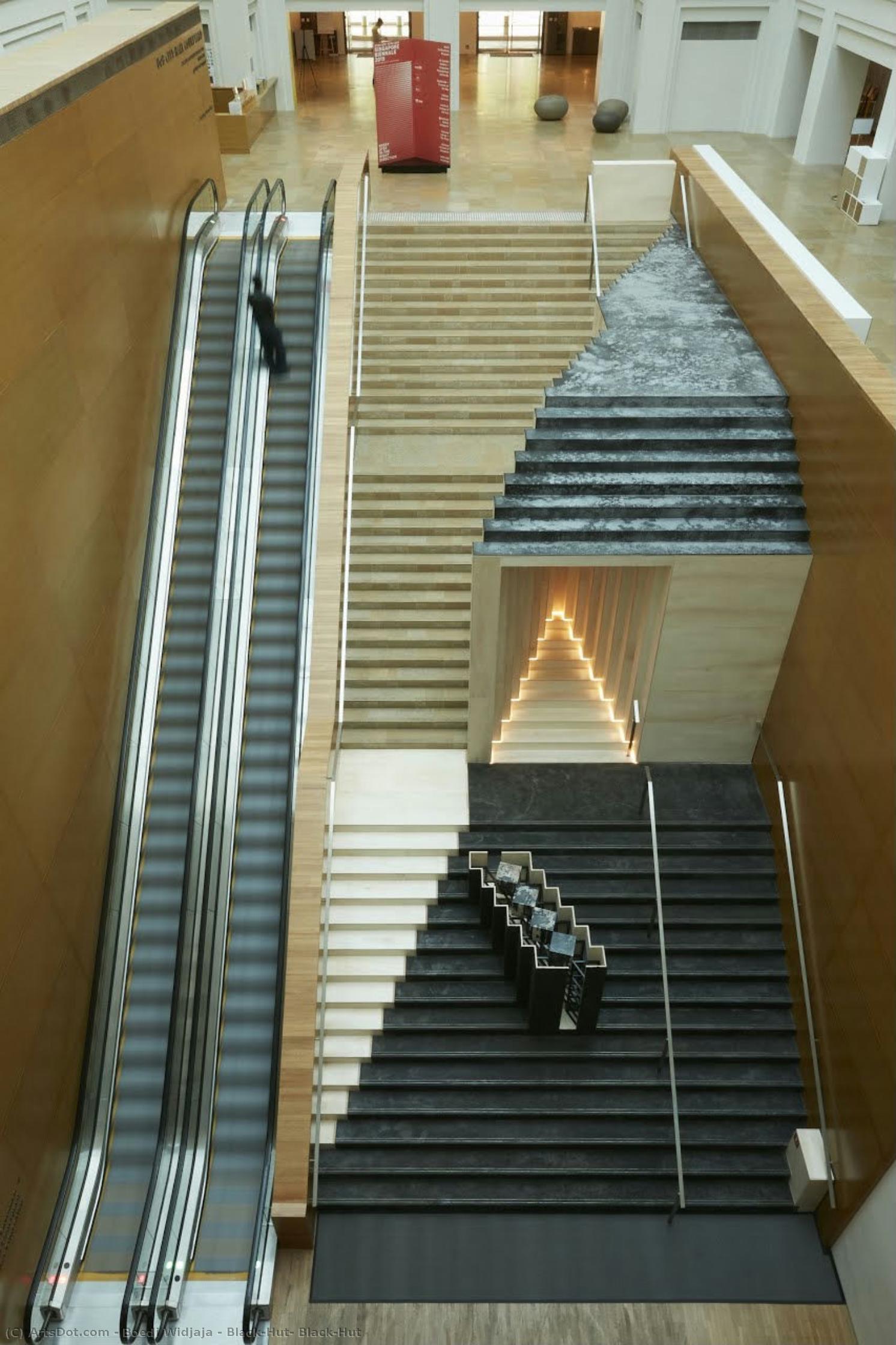
Black—Hut, Black—Hut


 詳細を見る
詳細を見る
ジークレー/アートプリント
迅速な制作と多彩な仕上げオプションを備えた、ミュージアムクオリティのジークレーまたはキャンバスプリント。 ( 手描きの絵画を購入 画像を購入)




































作品のオリジナル比率に合わせた、当店の規定サイズからお選びください。

特定のフレームやスペースに合わせて、ご自身でサイズを指定することも可能です。選択されたサイズが元の画像の比率と一致しない場合、作品をトリミングするか、鏡面反射または単色での塗りつぶしによって画像を拡張いたします。制作を開始する前に、ご確認用のデジタルモックアップをお送りいたします。
画面上のプレビューには、実際のトリミングや拡張は反映されませんのでご注意ください。最終的な構図を正確に確認できるのは、モックアップのみとなります。
カスタムサイズも承っておりますが、元の比率を維持するためには、あらかじめ用意されたリストからサイズを選択することをお勧めいたします。


 ガラスオプションは、110cm未満のサイズでのみご利用いただけます。

Black—Hut, Black—Hut
ジークレー/アートプリント
複製画のサイズ
-


合計金額
$ 62
関連作品










アーティストの略歴
A Life Between Homes: The Poetic Cartographies of Boedi Widjaja
Boedi Widjaja, born in 1975 in Solo City, Indonesia, is an artist whose work resonates with the quiet ache of displacement and the persistent search for belonging. His story isn’t one of grand pronouncements or overt political statements, but rather a deeply personal exploration woven into the fabric of his artistic practice. Widjaja's early life was marked by a separation from his family, a necessity dictated by the racial tensions that simmered under President Suharto’s New Order regime. Sent to Singapore at a young age, he navigated a new culture and language while carrying within him the echoes of a homeland left behind. This formative experience—the feeling of being both rooted and adrift—became the foundational impulse for his art. Initially trained as an architect, Widjaja's path took an unexpected turn through graphic design before ultimately blossoming into a multifaceted artistic career in his thirties. It’s perhaps this diverse background that lends his work its unique sensibility: a meticulous attention to space, form, and material combined with a conceptual depth born from personal narrative.From Architecture to Autobiographical Landscapes
Widjaja's transition from architecture wasn’t an abandonment of spatial concerns but rather a broadening of them. He began to see the built environment not merely as a functional structure but as a repository of memory, identity, and cultural meaning. His work contemplates on house, home and homeland through long-running, interdisciplinary series developed in parallel. This shift is evident in his embrace of drawing as a primary medium—a deliberate act of slowing down, of tracing the contours of experience, both physical and emotional. He doesn’t simply depict spaces; he excavates them, layering histories and personal associations onto their surfaces. The techniques he employs are often subtle, relying on repetition, fragmentation, and the evocative power of texture to convey a sense of longing or estrangement. His approach is often autobiographical and informed by his own lived experience of migration and diaspora. Early projects began to explore these themes through installations that subtly disrupted familiar architectural forms, hinting at the instability of belonging and the porousness of cultural boundaries.Themes of Migration, Memory, and the Search for Identity
The core concerns of Widjaja’s work—migration, memory, and the search for identity—are not presented as abstract concepts but rather as lived realities. His series *Path.* (2012 – Present) is a particularly poignant example, tracing migratory routes through installations and live art performances that emphasize physical movement and social connection. Another significant body of work, *Imaginary Homeland* (2015 – Present), delves into the popular imagery of national and cultural identities, playfully deconstructing visual tropes to reveal their inherent instabilities. He often returns to motifs associated with his childhood in Solo City—the turquoise hues of traditional houses, the rhythmic patterns of Javanese gamelan music—not as nostalgic signifiers but as fragments of a fractured past. These elements are recontextualized and reimagined, creating a space for contemplation on the complexities of cultural hybridity and the enduring power of memory.International Recognition and Artistic Achievements
Widjaja’s work has garnered significant international recognition, with exhibitions at prestigious venues such as the Asia Pacific Triennial (2018), MAP1: The Transforming Cityscape (2014), and the Singapore Biennale (2011, 2013, 2016). His inclusion in these platforms speaks to the universality of his themes and the nuanced sensitivity of his artistic approach. He was awarded Top 10 Winner, FID Prize (2017) and Finalist, Sovereign Asian Art Prize(2015), among other accolades. His works are featured in the collections of prominent institutions including the National Gallery Singapore, the Singapore Art Museum, and the Museum of Contemporary Art and Design in Manila, solidifying his position as a significant voice in contemporary art.A Legacy of Quiet Resonance
Boedi Widjaja’s historical significance lies not in making bold statements but in creating spaces for quiet contemplation. His work doesn't offer easy answers or definitive resolutions; instead, it invites viewers to engage with the complexities of displacement, memory, and identity on a deeply personal level. He has shown in numerous exhibitions internationally, including the asia pacific triennial 9 (2018); map1: the transforming cityscape (2014); and the singapore biennale (2011, 2013, 2016). His art is a testament to the enduring power of personal narrative and the importance of acknowledging the often-unseen wounds of migration. Through his meticulous attention to space, form, and material, Widjaja has created a body of work that resonates with anyone who has ever felt the pull of multiple homes or the ache of belonging nowhere—a poetic cartography of the human heart.
boedi widjaja
1975 - , Indonesia
基本情報
- Artistic Movement Or Style: Contemporary art
- Date Of Birth: 1975
- Full Name: boedi widjaja
- Nationality: Indonesian
- Notable Artworks: ['Black—Hut, Black—Hut']
- Place Of Birth: Solo City, Indonesia