

 プレビュー
プレビュー
 シェアする
シェアする シェアする
シェアする
 詳細を見る
詳細を見る

 ダウンロード
 似ている作品
 X線調査
X線調査 スライドショー
 Stats
StatsBERGER DES PYRENEES

 詳細を見る
詳細を見る
ジークレー/アートプリント
迅速な制作と多彩な仕上げオプションを備えた、ミュージアムクオリティのジークレーまたはキャンバスプリント。 ( 手描きの絵画を購入 Switch to Digital Image)




































作品のオリジナル比率に合わせた、当店の規定サイズからお選びください。

特定のフレームやスペースに合わせて、ご自身でサイズを指定することも可能です。選択されたサイズが元の画像の比率と一致しない場合、作品をトリミングするか、鏡面反射または単色での塗りつぶしによって画像を拡張いたします。制作を開始する前に、ご確認用のデジタルモックアップをお送りいたします。
画面上のプレビューには、実際のトリミングや拡張は反映されませんのでご注意ください。最終的な構図を正確に確認できるのは、モックアップのみとなります。
カスタムサイズも承っておりますが、元の比率を維持するためには、あらかじめ用意されたリストからサイズを選択することをお勧めいたします。


 ガラスオプションは、110cm未満のサイズでのみご利用いただけます。

BERGER DES PYRENEES
ジークレー/アートプリント
複製画のサイズ
-


合計金額
$ 62
A Tranquil Pastoral: "Berger des Pyrénées" by Rosa Bonheur
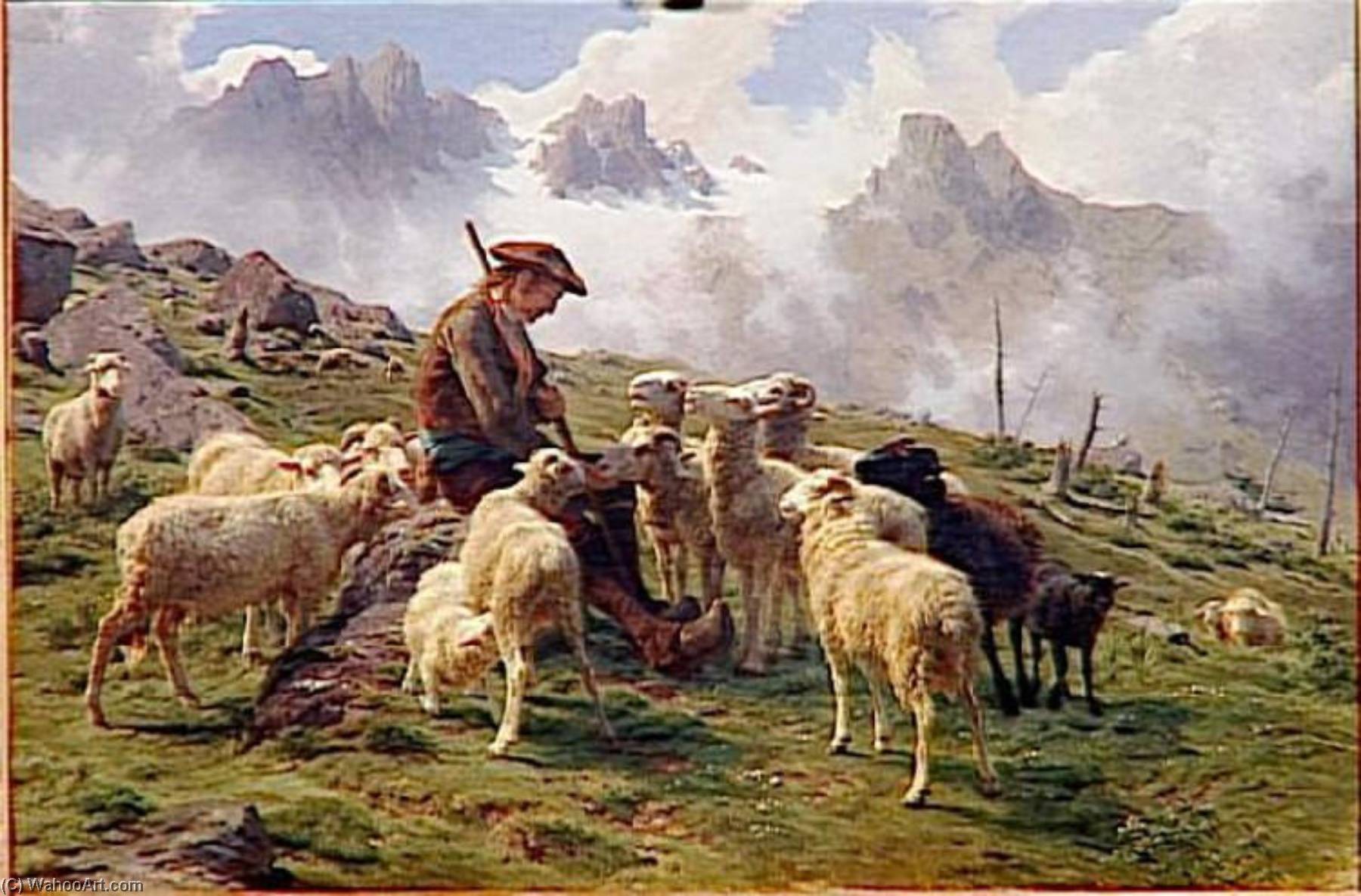
Rosa Bonheur’s “Berger des Pyrénées” (Shepherd of the Pyrenees) offers a captivating glimpse into 19th-century rural life, transporting viewers to the serene landscapes of the French Pyrenees. This evocative work exemplifies Bonheur's mastery of animalière painting – a genre dedicated to depicting animals with remarkable realism and detail – while also showcasing her skill in capturing atmospheric landscapes.
Subject & Style: Celebrating Nature’s Simplicity
The scene depicts a shepherd, calmly seated amidst his flock of sheep against the backdrop of majestic mountains partially veiled by clouds. Bonheur's style blends realistic observation with impressionistic techniques. While she meticulously renders the forms of the animals and rocks, her use of loose brushwork and subtle color blending creates an overall sense of atmosphere rather than photographic precision. This approach aligns firmly within the tradition of 19th-century academic painting, yet possesses a softness that distinguishes it from more rigid styles.
Technique & Composition: A Masterclass in Oil Painting
Executed in oil on canvas (assumed based on period and style), “Berger des Pyrénées” demonstrates Bonheur’s technical prowess. The artist skillfully employs atmospheric perspective, softening the details of distant mountains to convey depth and distance. Notice how the foreground elements – the sheep and shepherd – are rendered with greater clarity than the hazy peaks in the background. The composition itself is thoughtfully structured around a triangular form, grounding the scene with the shepherd at its base and culminating in the mountain heights. The use of organic shapes—the rounded forms of the sheep, the irregular rocks—contrasts beautifully with the more angular mountain silhouettes.
Symbolism & Emotional Resonance: Peace and Connection
Beyond its aesthetic beauty, “Berger des Pyrénées” carries symbolic weight. The shepherd traditionally represents caretaking, responsibility, and a connection to nature. The painting evokes feelings of peace, tranquility, and a deep appreciation for the simplicity of rural life. The diffused lighting and muted color palette contribute to this sense of calm, inviting viewers to share in the quiet contemplation of the scene. It’s a testament to Bonheur's ability to not only depict animals with scientific accuracy but also to imbue her works with profound emotional depth.
関連作品
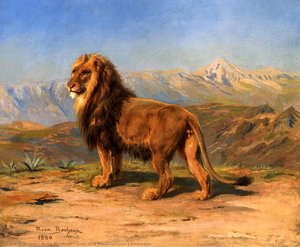
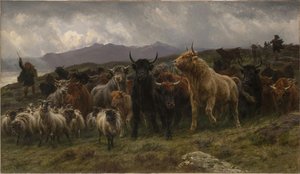
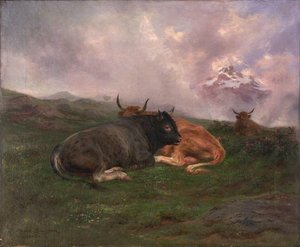
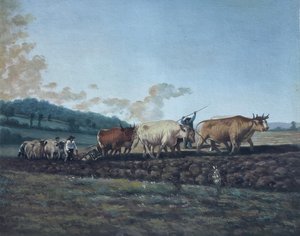
アーティストの略歴
Rosa Bonheur: A Pioneer of Animal Art
Rosa Bonheur (1822-1899) stands as a monumental figure in the history of art, not merely for her prodigious talent but also for her audacious spirit and groundbreaking role as a female artist challenging societal norms. More than just a painter, she was an animalière—a specialist in depicting animals with unparalleled realism and emotional depth – a field dominated by men during the 19th century. Her journey from a rebellious child to one of France’s most celebrated artists is a testament to her dedication, observational skills, and unwavering belief in her artistic vision.
Born Marie-Rosalie Bonheur in Bordeaux, her early life was marked by both privilege and profound loss. The sudden death of her mother when she was only eleven years old profoundly shaped her character, fostering an independent streak and a deep connection to the natural world. Her father, Oscar-Raymond Bonheur, a landscape painter himself, recognized his daughter’s extraordinary talent for capturing the essence of animals and nurtured it through unconventional methods. Unlike the traditional art academies that barred women's access, Rosa received her training primarily through observation—spending countless hours sketching live animals in stables, at markets, and even in slaughterhouses – immersing herself in their movements, behaviors, and unique physiologies. This immersive approach, coupled with her father’s guidance, allowed her to develop a level of anatomical accuracy and emotional understanding rarely seen in animal art of the time.
The Rise of an Animalière
Rosa's artistic career gained momentum through consistent participation in the prestigious Salon de Paris, the dominant art exhibition of the era. Beginning in 1841, she steadily showcased her work, earning critical acclaim and establishing herself as a rising star. Her early successes included *Goats and Sheep* (1840) and *Rabbits Nibbling Carrots* (1840), both depicting scenes from rural life with remarkable detail and sensitivity. However, it was *The Horse Fair* (Le marché aux chevaux), completed in 1855, that cemented her reputation as the foremost animal painter of her generation. This monumental canvas—measuring eight by sixteen feet—depicts a bustling horse market in Paris, capturing not just the physical appearance of the animals and their handlers but also the vibrant atmosphere and social interactions of the scene.
*The Horse Fair* was revolutionary for several reasons. Firstly, its scale was unprecedented for a female artist at the Salon. Secondly, Bonheur’s meticulous attention to detail—the individual expressions on the horses' faces, the textures of their coats, the intricate patterns of their harnesses – demonstrated an extraordinary level of observation and technical skill. Furthermore, the painting subtly challenged societal expectations by portraying women actively participating in the market alongside men, reflecting a more egalitarian view of rural life.
Breaking Boundaries: Gender, Art, and Observation
Rosa Bonheur’s artistic practice was inextricably linked to her personal choices and defiance of conventional gender roles. To gain access to the subjects she needed for her art—particularly animals in their natural environments—she adopted masculine attire, including trousers and a loose shirt, a deliberate act of rebellion against the restrictive expectations placed upon women at the time. This unconventional appearance garnered both admiration and criticism, but it also served as a powerful statement about her commitment to her artistic pursuits. Her decision to study animals directly from life, rather than relying solely on sketches or engravings, further distinguished her work and underscored her dedication to authentic representation.
She was not alone in her pursuit of art; she had siblings who were also artists, including Auguste Bonheur (a sculptor) and Juliette Bonheur (another painter). The family’s artistic legacy was fostered by their father, Raymond, a landscape and portrait painter. The Bonheurs' commitment to realism and observation—influenced by the Saint-Simonian social philosophy—provided a foundation for Rosa’s unique approach to animal art.
Legacy and Influence
Rosa Bonheur’s impact on the history of art extends far beyond her individual achievements. She paved the way for future generations of female artists, demonstrating that women could excel in traditionally male-dominated fields. Her meticulous realism and emotional sensitivity set a new standard for animal painting, influencing countless artists who followed. Her work continues to be celebrated for its beauty, accuracy, and profound understanding of the natural world. Today, her masterpieces—including *The Horse Fair* and *Ploughing in the Nivernais*—are housed in prestigious museums around the globe, ensuring that Rosa Bonheur’s legacy as a pioneering artist and a champion of female creativity endures.
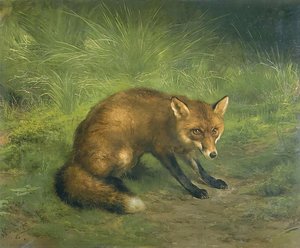
bonheur marie rosalie
1822 - 1899
基本情報
- Artistic Movement Or Style: Animalière Painting
- Artists Or Movements Influenced By This Artist: ['Rosa Bonheur']
- Artists Who Influenced This Artist: ['Raymond Bonheur']
- Date Of Birth: March 16, 1822
- Date Of Death: May 25, 1899
- Full Name: Marie-Rosalie Bonheur
- Nationality: French
- Notable Artworks:
- The Horse Fair
- Ploughing in the Nivernais
- Place Of Birth: Bordeaux, France
関連記事
Idyllic Visions: Exploring the Pastoral Scene in Art History – From Arcadia to Modern Interpretations
Explore the captivating history of pastoral art from classical Arcadia to modern masterpieces. Discover key artists like Millet & Cole at ArtsDot. Find serene landscape paintings for your home.
Idyllic Visions: Exploring the Pastoral Tradition in Western Art – Themes, Techniques & Enduring Appeal
Explore the rich history of pastoral art from classical Arcadia to contemporary interpretations. Discover key artists, themes & collecting tips at ArtsDot.
Rosa Bonheur: Realism, Rural Life & Redefining Women's Roles in 19th-Century Art
Explore the life & art of Rosa Bonheur, a pioneering Realist painter who redefined women's roles in 19th-century France. Discover her iconic animal paintings and lasting influence on art history. Learn more at ArtsDot.
生命空間に息吹を吹き込む:芸術における動物表現の永続性と内装デザインへの応用
ArtsDotで、生命空間に息吹を吹き込む芸術作品を見つけませんか?高品質な油絵複製、カスタム制作、無料アートコンサルテーション。美術史に基づいた確かな品質と、お客様だけの特別な空間演出をお手伝いします。
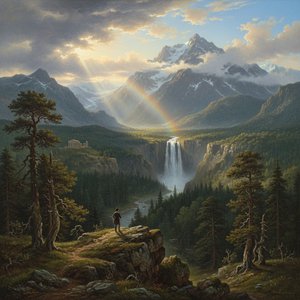
Evoking Nature's Sublime: A Comprehensive Exploration of 19th-Century Landscape Painting
Explore the captivating world of 19th-century landscape painting! Discover renowned artists like Friedrich & Monet, key movements, and find the perfect artwork to bring nature's serenity into your home. Expert insights at ArtsDot.