

 プレビュー
プレビュー
 プリントを購入
 シェアする
シェアする シェアする
シェアする
 詳細を見る
詳細を見る

 ダウンロード
 似ている作品
 X線調査
X線調査 スライドショー
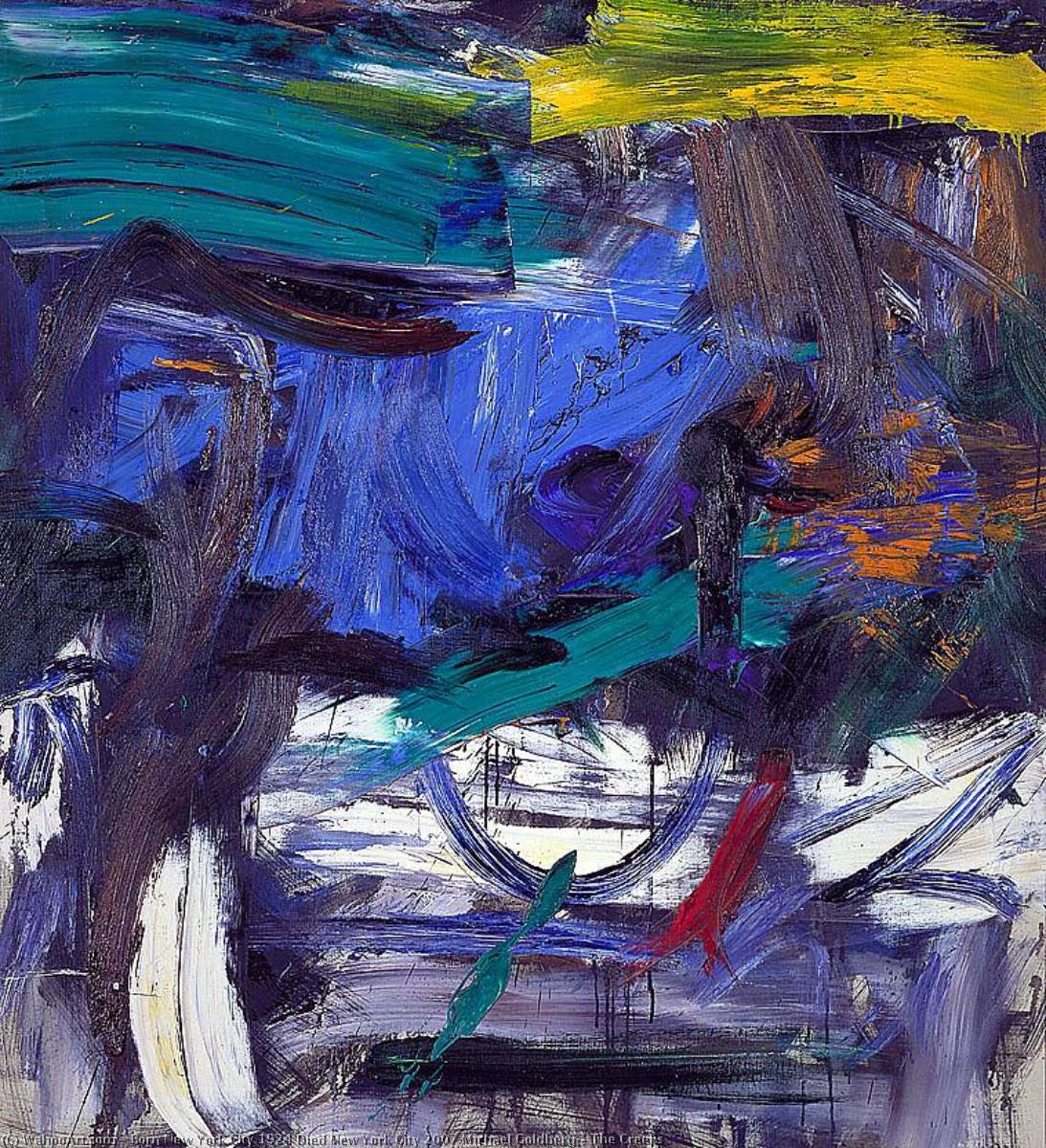
The Creeks
 1959
1959 132.0 x 121.0 cm
 詳細を見る
詳細を見る




































作品のオリジナル比率に合わせた、当店の規定サイズからお選びください。

特定のフレームやスペースに合わせて、ご希望のサイズをご入力いただけます。選択されたサイズが元の画像の比率と異なる場合、アートワークをトリミングするか、手描きで要素を追加して絵画を拡張いたします。デジタルモックアップ を制作し、制作開始前にご確認(承認)をいただきます。
画面上のプレビューは、実際のトリミングや拡張を正確に反映しているものではありません。最終的な構図は、モックアップによってのみ正確にご確認いただけます。
カスタムサイズもご利用いただけますが、元の比率を維持するためには、あらかじめ用意されたリストからサイズを選択することをお勧めいたします。
ご注文後、ArtsDot.com チームより詳細な指示をお送りするとともに、仕上がりイメージ(モックアップ)をご提供いたします。


 ガラスオプションは、110cm未満のサイズでのみご利用いただけます。

The Creeks
複製技法
複製画のサイズ
-


合計金額
$ 263
関連作品








アーティストの略歴
Michael Goldberg: A Pioneer of Gesture and Color
Born in the Bronx in 1924, Michael Goldberg emerged from the vibrant, post-war crucible of New York City as a singular and powerful voice within the Abstract Expressionist movement. His artistic journey was marked by an early precocity; at just fourteen years old, he began enrolling in classes at the Art Students League of $\text{New York}$, setting the stage for a lifetime of profound exploration. This formative period placed him at the heart of a burgeoning modernism, where the boundaries of canvas and emotion were being radically redefined. His development was further shaped by his time studying under the legendary Hans Hofmann, a mentor whose teachings on spontaneity and the expressive potential of color would become the bedrock of Goldberg’s aesthetic language.
The trajectory of Goldberg's life was not without its interruptions, as the shadows of global conflict reached even the studios of Manhattan. A veteran of World War II, he served with distinction in North Africa and the China-Burma-India Theater, earning both a Purple Heart and a Bronze Star. This period of intense, real-world experience added a layer of psychological depth to his later work, perhaps informing the raw, visceral energy found in his compositions. Upon returning to New York, he found himself immersed in the legendary Eighth Street Club and the Cedar Bar, spaces where he engaged in spirited dialogues with titans such as Willem de Kooning, Jackson Pollock, and Lee Krasner. These interactions were not merely social; they were intellectual skirmishes that helped solidify his position within the "second generation" of the New York School.
The Language of Action and Abstraction
Goldberg’s mature style is best characterized by its rhythmic, gestural intensity. He was a master of action painting, a technique where the act of creation itself becomes visible through energetic brushstrokes and layered textures. His canvases often pulsate with a sense of movement, as if the paint were still in the process of settling upon the surface. This kinetic energy was frequently balanced by a sophisticated command of color. He utilized bold reds, deep blues, and luminous yellows to create compositions that felt both structurally sound and emotionally volatile. In many ways, his work sought to bridge the gap between the heavy traditions of Western European painting and the emerging, liberated spirit of post-war American abstraction.
While much of his fame rests upon his purely abstract works, Goldberg possessed a remarkable ability to infuse recognizable forms with an abstract sensibility. His still lifes and urban vistas serve as poignant reminders of his engagement with the tangible world. In these pieces, the distinction between subject and medium begins to blur; a stool or a cityscape becomes less a literal depiction and more a vessel for light, shadow, and texture. This duality allowed him to maintain a connection to the everyday experience while simultaneously pursuing the sublime heights of pure abstraction.
Legacy and Historical Significance
As the art world shifted toward Color Field painting, Hard-edge abstraction, and eventually Pop Art, Goldberg remained steadfast in his commitment to the gestural tradition. While some critics viewed this as a resistance to changing fashions, it can more accurately be seen as a dedicated pursuit of an authentic, expressive medium. His ability to maintain relevance through decades of stylistic upheaval is a testament to the enduring power of his visual language.
Today, the historical significance of Michael Goldberg is recognized through his presence in some of the world's most prestigious institutions. His contributions to the canon of American art are preserved in collections such as:
- The Museum of Modern Art (MoMA), New York
- The Whitney Museum of American Art, New York
- The Hirshhorn Museum and Sculpture Garden, Washington, D.C.
- The Cleveland Museum of Art, Ohio
- The Baltimore Museum of Art, Maryland
Through his prolific output and his role as a teacher at the School of Visual Arts, Goldberg helped sustain the flame of Abstract Expressionism long after its initial explosion. He remains a vital figure for anyone seeking to understand the profound emotional landscape of mid-century American modernism.
born new york city 1924 died new york city 2007 michael goldberg
1924 - 2007 , United States of America
基本情報
- Artistic Movement Or Style: Abstract Expressionism
- Artists Who Influenced This Artist:
- Joan Mitchell
- Alfred Leslie
- Helen Frankenthaler
- Willem de Kooning
- Date Of Birth: December 24, 1924
- Date Of Death: December 31, 2007
- Full Name: Michael Goldberg
- Nationality: American
- Notable Artworks:
- Sir Moses Gaster
- Untitled (stool)
- Hill 12
- Place Of Birth: The Bronx, United States

