

 プレビュー
プレビュー
 シェアする
シェアする シェアする
シェアする
 詳細を見る
詳細を見る

 ダウンロード
 似ている作品
 X線調査
X線調査 スライドショー
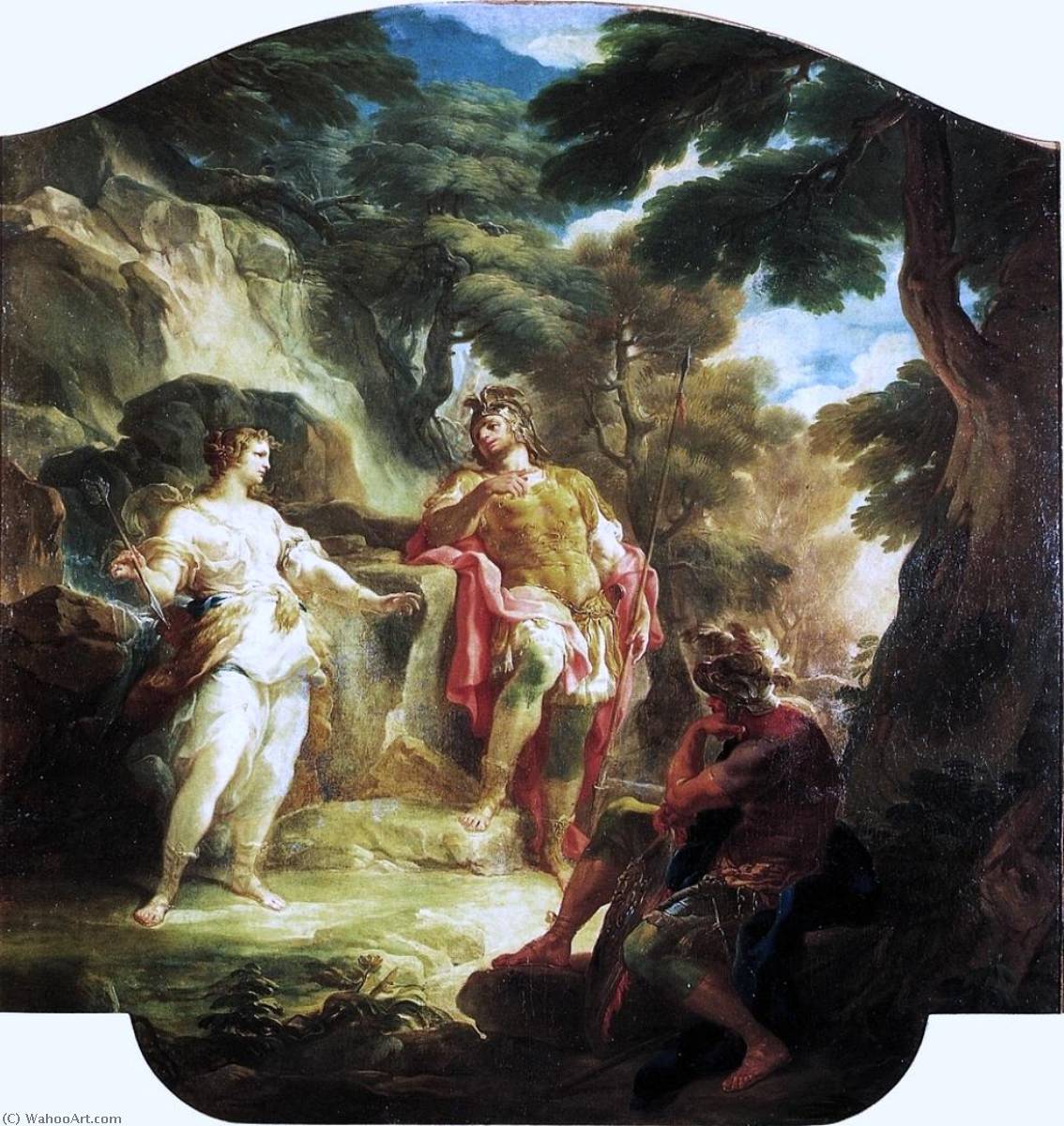
Life of Aeneas Venus Appearing to Aeneas


 詳細を見る
詳細を見る
ジークレー/アートプリント
迅速な制作と多彩な仕上げオプションを備えた、ミュージアムクオリティのジークレーまたはキャンバスプリント。 ( 手描きの絵画を購入 画像を購入)




































作品のオリジナル比率に合わせた、当店の規定サイズからお選びください。

特定のフレームやスペースに合わせて、ご自身でサイズを指定することも可能です。選択されたサイズが元の画像の比率と一致しない場合、作品をトリミングするか、鏡面反射または単色での塗りつぶしによって画像を拡張いたします。制作を開始する前に、ご確認用のデジタルモックアップをお送りいたします。
画面上のプレビューには、実際のトリミングや拡張は反映されませんのでご注意ください。最終的な構図を正確に確認できるのは、モックアップのみとなります。
カスタムサイズも承っておりますが、元の比率を維持するためには、あらかじめ用意されたリストからサイズを選択することをお勧めいたします。


 ガラスオプションは、110cm未満のサイズでのみご利用いただけます。

Life of Aeneas Venus Appearing to Aeneas
ジークレー/アートプリント
複製画のサイズ
-


合計金額
$ 62
関連作品
アーティストの略歴
The Radiant Legacy of Corrado Giaquinto
In the grand tapestry of the eighteenth century, few threads shimmer with as much luminous grace as the works of Corrado Giaquinto. A master of the Rococo era, Giaquinto possessed a rare ability to bridge the heavy, dramatic grandeur of the Neapolitan Baroque with a newfound lightness and airy elegance. Born in Molfetta in 1703, his journey was one of profound transformation, moving from the disciplined shadows of traditional training into a world of brilliant color and celestial movement. While his early life might have been destined for a religious vocation, it was instead captured by the irresistible pull of the brush, leading him to escape the cloister for the studio.
His artistic foundation was built upon the rigorous techniques of Saverio Porta, whose guidance provided the essential structural understanding required for large-scale compositions. However, it was his period within the prolific Neapolitan studio of Francesco Solimena between 1719 and 1723 that truly defined his early professional identity. Under Solimena, Giaquinto mastered the monumental scale and the complex use of perspective that characterized the late Baroque. Yet, even as he absorbed this sense of gravity, a restless creative spirit began to pull him toward a more fluid and expressive way of seeing the world.
A Synthesis of Light and Motion
As Giaquinto’s career progressed, his style underwent a breathtaking evolution, driven by his encounters with the legendary Luca Giordano. While Solimena provided the structural bones of his work, Giordano offered the soul—a vibrant, kinetic energy expressed through daring color palettes and dramatic, flickering light. This synthesis allowed Giaquintio to move beyond the more restrained aesthetics of his predecessors, creating works that felt as though they were breathing with life. His time in Rome further enriched this development; collaborating with artists like Giuseppe Rossi and Nicolas Maria Rossi, he refined a visual language that was uniquely his own—one that could convey both the tragic weight of mythology and the ethereal joy of the divine.
This mastery is perhaps most evident when examining the thematic breadth of his repertoire. In works such as Medea, one can witness his ability to capture the raw, visceral intensity of myth, using bold brushstrokes to depict the harrowing consequences of vengeance. Conversely, in his religious compositions like The Nativity or The Holy Face, he employs a delicate, almost translucent touch. In these sacred scenes, the use of warm tones and gentle, diffused light creates an atmosphere of profound intimacy and spiritual tranquility, inviting the viewer into a moment of pure, unadulterated devotion.
An Itinerant Master Across Europe
Giaquinto’s reputation was not confined to the borders of Italy; he was a true cosmopolitan of the art world. His career was a grand tour of the great cultural centers of Europe, spanning Naples, Rome, Turin, and Madrid. This nomadic existence allowed him to absorb diverse artistic traditions and adapt his technique to suit the varying tastes of royal courts and religious institutions alike. His ability to execute ambitious fresco projects, such as those in San Giovanni Calibita and Santa Croce in Gerusalemme, cemented his status as one of the premier decorators of his age.
One of his most significant achievements remains his contribution to the Cathedral of Mafra in Portugal. The altarpiece commissioned for this site serves as a definitive testament to his skill, demonstrating an unparalleled ability to synthesize emotional depth with architectural grandeur. By the time of his passing in 1765, Giaquinto had left behind a legacy that transcended mere decoration. He had successfully navigated the transition from the heavy shadows of the Baroque to the luminous, decorative splendor of the Rococo, leaving an indelible mark on the history of European painting through his unparalleled command of light, color, and human emotion.
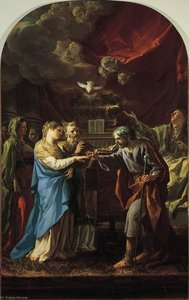
bottega di corrado giaquinto
1703 - 1765
基本情報
- Artistic Movement Or Style: Rococo
- Artists Who Influenced This Artist:
- Francesco Solimena
- Luca Giordano
- Date Of Birth: February 8, 1703
- Date Of Death: April 18, 1766
- Full Name: Corrado Giaquinto
- Nationality: Italian
- Notable Artworks:
- The Marriage of the Virgin
- The Martyr of St Laurent
- Nativity
- Place Of Birth: Molfetta, Italy
関連記事

Baroque Classicism: Reconciling Drama & Order in 17th-Century Art
Explore the captivating world of Baroque Classicism! Discover its history, key artists like Caravaggio & Rubens, and defining characteristics. Expert insights & high-quality reproductions at ArtsDot.
Echoes of Olympus: Mythological Narratives in Western Art Through the Ages
Explore the captivating history of mythological narratives in Western art! From ancient Greece to modern masterpieces, discover iconic artworks & symbolism. Expert analysis and high-quality reproductions at ArtsDot.
Neo-Classicism's Greatest Hits: 10 Masterpieces for Your Home |
Journey through Neo-Classicism's finest! Explore 10 iconic masterpieces by David, Ingres & Canova. Discover art history, techniques & timeless beauty – perfect for inspiring your home decor. Find museum-quality reproductions at
The Enduring Legacy of Classicism: Principles, Evolution & Influence in Western Art
Explore the enduring legacy of Classicism in Western art! Discover its historical context, key principles, iconic masterpieces & lasting influence. Learn about Renaissance and Neoclassical movements with ArtsDot.

バロックのドラマ:現代のインテリアに壮麗さと情感を取り込む
バロック様式の歴史、絵画、家具の魅力をご紹介。ArtsDotでは、高品質な油絵複製やカスタムポートレートをご提供し、現代のインテリアに壮麗さと情感を取り入れます。アートコンサルテーションも承ります。

