

 プレビュー
プレビュー
 プリントを購入
 シェアする
シェアする シェアする
シェアする
 詳細を見る
詳細を見る

 ダウンロード
 似ている作品
 X線調査
X線調査 スライドショー
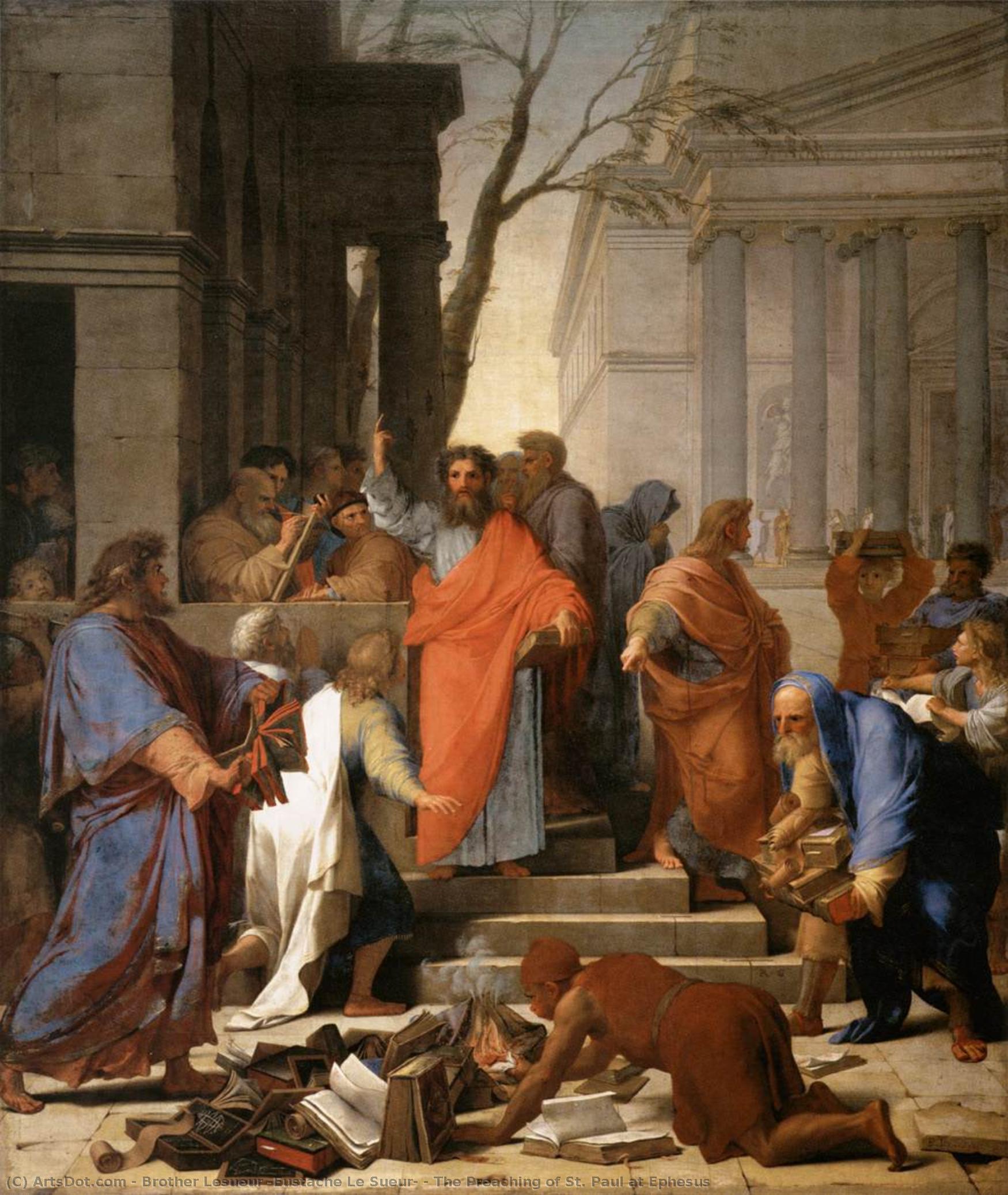
The Preaching of St. Paul at Ephesus


 詳細を見る
詳細を見る




































作品のオリジナル比率に合わせた、当店の規定サイズからお選びください。

特定のフレームやスペースに合わせて、ご希望のサイズをご入力いただけます。選択されたサイズが元の画像の比率と異なる場合、アートワークをトリミングするか、手描きで要素を追加して絵画を拡張いたします。デジタルモックアップ を制作し、制作開始前にご確認(承認)をいただきます。
画面上のプレビューは、実際のトリミングや拡張を正確に反映しているものではありません。最終的な構図は、モックアップによってのみ正確にご確認いただけます。
カスタムサイズもご利用いただけますが、元の比率を維持するためには、あらかじめ用意されたリストからサイズを選択することをお勧めいたします。
ご注文後、ArtsDot.com チームより詳細な指示をお送りするとともに、仕上がりイメージ(モックアップ)をご提供いたします。


 ガラスオプションは、110cm未満のサイズでのみご利用いただけます。

The Preaching of St. Paul at Ephesus
複製技法
複製画のサイズ
-


合計金額
$ 263
関連作品


アーティストの略歴
A Pioneer of the Natural World
In the vibrant and often dramatic landscape of the 17th-century French Baroque, few figures stand as uniquely as Brother Lesueur, known to history as Eustache Le Sueur. While his contemporaries were frequently swept up in the grand, sweeping narratives of mythology or the opulent displays of royal portraiture, Le Sueur turned his gaze toward a different kind of majesty: the intricate, often overlooked wonders of the animal kingdom. Born in Paris around 1617, he emerged not merely as a painter, but as a precursor to the scientific illustrators who would later define the Age of Enlightenment. His life’s work represents a profound intersection where the delicate touch of fine art meets the rigorous scrutiny of biological inquiry.
Le Sueur's artistic journey began with a foundation in classical discipline. He underwent an apprenticeship under Nicolas Boutet de Valois, a sculptor renowned for his allegorical works commissioned by the court of Louis XIII. This early exposure to the principles of proportion, anatomy, and classical beauty provided him with the technical vocabulary necessary to render form with absolute precision. However, where his mentor sought to idealize the human figure through stone, Le Suelar sought truth through the living—and sometimes the deceased—specimens of the natural world. This transition from the sculptural ideals of the academy to the empirical observations of a naturalist marked the beginning of a revolutionary artistic evolution.
The Art of Anatomical Precision
What truly distinguishes the work of Le Sueur is his uncompromising commitment to realism, a quality that transformed his studio into a space of scientific discovery. He did not merely paint what he imagined; he painted what he understood through direct observation. To achieve this level of unparalleled detail, Le Sueur engaged in a method that was radical for the 1600s: the study of anatomy via the dissection of carcasses obtained from royal hunts. This painstaking process allowed him to master the complex architecture of musculature, the delicate texture of feathers, and the rugged patterns of scales.
His technique was characterized by an extraordinary ability to capture the essence of life through physical accuracy. In his renderings, one can sense the weight of a limb, the sheen of wet fur, and the tension in a predator's stance. This dedication meant that his paintings functioned as both aesthetic triumphs and vital biological records. By integrating anatomical sketches with finished oil works, he bridged the gap between the artistic impulse and the scientific method, creating a legacy that predated the formal establishment of modern zoological illustration.
A Legacy of Sacred and Natural Splendor
While his contributions to animal painting are his most enduring scientific legacy, Le Sueur's repertoire was not limited to the wild. He possessed a remarkable versatility that allowed him to navigate the sacred themes prevalent in Baroque art. His religious compositions, such as the Presentation of the Virgin, demonstrate how he applied his mastery of detail and light to biblical narratives. In these works, the same meticulous attention to texture and form used for a bird's plumage was applied to the folds of holy drapery and the soft glow of divine light, creating a sense of profound, tangible presence.
The historical significance of Eustache Le Sueur lies in his role as a bridge between eras. He stood at the crossroads of the Baroque's emotional intensity and the burgeoning scientific curiosity of the next century. His ability to find the sublime within the anatomical has left an indelible mark on the history of French art. Through his eyes, the natural world was not just a backdrop for human drama, but a subject worthy of intense, reverent, and scientifically accurate study, cementing his reputation as a true pioneer of zoological art.
brother lesueur (eustache le sueur)
1616 - 1655 , France
基本情報
- Artistic Movement Or Style: Baroque Painting
- Artists Or Movements Influenced By This Artist: ['Rembrandt']
- Artists Who Influenced This Artist: ['Peter Paul Rubens']
- Date Of Birth: November 19, 1617
- Date Of Death: April 30, 1655
- Full Name: Eustache Le Sueur
- Nationality: French
- Notable Artworks:
- The Muses: Melpomene, Erato and Polyhymnia
- The Muses: Clio, Euterpe and Thalia
- Presentation of the Virgin
- Place Of Birth: Paris, France

