

 プレビュー
プレビュー
 シェアする
シェアする シェアする
シェアする
 詳細を見る
詳細を見る

 ダウンロード
 似ている作品
 X線調査
X線調査 スライドショー
 Stats
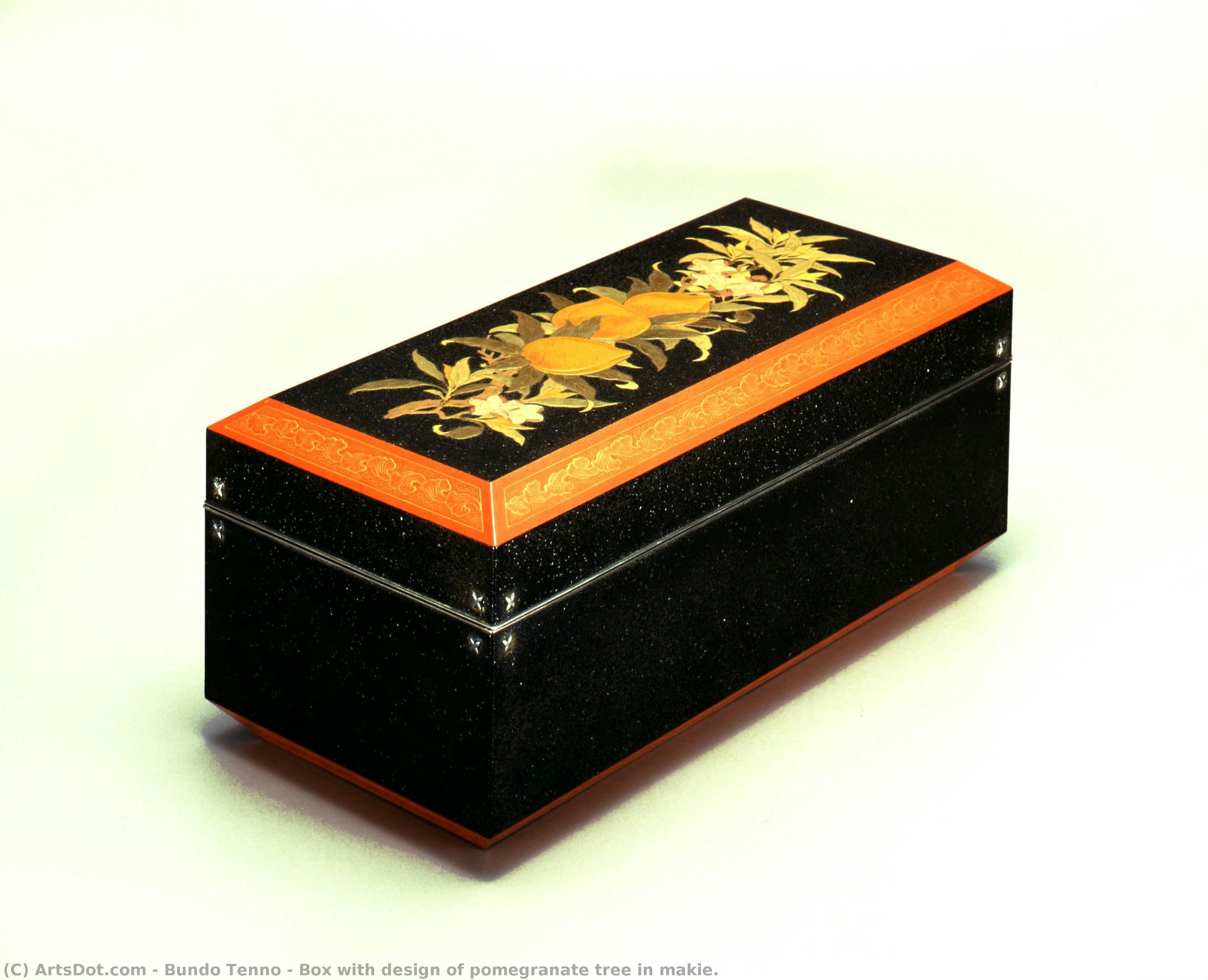
StatsBox with design of pomegranate tree in makie.


 詳細を見る
詳細を見る
手描き油彩複製画
当社のアーティストが、お客様のご希望のサイズと額縁に合わせて、キャンバスに手描きで制作する油彩画です。 ( Switch to Print Switch to Digital Image)




































作品のオリジナル比率に合わせた、当店の規定サイズからお選びください。

特定のフレームやスペースに合わせて、ご希望のサイズをご入力いただけます。選択されたサイズが元の画像の比率と異なる場合、アートワークをトリミングするか、手描きで要素を追加して絵画を拡張いたします。デジタルモックアップ を制作し、制作開始前にご確認(承認)をいただきます。
画面上のプレビューは、実際のトリミングや拡張を正確に反映しているものではありません。最終的な構図は、モックアップによってのみ正確にご確認いただけます。
カスタムサイズもご利用いただけますが、元の比率を維持するためには、あらかじめ用意されたリストからサイズを選択することをお勧めいたします。
ご注文後、ArtsDot.com チームより詳細な指示をお送りするとともに、仕上がりイメージ(モックアップ)をご提供いたします。


 ガラスオプションは、110cm未満のサイズでのみご利用いただけます。

Box with design of pomegranate tree in makie.
複製技法
複製画のサイズ
-


合計金額
$ 263
関連作品









アーティストの略歴
The Master of Luminous Layers: The Life and Art of Bundo Tenno
In the delicate, shimmering world of Japanese lacquerware, few names evoke the same sense of meticulous devotion as Bundo Tenno. Born in Tokyo in 1896, Tenno emerged during a transformative era for Japanese decorative arts, a period where the ancient traditions of the Edo period met the burgeoning modernism of the early 20th century. His journey was one of profound discipline, rooted in an early fascination with the way light interacts with precious minerals and sap. To study under the masters of his time was to undergo a spiritual refinement as much as a technical one, and Tenno emerged from this rigorous training not merely as a craftsman, but as a poet of texture and depth.
The essence of Tenno’s artistry lies in his unparalleled command over maki-e, the sophisticated technique of sprinkling metallic powders onto wet lacquer. He did not simply decorate surfaces; he sculpted them. Through the mastery of takamaki-e, he achieved a breathtaking relief, building up layers of lacquer to create raised, three-dimensional forms that seem to breathe against the dark, polished background. His use of hiramaki-e allowed for a more subtle, flush elegance, while his application of hirame—the delicate dusting of metallic powders—infused his pieces with a soft, ethereal glow. This interplay of light and shadow transformed functional objects into luminous treasures that captured the very soul of the natural world.
Nature Reflected in Lacquer
Tenno’s thematic repertoire was deeply rooted in the seasonal rhythms of Japan, finding profound beauty in the fleeting moments of the natural landscape. His compositions often featured a delicate balance of flora and fauna, where every petal and leaf was rendered with scientific precision yet imbued with an emotional resonance. One of his most celebrated achievements is the round lacquer box featuring a pomegranate tree, created in 1944. In this piece, the artist utilized the richness of his medium to depict the heavy, ripening fruit and the intricate branching of the tree, creating a sense of abundance and vitality that stood as a testament to beauty even amidst the global uncertainties of the mid-1940s.
Beyond the pomegranate, his work frequently explored:
- Botanical Elegance: The use of seasonal flowers to evoke specific moods, from the ephemeral cherry blossom to the resilient plum blossom.
- Avian Grace: The integration of birds into landscapes, where the movement of a wing is captured through subtle shifts in lacquer thickness.
- Textural Depth: The creation of organic surfaces that mimic the roughness of bark or the smoothness of a water droplet through advanced maki-e techniques.
A Lasting Legacy of Craftsmanship
Though Bundo Tenno passed away in 1952, his influence remains etched in the history of Japanese decorative arts. He belonged to a generation of artists who bridged the gap between the ancient guild traditions and the modern museum era, ensuring that the complex vocabulary of lacquerware would be preserved for future generations. His work serves as a vital link to the heritage of the Tokugawa era, yet it possesses a clarity and innovation that feels timeless.
Today, his masterpieces are cherished by collectors and institutions worldwide, standing as silent witnesses to a period of unparalleled technical achievement. To behold a piece by Tenno is to experience a meditative encounter with light; it is to see how the patient application of many layers can eventually reveal a world of infinite complexity. His legacy continues to inspire those who seek beauty in the meticulous, proving that true art lies in the harmonious marriage of nature's motifs and the artist's unwavering hand.
bundo tenno
1896 - 1952 , Japan
基本情報
- Artistic Movement Or Style: Lacquerware (Takamaki-e, Hiramaki-e, Hirame)
- Date Of Birth: 1896-04-27
- Date Of Death: 1952
- Full Name: Bundo Tenno / tenno bundo
- Nationality: Japanese
- Notable Artworks:
- Pomegranate tree box (1944)
- Sake cup with plum garden (1945)
- Place Of Birth: Tokyo, Japan