

 プレビュー
プレビュー
 プリントを購入
 シェアする
シェアする シェアする
シェアする
 詳細を見る
詳細を見る

 ダウンロード
 似ている作品
 X線調査
X線調査 スライドショー
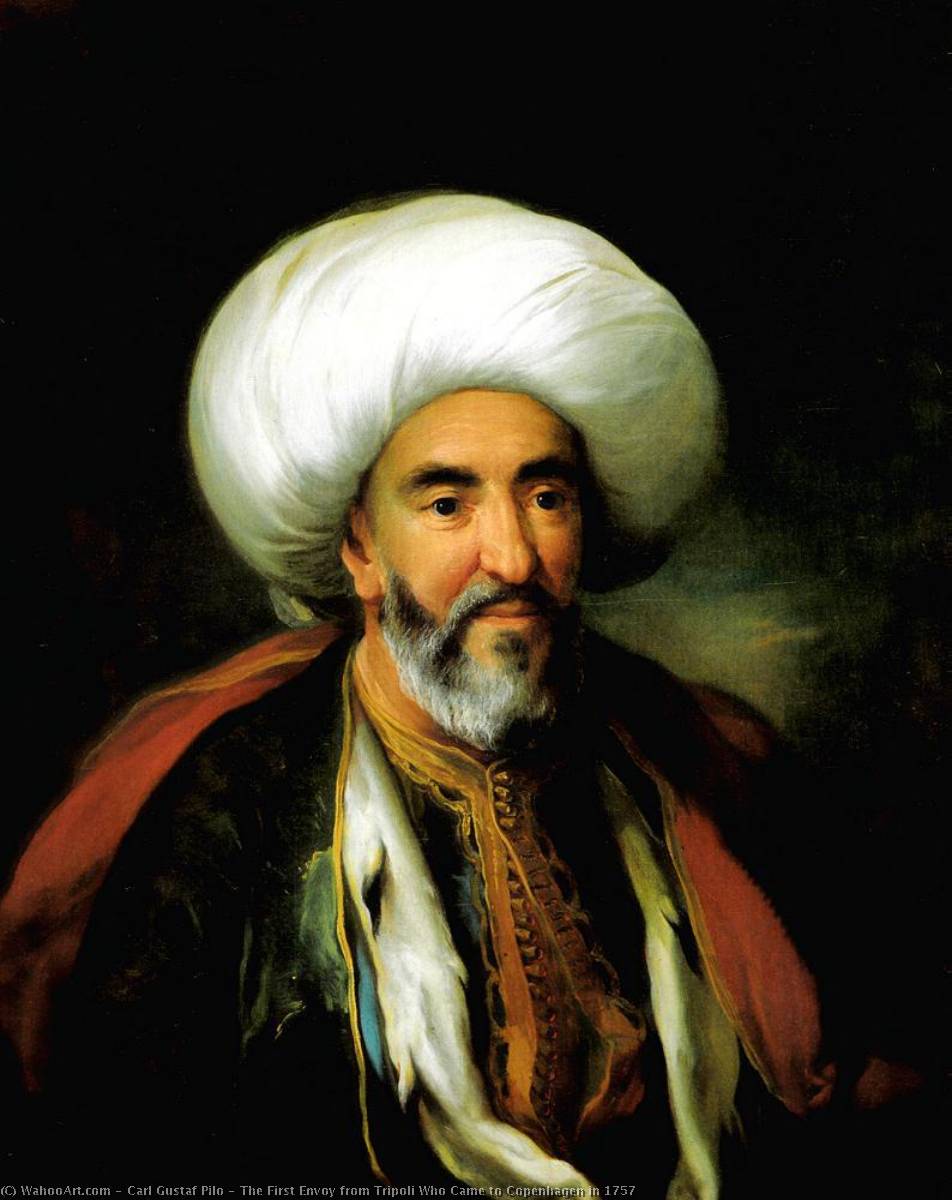
The First Envoy from Tripoli Who Came to Copenhagen in 1757


 詳細を見る
詳細を見る




































作品のオリジナル比率に合わせた、当店の規定サイズからお選びください。

特定のフレームやスペースに合わせて、ご希望のサイズをご入力いただけます。選択されたサイズが元の画像の比率と異なる場合、アートワークをトリミングするか、手描きで要素を追加して絵画を拡張いたします。デジタルモックアップ を制作し、制作開始前にご確認(承認)をいただきます。
画面上のプレビューは、実際のトリミングや拡張を正確に反映しているものではありません。最終的な構図は、モックアップによってのみ正確にご確認いただけます。
カスタムサイズもご利用いただけますが、元の比率を維持するためには、あらかじめ用意されたリストからサイズを選択することをお勧めいたします。
ご注文後、ArtsDot.com チームより詳細な指示をお送りするとともに、仕上がりイメージ(モックアップ)をご提供いたします。


 ガラスオプションは、110cm未満のサイズでのみご利用いただけます。

The First Envoy from Tripoli Who Came to Copenhagen in 1757
複製技法
複製画のサイズ
-


合計金額
$ 263
関連作品








アーティストの略歴
A Life Painted in Light and Shadow
The story of Carl Gustaf Pilo is one of remarkable movement, a journey that mirrored the shifting artistic tides of the eighteenth century. Born in 1711 on the farm Göksäter near Nyköping, Sweden, Pilo emerged from humble beginnings as the son of Olof Pilo, a skilled decorative painter. While his father initially harbored reservations about a career in the arts—viewing it as a precarious path compared to more stable livelihoods—the young artist’s destiny was already being etched by the fine brushes of his lineage. His early training, likely influenced by his father's work at Drottningholm and Stockholm Palace, provided him with a foundational mastery of craftsmanship that would later allow him to navigate the sophisticated circles of European royalty.
Pilo’s early years were characterized by a restless search for identity and skill. Whether he was honing his talents under the tutelage of the painter Crisman in Stockholm or traveling through the vibrant artistic landscapes of Germany and potentially Vienna, his development was marked by an expanding horizon. By the 1730s, he had established himself as a craft painter, undertaking decorative commissions for noble families in Scania. These early works, often consisting of pastoral drawings, hinted at a burgeoning sensitivity to landscape and the natural world, reflecting the gentle aesthetic sensibilities that would eventually find their way into his more formal portraiture.
The Master of the Danish Court
Around 1740, Pilo’s trajectory shifted toward Copenhagen, a move that would define his legacy. In the heart of the Danish capital, he ascended to the heights of prestige, becoming a celebrated painter to the Danish Royal Court. For over two decades, he was recognized as the preeminent portraitist in Denmark, a title earned through his ability to capture not just the physical likeness of the nobility, but the very essence of their status and character. His work during this period was a masterful blend of tradition and the emerging nuances of the era, often incorporating genre paintings executed in a refined Dutch style.
Beyond the canvas, Pilo played a pivotal role in the institutionalization of art through his service as a professor and director at the Royal Danish Academy of Art. In this capacity, he was more than just a practitioner; he was an educator and a guardian of academic standards, shaping the minds of future generations of Scandinavian artists. His influence extended to notable students such as Per Krafft and Lorements Pasch, ensuring that his technical precision and stylistic elegance would endure long after his departure from the academy.
A Legacy of Grandeur and Detail
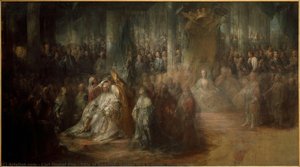
Perhaps no single work encapsulates the grandeur and technical complexity of Pilo’s career more than his monumental, though unfinished, masterpiece, "Gustav III’s Coronation." This painting serves as a breathtaking window into the ceremonial splendor of the Swedish monarchy. In this composition, King Gustav III is depicted in white coronation robes that seem to radiate an ethereal light, surrounded by the intricate social hierarchy of the era—from the nobility and burghers to the priests and farmers. The painting is a study in atmosphere, utilizing misty, blue-grey sunlight and deep, somber tones of green and brown to create a sense of profound historical weight.
The technical execution of such works reveals a painter deeply engaged with the physical properties of his medium. Pilo’s use of a yellow-brown ground and layers of asphalt to deepen shadows demonstrates a sophisticated understanding of light and texture, even if these very materials have contributed to the complex, sometimes bubbly aging process seen in his canvases today. Ultimately, Carl Gustaf Pilo remains a bridge between eras—a painter who began with the practicalities of decorative craft and rose to become a chronicler of royal majesty, leaving behind a body of work that continues to captivate the eye with its luminous presence and historical depth.
Carl Gustaf Pilo
1711 - 1793
基本情報
- Artistic Movement Or Style: Rococo
- Artists Or Movements Influenced By This Artist: ['Swedish Painting']
- Artists Who Influenced This Artist: ['Crisman']
- Date Of Birth: 1711
- Date Of Death: 1793
- Full Name: Carl Gustaf Pilo
- Nationality: Swedish
- Notable Artworks:
- Gustav III:s kröning.
- The First Envoy from Tripoli Who Came to Copenhagen in 1757
- Frederik V in his Anointing Robes
- Place Of Birth: Runtuna, Sweden

