

 プレビュー
プレビュー
 シェアする
シェアする シェアする
シェアする
 詳細を見る
詳細を見る

 ダウンロード
 似ている作品
 X線調査
X線調査 スライドショー
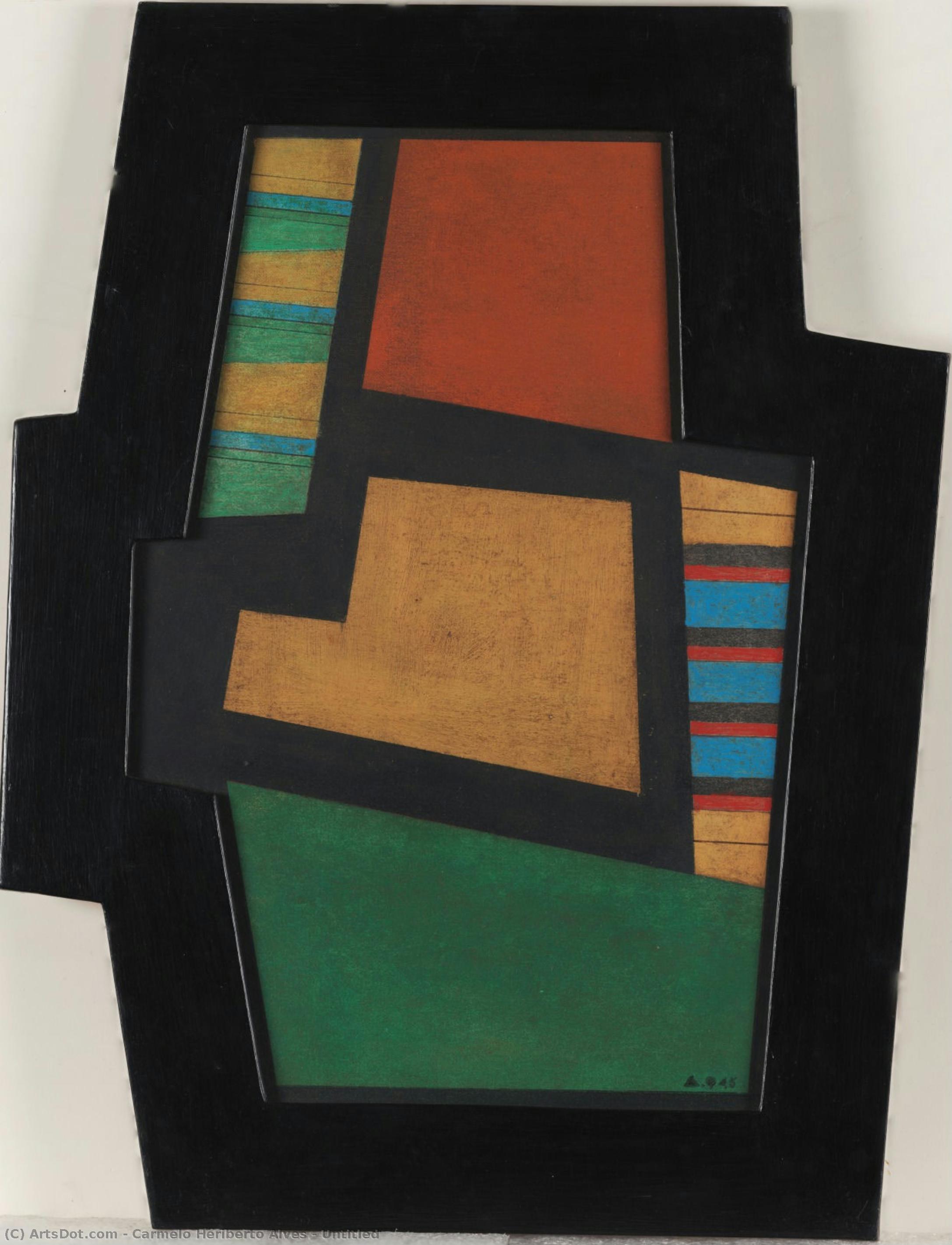
Untitled


 詳細を見る
詳細を見る
ジークレー/アートプリント
迅速な制作と多彩な仕上げオプションを備えた、ミュージアムクオリティのジークレーまたはキャンバスプリント。 ( 手描きの絵画を購入 画像を購入)




































作品のオリジナル比率に合わせた、当店の規定サイズからお選びください。

特定のフレームやスペースに合わせて、ご自身でサイズを指定することも可能です。選択されたサイズが元の画像の比率と一致しない場合、作品をトリミングするか、鏡面反射または単色での塗りつぶしによって画像を拡張いたします。制作を開始する前に、ご確認用のデジタルモックアップをお送りいたします。
画面上のプレビューには、実際のトリミングや拡張は反映されませんのでご注意ください。最終的な構図を正確に確認できるのは、モックアップのみとなります。
カスタムサイズも承っておりますが、元の比率を維持するためには、あらかじめ用意されたリストからサイズを選択することをお勧めいたします。


 ガラスオプションは、110cm未満のサイズでのみご利用いただけます。

Untitled
ジークレー/アートプリント
複製画のサイズ
-


合計金額
$ 62
関連作品
アーティストの略歴
Early Life and Artistic Awakening
Carmelo Heriberto Alves, known to the art world as Carmelo Arden Quin, was born in Rivera, Uruguay, on March 16, 1913—a location that would subtly yet profoundly shape his artistic trajectory. The border town’s unique position, straddling the line between Uruguay and Brazil, instilled in him a sense of fluidity and openness to new perspectives from an early age. His childhood was marked by both personal tragedy – the murder of his father before his birth – and familial support; three uncles stepped in to raise him, fostering an environment where creativity could flourish. Even as a young boy, Arden Quin demonstrated an innate artistic inclination, crafting and selling vibrant kites to his classmates, a testament to his early desire for expression and innovation.
This initial spark was further nurtured by his uncle Miguel, a painter and sculptor who provided rudimentary lessons and encouragement. Simultaneously, the political climate of Uruguay began to resonate with Arden Quin, igniting within him a lifelong commitment to social causes that would later inform his artistic philosophy. These formative experiences—the loss, the familial warmth, and the burgeoning awareness of societal issues—laid the groundwork for an artist deeply invested in both aesthetic exploration and meaningful change.
The Genesis of Madí: A Rejection of Convention
In 1934, Arden Quin embarked on a pivotal artistic experiment. While working in his uncle Miguel’s workshop, he felt constrained by the traditional rectangular format of painting. Driven by an impulse to “reform” this convention, he took scissors to one of his cubist works, cutting away portions of the border. This seemingly simple act was not merely a physical alteration; it represented a fundamental rejection of established norms and the beginning of a relentless pursuit of new forms. Shortly thereafter, Arden Quin relocated to Montevideo, immersing himself in the city’s vibrant artistic community.
A crucial encounter occurred in 1935 when he attended a lecture by Joaquín Torres-García, the founder of Universalismo—a movement advocating for a uniquely Latin American form of constructivism. Torres-García became a mentor, providing guidance and inspiration that profoundly influenced Arden Quin’s artistic development. However, while deeply appreciative of Torres-García's teachings, Arden Quin soon began to diverge from Universalismo’s principles, seeking an even more radical departure from tradition.
Buenos Aires and the Founding of Madí
By 1937, Arden Quin had moved to Buenos Aires, a city teeming with artistic energy. He quickly integrated himself into the local avant-garde scene, frequenting cafés where painters, poets, and intellectuals gathered to exchange ideas. He continued his studies at the university while simultaneously forging connections that would prove instrumental in the formation of a new movement. Recognizing a shared desire for innovation, Arden Quin began recruiting like-minded individuals, including poet Edgar Bayley.
In 1946, after years of gestation and debate, Arden Quin publicly presented the Madí Manifesto, outlining the principles of a revolutionary artistic approach. The movement championed non-objective geometric forms, irregular canvases, and mobile structures—a deliberate rejection of traditional rectangular formats and representational art. Madí, an acronym derived from “Materialismo Artístico Dialéctico Internacional” (International Dialectical Materialist Art), sought to liberate art from the constraints of ideology and embrace pure invention. The movement quickly gained momentum, hosting a series of exhibitions that showcased its radical new aesthetic.
International Expansion and Enduring Legacy
In 1947, Arden Quin relocated to Paris, establishing Madí International and extending the movement’s reach beyond Argentina. He exhibited regularly at the prestigious Salon des Réalités Nouvelles from 1948 to 1956, solidifying his contributions to global geometric abstraction. His work during this period continued to evolve, incorporating collage and découpage techniques before returning to painting in 1971.
Throughout his long and prolific career, Arden Quin remained committed to the principles of invention and experimentation. His oeuvre—spanning paintings, poems, and theoretical writings—prioritized empirical exploration over ideological narratives. He consistently challenged conventional notions of art, pushing boundaries and inspiring generations of artists. Carmelo Arden Quin passed away in Paris on September 27, 2010, leaving behind a rich legacy as a pioneering figure in abstract expressionism and a champion of artistic freedom. His work continues to be celebrated for its boldness, originality, and enduring relevance.
- Key Influences: Joaquín Torres-García, Piet Mondrian, the political climate of Uruguay
- Major Movement: Co-founder of Madí (Materialismo Artístico Dialéctico Internacional)
- Signature Style: Non-objective geometric abstraction, irregular canvases, mobile structures
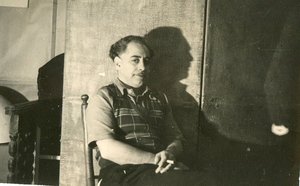
carmelo heriberto alves
1913 - 2010 , Uruguay
基本情報
- Artistic Movement Or Style: Madí Movement, Abstract Expressionism
- Artists Or Movements Influenced By This Artist: ['Latin American abstract trends']
- Artists Who Influenced This Artist: ['Joaquín Torres-García']
- Date Of Birth: March 16, 1913
- Date Of Death: September 27, 2010
- Full Name: Carmelo Heriberto Alves
- Nationality: Uruguayan
- Notable Artworks: ['Untitled']
- Place Of Birth: Rivera, Uruguay
関連記事

幾何学的抽象絵画を定義した傑作10選|アート、アーティスト、インテリア装飾
モンドリアン、マレーヴィチ…幾何学的抽象絵画を代表する傑作10選。各作品の背景や色彩構成、アーティストの情熱に迫ります。美術館品質の複製画はArtsDot.comで。オンラインでアートコレクションをご覧ください。
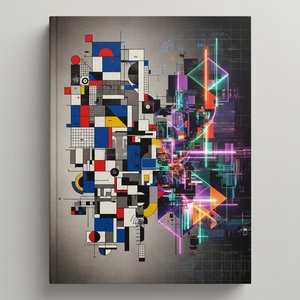
Beyond Form & Color: Geometric Abstraction's Evolution in 20th/21st Century Art
Explore the evolution of geometric abstraction from Cubism to contemporary art. Discover key artists like Malevich & Mondrian, investment insights, and expert collecting advice at ArtsDot.
Beyond Form & Color: Geometric Abstraction's Enduring Legacy in Art History
Explore the captivating world of geometric abstraction! Discover its origins, key artists like Malevich & Mondrian, and why this movement remains highly valued by art collectors today. Expert insights at ArtsDot.
Kandinsky's Masterpieces: 25 Paintings That Define Abstract Art | ArtsDot
Journey through Wassily Kandinsky's 25 most iconic abstract paintings. Explore his revolutionary use of color, form & spiritual expressionism. Find museum-quality Kandinsky reproductions and elevate your home decor with ArtsDot.com. Discover all masterpieces on ArtsDot.com!
Beyond Form: Exploring the Philosophical Foundations of Geometric Abstraction
Explore the philosophical roots & artistic evolution of geometric abstraction with ArtsDot. Discover Mondrian, Malevich, De Stijl & more. Expert insights for collectors and art enthusiasts.