

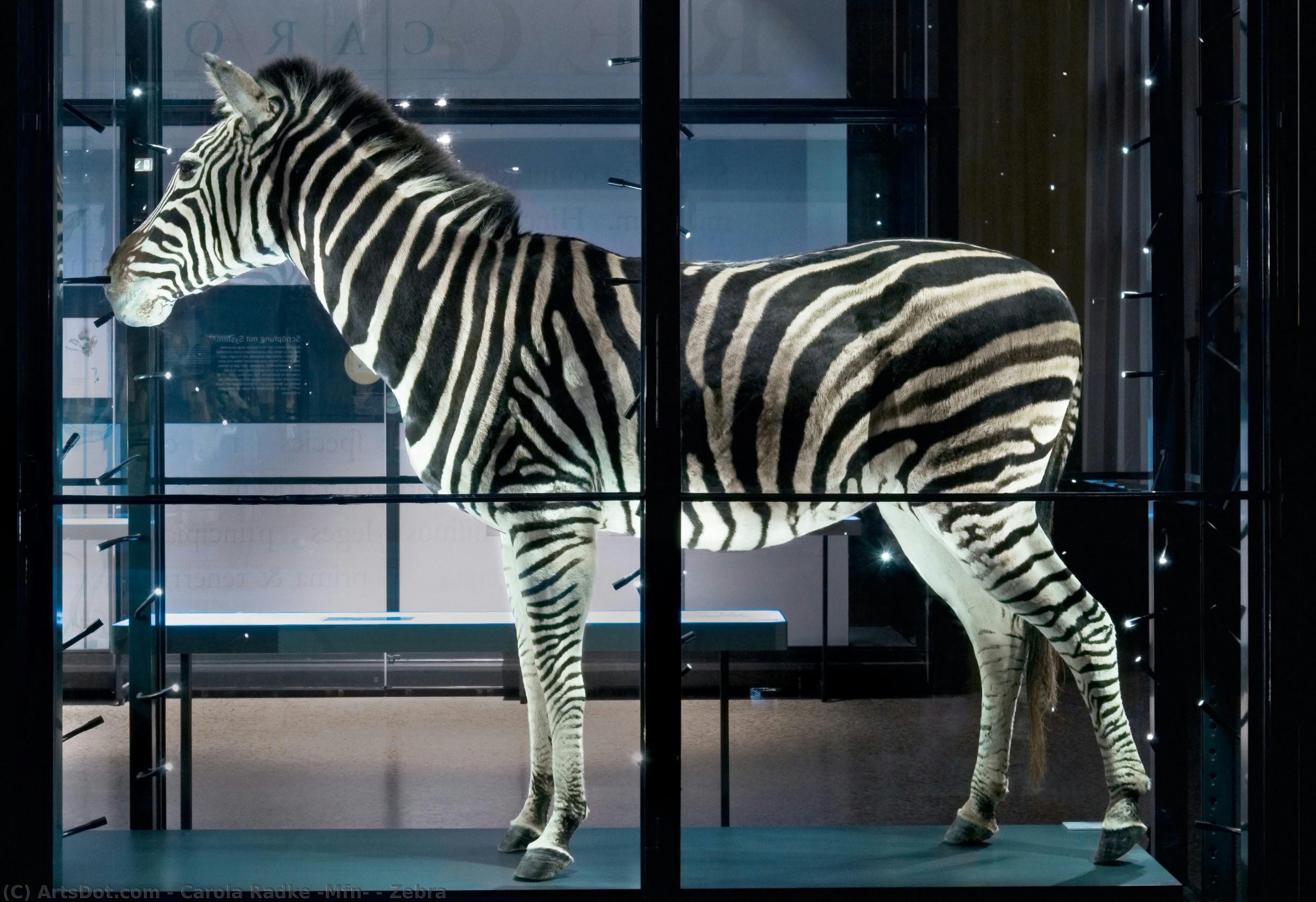
 プレビュー
プレビュー
 シェアする
シェアする シェアする
シェアする
 詳細を見る
詳細を見る

 ダウンロード
 似ている作品
 X線調査
X線調査 スライドショー
Zebra

 詳細を見る
詳細を見る
ジークレー/アートプリント
迅速な制作と多彩な仕上げオプションを備えた、ミュージアムクオリティのジークレーまたはキャンバスプリント。 ( 手描きの絵画を購入 画像を購入)




































作品のオリジナル比率に合わせた、当店の規定サイズからお選びください。

特定のフレームやスペースに合わせて、ご自身でサイズを指定することも可能です。選択されたサイズが元の画像の比率と一致しない場合、作品をトリミングするか、鏡面反射または単色での塗りつぶしによって画像を拡張いたします。制作を開始する前に、ご確認用のデジタルモックアップをお送りいたします。
画面上のプレビューには、実際のトリミングや拡張は反映されませんのでご注意ください。最終的な構図を正確に確認できるのは、モックアップのみとなります。
カスタムサイズも承っておりますが、元の比率を維持するためには、あらかじめ用意されたリストからサイズを選択することをお勧めいたします。


 ガラスオプションは、110cm未満のサイズでのみご利用いただけます。

Zebra
ジークレー/アートプリント
複製画のサイズ
-


合計金額
$ 62
関連作品







アーティストの略歴
Carola Radke (Mfn): Bridging Science and Art Through Taxidermy
Carola Radke’s artistic journey began amidst the fascination for natural history, nurtured by her upbringing in Germany and fueled by a lifelong passion for observing and documenting the intricacies of the animal kingdom. Her work transcends mere representation; it strives to convey profound insights into evolution, mortality, and the delicate balance between scientific inquiry and aesthetic appreciation—a duality that defines her distinctive artistic vision.- Early Life & Education: Radke pursued formal studies in biology and art history at Humboldt University of Berlin, equipping herself with a multidisciplinary understanding crucial to her subsequent explorations into taxidermy as an expressive medium.
- Emergence as Taxidermist Artist: Recognizing the potential for taxidermy to serve as both a scientific tool and a conduit for artistic contemplation, Radke honed her skills in preserving animal specimens with meticulous attention to detail, prioritizing anatomical accuracy alongside compositional artistry.
- Notable Projects & Exhibitions: Radke’s contributions to museums like the Museum für Naturkunde Berlin have cemented her reputation as a pioneering figure in scientific illustration. Her exhibitions showcase stunning depictions of wildlife—often imbued with symbolic resonance—challenging viewers to consider the interconnectedness of life and the enduring power of artistic interpretation.
- Influences & Artistic Style: Radke’s aesthetic sensibilities draw inspiration from classical art traditions, particularly Baroque sculpture and portraiture, reflecting a commitment to conveying emotion and grandeur through masterful technique. She skillfully blends realism with expressive lighting and shading, creating images that resonate with both scientific precision and artistic beauty.
- Legacy & Recognition: Radke's work has garnered critical acclaim for its ability to communicate complex scientific concepts in an accessible and captivating manner—a testament to her unwavering dedication to bridging the gap between science and art. Her enduring influence can be seen in contemporary artists who embrace taxidermy as a medium for exploring themes of conservation, memory, and the human relationship with nature.
Exploring Biodiversity Through Taxidermy: A Scientific Approach
Radke’s artistic practice is fundamentally rooted in her scientific background—a conviction that informs every aspect of her creative process. She meticulously researches animal anatomy and behavior, utilizing this knowledge to craft taxidermied specimens that faithfully capture the essence of their subjects. This commitment to accuracy isn't merely technical; it serves as a cornerstone for conveying deeper messages about ecological interdependence and the importance of preserving biodiversity—themes that permeate her oeuvre.- Detailed Anatomical Reconstruction: Radke employs advanced techniques to reconstruct animal skeletons with unparalleled precision, ensuring that every bone is positioned accurately according to anatomical standards.
- Realistic Rendering Techniques: She utilizes pigments and varnishes derived from natural sources—often painstakingly recreated—to achieve lifelike textures and coloration, mirroring the appearance of animals in their habitats.
- Compositional Considerations: Radke carefully arranges taxidermied specimens within evocative landscapes or studio settings, employing lighting and perspective to heighten visual impact and convey emotional nuance.
Notable Works & Exhibitions
Radke’s artistic achievements have been recognized internationally through numerous exhibitions—most notably her collaborative project with the Museum für Naturkunde Berlin ("Ocelot: The Evolution of Taxidermy"), which garnered critical acclaim for its exploration of taxidermy's historical trajectory and its role in shaping scientific understanding. Her work has appeared in publications such as “ArtsDot” and “Google Arts & Culture,” demonstrating her commitment to disseminating artistic insights to a broader audience.- “Ocelot: The Evolution of Taxidermy” (Museum für Naturkunde Berlin): This exhibition showcased Radke’s meticulous reconstructions of ocelots—remarkable specimens that exemplify the transformative power of taxidermy as an art form and scientific tool.
- Collaborations with ArtsDot: Radke partnered with ArtsDot to produce high-quality reproductions of iconic artworks, furthering her mission to promote artistic appreciation and scholarly engagement.
Continuing Artistic Exploration & Legacy
Carola Radke remains active as an artist and researcher at the Museum für Naturkunde Berlin, consistently pushing boundaries in scientific illustration while upholding a steadfast dedication to aesthetic excellence. Her enduring influence extends beyond her own artistic output—inspiring younger generations of artists to embrace taxidermy as a medium for conveying complex ecological narratives and fostering a deeper connection with the natural world. Radke’s legacy serves as a reminder that art can illuminate science, enriching our understanding of both the beauty and fragility of life on Earth.
carola radke (mfn)
Germany
基本情報
- Artistic Movement Or Style: Biodiversity Illustration
- Artists Or Movements Influenced By This Artist: ['ArtsDot']
- Artists Who Influenced This Artist:
- Karl Blossfeldt
- Arthur Rackham
- Full Name: Carola Radke
- Nationality: German
- Notable Artworks:
- Ocelot: the evolution of taxidermy - Carola Radke (MfN)
- Horses, Grass & Climate
- Place Of Birth: Berlin, Germany