

 プレビュー
プレビュー
 シェアする
シェアする シェアする
シェアする
 詳細を見る
詳細を見る

 ダウンロード
 似ている作品
 X線調査
X線調査 スライドショー
 Stats
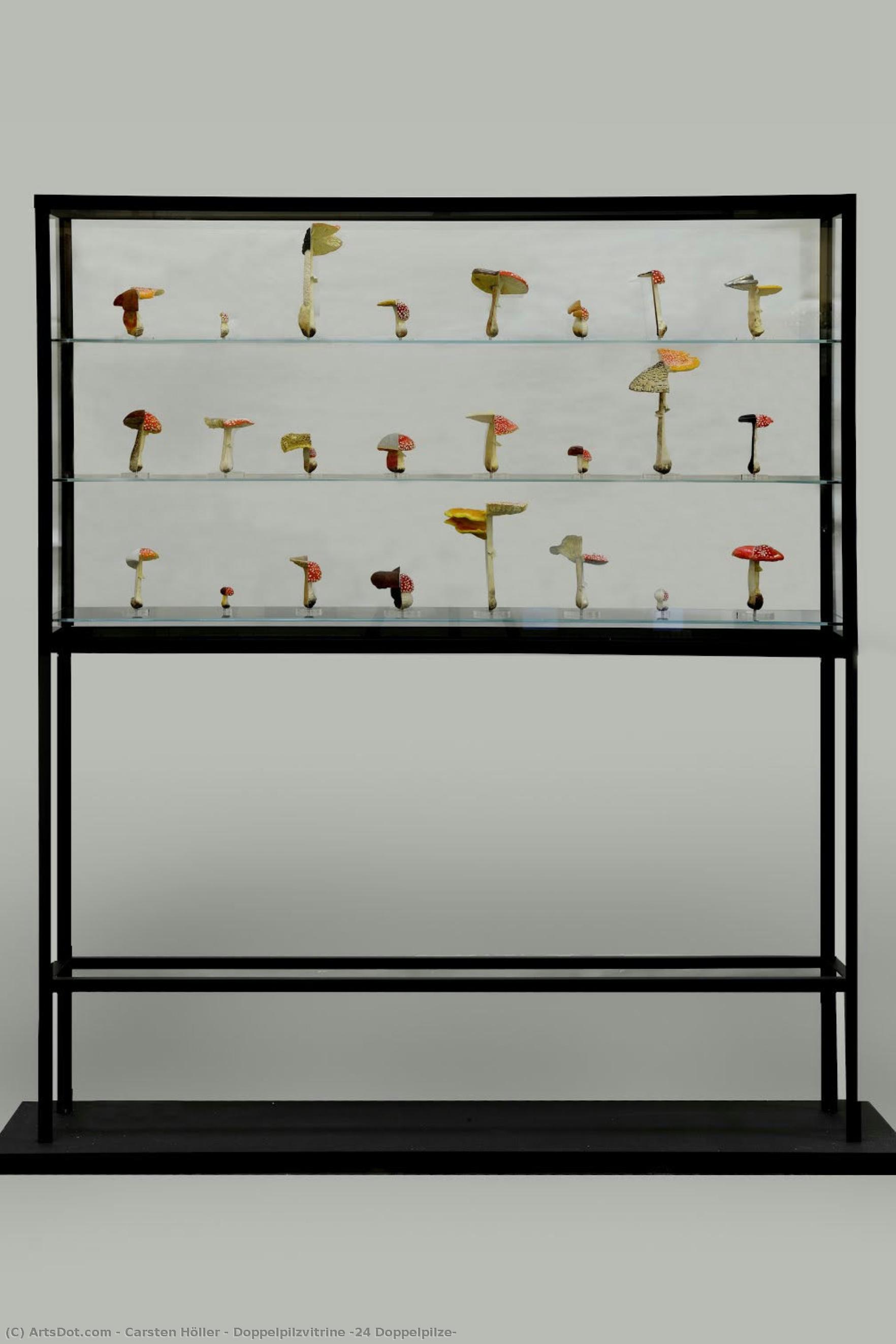
StatsDoppelpilzvitrine (24 Doppelpilze)
 Surrealism
 145.0 x 174.0 cm
 Galleria Civica di Arte Moderna e Contemporanea Torino
 詳細を見る
詳細を見る
ジークレー/アートプリント
迅速な制作と多彩な仕上げオプションを備えた、ミュージアムクオリティのジークレーまたはキャンバスプリント。 ( 手描きの絵画を購入 Switch to Digital Image)




































作品のオリジナル比率に合わせた、当店の規定サイズからお選びください。

特定のフレームやスペースに合わせて、ご自身でサイズを指定することも可能です。選択されたサイズが元の画像の比率と一致しない場合、作品をトリミングするか、鏡面反射または単色での塗りつぶしによって画像を拡張いたします。制作を開始する前に、ご確認用のデジタルモックアップをお送りいたします。
画面上のプレビューには、実際のトリミングや拡張は反映されませんのでご注意ください。最終的な構図を正確に確認できるのは、モックアップのみとなります。
カスタムサイズも承っておりますが、元の比率を維持するためには、あらかじめ用意されたリストからサイズを選択することをお勧めいたします。


 ガラスオプションは、110cm未満のサイズでのみご利用いただけます。

Doppelpilzvitrine (24 Doppelpilze)
ジークレー/アートプリント
複製画のサイズ
-


合計金額
$ 62
関連作品




アーティストの略歴
The Architect of Sensory Experience
Carsten Höller, born in Germany in 1961, stands as a visionary figure whose work transcends the traditional boundaries of fine art to merge the realms of science, psychology, and immersive installation. His practice is not merely about the creation of objects to be viewed from a distance, but rather the construction of environments designed to provoke contemplation and challenge the very foundations of human perception. Often described through the lens of relational aesthetics, Höller’s approach centers on fostering a profound dialogue between the artwork and its audience, transforming sterile gallery spaces into living laboratories where emotional responses and cognitive processes are actively stimulated.
The artist's unique perspective is deeply rooted in his scientific background. Before emerging as a prominent force in the contemporary art world during the late 1980s, Höller worked as a research entomologist, holding a doctorate in agricultural science from the University of Kiel. This rigorous training in studying the olfactory communication strategies of insects profoundly informs his artistic methodology. In his work, he often adopts the persona of a scientist conducting mock experiments, utilizing materials and structures that mimic laboratory arrangements to turn the exhibition visitor into a subject of investigation. This intersection of empirical precision and creative speculation allows him to explore themes of uncertainty, chance, and the limits of human understanding.
A Journey Through Experimentation and Perception
Höller’s artistic evolution began with formal studies in graphic design and sculpture at the Braunschweig Hochschule für Grafik und Druck Gestaltung, followed by postgraduate work at Goldsmiths College London. These formative years instilled in him a fascination for experimentation and a commitment to questioning established conventions. Influenced by the conceptual rigor of Marcel Duchamp and Joseph Kosuth, Höller adopted a philosophy that prioritizes the process over the final product, emphasizing how materiality and randomness can generate unexpected artistic outcomes.
His rise to international prominence in the 1990s saw him working alongside a cohort of influential artists who sought to reimagine the spatial experience of art. His work during this period began to encompass an extraordinary range of media, including:
- Architectural interventions that manipulate light and shadow;
- Mechanical structures such as his famous series of corkscrewing tubular metal slides;
- Sensory tools like darkened rooms, mirrors, and even sensory deprivation tanks;
- Biological motifs that play with the viewer's sense of reality and danger.
One of his most iconic achievements remains the installation “Test Site” (2006) at the Tate Modern in London. By installing a monumental slide that traversed the gallery space, Höller invited visitors to surrender to gravity, creating a moment of deliberate disorientation and physical exhilaration. This project solidified his reputation as a pioneer of immersive art, proving that the sensation of movement and the visceral experience of one's own body could serve as powerful artistic mediums.
The Intersection of Surrealism and Science
The aesthetic language of Carsten Höller is characterized by a playful yet unsettling blend of Surrealism and Pop Art. He possesses a singular ability to use familiar, even whimsical, elements to evoke deep-seated psychological responses. His work often explores the concept of the "double" and the manipulation of scale, reminiscent of the dreamlike logic found in Alice in Wonderland. This is evident in pieces like Doppelpilzvitrine (24 Doppelpilze), where polyurethane models of mushrooms are presented in a way that mimics genetic experimentation, blurring the line between scientific truth and pure imagination.
Through his use of mirrored surfaces, light-altering technologies, and interactive installations, Höller creates "influential environments" that force the viewer to confront their own perceptions. He invites us to step into a space where the boundaries between the known and the unknown are blurred, encouraging a state of wonder and curiosity. Ultimately, his historical significance lies in his ability to transform the act of viewing art into an act of becoming—where the spectator is no longer a passive observer but an active participant in a grand, ongoing experiment of human consciousness.
carsten höller
1961 - , Germany
基本情報
- Artistic Movement Or Style: Interactive Art
- Date Of Birth: December 1961
- Full Name: Carsten Höller
- Nationality: German
- Notable Artworks:
- Doppelpilzvitrine
- Installation View
- Place Of Birth: Germany
関連記事

The Enduring Form: Exploring Themes & Techniques in Sculpture Across Historical Periods
Explore the rich history of sculpture from ancient masterpieces to contemporary innovations. Discover key techniques, influential artists & investment potential for discerning art collectors.
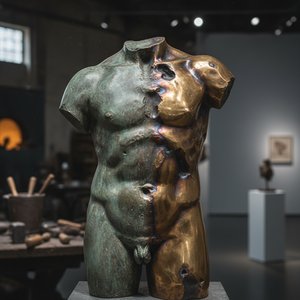
青銅彫刻の永続的遺産:歴史、技法、そして現代における解釈
青銅彫刻の歴史、技法、現代における解釈を専門家が解説。古代から現代までの貴重な作品群を深く理解し、コレクションや投資に役立つ情報を提供します。美術品鑑定、修復についてもご紹介。

Bronze Sculptures That Defined Art History | ArtsDot
Journey through art history with our Top 10 bronze sculptures! Explore masterpieces by Rodin, Michelangelo & more. Discover stories behind iconic statues and find museum-quality reproductions for your home decor at ArtsDot.com.

Bronze Age to Modern Masters: 10 Sculptures That Redefined Art | ArtsDot
Journey through art history with 10 legendary bronze sculptures – from Michelangelo's David to Rodin’s Thinker. Explore the stories, techniques & timeless beauty of these masterpieces. Find museum-quality reproductions & elevate your home decor on ArtsDot.com.

The Enduring Form: Sculpture Across History, Technique & Emotional Resonance
Explore the rich history of sculpture with ArtsDot. Discover key techniques, influential artists & investment potential for discerning collectors. Expert insights into valuing and collecting timeless masterpieces.