

 シェアする
シェアする シェアする
シェアする
 詳細を見る
詳細を見る

 ダウンロード
 似ている作品
 スライドショー
 Stats
StatsSound Texts #4: Deep River


 詳細を見る
詳細を見る
手描き油彩複製画
当社のアーティストが、お客様のご希望のサイズと額縁に合わせて、キャンバスに手描きで制作する油彩画です。 ( Switch to Print Switch to Digital Image)




































作品のオリジナル比率に合わせた、当店の規定サイズからお選びください。

特定のフレームやスペースに合わせて、ご希望のサイズをご入力いただけます。選択されたサイズが元の画像の比率と異なる場合、アートワークをトリミングするか、手描きで要素を追加して絵画を拡張いたします。デジタルモックアップ を制作し、制作開始前にご確認(承認)をいただきます。
画面上のプレビューは、実際のトリミングや拡張を正確に反映しているものではありません。最終的な構図は、モックアップによってのみ正確にご確認いただけます。
カスタムサイズもご利用いただけますが、元の比率を維持するためには、あらかじめ用意されたリストからサイズを選択することをお勧めいたします。
ご注文後、ArtsDot.com チームより詳細な指示をお送りするとともに、仕上がりイメージ(モックアップ)をご提供いたします。


 ガラスオプションは、110cm未満のサイズでのみご利用いただけます。

Sound Texts #4: Deep River
複製技法
複製画のサイズ
-


合計金額
$ 263
The Architecture of Sound: Exploring Charles Gaines' Conceptual Landscape
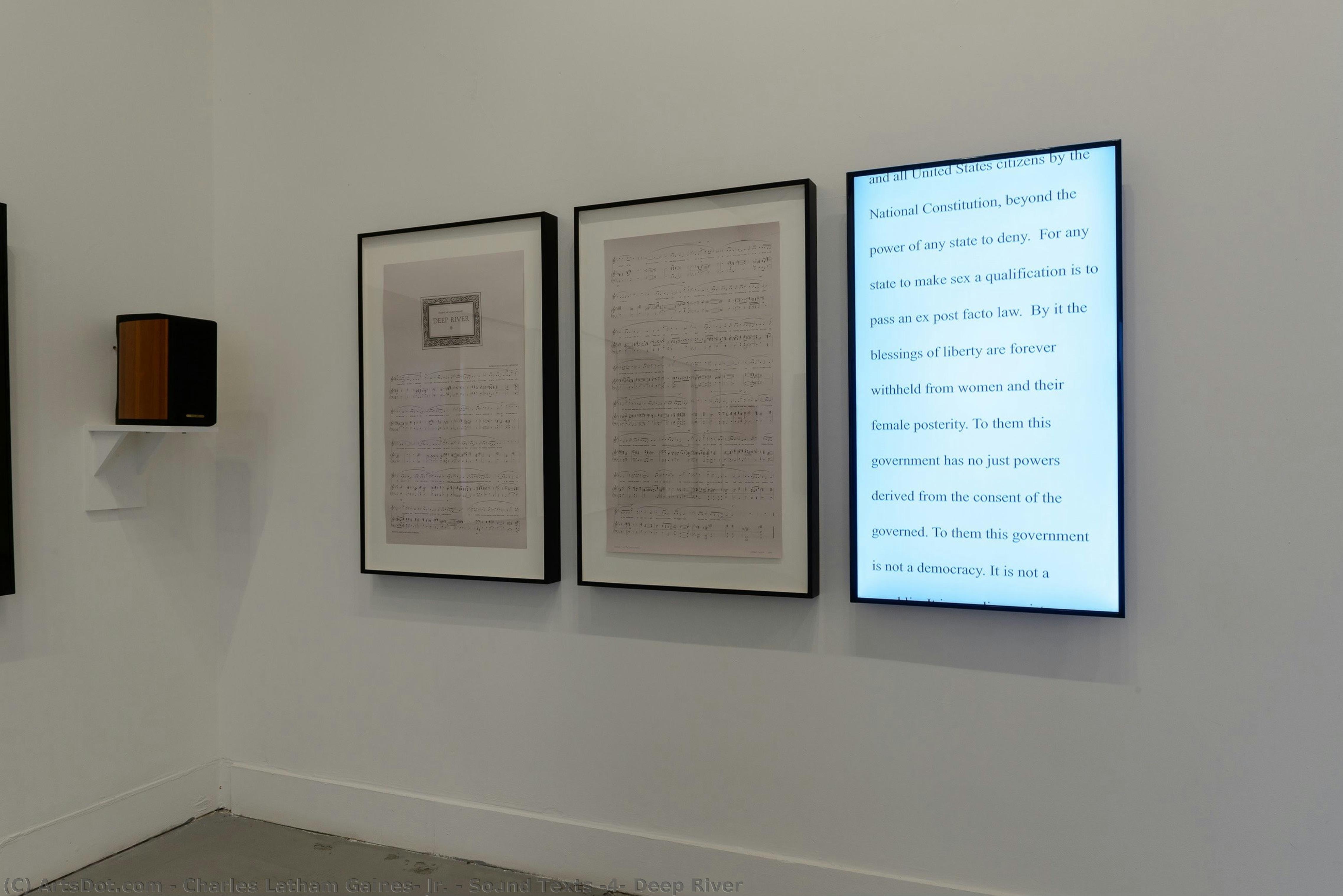
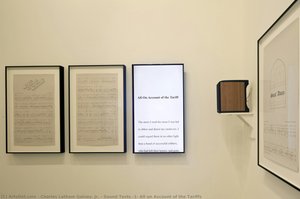
To stand before a piece by Charles Gaines is not merely to observe an arrangement of images; it is to enter a meticulously constructed intellectual space, a place where the rigid logic of structure confronts the unruly tide of human experience. This work, Sound Texts #4: Deep River, exemplifies Gaines’ signature ability to deploy impersonal systems—the very grammar of art itself—to address deeply personal and profoundly political concerns. The visual presentation, as captured in this photograph, suggests a curated gallery moment, featuring multiple distinct paintings alongside the modern intrusion of mounted televisions. This juxtaposition is key; it forces the viewer to question what constitutes 'art' in a contemporary setting.
A Dialogue Between Text, Music, and Image
Gaines’ practice has always been deeply rooted in translation—translating political speech into musical notation, or perhaps, translating the ephemeral nature of sound into fixed visual planes. His conceptual framework often involves taking foundational texts, such as manifestos or historical declarations, and subjecting them to a systematic, almost mathematical process. In this piece, the arrangement of three distinct paintings suggests a dialogue across time or theme. The inclusion of technology, the TVs, alongside traditional painted works, speaks volumes about the passage of culture itself—a constant negotiation between analog memory and digital immediacy.
Symbolism in Structure: The Power of Limitation
The underlying symbolism within Gaines’ work is often found not in what is depicted, but in the rules governing its depiction. By employing rule-based artmaking, he creates a tension that is both intellectually stimulating and emotionally resonant. If one considers his historical engagement with texts like those of Malcolm X or Olympe de Gouges, the underlying message remains: structure can be a tool for liberation as much as it can be a cage. The visual rhythm suggested by the grouping of these works invites contemplation on how systems—be they musical scales, political doctrines, or interior design layouts—shape our understanding of freedom and constraint.
Integrating Conceptual Depth into Modern Interiors
For the discerning collector or designer, this piece offers more than mere decoration; it offers a conversation starter built upon layers of academic rigor. The black and white photographic documentation itself lends an air of timeless, gallery-grade sophistication. Reproducing such a work allows one to bring a sophisticated dialogue into a living space—a place where art must perform multiple roles: aesthetic pleasure, intellectual challenge, and historical anchor. It suggests that true interior design is not about filling walls, but about curating moments of profound thought.
関連作品

![Abstract Composition [triptych] — Vaclav Vytlacil, Abstract Expressionism](/media/artworks/images-thumb/08/3c/083c0675045645fd42d4e6c6d63f1ced.jpg)
アーティストの略歴
Charles Latham Gaines Jr.: A Life Bridging Words, Nature, and Art
- Born: Charleston, United States of America (1942)
- Status: Living
Charles Latham Gaines Jr., often known as Charles Gaines, is a multifaceted American figure celebrated for his contributions as a writer, outdoorsman, and conservationist. His career spans diverse fields, leaving an indelible mark on literature, bodybuilding culture, and environmental stewardship. Born in 1942, Gaines’s work consistently explores the intersection of human experience with the natural world, often infused with intellectual depth and philosophical inquiry.
Early Life and Literary Beginnings
Gaines was born in Charleston, South Carolina, later moving to Birmingham, Alabama as a child. He pursued higher education at Washington and Lee University before transferring to Birmingham-Southern College, where he earned his BA and an MFA in writing from the University of Iowa. His early life experiences fostered a deep appreciation for the outdoors, which would become a recurring theme throughout his literary career.
"Pumping Iron" and Bodybuilding's Golden Age
- Notable Work: Pumping Iron: The Art and Sport of Bodybuilding (1974)
Gaines achieved widespread recognition as the co-author, alongside George Butler, of "Pumping Iron." This groundbreaking journalistic work provided an unprecedented look into the world of competitive bodybuilding during its “Golden Age.” The book not only brought this specialized subculture to a broader audience but also played a pivotal role in launching the career of Arnold Schwarzenegger. Gaines's narration and contribution to the documentary film adaptation further solidified his influence, capturing the intensity, dedication, and artistry inherent in the sport.
Conservation Efforts and Environmental Advocacy
Beyond his literary achievements, Gaines is deeply committed to environmental conservation. He has been actively involved in the stewardship of North American Atlantic salmon fisheries, demonstrating a profound concern for ecological preservation. His service on the board of directors of the Atlantic Salmon Federation underscores his dedication to protecting natural resources and promoting sustainable practices.
Artistic Exploration and Intellectual Legacy
While not primarily known as a visual artist himself, Gaines’s work frequently intersects with artistic realms, particularly through its exploration of the human relationship with nature. His writings offer a unique perspective on how we perceive and interact with the environment, prompting reflection on our place within the natural world. His "Sound Texts" series, utilizing musical scores derived from political texts, exemplifies his conceptual approach to art, transforming language into auditory experiences that challenge conventional modes of understanding. Gaines’s legacy lies in his ability to bridge seemingly disparate fields—literature, sports, conservation, and art—creating a rich tapestry of intellectual inquiry and practical engagement.

charles latham gaines, jr.
1942 - , United States of America
基本情報
- Date Of Birth: January 6, 1942
- Full Name: Charles Latham Gaines Jr.
- Nationality: American
- Notable Artworks:
- Pumping Iron: The Art and Sport
- Sound Texts #1
- Sound Texts #2
- Sound Texts #4
- Place Of Birth: Charleston, United States
関連記事
Kandinsky's Masterpieces: 25 Paintings That Define Abstract Art | ArtsDot
Journey through Wassily Kandinsky's 25 most iconic abstract paintings. Explore his revolutionary use of color, form & spiritual expressionism. Find museum-quality Kandinsky reproductions and elevate your home decor with ArtsDot.com. Discover all masterpieces on ArtsDot.com!
抽象表現主義を定義する十大傑作:芸術と装飾の深遠な旅
抽象表現主義を定義する10の傑作。ポロック、ロスコら巨匠たちの情熱と色彩の世界へ。各作品に込められた物語と技法を紐解き、至高のアート体験を。ArtsDot.comで、ミュージアムクオリティの複製画や洗練されたインテリアアイデアを発見してください。
カジミール・マレーヴィチ:至高の25選 - 抽象芸術の革命とホームデコレーション
カジミール・マレーヴィチの至高の25選。シュプレマティズムを代表する「ブラックスクエア」をはじめ、抽象芸術の革命的作品群を紐解きます。ロシア構成主義からミニマリズムまで、美術史に輝く傑作をArtsDot.comで。高品質なアートプリントとホームデコレーションの世界へ。今すぐコレクションをご覧ください。

White on Canvas: 10 Masterpieces & Timeless Elegance for Your Home Decor
Explore 10 iconic white paintings by Monet, Whistler & Rothko! Discover the stories behind these serene masterpieces and their impact on art history. Find museum-quality reproductions for your home decor at .

Dark Masterpieces: 10 Iconic Paintings Dominated by Black Tones |
Explore 10 iconic paintings dominated by black tones, from Rembrandt’s chiaroscuro to Goya's dark expressions. Discover the stories behind these masterpieces & find museum-quality art reproductions for your home at .