 プレビュー
プレビュー
 プリントを購入
 シェアする
シェアする シェアする
シェアする
 詳細を見る
詳細を見る

 ダウンロード
 似ている作品
 X線調査
X線調査 スライドショー
静物画


 詳細を見る
詳細を見る




P118B $10

P118H $10

P118W $10

P438Z $10

P508JH $12

P508YH $12

P805H $10

P805Z $10

P919BZ $10

P919G $10

P919XJ $10

P959ZH $10

P968JZ $12

W106C $8

W218G $10

W218JH $8

W218Y $10

W307PJ $10

W316G $10

W316PJ $8

W316Y $10

W398PJ $8

W4111J $10

W500HY $15

W500JH $15

W692G $12

W849H $8

W940BG $15

W953PJ $8




作品のオリジナル比率に合わせた、当店の規定サイズからお選びください。

特定のフレームやスペースに合わせて、ご希望のサイズをご入力いただけます。選択されたサイズが元の画像の比率と異なる場合、アートワークをトリミングするか、手描きで要素を追加して絵画を拡張いたします。デジタルモックアップ を制作し、制作開始前にご確認(承認)をいただきます。
画面上のプレビューは、実際のトリミングや拡張を正確に反映しているものではありません。最終的な構図は、モックアップによってのみ正確にご確認いただけます。
カスタムサイズもご利用いただけますが、元の比率を維持するためには、あらかじめ用意されたリストからサイズを選択することをお勧めいたします。
ご注文後、ArtsDot.com チームより詳細な指示をお送りするとともに、仕上がりイメージ(モックアップ)をご提供いたします。


 ガラスオプションは、110cm未満のサイズでのみご利用いただけます。

静物画
複製技法
複製画のサイズ
-


合計金額
$ 263
作品解説
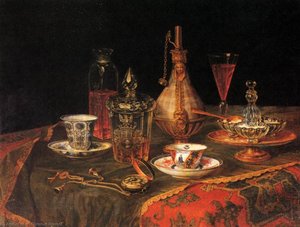
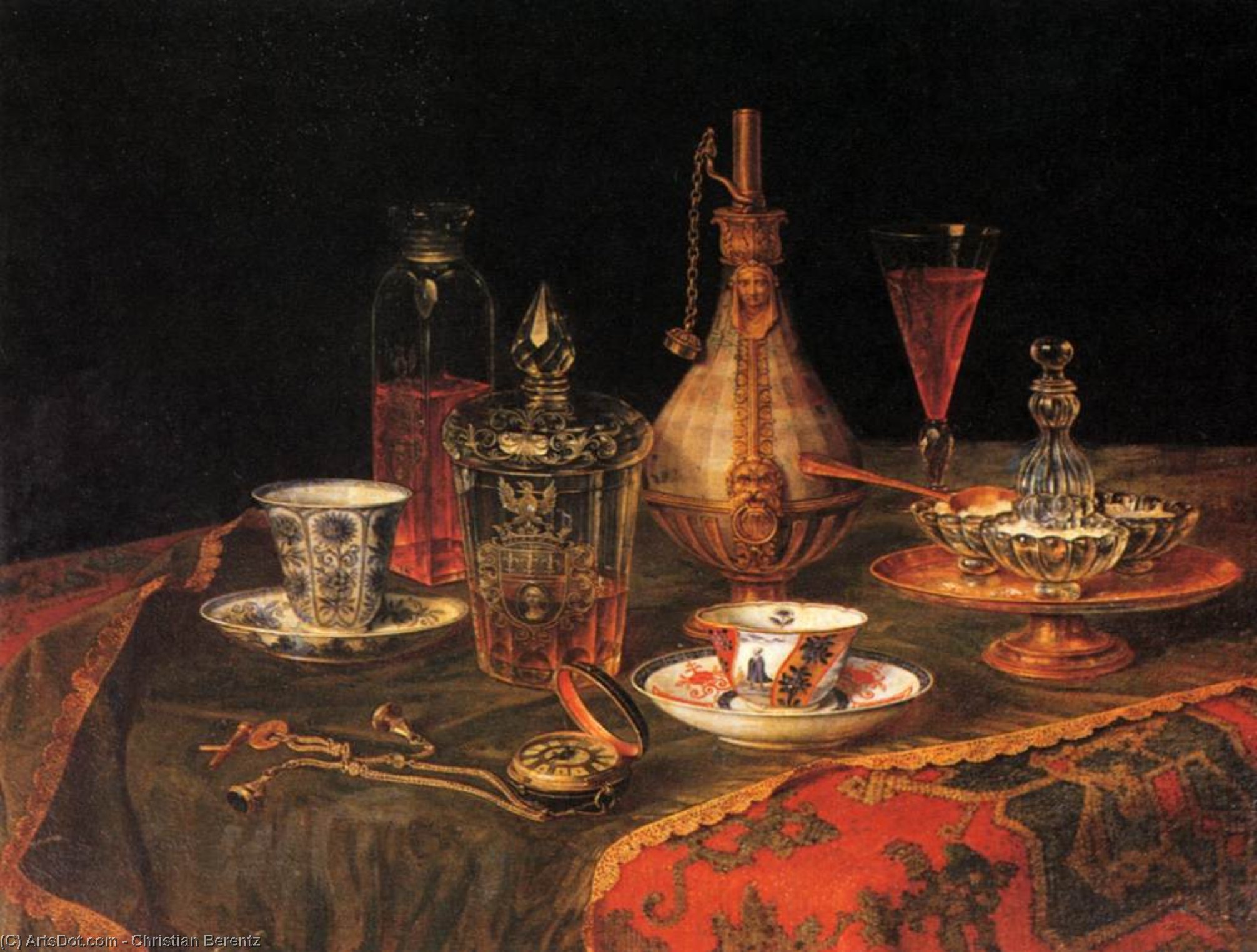
クリスチャン・ベレンツの静物画:伝統とバロック革新の融合
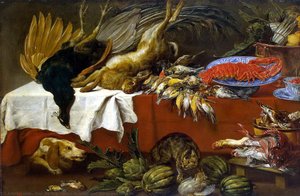
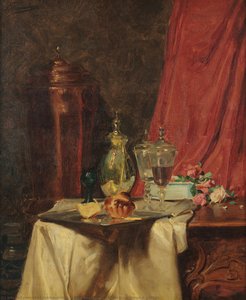
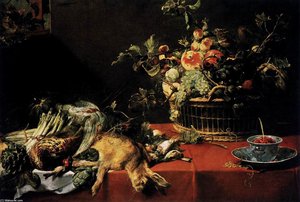
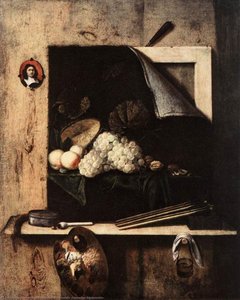
クリスチャン・ベレンツ(1658年生まれ、ハンブルク出身)は、バロック美術における重要な人物であり、特にオランダ絵画の影響を受けながらもローマでの活動を通じてヨーロッパ美術全体に広がる潮流を反映したアーティストです。初期の指導を受けたのはドイツの画家ヘルマン・カンプハースとヨアヒン・ハインスで、これらの指導はベレンツがバロック美術の伝統の中で確かな地位を築くための基礎となりました。しかしながら、アムステルダムやヴェネツィアへの渡航は彼の芸術的な視野を広げ、当時の優れた画家たちとの交流を通じて彼自身のスタイルに新たな要素をもたらしました。 ベレンツの作品の特徴は、観察力と技術の完璧さにおいて顕著であり、ピエートル・クラエズやマクシミリアン・フェイラー、ヴィレム・カルフなどのオランダ絵画大师の影響を受けながらも、独自の表現を追求しています。彼のスタイルは「マニエリスム」と呼ばれるものであり、特に繊細な色彩使いと光の表現において特徴があります。彼はバロック美術における伝統的な技法を継承しつつも、同時にローマで洗練された芸術環境の中で新たな視点を獲得しました。この影響は彼の作品に独特の雰囲気を与え、見る人に深い感動を与える力を持っています。 ベレンツの静物画は、オランダ絵画の伝統とバロック美術における革新的な要素が融合した傑作と言えるでしょう。彼は特にフルーツや野菜などの自然物をモチーフに描き込み、光と影のコントラストを巧みに表現することで、作品に奥行きとリアリズムを与えています。彼の静物画は単なる美しい絵画作品ではなく、当時の社会情勢や価値観を反映した芸術作品であり、美術史における重要な位置を占めています。ベレンツの作品は、その技術的な卓越性と芸術的な美しさにおいて、バロック美術の頂点に立つと言えるでしょう。 彼の代表作の一つである「葡萄と果物」は、特にヴェネツィアで活躍した画家たちとの交流を通じて得られた経験が反映された作品です。この絵画は、熟練した技術を用いて描かれ、色彩豊かな表現と光の演出によって見る人に深い感動を与えます。ベレンツの静物画は、バロック美術における伝統的な技法を継承しつつも、同時にローマで洗練された芸術環境の中で新たな視点を獲得した画家たちの代表作として、美術史に名を刻んでいます。この作品は、その美しい色彩と繊細な光の表現において、バロック美術の傑作の一つとして高く評価されています。 さらにベレンツの静物画は、当時の社会における「ヴァニタス」という思想の影響を受けています。「ヴァニタス」とはラテン語で「儚さ」「無意味さ」を意味する言葉であり、人間の生と死、そして物質的な豊かさをテーマにした芸術作品です。ベレンツの静物画は、これらのテーマを表現することで見る人に深い哲学的な問いかけを与え、人生の意味について考えさせる力を持っています。彼の作品は、バロック美術における思想的な深さと芸術的な美しさが融合した傑作であり、美術史における重要な位置を占めています。関連作品
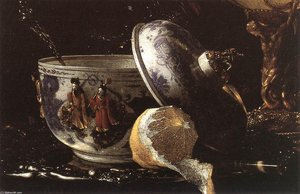
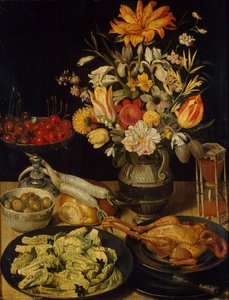
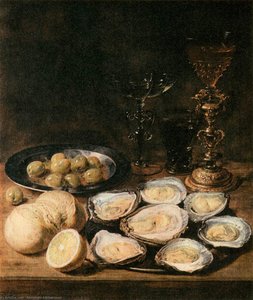
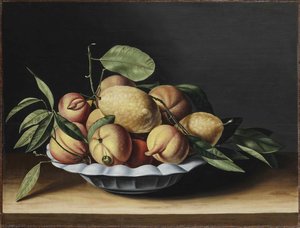
アーティストの略歴
The Alchemist of Light: The Life and Legacy of Christian Berentz
In the grand, sweeping tapestry of the Baroque era, few threads are as intricately woven as those of Christian Berentz. Born in the industrious city of Hamburg in 1658, Berentz emerged from the German tradition not merely as a student of form, but as a bridge between disparate worlds. His early years were defined by rigorous discipline under the tutelage of masters such as Hermann Kamphusen and Georg Hainz, providing him with a foundational mastery of the Northern European penchant for precision. Yet, the soul of an artist often craves the horizon, and for Berentz, that horizon lay far beyond the borders of Germany. His subsequent journeys through the Netherlands and Venice acted as a transformative pilgrimage, exposing him to the luminous palettes of the Mediterranean and the profound, quiet realism of the Dutch Golden Age.
By the time Berentz established himself in Rome, he had become a true cosmopolitan of the canvas. He did not merely adopt the Roman style; he synthesized it with his Northern roots to create something entirely singular. His residency in the Eternal City allowed him to absorb the grandeur and theatricality of the Italian Baroque, most notably through his involvement in the prestigious studio of Carlo Maratta. This period of collaboration was instrumental in refining his ability to marry the meticulous, almost scientific observation of Dutch still life with the sweeping, emotive energy of Roman classicism. In doing so, Berentz became a vital conduit for the dissemination of Northern stylistic nuances into the heart of Italy.
A Symphony of Texture and Symbolism
To gaze upon a Berentz masterpiece is to enter a world where time seems to suspend itself in a moment of exquisite decay and eternal beauty. He was a master of the still life, a genre that, under his brush, transcended simple representation to become a profound meditation on existence. His compositions are often characterized by a sophisticated use of chiarosc Century, where deep, velvety shadows provide a dramatic stage for the sudden, brilliant emergence of light upon a dew-kissed petal or a translucent grape. This interplay of light and dark does more than create depth; it breathes life into the inanimate.
His technique, often described with a touch of mannerist elegance, reveals a conscious effort to distill the essence of nature into highly stylized yet breathtakingly realistic forms. One might observe:
- The tactile richness of heavy drapery and dark cloths that anchor his compositions.
- The delicate, almost fragile rendering of floral motifs that suggest the fleeting nature of life.
- The masterful depiction of glass and liquid, capturing the way light refracts through wine and crystal.
Historical Significance and Artistic Endurance
The historical importance of Christian Berentz lies in his role as an artistic mediator. He stood at the crossroads of Northern realism and Southern grandeur, proving that these seemingly opposing movements could be harmonized into a cohesive visual language. His ability to navigate the technical demands of the Dutch masters—such as the precision of Pieter Claesz—while embracing the atmospheric depth of the Roman school, allowed him to occupy a unique niche in the Baroque hierarchy. Furthermore, his legacy extends through his role as an educator; by training figures such as Pietro Navarra, he ensured that his particular brand of stylistic synthesis would ripple through subsequent generations of painters.
Today, Berentz’s contributions are preserved in some of the world's most esteemed institutions, including the Hermitage Museum. His works remain vital touchstones for anyone seeking to understand the complexity of the Baroque period—a time when art was not merely a mirror held up to nature, but a sophisticated dialogue between the seen and the unseen, the fleeting and the eternal. Through his meticulous observation and emotive execution, Berentz continues to invite viewers into a silent, beautiful conversation with the ephemeral wonders of the natural world.
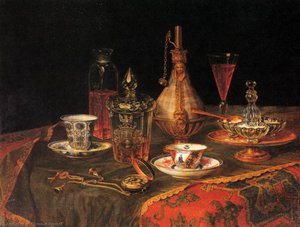
Christian Berentz
1658 - 1722 , Germany
基本情報
- Artistic Movement Or Style: Baroque
- Artists Or Movements Influenced By This Artist:
- Pieter Claesz
- Carlo Maratta
- Artists Who Influenced This Artist:
- Hermann Kamphusen
- Georg Heinz
- Date Of Birth: 1658
- Full Name: Christian Berentz
- Nationality: German
- Notable Artworks: ['Flowers & Fruits']
- Place Of Birth: Hamburg, Germany
関連記事

Dutch Baroque Masters: 10 Paintings That Shaped an Era | ArtsDot
Journey through the Golden Age with our guide to the Top 10 Dutch Baroque masterpieces! Explore iconic paintings by Rembrandt, Vermeer & Frans Hals. Find museum-quality art reproductions and elevate your home decor at ArtsDot.com.

Golden Age Reflections: Dutch Baroque Painting & Cultural Innovation
Explore the Dutch Golden Age of painting! Discover key artists like Vermeer & ter Borch, their innovative techniques, and the rich cultural context behind these Baroque masterpieces. Learn about collecting & appreciating this iconic art period.
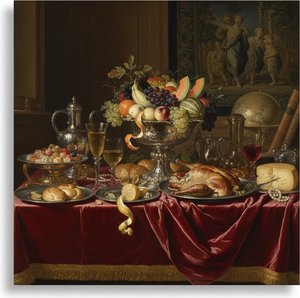
Abraham Hendricksz van Beyeren: Pioneering Dutch Still Life & the Banquet Tradition
Explore the captivating world of Dutch Golden Age still life with Abraham van Beyeren. Discover his innovative techniques, symbolic banquet scenes & lasting influence on art history. Learn about collecting these masterpieces.
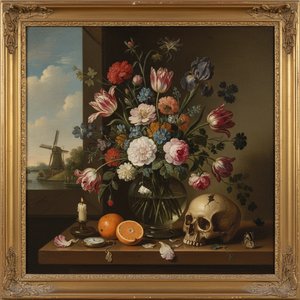
Jan Jansz Wijnants: A Study in Dutch Golden Age Still Life & Floral Transience
Explore the captivating world of Jan Wijnants and Dutch Golden Age still life painting. Discover symbolism, masterful techniques & lasting influence on floral art history. Learn more!
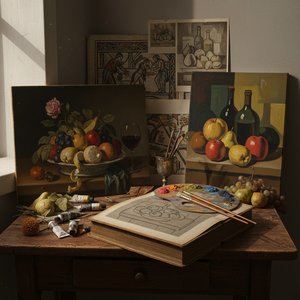
Silent Narratives: Exploring the Enduring Appeal of Still Life Painting Across Centuries
Explore the rich history of still life painting with ArtsDot. Discover Dutch Masters, decode vanitas symbolism & learn about collecting timeless art. Expert insights and museum-quality reproductions.