

 プレビュー
プレビュー
 プリントを購入
 シェアする
シェアする シェアする
シェアする
 詳細を見る
詳細を見る

 ダウンロード
 似ている作品
 X線調査
X線調査 スライドショー
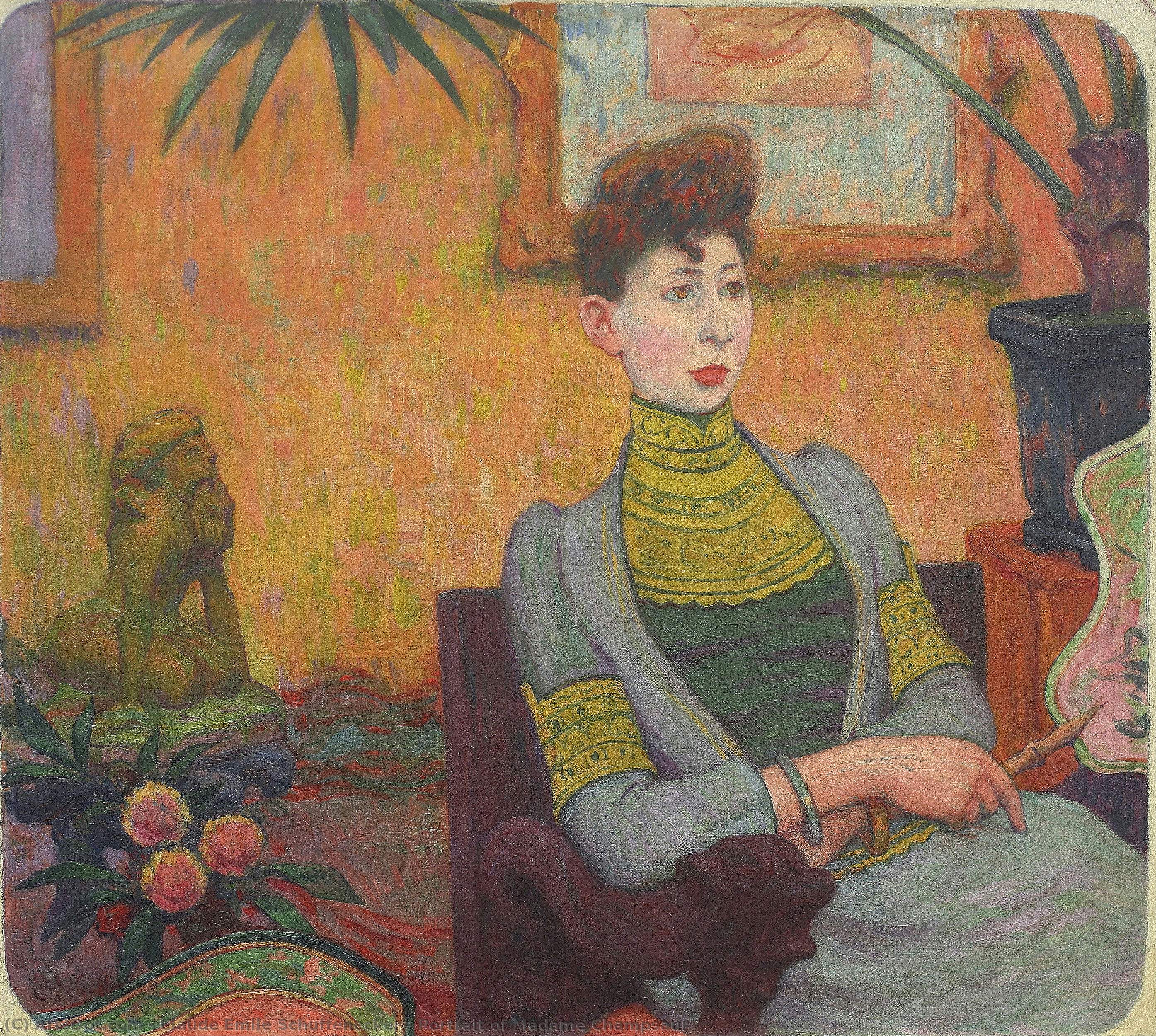
Portrait of Madame Champsaur
 Acrylic
- WallArt
- Post-Impressionism
 1890
1890 68.0 x 75.0 cm
 Musée de Pont-Aven
 詳細を見る
詳細を見る




P118B $10

P118H $10

P118W $10

P438Z $10

P508JH $12

P508YH $12

P805H $10

P805Z $10

P919BZ $10

P919G $10

P919XJ $10

P959ZH $10

P968JZ $12

W106C $8

W218G $10

W218JH $8

W218Y $10

W307PJ $10

W316G $10

W316PJ $8

W316Y $10

W398PJ $8

W4111J $10

W500HY $15

W500JH $15

W692G $12

W849H $8

W940BG $15

W953PJ $8




作品のオリジナル比率に合わせた、当店の規定サイズからお選びください。

特定のフレームやスペースに合わせて、ご希望のサイズをご入力いただけます。選択されたサイズが元の画像の比率と異なる場合、アートワークをトリミングするか、手描きで要素を追加して絵画を拡張いたします。デジタルモックアップ を制作し、制作開始前にご確認(承認)をいただきます。
画面上のプレビューは、実際のトリミングや拡張を正確に反映しているものではありません。最終的な構図は、モックアップによってのみ正確にご確認いただけます。
カスタムサイズもご利用いただけますが、元の比率を維持するためには、あらかじめ用意されたリストからサイズを選択することをお勧めいたします。
ご注文後、ArtsDot.com チームより詳細な指示をお送りするとともに、仕上がりイメージ(モックアップ)をご提供いたします。


 ガラスオプションは、110cm未満のサイズでのみご利用いただけます。

Portrait of Madame Champsaur
複製技法
複製画のサイズ
-


合計金額
$ 263
作品解説
A Quiet Pioneer of Impressionism: Claude Emile Schuffenecker’s Portrait of Madame Champsaur
Claude Emile Schuffenecker (1851–1934) remains a figure largely overshadowed by the towering presence of Paul Gauguin and Odilon Redon, artists who dominated the Parisian art scene during his lifetime. Yet, this unassuming French Post-Impressionist painter possessed an undeniable contribution to the burgeoning field of art collecting and fostered a vibrant artistic community—a legacy deserving of renewed appreciation. His life’s journey unfolded amidst considerable personal hardship – marked by familial loss and financial struggles – yet Schuffenecker steadfastly pursued his artistic vision, shaping landscapes imbued with atmospheric subtlety and portraits reflecting profound psychological depth.The Subject Matter: A Reflection of Belle Époque Elegance
“Portrait of Madame Champsaur” depicts Felicien Champsaur’s wife, a woman embodying the refined sensibilities of the Belle Époque era. Schuffenecker skillfully captures her likeness in an intimate setting—a room bathed in warm yellow light—accentuated by carefully positioned potted plants and a single book resting on a surface near the bottom right corner. These details contribute to a sense of serene domestic tranquility, mirroring the idealized vision of femininity prevalent during this period. The artist’s meticulous attention to detail extends beyond mere representation; he strives to convey Madame Champsaur's inner character—her composure and grace—through subtle gestures and expressive facial features.Stylistic Influences: Gauguin’s Resonance and Rodin’s Sculptural Inspiration
Schuffenecker’s artistic style draws heavily from Impressionism, particularly the influence of Paul Cézanne and Camille Pissarro, yet he transcends mere stylistic imitation by incorporating elements of Symbolism. The evocative reference to Rodin’s sculpture “Succube”—a depiction of a demonic female figure—serves as a powerful visual metaphor, injecting an element of unsettling beauty into the portrait. This deliberate juxtaposition underscores Schuffenecker's fascination with exploring psychological complexities and confronting darker aspects of human experience – themes that resonate powerfully within the broader context of Impressionist art’s preoccupation with capturing emotion and atmosphere.Technique: Delicate Brushwork and Atmospheric Depth
Schuffenecker employed a technique characterized by delicate brushstrokes—a hallmark of Impressionism—to achieve remarkable atmospheric depth and luminosity. Layers of paint create subtle gradations of color, conveying the warmth of the room’s yellow walls and capturing the diffused light filtering through the windows. The artist skillfully utilizes tonal variations to sculpt Madame Champsaur's face, emphasizing contours and creating a palpable sense of presence. Furthermore, Schuffenecker’s incorporation of Breton-style embroidery—evident in Madame Champsaur’s clothing—adds textural richness to the composition and subtly references the artistic traditions of Brittany, reflecting Schuffenecker’s connection to regional identity and cultural heritage.Historical Context: The Pont-Aven Group and Artistic Innovation
“Portrait of Madame Champsaur” emerged during a pivotal moment in art history – the formative years of the Pont-Aven Group, spearheaded by Gauguin and Vincent van Gogh. Schuffenecker’s involvement as an organizer of the group's inaugural exhibition at Café Volpini in Paris solidified his position as a champion of artistic innovation and a catalyst for cultural dialogue. This work stands as testament to Schuffenecker’s unwavering commitment to pushing boundaries, challenging conventions, and exploring uncharted territories within the realm of visual art—a legacy deserving of rediscovery by contemporary audiences eager to appreciate the quiet brilliance of an overlooked Impressionist master.関連作品
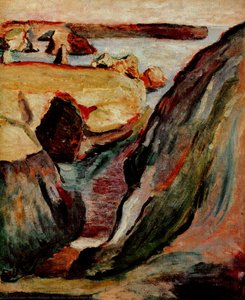
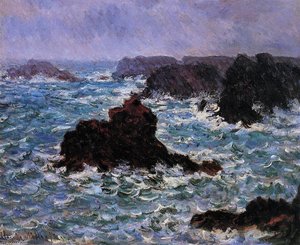
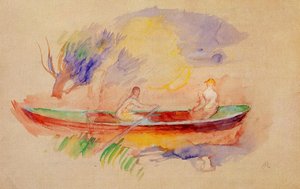
アーティストの略歴
The Quiet Pioneer: The Life and Legacy of Claude Émile Schuffenecker
In the vibrant, often tumultuous tapestry of the late nineteenth-century Parisian art scene, certain names shine with an almost blinding brilliance, while others linger in the soft, atmospheric shadows. Claude Émile Schuffenecker (1851–1934) belongs to that evocative second group—a figure whose brushstrokes helped define the edges of Post-Impressionism even as he remained somewhat obscured by the monumental shadows of his contemporaries. Born in Haute-Saône, France, Schuffenecker’s journey was one of profound resilience and artistic devotion. Following the early loss of his father, a tailor from Alsace, his path was shaped by economic necessity and a disciplined upbringing. Before fully committing to the easel, he worked within the practical world of commerce, assisting in his uncle’s coffee and chocolate roasting business. This grounded, industrious spirit would later manifest in his meticulous approach to color and composition, providing a stable foundation for his experimental explorations in light and form.
Schuffenecker’s artistic soul was forged in the crucible of Parisian bohemianism, where he found kindred spirits in the likes of Paul Gauguin and Odilon Redon. His education at the Académie Colarossi allowed him to refine his technical prowess, but it was his deep, intellectual connection with Gauguin that truly catalyzed his creative evolution. The two men shared more than just a studio space; they shared a reverence for the Old Masters and a mutual desire to push beyond the fleeting impressions of Monet toward something more structural and symbolic. This period of intense camaraderie saw Schuffenecker participating in pivotal moments of art history, most notably the Volpini Exhibition, an event that served as a crucial platform for the avant-garde. Through these connections, he also became an early supporter of Vincent van Gogh, positioning himself at the very heart of a movement that would forever alter the course of modern art.
A Vision of Light and Atmosphere
The work of Schuffenecker is characterized by a delicate balance between the observational accuracy of Impressionism and the emotive, flattened planes of Post-Impressionism. His landscapes often serve as windows into a serene, almost dreamlike reality. In pieces such as In the Woods, one can observe his mastery of pastel and oil to create a sense of depth through soft, rhythmic brushwork. He possessed a unique ability to capture the way light filters through foliage or rests upon the surface of water, as seen in his evocative depictions of the Meudon region. His compositions often invite the viewer into a quiet, contemplative space, where the boundaries between the physical world and psychological mood begin to blur.
Beyond the landscape, Schuffenecker’s oeuvre includes portraits that delve into the interiority of his subjects, reflecting a profound interest in human emotion. His technique often utilized:
- Atmospheric Subtlety: A focus on the weight and texture of air and light to create mood.
- Color Harmony: An intentional use of palette to evoke specific emotional responses, influenced by his studies with Gauguin.
- Structural Composition: A move away from purely spontaneous strokes toward more deliberate, organized forms that suggest a lasting permanence.
Historical Significance and the Collector's Eye
While Schuffenecker may not have achieved the global celebrity of the masters he befriended, his historical significance is multifaceted. He was not merely a painter but an active participant in the ecosystem of art through his roles as an art teacher and a dedicated collector. His eye for talent and his commitment to fostering new movements helped sustain the momentum of the Post-Impressionist era. By documenting and supporting the works of his peers, he contributed to the very fabric of the Parisian avant-garde.
Today, Schuffenecker’s legacy is being rediscovered by scholars and enthusiasts alike who recognize the quiet strength in his vision. His ability to navigate the transition from the naturalism of the mid-century to the expressive freedom of the new century marks him as a vital link in the chain of modern art history. To study Schuffenecker is to witness the evolution of a movement, seeing through his eyes the shifting light of a world on the brink of profound change.
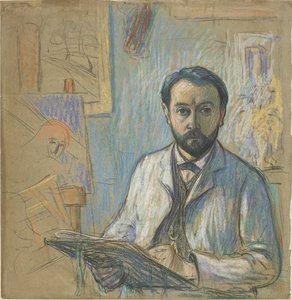
claude emile schuffenecker
1851 - 1934 , France
基本情報
- Artistic Movement Or Style: Post-Impressionism
- Artists Or Movements Influenced By This Artist: ['Vincent van Gogh']
- Artists Who Influenced This Artist:
- Paul Gauguin
- Odilon Redon
- Date Of Birth: December 8, 1851
- Date Of Death: July 31, 1934
- Full Name: Claude Emile Schuffenecker
- Nationality: French
- Notable Artworks:
- The Luxembourg Parc
- Paysage Landscape
- Place Of Birth: Haute-Saône, France
関連記事
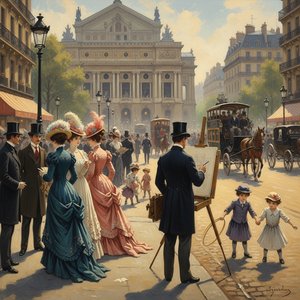
Jean-Georges Béraud: Capturing Parisian Life in the Belle Époque
Explore the captivating world of Jean-Georges Béraud, master painter of Belle Époque Paris. Discover his iconic scenes, artistic evolution, and social commentary. A deep dive into 19th-century French art.
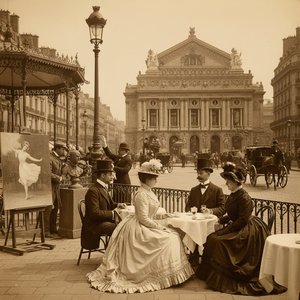
Echoes of 1882: Art, Culture & the Belle Époque's Lasting Impression
Explore the art & culture of the Belle Époque! Discover Impressionism, Realism, and iconic Parisian paintings from Degas, Béraud & more. High-quality reproductions at ArtsDot.
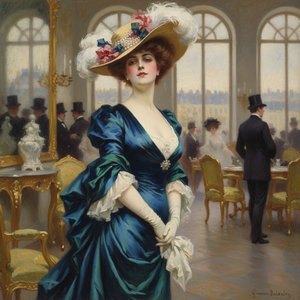
Giovanni Boldini: A Study in Belle Époque Portraiture & the Cult of Personality
Explore the captivating world of Giovanni Boldini, master of Belle Époque portraiture. Discover his signature style, iconic works like 'Miss Bell,' and lasting influence on art history. Expert analysis for collectors.
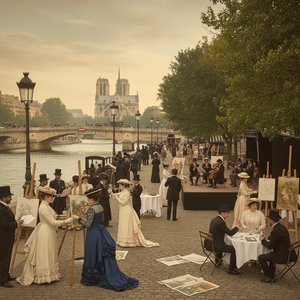
Echoes of 1875: Art, Culture & the Belle Époque's Pivotal Moment
Explore the art & culture of 1875 Paris – a pivotal year for Impressionism & the Belle Époque. Discover Degas, Béraud, Stewart & more with ArtsDot's expert insights.

ポール・セザンヌ:至高の25選 - 傑作と革新の軌跡 | ArtsDot
ポール・セザンヌの至高の25選。ポスト印象派を代表する画家、セザンヌの傑作と革新的な技法を紐解きます。ArtsDotで高品質な複製画やインテリアアートを見つけ、芸術の世界をご自宅に。今すぐコレクションをご覧ください。

