 プレビュー
プレビュー
 プリントを購入
 シェアする
シェアする シェアする
シェアする
 詳細を見る
詳細を見る

 ダウンロード
 似ている作品
 X線調査
X線調査 スライドショー
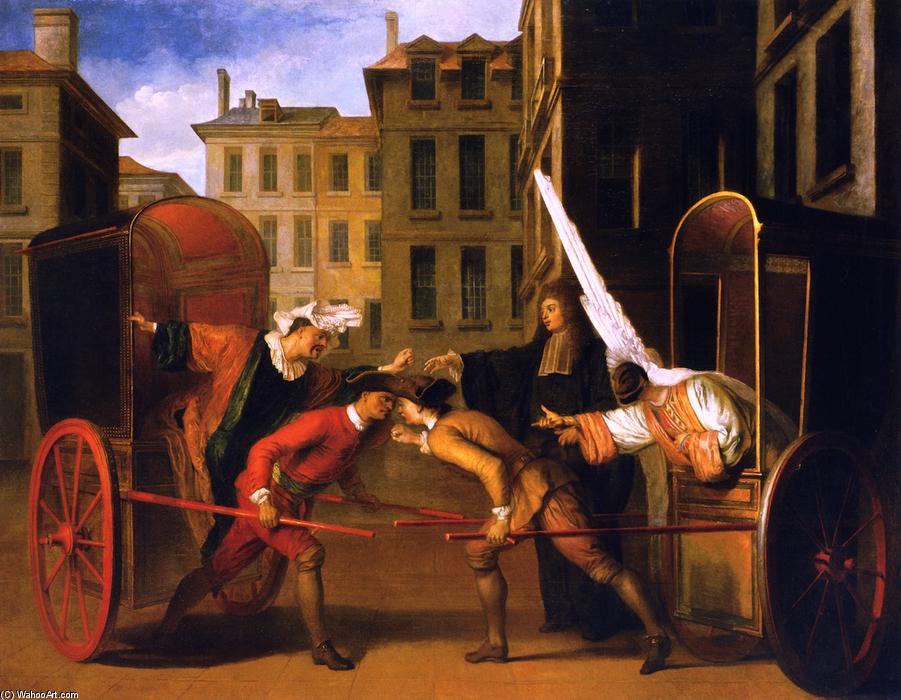
The Two Coaches
 Oil On Canvas
- WallArt
- Baroque
 1707
1707 127.0 x 160.0 cm
 ルーブル美術館
 詳細を見る
詳細を見る




P118B $10

P118H $10

P118W $10

P438Z $10

P508JH $12

P508YH $12

P805H $10

P805Z $10

P919BZ $10

P919G $10

P919XJ $10

P959ZH $10

P968JZ $12

W106C $8

W218G $10

W218JH $8

W218Y $10

W307PJ $10

W316G $10

W316PJ $8

W316Y $10

W398PJ $8

W4111J $10

W500HY $15

W500JH $15

W692G $12

W849H $8

W940BG $15

W953PJ $8




作品のオリジナル比率に合わせた、当店の規定サイズからお選びください。

特定のフレームやスペースに合わせて、ご希望のサイズをご入力いただけます。選択されたサイズが元の画像の比率と異なる場合、アートワークをトリミングするか、手描きで要素を追加して絵画を拡張いたします。デジタルモックアップ を制作し、制作開始前にご確認(承認)をいただきます。
画面上のプレビューは、実際のトリミングや拡張を正確に反映しているものではありません。最終的な構図は、モックアップによってのみ正確にご確認いただけます。
カスタムサイズもご利用いただけますが、元の比率を維持するためには、あらかじめ用意されたリストからサイズを選択することをお勧めいたします。
ご注文後、ArtsDot.com チームより詳細な指示をお送りするとともに、仕上がりイメージ(モックアップ)をご提供いたします。


 ガラスオプションは、110cm未満のサイズでのみご利用いただけます。

The Two Coaches
複製技法
複製画のサイズ
-


合計金額
$ 313
作品解説
The Two Coaches: A Baroque Tableau of Urban Life
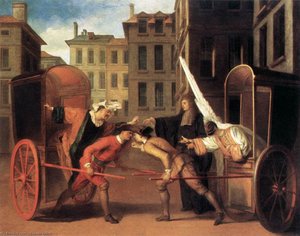
Claude Gillot’s “The Two Coaches,” painted in 1707, is more than just a depiction of a Parisian street scene; it's a vibrant snapshot of an era, brimming with the energy and social dynamics of 18th-century France. This oil on canvas, currently residing within the hallowed halls of the Louvre Museum, immediately draws the viewer into a bustling tableau – a chaotic yet meticulously rendered representation of public life unfolding amidst the city’s cobblestone streets. Gillot masterfully captures not just what was seen, but also the feeling—the movement, the noise, and the underlying tension inherent in a crowded urban space. The painting isn't merely illustrating an event; it’s conveying a mood, a sense of immediacy that transcends its historical context.
The composition itself is a key element of the work’s impact. Gillot employs a dynamic diagonal thrust created by the central cart and the figures pulling it, propelling the eye across the canvas with remarkable force. This movement is counterbalanced by the triangular arrangement of the principal figures – the executed man at the center and the executioners surrounding him – creating a compelling visual rhythm. The artist’s use of perspective subtly flattens the scene, emphasizing the action and drawing attention to the drama unfolding before us. It's a deliberate choice that prioritizes the narrative over strict realism, aligning with the theatrical sensibilities prevalent in Gillot’s work.
A Masterclass in Baroque Technique
Gillot’s skill as an artist is immediately apparent in his masterful handling of oil paint. The texture is rich and impastoed – thick layers of pigment applied directly to the canvas, creating a palpable sense of physicality. Notice particularly the rough surface of the executed man's skin, rendered with expressive brushstrokes that convey both vulnerability and brutality. The clothing of the executioners is equally detailed, showcasing the artist’s ability to capture the folds and textures of fabric with remarkable precision. The color palette leans heavily into warm tones – deep reds, browns, and golds—contrasted by the cooler shadows, creating a dramatic interplay of light and dark that intensifies the scene's emotional impact.
The use of line is equally significant. Gillot employs both thick, expressive lines to define the figures’ musculature and clothing, and thinner, more delicate lines to delineate architectural details in the background. This combination creates a sense of depth and dimensionality, while simultaneously emphasizing the key elements of the composition. The overall effect is one of controlled chaos—a carefully orchestrated scene that nevertheless feels utterly authentic.
Historical Context and Symbolic Weight
“The Two Coaches” depicts a public execution – a grim but not uncommon occurrence in 18th-century France. These executions served as stark reminders of the power of the monarchy and the consequences of defying its authority. Gillot’s painting isn't simply documenting an event; it’s engaging with the complex social and political realities of the time. The scene speaks to themes of justice, mortality, and the precariousness of life under a strict regime.
Furthermore, the inclusion of figures engaged in a quarrel – the “Two Coaches” themselves – suggests a broader commentary on social conflict and the tensions that simmered beneath the surface of Parisian society. The painting’s theatricality—its dramatic lighting, dynamic composition, and heightened emotional intensity—reflects the influence of the burgeoning opera and theatre scene of the period. Gillot was not only a painter but also a designer for the stage, bringing his artistic sensibilities to both visual and performing arts.
A Timeless Image: Reproduction and Beyond
Reproducing “The Two Coaches” today offers a unique opportunity to experience the power and artistry of this remarkable Baroque masterpiece. Whether as a large-scale canvas or a smaller print, the painting’s dramatic composition and evocative imagery continue to captivate viewers centuries after its creation. The rich textures and vibrant colors are faithfully recreated in high-quality reproductions, allowing art lovers to appreciate Gillot's skill and vision from the comfort of their own homes. Consider framing this piece within your interior design—its dynamic energy will add a touch of historical drama and artistic sophistication to any space.
関連作品



アーティストの略歴
The Architect of Baroque Splendor
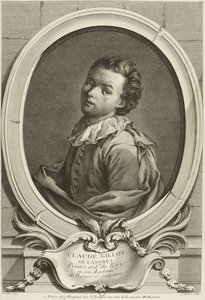
Claude Gillot (1673–1722) remains a luminous figure in the tapestry of late Baroque France, an artist whose versatile hand touched nearly every facet of the visual culture of his era. Born in the historic town of Langres, north of Dijon, Gillot’s early creative impulses were nurtured by his father before he ventured to Paris to refine his craft. His artistic journey was far from linear; he was a true polymath of the arts, moving with ease between the delicate precision of printmaking, the structural demands of metalworking, and the grand-scale imagination required for theatrical design. This multidisciplinary foundation allowed him to approach the canvas not merely as a surface for pigment, and but as a stage where light, movement, and drama could converge.
The trajectory of Gillot’s career was profoundly shaped by his apprenticeship under the legendary Jean Watteau around 1703. From Watteau, he absorbed the ethereal qualities of the emerging fête champêtre style—a genre characterized by pastoral elegance and aristocratic leisure. Yet, while he inherited this delicate sensibility, Gillot infused it with a unique vigor derived from his work in the Parisian theater. His extensive collaborations with playwrights and composers to design elaborate sets and costumes for operas and comedies instilled in him a mastery of visual storytelling. He understood how to direct the viewer's eye through composition, using the theatricality of costume and scenery to breathe life into mythological and contemporary narratives alike.
A Mastery of Myth and Motion
Gillot’s ascent within the prestigious Académie Royale de peinture et de sculpture in 1715 marked a definitive moment in his professional life, signaling his recognition as a master of monumental composition. His breakthrough was anchored by works that celebrated the grandeur of classical antiquity through a contemporary lens. In masterpieces such as “Feast of Pan” and “Feast of Bacchus,” Gillot demonstrated an extraordinary ability to blend the divine with the terrestrial. These canvases were not merely depictions of myth; they were sensory experiences, where the lushness of the landscape met the exuberant energy of mythological revelry.
His technique was characterized by a sophisticated use of color and form that could shift from the soft, dreamlike textures reminiscent of his mentor to a more robust, dramatic Baroque intensity. This versatility allowed him to capture the very essence of the commedia dell’arte, bringing the wit and character of masked performers to life with a sense of spontaneous motion. Through his engravings and paintings, he documented the social graces and theatrical whimsies of the French court, creating a visual record that was as much about the spirit of the age as it was about the subjects themselves.
Legacy of the Rococo Prelude
As the art world began to transition from the heavy grandeur of the Baroque toward the lighter, more intimate aesthetics of the Rococo, Gillot’s influence remained foundational. He served as a vital bridge between generations, influencing later masters such as Lancret by refining the vocabulary of pastoral scenes and theatrical character studies. His ability to marry the structural discipline of classical painting with the whimsical charm of the stage helped define the aesthetic sensibilities of the early 18th century.
Today, the significance of Claude Gillot lies in his role as a creator of atmosphere. Whether through the intricate lines of a print or the sweeping vistas of a mythological feast, his work continues to evoke the vibrant, theatrical pulse of pre-revolutionary France. He remains an artist whose legacy is found not just in individual masterpieces, but in the very way we perceive the intersection of art, theater, and the beautiful artifice of life.
Claude Gillot
1673 - 1722 , France
基本情報
- Artistic Movement Or Style: Baroque
- Artists Who Influenced This Artist:
- Jean Watteau
- Nicolas Lancret
- Date Of Birth: 1673
- Date Of Death: 1722
- Full Name: Claude Gillot
- Nationality: French
- Notable Artworks:
- The Two Coaches
- Garment time of night
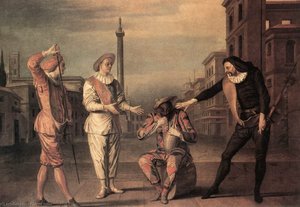
- Italian Comedians
- Place Of Birth: Langres, France
関連記事
クロード・モネ傑作25選:光と色彩の印象派を彩る名画の世界 | ArtsDot
クロード・モネの傑作25選。印象派を代表する光の画家、モネの世界を旅しませんか?睡蓮や風景画など、名画の背景にある物語と芸術技法をご紹介。ArtsDotで高品質な複製画とインテリアアートを見つけましょう。全コレクションはこちら。
Simon Vouet: A Baroque Master's Journey from Italian Influence to French Classicism
Explore the life & art of Simon Vouet, a pivotal French Baroque painter who introduced Italian styles to France. Discover his masterpieces and lasting influence on 17th-century art.

バロックのドラマ:現代のインテリアに壮麗さと情感を取り込む
バロック様式の歴史、絵画、家具の魅力をご紹介。ArtsDotでは、高品質な油絵複製やカスタムポートレートをご提供し、現代のインテリアに壮麗さと情感を取り入れます。アートコンサルテーションも承ります。
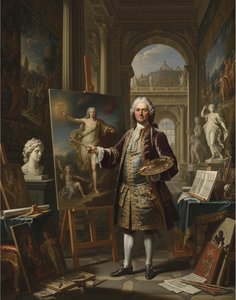
Charles Le Brun: Master of French Baroque Classicism & His Enduring Legacy
Explore the life & art of Charles Le Brun, master of French Baroque Classicism. Discover his royal commissions, influence on Versailles, and enduring legacy through detailed analysis & stunning artworks.

The Dramatic Flourish: Exploring the Baroque Movement's Enduring Legacy in Art History
Explore the dramatic world of Baroque art! Discover iconic artists like Caravaggio & Rubens, defining techniques, and its lasting impact on art history. Expert insights for collectors & enthusiasts at ArtsDot.