

 プレビュー
プレビュー
 シェアする
シェアする シェアする
シェアする
 詳細を見る
詳細を見る

 ダウンロード
 似ている作品
 X線調査
X線調査 スライドショー
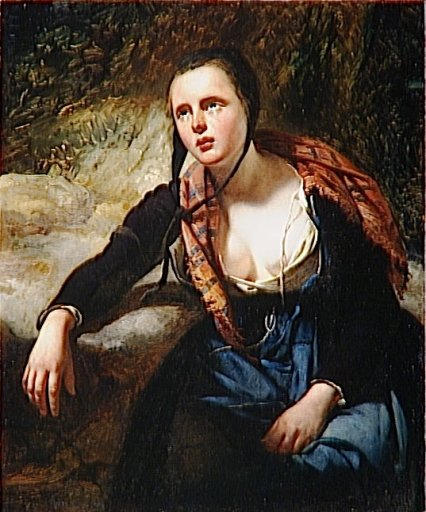
Jeune Alsacienne


 詳細を見る
詳細を見る
ジークレー/アートプリント
迅速な制作と多彩な仕上げオプションを備えた、ミュージアムクオリティのジークレーまたはキャンバスプリント。 ( 手描きの絵画を購入 画像を購入)




P118B $10

P118H $10

P118W $10

P438Z $10

P508JH $12

P508YH $12

P805H $10

P805Z $10

P919BZ $10

P919G $10

P919XJ $10

P959ZH $10

P968JZ $12

W106C $8

W218G $10

W218JH $8

W218Y $10

W307PJ $10

W316G $10

W316PJ $8

W316Y $10

W398PJ $8

W4111J $10

W500HY $15

W500JH $15

W692G $12

W849H $8

W940BG $15

W953PJ $8




作品のオリジナル比率に合わせた、当店の規定サイズからお選びください。

特定のフレームやスペースに合わせて、ご自身でサイズを指定することも可能です。選択されたサイズが元の画像の比率と一致しない場合、作品をトリミングするか、鏡面反射または単色での塗りつぶしによって画像を拡張いたします。制作を開始する前に、ご確認用のデジタルモックアップをお送りいたします。
画面上のプレビューには、実際のトリミングや拡張は反映されませんのでご注意ください。最終的な構図を正確に確認できるのは、モックアップのみとなります。
カスタムサイズも承っておりますが、元の比率を維持するためには、あらかじめ用意されたリストからサイズを選択することをお勧めいたします。


 ガラスオプションは、110cm未満のサイズでのみご利用いただけます。

Jeune Alsacienne
ジークレー/アートプリント
複製画のサイズ
-


合計金額
$ 62
作品詳細説明
A Glimpse into Alsatian Melancholy
To stand before 'Jeune Alsacienne' is to be enveloped in a quiet moment of introspection. Claude Marie Paul Dubufe captures not merely a portrait, but an atmosphere—a delicate blend of youthful beauty tinged with a palpable sense of wistfulness. The subject, clad in the rich, traditional garments of Alsace, seems suspended in time, offering the viewer a direct, yet somewhat distant, connection through her gaze. It is a scene steeped in the romanticism of regional identity, where the weight of cultural heritage meets the ephemeral nature of youth.
Mastery of Tone and Texture
Dubufe’s technique here speaks volumes about his skill as an oil painter. The handling of paint is remarkably soft; one can almost feel the visible brushstrokes beneath the surface, particularly in the indistinct background foliage and the folds of her attire. The color palette itself is a masterclass in muted harmony—earthy browns, deep greens, and subtle blues dominate, punctuated only by the warmer tones of her skin and perhaps a splash of red from her scarf. This restrained use of color prevents any single element from overpowering the gentle, somber mood that permeates the entire composition.
The Echoes of Romantic Sentiment
While Dubufe’s early training was steeped in the grand narratives of Neoclassicism, this work leans deeply into the emotional currents of Romanticism. The soft lighting, which diffuses across her features and casts gentle shadows, avoids any dramatic flourish, opting instead for an intimate, almost whispered quality. This stylistic choice allows the symbolism—the quiet contemplation suggested by her pose, perhaps resting a hand upon unseen rocks—to take precedence over overt narrative action. It invites the observer to project their own musings onto the canvas.
A Touch of Regional Soul for Your Space
For those seeking art that whispers rather than shouts, 'Jeune Alsacienne' offers profound depth. Whether adorning a drawing-room corner or serving as a focal point in an elegantly styled interior, this piece brings with it a sense of storied history and gentle melancholy. Reproducing this work allows one to bring home not just paint on canvas, but a carefully curated emotional echo—a beautiful nod to regional culture rendered with the sophisticated touch of a master painter.
関連作品
アーティストの略歴
The Last Echo of David’s Legacy
Claude-Marie Paul Dubufe (1790–1864) stands as a poignant figure in French art history—the final bastion of Jacques-Louis David's artistic lineage, marking the twilight years of Neoclassicism and ushering in a new era of Romanticism. Born in Paris amidst the burgeoning intellectual fervor of his time, Dubufe’s formative years were steeped in the ideals championed by David himself, whose monumental canvases had redefined artistic expression with their austere grandeur and moral seriousness. This early influence profoundly shaped Dubufe's stylistic trajectory, initially favoring classical subjects—mythological narratives and biblical scenes—reflecting a desire to honor tradition while simultaneously injecting subtle emotional nuance into his compositions.
Dubufe’s formal education commenced under David’s tutelage at the École Royale Supérieure des Baux-Arts, where he absorbed not only technical mastery but also a deep appreciation for artistic idealism. The emphasis on anatomical precision and dramatic storytelling—hallmarks of David's oeuvre—became indelible components of Dubufe’s artistic vocabulary. As his career progressed, however, the rigid boundaries of Neoclassicism began to soften under his brush. While firmly rooted in classical principles, Dubufe swiftly transitioned to genre painting and portraiture, capturing the vibrancy of Parisian life and portraying individuals with remarkable sensitivity.
A Transition from Grandeur to Intimacy
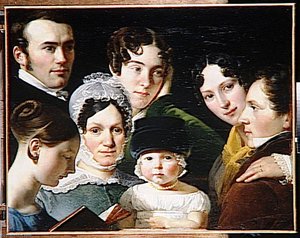
Unlike David’s monumental canvases focused on heroic narratives, Dubufe's subjects were often ordinary people—aristocrats, artists, musicians—presented with an intimacy that belied their social status. He possessed a unique ability to bridge the gap between the epic and the everyday, moving away from the cold, detached perfection of the classical era toward a more human-centric approach. This evolution is beautifully captured in his works that document the domestic elegance of the French upper class, such as his celebrated The Dubufe Family in 1820. In this masterpiece, one can observe how he utilizes neoclassical precision to render a scene of profound familial warmth and social grace.
His mastery extended deeply into the realm of portraiture, where he demonstrated an uncanny ability to convey both formal elegance and psychological depth. His meticulous attention to detail—particularly in capturing facial expressions and the textures of fine fabrics—allowed him to create portraits that felt alive with character. Notable examples include:
- Portrait de la comtesse de kergolay: A stunning neoclassical oil painting of a noblewoman, where rich detail and dramatic lighting highlight the historical weight of her station.
- Portraits of the Dubufe lineage: Including works featuring his son, Édouard Dubufe, which showcase a tender, personal side to his technical prowess.
- Social Portraits: Capturing figures such as Louise d’Orléans and Eleanor Jenkinson, blending the prestige of the subject with an intimate, observant gaze.
Historical Significance and Artistic Enduring Spirit
Dubufe’s artistic output spanned a prolific period, producing over 300 paintings that serve as a visual bridge between two transformative centuries. As the nineteenth century progressed, the rise of Romanticism challenged the very foundations of the school he represented. Yet, Dubufe remained a vital link to the past, preserving the technical rigor of the Davidian tradition while embracing the emotional fluidity required by a changing world. His work does not merely document the faces of his era; it captures the shifting soul of France itself.
Today, the legacy of Claude-Marie Paul Dubufe is found in the quiet strength of his compositions and the enduring elegance of his portraits. He remains an essential figure for any student of art history, representing that rare moment in time when the disciplined shadows of Neoclassicism met the bright, emotive light of a new age. Through his lens, we glimpse the refined textures of 19th-century society, rendered with a hand that was both classically trained and deeply human.
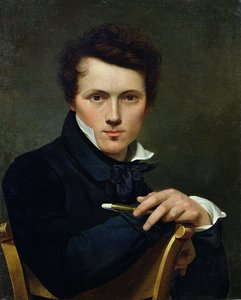
claude marie paul dubufe
1790 - 1864
基本情報
- Artistic Movement Or Style: David School
- Artists Or Movements Influenced By This Artist: ['Romanticism']
- Artists Who Influenced This Artist: ['Jacques-Louis David']
- Date Of Birth: 1790
- Date Of Death: 1864
- Full Name: Claude Marie Paul Dubufe
- Nationality: French
- Notable Artworks:
- Louise d’Orleans, Reine des Belges
- La lettre de Wagram
- Place Of Birth: Paris, France
関連記事
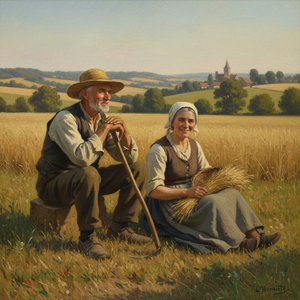
Léon Augustin L'Hermitte: Capturing the Soul of French Rural Life
Discover the captivating realist paintings of Léon Augustin L'Hermitte, masterfully depicting French rural life. Explore his technique, influences & legacy – a cornerstone of 19th-century art.
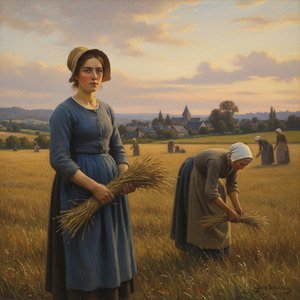
Jules Breton: Capturing the Poetic Soul of French Rural Life
Explore the captivating world of Jules Breton, master of French Realism. Discover his iconic paintings of rural life, learn about his artistic journey, and find high-quality reproductions to elevate your art collection at ArtsDot.
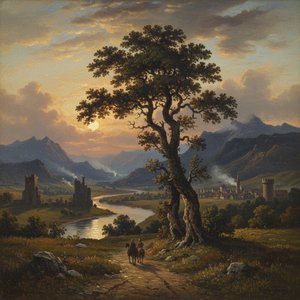
Paul Huet: Capturing the Essence of French Romanticism Through Light and Landscape
Explore the captivating world of Paul Huet (1803-1869), a master of French Romantic landscape painting. Discover his influence on Barbizon & Impressionism, and browse high-quality reproductions at ArtsDot.
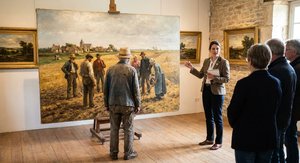
Cultivating Visions: Rural Life & Social Commentary in Art History
Explore the rich history of rural life in art! Discover masterpieces from Dutch Masters to Van Gogh & Courbet. Uncover artistic movements, social significance & expert collecting insights at ArtsDot.
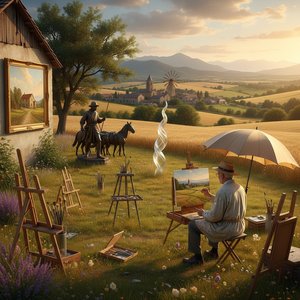
Echoes of Rural Life: Art's Enduring Representations of the Countryside
Explore the rich history of rural life in art! Discover masterpieces from Millet to Mauve & beyond. Learn about Realism, Barbizon School & find inspiration for your home with ArtsDot.

