 プレビュー
プレビュー
 プリントを購入
 シェアする
シェアする シェアする
シェアする
 詳細を見る
詳細を見る

 ダウンロード
 似ている作品
 X線調査
X線調査 スライドショー
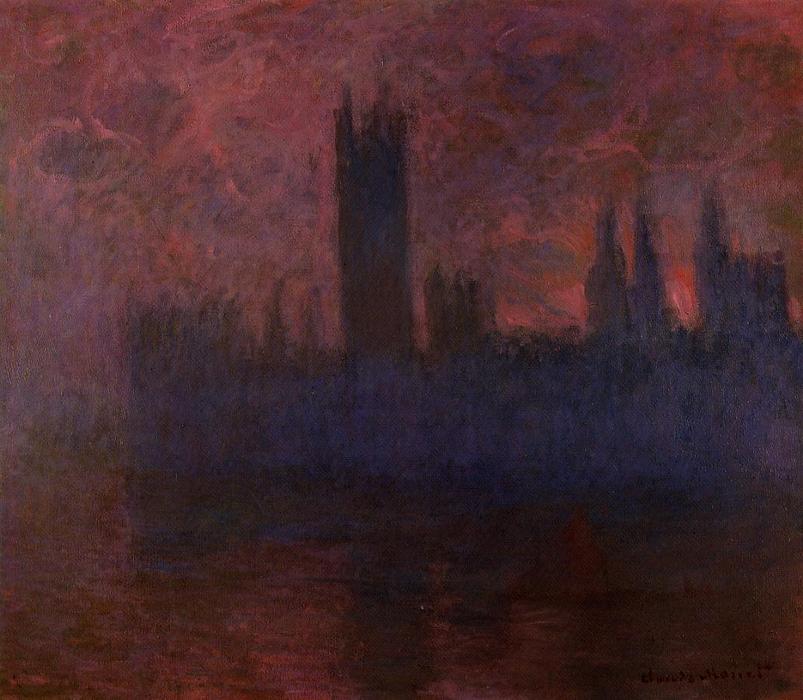
Houses of Parliament, London, Symphony in Rose


 詳細を見る
詳細を見る




P118B $10

P118H $10

P118W $10

P438Z $10

P508JH $12

P508YH $12

P805H $10

P805Z $10

P919BZ $10

P919G $10

P919XJ $10

P959ZH $10

P968JZ $12

W106C $8

W218G $10

W218JH $8

W218Y $10

W307PJ $10

W316G $10

W316PJ $8

W316Y $10

W398PJ $8

W4111J $10

W500HY $15

W500JH $15

W692G $12

W849H $8

W940BG $15

W953PJ $8




作品のオリジナル比率に合わせた、当店の規定サイズからお選びください。

特定のフレームやスペースに合わせて、ご希望のサイズをご入力いただけます。選択されたサイズが元の画像の比率と異なる場合、アートワークをトリミングするか、手描きで要素を追加して絵画を拡張いたします。デジタルモックアップ を制作し、制作開始前にご確認(承認)をいただきます。
画面上のプレビューは、実際のトリミングや拡張を正確に反映しているものではありません。最終的な構図は、モックアップによってのみ正確にご確認いただけます。
カスタムサイズもご利用いただけますが、元の比率を維持するためには、あらかじめ用意されたリストからサイズを選択することをお勧めいたします。
ご注文後、ArtsDot.com チームより詳細な指示をお送りするとともに、仕上がりイメージ(モックアップ)をご提供いたします。


 ガラスオプションは、110cm未満のサイズでのみご利用いただけます。

Houses of Parliament, London, Symphony in Rose
複製技法
複製画のサイズ
-


合計金額
$ 263
The Birth of Impressionism: Monet's Vision of London
Claude Oscar Monet (1840-1926) stands as one of the founding fathers of Impressionism, an artistic movement that revolutionized painting in the late 19th century. Born in Paris to Auguste Monet and Louisa Bourgeois, Claude’s early life was marked by a fascination with drawing and a burgeoning talent for capturing fleeting moments of beauty—a passion nurtured by his mentor, Eugène Boudin, who instilled in him the crucial principle of plein air painting: observing and depicting subjects directly from nature. This formative influence would shape Monet's entire artistic trajectory, propelling him toward groundbreaking explorations of light and color.A Landmark Captured at Sunset
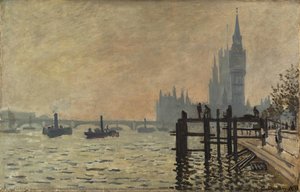
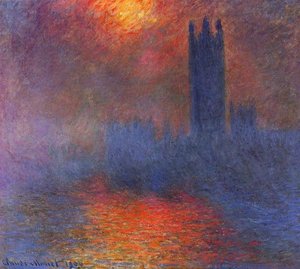
The artwork under scrutiny is Claude Monet’s “Houses of Parliament, London, Symphony in Rose,” completed in 1900. Painted on a large canvas using oil paints—a technique favored by Impressionists for its ability to achieve luminous effects—the painting embodies the movement's core ethos: prioritizing sensory experience over meticulous detail. Monet sought not to reproduce an exact likeness of the iconic Westminster Palace but rather to convey its atmosphere at dusk, capturing the dramatic interplay of light and color that characterizes this particular time of day. The clock tower dominates the composition, serving as a focal point for the viewer’s gaze and symbolizing permanence amidst the ephemeral beauty of the sunset sky.Composition and Technique: Embracing Light's Dance
Monet’s masterful technique is characterized by loose brushstrokes—a hallmark of Impressionism—that blend seamlessly to create an illusion of shimmering light. He employed a vibrant palette dominated by shades of red, purple, and orange, mirroring the hues of the setting sun. The artist skillfully layered pigments to achieve depth and luminosity, capturing the subtle nuances of color that would vanish if observed indoors. Furthermore, Monet incorporated reflections from the Thames River into the lower portion of the canvas, adding another layer of complexity and enhancing the painting's overall visual impact. Soft brushstrokes and vibrant colors are key to conveying the mood of this masterpiece.Inspired by Tradition, Driven by Innovation
Monet’s artistic vision was profoundly influenced by the architectural grandeur of London and its historic landmarks—a fascination evident in his extensive series of paintings depicting the Houses of Parliament. Alongside Boudin and Renoir, Monet engaged in spirited discussions about artistic principles, challenging academic conventions that prioritized idealized representations over truthful depictions of reality. He drew inspiration from artists like Eugène Delacroix, whose Romantic fervor championed expressive emotion and dramatic narrative—a stylistic contrast to Impressionism’s focus on capturing subjective perception.A Legacy Enduring Through Reproduction
“Houses of Parliament, London, Symphony in Rose” resides within the Musée d'Orsay’s celebrated collection—a testament to Monet’s enduring legacy as a pioneer of modern art. As a handmade oil painting reproduction, it offers an opportunity to experience the beauty and emotional resonance of this iconic artwork firsthand. Bringing a touch of Impressionist elegance into any interior space, it serves as a captivating reminder of Claude Monet's transformative contribution to the history of painting—a celebration of light, color, and the artist’s unwavering commitment to capturing the essence of the natural world.- View more of Monet's works on ArtsDot.com
- Discover the Staatliche Museen zu Berlin and its impressive collection of European paintings on ArtsDot.com
- Learn more about Claude Monet and his impressionist style on Wikipedia
The “Houses of Parliament, London, Symphony in Rose” is a testament to Monet's skill as a painter and his ability to capture the beauty of the world around him. As a handmade oil painting reproduction, it can be a stunning addition to any art collection, bringing a touch of Impressionist elegance into any room.
Monet’s Series: Exploring London's Lightscapes
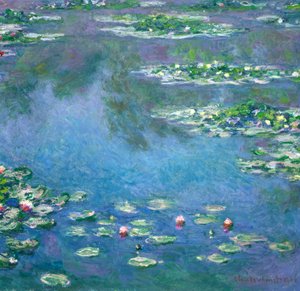
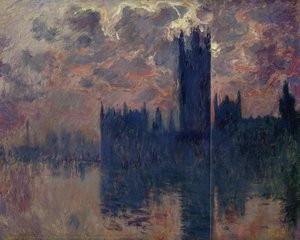
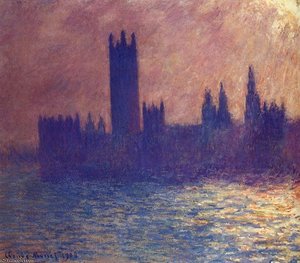
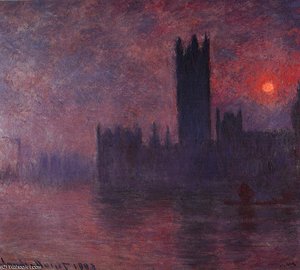
Claude Monet embarked on an ambitious project documenting the changing light conditions over London during sunset—a series that cemented his reputation as one of the foremost observers of natural phenomena. Alongside “Houses of Parliament, Symphony in Rose,” other notable works include "Houses of Parliament, Effect of Sunlight in the Fog," capturing the misty atmosphere of a London morning; "Houses of Parliament, Reflection of the Thames," showcasing the shimmering surface of the river at dusk; and “Water Lilies,” Symphony in Rose—a serene depiction of Giverny’s lily pond bathed in golden light. These paintings are housed in prestigious museums such as the Musée d'Orsay in Paris and the Museum of Fine Arts in St Petersburg, ensuring that Monet’s groundbreaking vision continues to inspire generations of artists and art enthusiasts alike.- View more of Monet's works on ArtsDot.com
- Discover the Staatliche Museen zu Berlin and its impressive collection of European paintings on ArtsDot.com
- Learn more about Claude Monet and his impressionist style on Wikipedia
The “Houses of Parliament, Symphony in Rose” exemplifies Monet’s dedication to portraying the subtleties of light and color—a cornerstone of Impressionism that continues to captivate audiences worldwide. As a handmade oil painting reproduction, it embodies the spirit of artistic innovation and offers an unparalleled opportunity to appreciate the enduring beauty of Claude Monet's masterpiece.
Monet’s Influence: Shaping Modern Art
Claude Monet’s pioneering approach to painting profoundly impacted subsequent generations of artists—establishing him as a pivotal figure in the development of modern art. His unwavering commitment to capturing subjective perception and prioritizing sensory experience challenged academic conventions that championed idealized representations, paving the way for movements such as Fauvism and Expressionism. Monet's legacy extends beyond his individual artworks; he fundamentally altered artistic discourse and redefined the role of the artist within society—a testament to his transformative contribution to the history of art.関連作品
アーティストの略歴
光と色彩の詩人:クロード・モネの世界
印象派という言葉と同義語とも言えるオスカー=クロード・モネ。彼は単なる風景画家ではなく、一瞬のきらめきを記録する克明な観察者であり、光と色彩の詩人でした。1840年11月14日、パリで生まれ、5歳の時に一家がノルマンディー地方のローヌ=リヴィエールに移り住ったことが、彼の人生に予想外の変化をもたらしました。当初は父親の意向により商業的なキャリアを歩むことになっていましたが、若きモネの内なる芸術的才能はすぐに開花し、まず地元の市場で売られた風刺画として現れました。これは彼の技術と起業家精神の両方を証明するものでした。しかし、彼にとって転機となったのは、エウジェーヌ・ブーダンとの出会いでした。ブーダンはモネに絵を描き方だけでなく、En plein air(直接自然の中で描く)という革命的なアイデアを植え付けました。この実践こそが、彼の芸術的探求全体を定義づけることになったのです。
モネの正式な訓練はパリで始まり、まずアカデミー・スイスで、その後シャルル・グレールのもとで学びました。ここで彼はピエール=オーギュスト・ルノワールといった同時代の芸術家たちとの間に固い友情を築き、共通の芸術的苦悩と伝統的な学術絵画からの解放への欲求によって結ばれました。初期の作品は技術的な熟練さを示していましたが、やがて彼のスタイルを特徴づけることになる独特の声には欠けていました。その後、普仏戦争によりモネはロンドンに避難し、そこでJ.M.W.ターナーといったイギリスの風景画家たちの作品に没頭しました。大気効果と色彩の革新的な使用法を吸収したのです。
美学革命の誕生
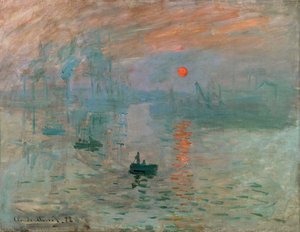
フランスに戻ったモネは、新たな芸術的叛乱の中心人物となりました。保守的なサロンの基準に不満を持っていた彼は、志を同じくする芸術家たちと共に独立展覧会を開催しました。1874年の展覧会は、モネだけでなく、美術界全体にとって転換点となりました。この際、彼の作品「印象、日の出」が展示され、そこから「印象派」という名称が生まれました。この作品はローヌ河口の日の出のぼやけた描写であり、正確な再現ではなく、シーンに対する主観的な印象を捉えようとする運動の名声を決定づけました。
モネのシグネチャー・スタイルは、この時期に花開きました。大胆で目に見える筆致、隣接して配置された鮮やかでしばしば混ざり合っていない色彩(「分割色彩」として知られる技法)、そして変化する条件がシーンを変化させる前に、一瞬の認識を記録するために迅速に作業するという揺るぎない光への集中。これは芸術的慣習からの根本的な逸脱でした。彼はEn plein airの実践を熱心に行い、変化する状況によってシーンが変化する前に、その即時的な知覚を記録するために急速に作業しました。この献身は彼が見たものを描くことだけでなく、それに応答して感じたことを表現することでした。
ヴェルニー:光と反射の楽園
1883年、モネはパリ北西部のヴェルニーに定住し、家と庭を彼の聖域であり、最大のインスピレーション源となるように変貌させました。彼は注意深く敷地を整備し、異国の花々、垂れ柳、そして最も有名な水仙池に架かる日本式の橋などを配置しました。これは単なる装飾的な庭ではなく、光が水、葉、反射に及ぼす影響を制御された条件下で研究できる生きた実験室でした。
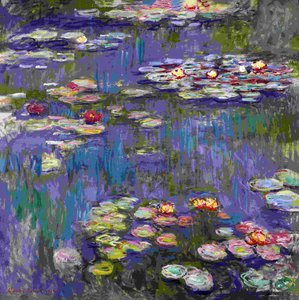
彼の人生の最後の数十年はほぼ完全に水仙池の絵画に捧げられました。睡蓮シリーズという壮大な作品に取り組み、水面の絶え間なく変化する色彩と光のタペストリーを描写した広大なキャンバスを制作しました。これらは単なる花々を描いた絵ではなく、鑑賞者を穏やかな美しさと瞑想的な静けさの世界に包み込む没入型の体験でした。これらの作品の規模は息を呑むほどで、伝統的な絵画の境界線を押し広げ、抽象表現主義を予感させます。
遺産:美術史への永続的な影響
クロード・モネの影響力は計り知れません。彼は印象派の創始者であるだけでなく、芸術家たちが世界を取り囲むものをどのように認識し、表現したかを根本的に変えました。主観的経験への重点、En plein airでの絵画の採用、そして革新的な技術は、現代美術における抽象化と非描写形態の探求への道を開きました。
モネは彼の時代のアバンギャルドな芸術家にとってまれなことですが、生涯にわたってかなりの商業的成功を収めました。彼の作品は今日でも世界中の観客を魅了し、畏敬の念を起こさせ、西洋美術における最も重要な人物の一人としての地位を確固たるものにしています。彼は1926年12月5日に亡くなり、世代を超えて芸術家や美術愛好家の心に響き渡る遺産を残しました。彼の傑作の重要なコレクションは、パリのオルセー美術館やモネ美術館などの著名な機関で保管されており、彼のビジョンが世界を照らし続けています。
主要な芸術的技法
- En plein airでの絵画: 彼の発展の中心であり、光と大気の状態を直接観察することを可能にしました。
- 分割色彩: 光学的なブレンドのために、小さな筆致で純粋な色を隣接して適用します。
- シリーズ絵画: 同じ主題を異なる照明条件や天候条件下で描くことで、時間と光の変革力を示します。
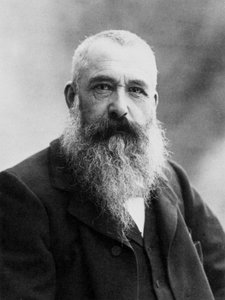
クロード・モネ
1840 - 1926 , フランス
基本情報
- フルネーム: クロード・モネ
- 主な作品:
- 印象、日の出
- 睡蓮
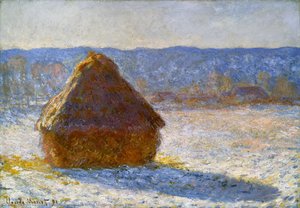
- 干し草
- ルーアン大聖堂
- 出生地: パリ、フランス
- 国籍: フランス人
- 影響を与えたアーティストまたは運動: ['近代美術']
- 影響を受けたアーティスト:
- ユージェン・ブーダン
- J.M.W.ターナー
- 死亡年月日: 1926年12月5日
- 生年月日: 1840年11月14日
- 芸術運動またはスタイル: 印象派
関連記事
クロード・モネ傑作25選:光と色彩の印象派を彩る名画の世界 | ArtsDot
クロード・モネの傑作25選。印象派を代表する光の画家、モネの世界を旅しませんか?睡蓮や風景画など、名画の背景にある物語と芸術技法をご紹介。ArtsDotで高品質な複製画とインテリアアートを見つけましょう。全コレクションはこちら。
パリ・オルセー美術館の至宝25選:印象派とポスト印象派の名作を巡る旅 | ArtsDot
パリ・オルセー美術館の至宝25選。モネ、デガ、ゴッホ…印象派とポスト印象派の名作を紐解き、その感動的な物語と色彩に触れる旅へ。ArtsDotで高品質な複製画やアートプリントを見つけ、お部屋に名画の輝きを。今すぐコレクションをご覧ください。
Impressionistic Landscapes: 10 Masterpieces That Changed Art & Decor
Journey into the heart of Impressionism! Explore 10 masterpieces by Monet, Renoir & Degas that revolutionized landscape art. Discover their stories, techniques & find museum-quality reproductions to elevate your home decor on ArtsDot.com.
印象派風景を彩った至宝:アート史に名を刻む10選
印象派風景の革新を彩った10選。モネ、ルノワールら巨匠の名作を紐解き、色彩と光が生み出す感動の世界へ。アートの歴史とインテリアのインスピレーションをArtsDot.comで。高品質な複製画で、あなただけの空間を創造しましょう。

Impressionism's Masterpieces: 10 Paintings That Defined a Movement | ArtsDot
Journey through Impressionism's heart with 10 iconic paintings by Monet, Renoir & Degas. Explore light, color & the stories behind these masterpieces. Find museum-quality art reproductions and elevate your home decor on ArtsDot.com.