

 プレビュー
プレビュー
 シェアする
シェアする シェアする
シェアする
 詳細を見る
詳細を見る

 ダウンロード
 似ている作品
 X線調査
X線調査 スライドショー
 統計情報
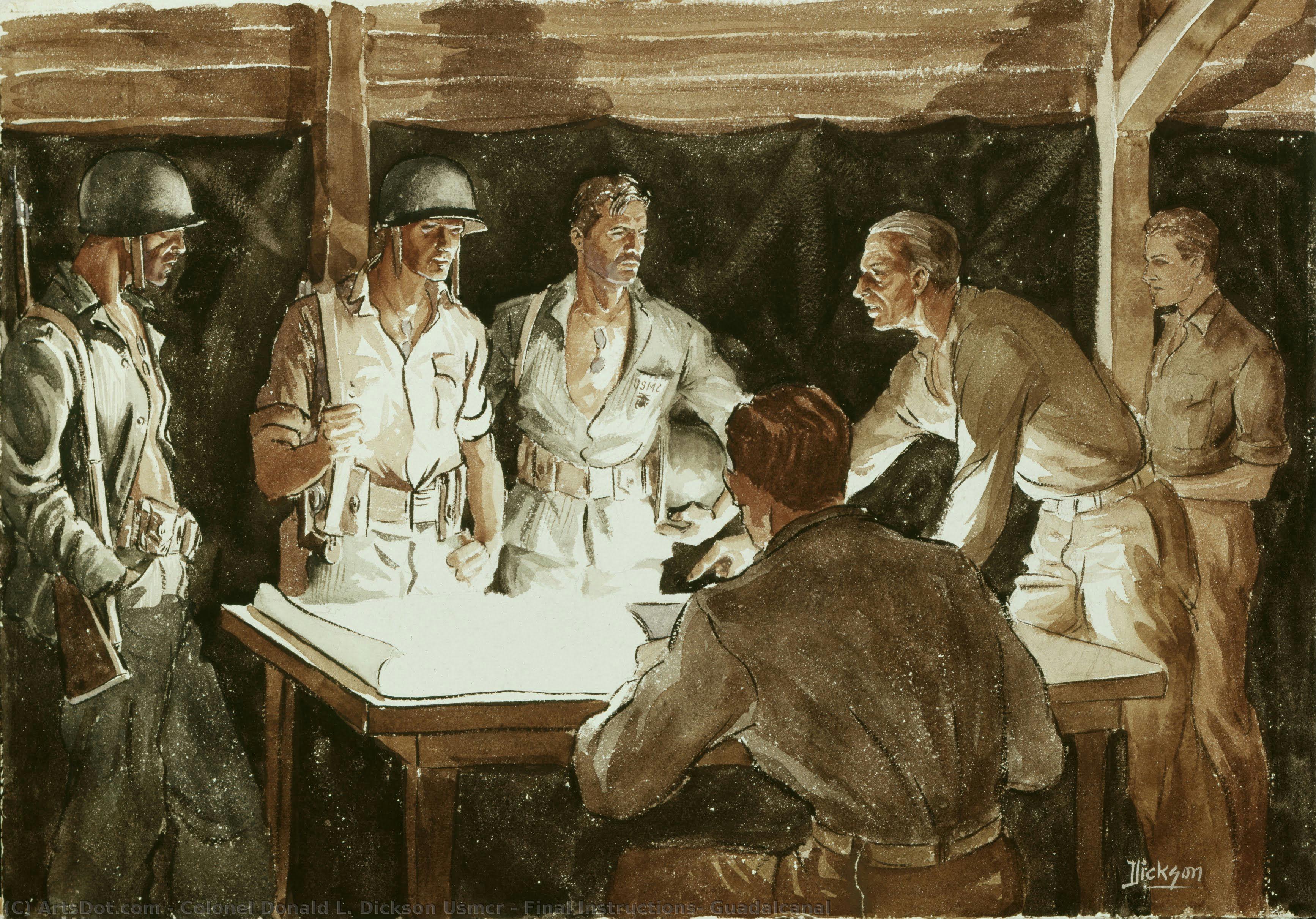
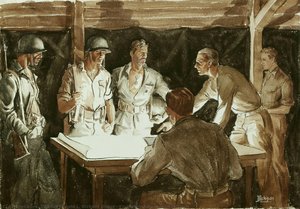
統計情報Final Instructions, Guadalcanal


 詳細を見る
詳細を見る
オンラインプレビューをはるかに凌ぐ、高解像度で鮮明なデジタル画像をご購入いただけます。
各ファイルは、社内の専門家が高度なツールと熟練した手作業によるレタッチを用いて、細心の注意を払って準備されています。すべての画像において、卓越した鮮明度、正確な色彩再現性、そして繊細なディテールを保証いたします。
最終ファイルは、プロフェッショナルな編集・印刷環境ですぐにご利用いただけるよう最適化された状態で、72時間以内にメールにてお届けいたします。これは、一流のデザインスタジオ、出版社、ギャラリーから信頼されているものと同等の品質です。
デジタルアート
個人での鑑賞、印刷、クリエイティブなプロジェクト用に、高解像度ファイルをダウンロードできます。 ( プリント版に切り替え 手描きの絵画を購入)
デジタル画像のご注文に付随する特典
高品質なデジタル画像配信を、確かな品質で。
ArtsDot.com を選ぶことは、単に画像を手に入れることではありません。それは、プロの手によって精密に仕上げられ、満足保証が付いた高品質なデジタルアートワークを受け取ることを意味します。ご注文いただいた際に自動的に付随する内容は、以下の通りです:

メールですぐにお届け
ご注文から72時間以内に、高解像度のデジタル画像ファイルがメールでお手元に届きます。すぐにそのままご利用いただけます。

AI技術で最適化されたデジタルファイル
お客様の作品は、高度なAIツールと専門家による手作業の編集を組み合わせてプロフェッショナルに最適化されており、細部のディテール、鮮明さ、そして正確な色再現性を最大限に引き出しています。

一生涯無料の再送サービス
ファイルを誤って削除したり、紛失してしまったりしましたか?ご安心ください。いつでも無料で再送いたします。

輸入手数料は一切かかりません
関税や手数料、配送料を気にすることなく、お気に入りのアートワークをすぐにお楽しみいただけます。デジタルダウンロードは常に免税です。

色彩再現の保証
プロ仕様のツールとカラーマネジメント技術を用いることで、デジタル画像が元の色を最大限に忠実に再現することを保証いたします。

100日間満足保証
ご購入いただいたデジタル画像にご満足いただけない場合は、100日以内であれば、理由を問わず修正または100%の返金対応をさせていただきます。

100% 返金保証
ご満足いただけない場合は、デジタルファイルを受け取ってから100日以内であれば、理由を問わず全額返金いたします。

まとめ買い割引
3枚購入で10%OFF - 5枚購入で15%OFF - 10枚以上購入で20%OFF。クリエイティブなプロジェクト、ギャラリー、エージェンシーに最適です。
A Moment Frozen in Command
In the quiet, heavy atmosphere of 1942, amidst the humid tension of the Pacific Theater, Colonel Donald L. Dickson captured more than just a military briefing; he immortalized the weight of decision-making. Final Instructions, Guadalcanal serves as a profound window into a pivotal moment in World War II history. The scene unfolds around a central table where a group of Marines is gathered, their silhouettes and postures conveying a shared sense of purpose and gravity. There is an undeniable intimacy in the way the figures are clustered, suggesting a brotherhood forged not just by rank, but by the imminent shared destiny that awaited them on the shores of Guadalcanal. The composition draws the viewer into the inner circle, making us feel like silent witnesses to the strategic whispers and the solemnity of the orders being delivered.
The technique employed by Dickson reflects his unique dual identity as both a trained artist from the Worcester Art Museum and a combat-hardened Marine. There is a raw, documentary-like precision in the depiction of the uniforms and the arrangement of the men, yet it is elevated by a painterly sensibility that captures the flickering light and the shadows of the command post. The way the light falls upon the table and the faces of the officers creates a dramatic chiaroscuro effect, emphasizing the importance of the documents being reviewed. This interplay of light and shadow does more than provide depth; it symbolizes the uncertainty of the war itself—the clarity of duty clashing with the murky unknown of the jungle campaign ahead.
For the discerning collector or interior designer, this piece offers a sophisticated narrative element that transcends mere decoration. It is an evocative work of historical realism that brings a sense of strength, discipline, and heritage to any space. The muted tones and the structured composition make it an ideal centerpiece for a study, a library, or a formal gallery wall, where its themes of leadership and resilience can be deeply appreciated. Owning a reproduction of this masterpiece is not simply about acquiring art; it is about preserving a fragment of history, inviting the contemplative energy of those brave souls into the modern home.
関連作品
作家の略歴
Paul Cézanne: Bridging Impressionism and Modernity
Born in Aix-en-Provence, France, on January 19, 1839, Paul Cézanne remains a pivotal figure in the transition from late 19th-century Impressionism to the burgeoning movements of early 20th-century modern art. His life was one of quiet dedication to his craft, marked by a relentless pursuit of formal structure and an innovative approach to color and perspective. While initially influenced by the vibrant palettes and fleeting moments captured by Impressionists like Monet and Renoir, Cézanne ultimately forged a unique path, laying the groundwork for Cubism and other radical developments in art history. His legacy lies not just in his individual paintings but in the profound impact he had on subsequent generations of artists.
Early Influences and Artistic Development
Cézanne’s early artistic training was somewhat conventional, studying at the École des Beaux-Arts in Paris. However, it was his time spent observing the landscapes around Aix – particularly Mont Sainte-Victoire, a towering peak that dominated the horizon – which profoundly shaped his artistic vision. He meticulously studied this subject throughout his career, creating hundreds of variations on its form and color. Initially, Cézanne’s work reflected the Impressionist emphasis on capturing light and atmosphere. However, he soon began to move beyond mere representation, experimenting with a more structured approach to composition and drawing. He sought to capture not just what he *saw*, but also the underlying geometric forms that constituted the world around him.
- Impressionism’s Influence: Cézanne initially admired Impressionist painters like Monet, absorbing their techniques for capturing light and color.
- The Mont Sainte-Victoire Series: This iconic subject became central to his artistic development, allowing him to explore form, perspective, and the effects of light.
- Breaking with Academic Tradition: Cézanne deliberately rejected the rigid rules of academic art, prioritizing personal observation and expressive representation over strict adherence to established conventions.
Formal Innovations and a New Pictorial Language
Cézanne’s most significant contribution was his revolutionary approach to painting technique. He systematically dismantled traditional notions of perspective, flattening space and employing multiple viewpoints within a single composition. He did this not through illusionistic depth, but by building up forms with small, broken brushstrokes—a technique he famously described as “putting in the black.” This method created a sense of solidity and structure, transforming his landscapes into dynamic arrangements of planes and volumes. His use of color was equally innovative; he moved away from the bright, pure hues favored by Impressionists, opting for earth tones, muted greens, and ochres to create a more subdued and atmospheric effect.
- Multiple Perspectives: Cézanne frequently depicted objects and landscapes from multiple viewpoints simultaneously, challenging traditional notions of spatial representation.
- Broken Brushstrokes: His distinctive technique involved applying small, separate brushstrokes that built up forms and created a sense of texture and depth.
- Earth Tones and Muted Colors: He favored a palette of subdued colors to create atmospheric effects and emphasize the formal qualities of his compositions.
Key Works and Lasting Legacy
Among Cézanne’s most celebrated works are *The Card Players* (1898), *The Bathers* (c. 1906-1907), and the numerous paintings depicting Mont Sainte-Victoire. These works exemplify his innovative approach to composition, color, and form. His influence extended far beyond his own lifetime, inspiring artists such as Van Gogh, Matisse, Picasso, and Braque—the very figures who would pioneer Cubism. Cézanne’s emphasis on structure, simplification, and the exploration of underlying forms paved the way for a radical shift in artistic representation, fundamentally altering the course of modern art. He died in Aix-en-Provence on October 22, 1906, leaving behind a body of work that continues to captivate and challenge viewers today.
Cézanne’s Place in Art History
Paul Cézanne is often considered a pivotal figure between Impressionism and Cubism. He didn't simply reject the Impressionist style, but rather built upon its foundations to create something entirely new. His work demonstrated that art could be more than just a representation of reality; it could also be an exploration of form, structure, and color. Cézanne’s legacy is one of innovation, experimentation, and profound influence—a testament to the enduring power of his artistic vision.
colonel donald l. dickson usmcr
1906 - 1974 , United States of America
プロフィール概要
- Artistic Movement Or Style: Post-Impressionism
- Artists Or Movements Influenced By This Artist:
- Cubism
- Impressionism
- Artists Who Influenced This Artist:
- Jean-Auguste–Dominique Ingres
- William-Adolphe Bouguereau
- Date Of Birth: 19 January 1839
- Date Of Death: 22 October 1906
- Full Name: Paul Cézanne
- Nationality: French
- Notable Artworks:
- The Card Players
- The Bathers
- Mont Sainte-Victoire
- Place Of Birth: Paris, France