

 プレビュー
プレビュー
 プリントを購入
 シェアする
シェアする シェアする
シェアする
 詳細を見る
詳細を見る

 ダウンロード
 似ている作品
 X線調査
X線調査 スライドショー
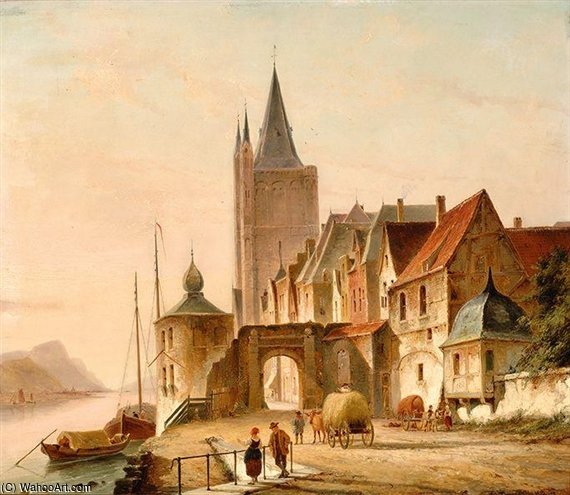
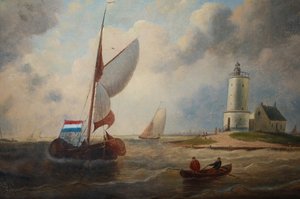
The City Gate
 詳細を見る
詳細を見る




































作品のオリジナル比率に合わせた、当店の規定サイズからお選びください。

特定のフレームやスペースに合わせて、ご希望のサイズをご入力いただけます。選択されたサイズが元の画像の比率と異なる場合、アートワークをトリミングするか、手描きで要素を追加して絵画を拡張いたします。デジタルモックアップ を制作し、制作開始前にご確認(承認)をいただきます。
画面上のプレビューは、実際のトリミングや拡張を正確に反映しているものではありません。最終的な構図は、モックアップによってのみ正確にご確認いただけます。
カスタムサイズもご利用いただけますが、元の比率を維持するためには、あらかじめ用意されたリストからサイズを選択することをお勧めいたします。
ご注文後、ArtsDot.com チームより詳細な指示をお送りするとともに、仕上がりイメージ(モックアップ)をご提供いたします。


 ガラスオプションは、110cm未満のサイズでのみご利用いただけます。

The City Gate
複製技法
複製画のサイズ
-


合計金額
$ 263
関連作品







アーティストの略歴
The Luminous Legacy of Cornelis Christiaan Dommelshuizen
In the golden era of nineteenth-century Dutch landscape art, few names evoke the atmospheric serenity and maritime vitality of the period quite like Cornelis Christiaan Dommelshuizen. Born in Utrecht in 1842, Dommelshuizen emerged from a rich tradition of Dutch realism, carrying forward a legacy that sought to capture not just the topography of the Netherlands, but the very soul of its waterways. His journey began with an academic foundation in architecture at Utrecht University, a discipline that undoubtedly gifted him with the precise structural understanding evident in his detailed cityscapes and harbor scenes. Yet, it was the call of the canvas and the shifting light over the Scheldt River that truly defined his destiny, leading him to transition from the rigid lines of architecture to the fluid, emotive brushstrokes of a master painter.
The artistic evolution of Dommelshuizen was deeply rooted in the Romantic movement, an era where artists sought to infuse natural scenes with profound psychological depth and dramatic tension. He drew significant inspiration from luminists such as Johan Sebastian Lorscher and Johannes Lingren, whose mastery of tonal harmonies and atmospheric realism provided a blueprint for his own explorations of light. Through these influences, Dommelshuizen learned the delicate art of capturing the ephemeral—the way mist clings to a riverbank at dawn or how sunlight glints off the sails of a merchant vessel. His technique often involved the sophisticated layering of thin pigment glazes, a method reminiscent of Dutch Impressionism, which allowed him to achieve a remarkable sense of translucency and luminous depth within his works.
Maritime Grandeur and the Spirit of the Port
Dommelshuizen’s most enduring contributions to the art world lie in his evocative depictions of maritime life, particularly his celebrated series focused on the Antwerp harbor. These paintings serve as a window into a bygone era of global commerce and nautical adventure. In works such as those depicting the Scheldt River area, the viewer is transported to bustling docks teeming with activity, where ships laden with heavy cargo sway gently against the piers. He possessed a singular ability to render the movement of water and the weight of timber, creating scenes that feel both monumental and intimately alive. His fascination with the sea extended beyond the borders of his homeland; his travels through England, America, Belgium, and France allowed him to broaden his repertoire, bringing a cosmopolitan perspective to his coastal scenery.
Beyond the grand scale of international ports, Dommelshuizen found profound beauty in the quietude of the Dutch countryside. His landscapes often feature:
- The rhythmic presence of windmills, standing as silent sentinels over the lowlands.
- Intimate river scenes, where small boats navigate the tranquil waterways near Leiden and Hazerswoude.
- Dramatic weather phenomena, such as the stormy seascapes that lend a sense of Romantic tension to his more adventurous compositions.
- Detailed urban vistas, including captivating cityscapes like L’Hotel De Ville, which showcase his skill in architectural rendering and civic pride.
A Lasting Impression on Dutch Realism
As his career progressed, Dommelshuizen established an independent studio in Amsterdam during the late 1870s, a period where his style matured into a sophisticated blend of topographical accuracy and emotional resonance. While he was often categorized alongside his contemporaries who focused on mere representation, his true achievement was his ability to infuse his canvases with a palpable sense of atmosphere. He did not merely paint a harbor; he painted the scent of salt air, the creak of wooden masts, and the heavy humidity of a Dutch afternoon. This pursuit of atmospheric realism ensured that his work remained relevant even as artistic movements shifted toward more abstract forms.
The historical significance of Cornelis Christiaan Dommelshuizen resides in his role as a bridge between the classical traditions of the Dutch masters and the burgeoning light-focused techniques of the late nineteenth century. Though his name is sometimes intertwined with the complex spelling variations of the Dommershuizen family, his individual artistic voice remains distinct. He leaves behind a body of work that serves as a vital historical record of the Netherlands' maritime and rural landscapes, preserved through a technique that celebrates the eternal dance between light, water, and land.
cornelis christiaan dommelshuizen
1842 - 1928 , Netherlands
基本情報
- Artistic Movement Or Style: Romantic Realism
- Date Of Birth: 1842 Utrecht Netherlands
- Date Of Death: 1928
- Full Name: Cornelis Christiaan Dommelshuizen
- Nationality: Dutch
- Notable Artworks:
- L’Hotel De Ville
- The Bustling Port Of Rotterdam
- Place Of Birth: Utrecht Netherlands

