

 プリントを購入
 シェアする
シェアする シェアする
シェアする


 ダウンロード
 似ている作品
 スライドショー
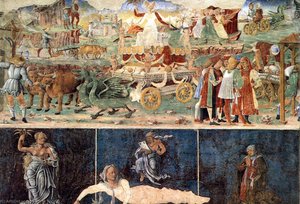
Allegory of August: Triumph of Ceres (detail)
 Fresco
- Early Renaissance
 1476
1476- Renaissance
 103.0 x 84.0 cm
 Palazzo Schifanoia
コズメ・トゥーラ(1430 – 1495)
フェラーラ派の創始者、コズメ・トゥーラ(1430-1495)の世界へ!表現力豊かな線、装飾的な細部、そして革新的な油彩技法を探求しましょう。初期ルネサンスを代表する重要な芸術家の足跡をご紹介します。
Palazzo Schifanoia(フェラーラ, イタリア)
イタリア、フェラーラの魅力をご紹介。ルネサンス期の栄華を今に伝える歴史的な街並みや文化遺産、芸術の美しさを探索しましょう。
Cosmé Tura’s Allegory of August: A Triumph of Fertility and Divine Providence
The fresco “Allegory of August: Triumph of Ceres” by Cosmè Tura, completed in 1476 for the Palazzo Ducale di Ferrara, stands as a testament to the burgeoning humanist spirit of the Early Renaissance and embodies profound symbolic meaning within its meticulously crafted composition. Situated in the Sala dei Giganti – aptly named for its colossal scale – this artwork represents more than just a decorative element; it’s an intellectual statement reflecting the prevailing cosmological understanding of the time and celebrating the fecundity of Ceres, goddess of agriculture and harvest.- Subject Matter: The fresco depicts a complex allegorical scene centered around Virgo, representing August, the eighth month of the Roman calendar. At its core is a man figure symbolizing the Calculus – representing the calculation of time and ensuring the proper observance of rituals – flanked by figures embodying Providence and Gratitude. These central characters oversee a vibrant landscape dominated by wheat fields, signifying abundance and prosperity.
- Style & Technique: Tura’s masterful application of linear perspective establishes a convincing illusion of depth within the fresco's confines, demonstrating his command of Renaissance artistic innovations. The artist skillfully employs chiaroscuro – dramatic contrasts between light and shadow – to sculpt form and imbue the scene with palpable emotion. Color palettes are rich and luminous, reflecting the vibrancy of the Ferrara court’s patronage and highlighting the symbolic significance of each hue.
- Historical Context: Ferrara under Ludovico Gonzaga was a crucible for artistic experimentation during this period. The Gonzaga family actively fostered humanist scholarship and commissioned ambitious artworks that aimed to elevate their prestige and reinforce their dominion. Tura's fresco aligns perfectly with these cultural ambitions, reflecting the Renaissance fascination with classical ideals of beauty and virtue.
- Symbolism: Beyond its depiction of agricultural abundance, “Allegory of August” is laden with symbolic references rooted in medieval Christian theology. The birds scattered throughout the landscape represent souls ascending to heaven, mirroring Ceres’s role as protector of the divine order. Notably, a bird perched atop the cornucopia symbolizes divine grace and blessing upon the harvest.
- Emotional Impact: Viewing this fresco evokes a sense of awe and contemplation. Tura's ability to convey both grandeur and serenity contributes to its enduring appeal. The artwork speaks to themes of fertility, prosperity, piety, and divine providence—concepts central to Renaissance worldview and resonating powerfully with audiences today.
作品詳細
- 作品名: Allegory of August: Triumph of Ceres (detail)
- 作家: コズメ・トゥーラ
- 制作年: 1476
- 作品サイズ: 103.0 x 84.0 cm
- 技法: Portrait
- 著作権の状態: パブリックドメイン
- 展示場所: Palazzo Schifanoia
- 制作時期: Early Renaissance
- 主要な色: Driftwood
- 用途: Accent
作品詳細
- Subject or theme: Agriculture; Mythology
- Influences: Francesco Squarcione
- Movement: Early Renaissance
- Notable elements or techniques: Linear perspective; Vibrant colors
- Year: 1476
- Title: Allegory of August: Triumph of Ceres
- Artistic style: Idealized realism
QRコード
