 プレビュー
プレビュー
 プリントを購入
 シェアする
シェアする シェアする
シェアする
 詳細を見る
詳細を見る

 ダウンロード
 似ている作品
 X線調査
X線調査 スライドショー
Allegory of September (detail)


 詳細を見る
詳細を見る




P118B $10

P118H $10

P118W $10

P438Z $10

P508JH $12

P508YH $12

P805H $10

P805Z $10

P919BZ $10

P919G $10

P919XJ $10

P959ZH $10

P968JZ $12

W106C $8

W218G $10

W218JH $8

W218Y $10

W307PJ $10

W316G $10

W316PJ $8

W316Y $10

W398PJ $8

W4111J $10

W500HY $15

W500JH $15

W692G $12

W849H $8

W940BG $15

W953PJ $8




作品のオリジナル比率に合わせた、当店の規定サイズからお選びください。

特定のフレームやスペースに合わせて、ご希望のサイズをご入力いただけます。選択されたサイズが元の画像の比率と異なる場合、アートワークをトリミングするか、手描きで要素を追加して絵画を拡張いたします。デジタルモックアップ を制作し、制作開始前にご確認(承認)をいただきます。
画面上のプレビューは、実際のトリミングや拡張を正確に反映しているものではありません。最終的な構図は、モックアップによってのみ正確にご確認いただけます。
カスタムサイズもご利用いただけますが、元の比率を維持するためには、あらかじめ用意されたリストからサイズを選択することをお勧めいたします。
ご注文後、ArtsDot.com チームより詳細な指示をお送りするとともに、仕上がりイメージ(モックアップ)をご提供いたします。


 ガラスオプションは、110cm未満のサイズでのみご利用いただけます。

Allegory of September (detail)
複製技法
複製画のサイズ
-


合計金額
$ 263
A Ferrarese Visionary: The Life and Art of Cosmè Tura
Cosmè Tura stands as one of the most remarkable figures of the Early Renaissance, a painter whose distinctive style and profound engagement with humanist ideals cemented his place among the luminaries of Ferrara’s artistic milieu. Born around 1430 in the bustling ducal city – his father, Domenico, was a shoemaker – Tura's ascent from modest origins to celebrated artist speaks volumes about the transformative power of talent and circumstance. While biographical details remain somewhat fragmentary, scholarly consensus points to an apprenticeship with Galasso Galassi, a shadowy artisan whose connections to Piero della Francesca hinted at a formative exposure to classical influences. Subsequent journeys, notably between 1452 and 1456 in Venice and Padua, broadened his artistic horizons and introduced him to the vibrant workshop of Francesco Squarcione, where the burgeoning techniques of linear perspective and sculptural realism were actively pursued. This crucible of innovation profoundly shaped Tura’s artistic sensibilities, equipping him with the tools necessary to achieve his unparalleled expressive vision.The Fresco's Narrative: Allegory of September
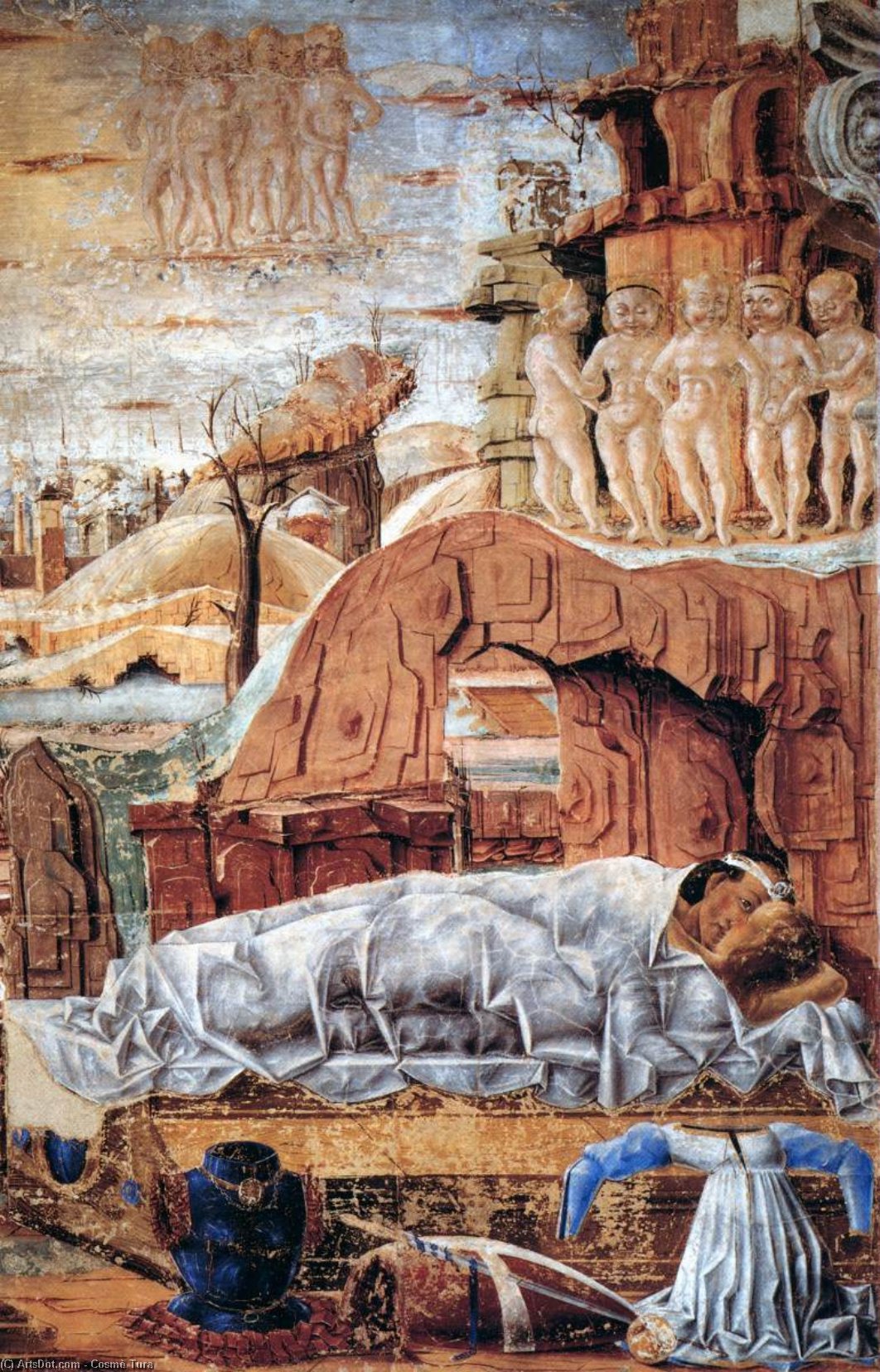
Tura’s magnum opus resides within Palazzo Schifanoia, Ferrara – specifically in the magnificent “Allegory of September,” a fresco that transcends mere decoration and embodies the intellectual fervor characteristic of its era. Executed circa 1476, this monumental artwork depicts a complex tableau divided into two distinct layers. The upper section presents a dynamic procession of figures—birds, angels, and human forms—engaged in an upward movement, symbolizing aspiration and divine grace. These figures are rendered with meticulous attention to detail, employing soft lines and subtle shading to imbue them with an ethereal quality that captures the spirit of Renaissance idealism. The lower portion portrays a reclining nude male figure draped beneath a white cloth, shrouded in shadow – a deliberate ambiguity designed to provoke contemplation about mortality and rebirth. Adjacent to this central figure stand two additional figures, one holding aloft a blue vase or container, representing fertility and abundance.Technique and Style: Renaissance Precision
Tura’s mastery of fresco technique is undeniable. He skillfully utilized pigments mixed with lime plaster to create durable images that would withstand the passage of time—a testament to his dedication to craftmanship and an embodiment of Renaissance artistic ideals. The fresco's surface texture contributes significantly to its visual impact, enhancing the illusion of depth and dimensionality through careful manipulation of light and shadow. Furthermore, Tura’s stylistic choices reflect the humanist preoccupation with anatomical accuracy and idealized beauty prevalent during this period. His figures possess a graceful posture and refined musculature, mirroring classical sculptures and demonstrating an unwavering commitment to representing human form in its most noble expression.Symbolism: Decoding the Visual Language
The “Allegory of September” is replete with symbolic references that illuminate the broader intellectual currents of Renaissance Ferrara. The procession of birds symbolizes divine providence and spiritual ascension, while the reclining nude figure embodies the cyclical nature of life—death followed by regeneration—a motif deeply rooted in Platonic philosophy. The blue vase represents fertility and prosperity, reflecting the importance of agriculture and familial lineage within Ferrarese society. Each element contributes to a cohesive narrative that speaks to themes of faith, virtue, and human potential.Emotional Resonance: A Window into Renaissance Thought
Ultimately, “Allegory of September” transcends its formal conventions to evoke profound emotional resonance. The painting’s serene palette—dominated by muted blues and earthy tones—creates an atmosphere of contemplative solemnity. Yet, beneath the surface tranquility lies a palpable sense of dynamism and aspiration, mirroring the humanist conviction that humanity possessed the capacity for moral excellence and spiritual enlightenment. Tura's masterpiece continues to captivate viewers today, serving as a poignant reminder of the enduring power of art to illuminate the human condition and inspire contemplation about life’s fundamental questions—a legacy worthy of admiration and scholarly study.関連作品
アーティストの略歴
フェラーラの先見者:コズメ・トゥーラの生涯と芸術
1430年頃、イタリアの活気あふれる公爵領フェラーラに生まれたコズメ・トゥーラは、靴職人ドメニコの息子という質素な出自から、初期ルネサンスにおいて最も独特かつ影響力のある画家の一人へと登り詰めました。初期の修行に関する詳細は謎に包まれていますが、美術史家たちは、高名なピエロ・デッラ・フランチェスカと縁のある謎めいた人物、ガラッソ・ガラッシに師事していた可能性を指摘しています。こうした初期の経験がトゥーラの芸術的感性の土台となったのでしょう。しかし、彼の創造的な情熱に真の火を灯したのは、1452年から1456年にかけてヴェネツィアやパドヴァを訪れたであろう旅の時代でした。パドヴァにおいて、彼はフランチェスコ・スクアルキオーネの工房に触れることになります。そこは古典古代の研究と、線遠近法や力強い形態といった新たなルネサンス技法が共存し、芸術的革新が花開いていた極めて重要な拠点でした。トゥーラはこれらの影響を単に吸収するにとどまらず、鋭い線、装飾的な豊穣さ、そして執念とも言える細部へのこだわりを特徴とする、彼独自のスタイルへと昇華させたのです。宮廷画家とその革新的な様式 トゥーラのキャリアは、エステ家の宮廷において、まずは公爵ボルソ・デステの下で、後にエルコレ1世・デステの下で大きく開花しました。彼は単なる画家ではありませんでした。フレスコ画や板絵を手がけるだけでなく、トーナメントの意匠、装飾家具、さらには衣服のデザインまでをも担う、多才な職人でもあったのです。この多面的な役割は、エステ家がいかに幅広い芸術的技能を重んじていたかを物語っており、トゥーラに材料や技法を実験するための豊かな機会を与えました。中でも特筆すべきは、油彩画の革新的な使用です。彼はその特性を巧みに操り、金属鎧の煌めく光沢から豪華な布地の繊細な襞に至るまで、驚くほど多彩な質感を表現しました。この卓越した技術力は、多様な影響を受けた芸術的ヴィジョンと結びついていました。フラ・アンジェリコの静謐な精神性、ピエロ・デッラ・フランチェスカの幾何学的な精密さ、アンドレア・マンテーニャの劇的な短縮法と古典への参照、そしてフランドル派の画家たちの緻密な写実主義。しかし、トゥーラはこれらの巨匠たちを単に模倣したわけではありません。彼はそれらを融合させ、表現力豊かな線、複雑な装飾、そして人々を魅了するダイナミズムを備えた、紛れもない「フェラーラ様式」を築き上げたのです。この時期の代表作には、形態と象徴性を繊細に描き出した1460年の뮤즈(細部)、1450年頃の初期の若者の肖像、そして1475年に完成した後期の読書するサン・アントニオ・ディ・パドヴァなどがあります。また、彼のピエタ(1474年)は、テンペラ画における彼の技量を示すもう一つの証です。
フェラーラに刻まれた遺産
コズメ・トゥーラの影響は、エステ家の宮廷という枠組みを遥かに超えて広がりました。彼は、15世紀後半に隆盛を極め、その後のイタリアの画家たちに多大な影響を与えた「フェラーラ派」の創始者として、正当に評価されています。彼の様式は、時に独特で、時にはどこか不安をかき立てるものと評されることもありますが、同時代の人々を虜にし、今日の美術史家をも魅了し続けています。線の持つ表現力豊かなエネルギー、装飾要素の幻想的なまでの性質、そして芸術的慣習の限界を押し広げようとする意志は、彼を他の画家たちから際立たせていました。1495年にトゥーラが没した後も、ジョヴァンニ・アンドレア・ギラルドーニのような芸術家たちがフェラーラ様式の発展を引き継いでいきました。今日、彼の作品は世界中の美術館やコレクションで見ることができますが、その重要な拠点は今なおフェラーラに存在しています。特にドゥオーモ博物館やスキャルノーア宮殿には、トゥーラの筆致が鮮明に残る壮麗なフレスコ画が収められています。影響と不朽の意義
コズメ・トゥーラの芸術的達成を理解するためには、彼のヴィジョンを形作った複雑な影響の網目を認識することが不可欠です。フラ・アンジェリコへの敬意は、彼の宗教画における信心深い情熱の中に見て取ることができ、一方でピエロ・デッラ・フランチェスカによる遠近法と幾何学的形態の習熟は、彼の構図に構造的な基盤を与えました。アンドレア・マンテーマーの芸術に見られる劇的な力強さと古典への言及もまた、トゥーラの心に深く響き、空間や解剖学を描写するための革新的なアプローチを促しました。さらに、フランドル派の画家たちとの接触は、おそらく油彩を媒体として採用する後押しとなり、より細密な描写と質感のニュアンスを可能にしたのでしょう。ガラッソ・ガラッシによる師事の可能性は、謎に包まれているものの、芸術的原理における初期の基礎を提供したのかもしれません。コズメ・トゥーラの遺産は、その絵画の美しさや独創性だけでなく、イタリア・ルネサンス美術の発展への貢献にもあります。彼は多様な影響を一つのまとまりのある説得力ある様式へと統合する驚異的な能力を示し、フェラーラを芸術的革新の重要な中心地として確立させ、絵画史に消えることのない足跡を残したのです。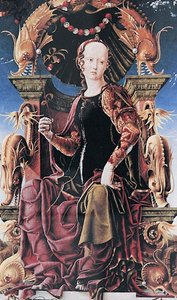
コズメ・トゥーラ
1430 - 1495 , イタリア
基本情報
- Artistic Movement Or Style: 初期ルネサンス
- Artists Or Movements Influenced By This Artist: ['ジョヴァンニ・アンドレア・ギラルドーニ']
- Artists Who Influenced This Artist:
- フラ・アンジェリコ
- ピエロ・デラ・フランチェスカ
- アンドレア・マンテーニャ
- フランドル派の画家
- Date Of Birth: 1430年頃
- Date Of Death: 1495年
- Full Name: コズメ・トゥーラ
- Nationality: イタリア
- Notable Artworks:
- ミューズ(細部)
- 若者の肖像
- 読書するパドヴァの聖アントニオ
- 聖ペテロ
- ピエタ
- Place Of Birth: イタリア、フェラーラ
関連記事
Cosmè Tura: Rediscovering the Ferrarese Master & His Distinctive Style
Discover Cosmè Tura (1430-1495), founder of the Ferrara School. Explore his unique style, key artworks & lasting influence. Expert insights for collectors.
Unveiling Hidden Meanings: Allegory in Western Art History
Explore the rich history of allegory in Western art! Discover hidden meanings in masterpieces from Giotto to Bosch & beyond. Expert insights for collectors and enthusiasts at ArtsDot.
Giulio Romano: A Master of Mannerism & the Palazzo Te Legacy
Explore the revolutionary art of Giulio Romano, master of Mannerism & architect of Palazzo Te. Discover his influence, investment potential, and stunning frescoes – a guide for discerning collectors.
Hans Baldung Grien: A Renaissance Master of Allegory, Innovation & the Grotesque
Explore the captivating world of Hans Baldung Grien, a Renaissance master renowned for his allegorical paintings, striking woodcuts & unique depictions of mythology and the grotesque. Discover his life, works & legacy with ArtsDot.
The Weight of Virtue and Vice: Exploring Moral Themes in Art History
Explore the captivating world of moral allegory in art history! Discover how Renaissance masters like Bosch, Botticelli & Lotto depicted virtue & vice. Expert analysis and stunning reproductions at ArtsDot.