

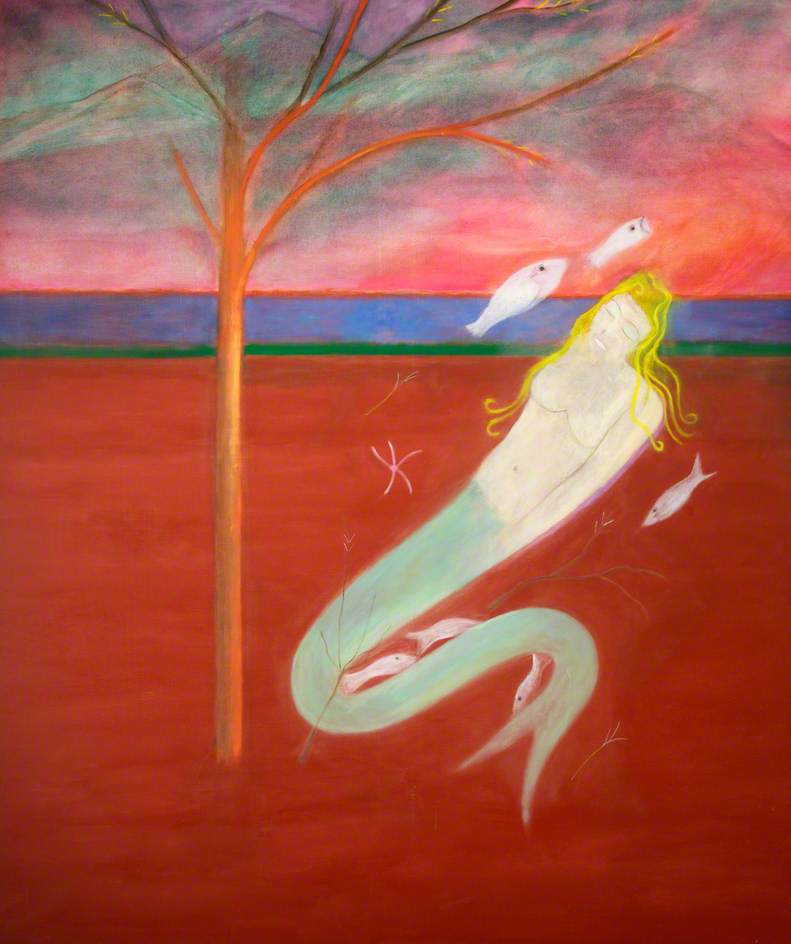
 プレビュー
プレビュー
 シェアする
シェアする シェアする
シェアする
 詳細を見る
詳細を見る

 ダウンロード
 似ている作品
 X線調査
X線調査 スライドショー
 統計情報
統計情報Mermaid
 173.0 x 145.0 cm
 詳細を見る
詳細を見る
手描き油彩複製画
当社のアーティストが、お客様のご希望のサイズと額縁に合わせて、キャンバスに手描きで制作する油彩画です。 ( プリント版に切り替え デジタル画像販売へ切り替え)




































作品のオリジナル比率に合わせた、当店の規定サイズからお選びください。

特定のフレームやスペースに合わせて、ご希望のサイズをご入力いただけます。選択されたサイズが元の画像の比率と異なる場合、アートワークをトリミングするか、手描きで要素を追加して絵画を拡張いたします。デジタルモックアップ を制作し、制作開始前にご確認(承認)をいただきます。
画面上のプレビューは、実際のトリミングや拡張を正確に反映しているものではありません。最終的な構図は、モックアップによってのみ正確にご確認いただけます。
カスタムサイズもご利用いただけますが、元の比率を維持するためには、あらかじめ用意されたリストからサイズを選択することをお勧めいたします。
ご注文後、ArtsDot.com チームより詳細な指示をお送りするとともに、仕上がりイメージ(モックアップ)をご提供いたします。


 ガラスオプションは、110cm未満のサイズでのみご利用いただけます。

Mermaid
複製技法
複製画のサイズ
-


合計金額
$ 263
関連作品

アーティストの略歴
Craigie Aitchison: A World Painted in Light and Emotion
John Ronald Craigie Aitchison (1926–2009) wasn’t a name that frequently graced the pages of art history textbooks, yet his work possesses a quiet intensity, a deeply felt spirituality that continues to resonate with viewers today. Born in Edinburgh, Scotland, into a family steeped in both legal and political tradition – his father was a judge and politician – Aitchison’s artistic journey began unexpectedly, diverging from the expected path of law. This shift wasn't driven by ambition or a grand vision, but rather by an innate need to translate the world around him onto canvas, a compulsion that would define his life’s work. His early years were marked by a connection to the Scottish landscape, particularly the Isle of Arran, where he spent formative summers absorbing the light and atmosphere of the Highlands. This initial exposure to nature would become a cornerstone of his artistic vocabulary, informing his later depictions of Italian landscapes and, more profoundly, his recurring exploration of religious themes.The Genesis of Style: Naivety and Emotional Depth
Aitchison’s style is notoriously difficult to categorize, defying easy labels. He was often described as a “naive artist,” a term that initially felt reductive but ultimately captures the essence of his approach. His paintings aren't meticulously rendered or technically complex; instead, they possess an almost childlike simplicity in their composition and execution. Bold, flat areas of color dominate each canvas, applied with broad brushstrokes that create a luminous quality, as if capturing the very essence of light itself. This deliberate avoidance of detail—faces are often indistinct, landscapes simplified—forces the viewer to engage on an emotional level, prompting introspection rather than purely visual analysis. Brian Sewell famously dismissed Aitchison’s work as “a painter of too considered trifles,” a judgment that belies the profound depth and sincerity present in his art. He was, in fact, deeply influenced by the Scottish Colourists – artists like George Leslie MacGregor Henderson who similarly employed vibrant color and simplified forms to convey powerful emotions—but Aitchison’s work possesses a unique intensity, a palpable sense of yearning and spiritual searching that sets him apart.The Crucifixion: A Lifelong Obsession
Perhaps the most recognizable aspect of Aitchison's oeuvre is his series of paintings depicting the Crucifixion. This wasn’t a fleeting artistic fancy; it was a lifelong preoccupation, triggered by a visit to see Salvador Dalí’s *Christ of St John of the Cross* in 1951 at the Kelvingrove Gallery in Glasgow. The stark simplicity and emotional power of Dalí's work ignited something within Aitchison—a profound empathy for Christ’s suffering and a desire to express this through his own art. These paintings are not dramatic or overtly theatrical; instead, they convey a quiet sense of sorrow and acceptance. Figures are rendered in muted tones, often bathed in an ethereal light, while the central image of Christ is presented with a gentle dignity. The recurring motif of a single, solitary figure—often a man in simple robes—underscores the universality of suffering and redemption. The Liverpool Cathedral’s altar holds one of his most celebrated Crucifixion paintings, a testament to its enduring power and emotional resonance.Beyond the Religious: Landscapes and Portraits
While the Crucifixion series dominates much of Aitchison's output, he also produced a significant body of work in other genres. His Italian landscapes are characterized by their vibrant colors and atmospheric perspective, capturing the essence of the Mediterranean light and evoking a sense of timeless beauty. He frequently depicted scenes from everyday life—still lifes featuring simple objects like fruit or flowers—and portraits, often focusing on Black men or dogs. These portraits aren’t formal studies; they possess an intimate quality, conveying a sense of connection and empathy between subject and viewer. The inclusion of animals, particularly Bedlington Terriers, reflects Aitchison's personal affection for these creatures and their inherent simplicity.Legacy and Significance
Craigie Aitchison’s work may not be widely recognized by the mainstream art world, but it holds a significant place in British art history. His unique style—a blend of naivety, emotional depth, and luminous color—represents a distinct voice within the broader landscape of 20th-century painting. He stands as an example of how profound artistic expression can emerge from unexpected sources and personal obsessions. His paintings continue to be exhibited and admired for their quiet beauty, spiritual resonance, and enduring ability to evoke empathy and contemplation. Aitchison’s legacy lies not in grand pronouncements or revolutionary techniques, but rather in the simple, heartfelt act of translating his world onto canvas—a testament to the power of art to connect us to something larger than ourselves.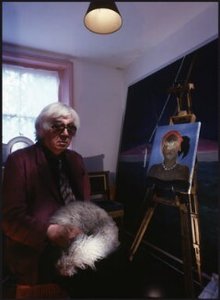
craigie ronald john aitchison
1926 - 2009
基本情報
- Artistic Movement Or Style: Naive art, Scottish Colourists
- Artists Or Movements Influenced By This Artist: ['Scottish Colourists']
- Artists Who Influenced This Artist: ['Salvador Dalí']
- Date Of Birth: 13 January 1926
- Date Of Death: 21 December 2009
- Full Name: Craigie Ronald John Aitchison
- Nationality: Scottish
- Notable Artworks:
- Crucifixion
- Saint Francis
- Portrait of Chris Ogidih
- Place Of Birth: Edinburgh, Scotland