

 プレビュー
プレビュー
 シェアする
シェアする シェアする
シェアする
 詳細を見る
詳細を見る

 ダウンロード
 似ている作品
 X線調査
X線調査 スライドショー
 統計情報
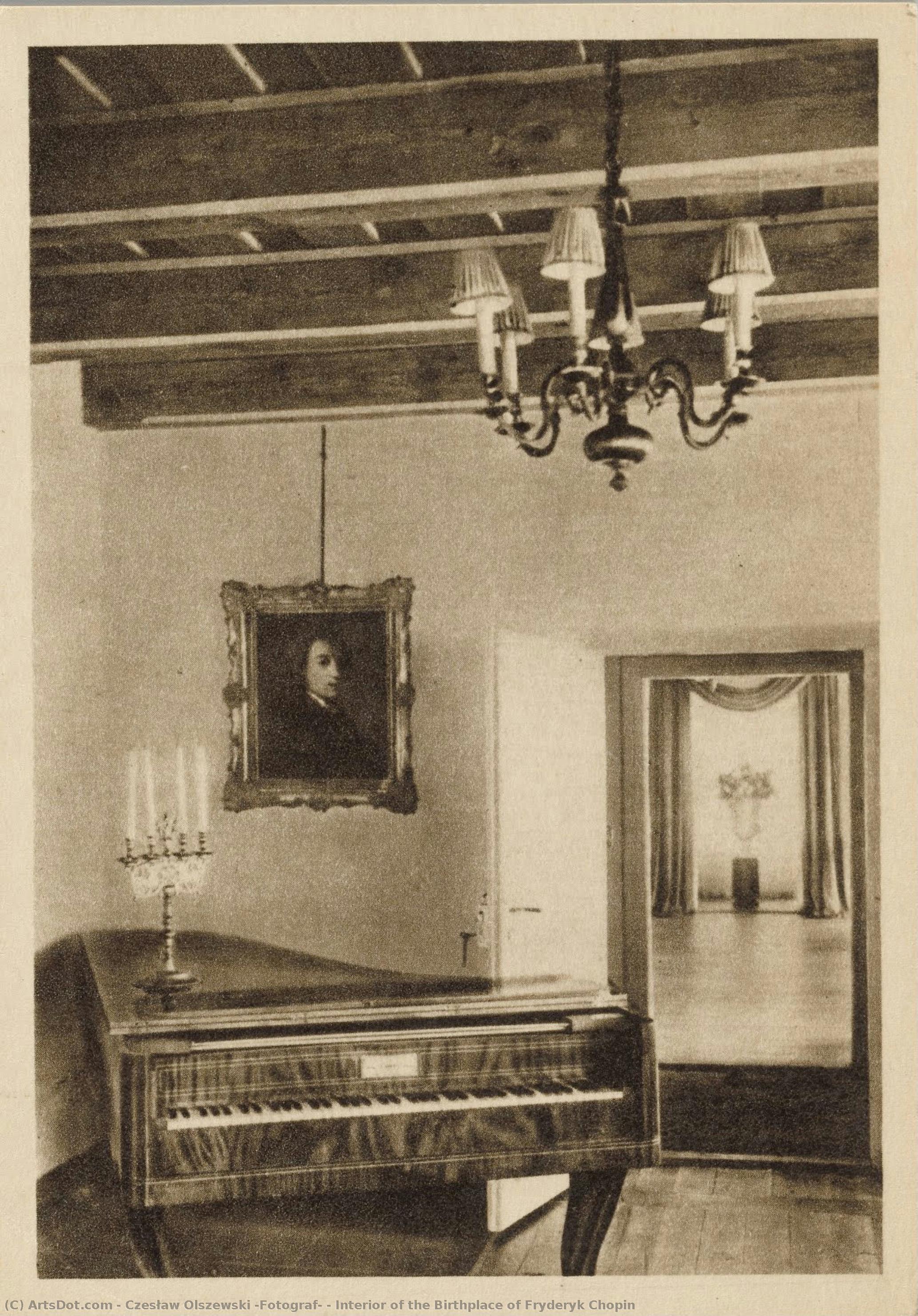
統計情報Interior of the Birthplace of Fryderyk Chopin

 詳細を見る
詳細を見る
手描き油彩複製画
当社のアーティストが、お客様のご希望のサイズと額縁に合わせて、キャンバスに手描きで制作する油彩画です。 ( プリント版に切り替え デジタル画像販売へ切り替え)




































作品のオリジナル比率に合わせた、当店の規定サイズからお選びください。

特定のフレームやスペースに合わせて、ご希望のサイズをご入力いただけます。選択されたサイズが元の画像の比率と異なる場合、アートワークをトリミングするか、手描きで要素を追加して絵画を拡張いたします。デジタルモックアップ を制作し、制作開始前にご確認(承認)をいただきます。
画面上のプレビューは、実際のトリミングや拡張を正確に反映しているものではありません。最終的な構図は、モックアップによってのみ正確にご確認いただけます。
カスタムサイズもご利用いただけますが、元の比率を維持するためには、あらかじめ用意されたリストからサイズを選択することをお勧めいたします。
ご注文後、ArtsDot.com チームより詳細な指示をお送りするとともに、仕上がりイメージ(モックアップ)をご提供いたします。


 ガラスオプションは、110cm未満のサイズでのみご利用いただけます。

Interior of the Birthplace of Fryderyk Chopin
複製技法
複製画のサイズ
-


合計金額
$ 263
関連作品










アーティストの略歴
A Pioneer of Polish Architectural Photography: Czesław Olszewski
Czesław Olszewski (1894-1969) stands as a pivotal figure in the development of architectural photography in Poland, a chronicler of a nation undergoing dramatic transformation throughout the 20th century. Born in Grójec, Poland, on June 19, 1894, Olszewski’s life coincided with periods of immense political and social upheaval – from the twilight of pre-war independence to the rebuilding efforts following the devastation of World War II. He wasn't merely documenting buildings; he was capturing the spirit of a nation striving for modernity and then painstakingly reconstructing itself.
Early Life and Formation
Details surrounding Olszewski’s early artistic training remain somewhat scarce, but his dedication to photography quickly became apparent. He possessed an innate ability to perceive architecture not just as static structures, but as dynamic forms shaped by light, shadow, and the evolving needs of society. This sensitivity would become a hallmark of his work. A crucial step in his career was becoming a co-founder of the Syndicate of Photoreporters of the Polish Republic. This collective underscored his commitment to journalistic integrity and collaborative documentation, establishing him within a network of like-minded professionals dedicated to visually recording Poland’s story.
Documenting a Nation: The Interwar Period
The 1930s proved to be a particularly fertile period for Olszewski. Poland was experiencing a surge in architectural innovation, embracing styles ranging from Art Deco to the burgeoning functionalist movement. Olszewski meticulously documented this evolution, his lens capturing the optimism and ambition of a nation eager to forge its own identity on the world stage. He wasn’t simply taking pictures *of* buildings; he was creating visual essays about progress, urban planning, and the changing face of Polish cities. His work from this era reveals a keen eye for composition, utilizing strong lines and dramatic perspectives to emphasize the scale and grandeur of these new structures. He captured not only the finished edifices but also the process of construction, offering a rare glimpse into the labor and ingenuity behind them.
Post-War Reconstruction and Legacy
The Second World War brought unimaginable destruction to Poland, leaving cities in ruins. Olszewski’s role shifted dramatically as he turned his attention to documenting the arduous task of reconstruction. His photographs from this period are imbued with a sense of solemnity and resilience. He captured the skeletal remains of once-proud buildings alongside images of rebuilding efforts, serving as a powerful testament to the nation's determination to rise from the ashes. This work wasn’t about celebrating architectural beauty; it was about bearing witness to loss and documenting the slow, painstaking process of renewal. He continued this documentation throughout the 1950s and 60s, capturing the emergence of socialist realism and post-war modernism.
Recognition and Enduring Influence
Throughout his career, Olszewski’s work was published in numerous books and exhibitions, ensuring its reach beyond journalistic circles. Publications like ‘Miastowidzenie. Fotografie Czesława Olszewskiego’ (Seeing the Cityscape. Photographs by Czesław Olszewski) and ‘Czesław Olszewski 'Warszawa nowoczesna'. Fotografie z lat trzydziestych XX wieku' (Czesław Olszewski 'Modern Warsaw'. Photographs from the 1930s) have cemented his place in Polish photographic history. More recently, exhibitions such as the one held at Dom Spotkań z Historią in Warsaw in 2022, brought renewed attention to his extensive archive. As a professor, Olszewski imparted his knowledge and passion for photography to generations of students, leaving an indelible mark on the field. His legacy extends beyond his stunning visual documentation; he instilled a commitment to meticulous observation, technical mastery, and a deep understanding of the social context in which architecture exists. His photographs remain invaluable resources for researchers studying Polish history, architecture, and the evolution of photographic techniques.

czesław olszewski (fotograf)
1894 - 1969 , Poland
基本情報
- Artistic Movement Or Style: Modernist Architecture Photography
- Date Of Birth: June 19, 1894
- Date Of Death: October 11, 1969
- Full Name: Czesław Olszewski
- Nationality: Polish
- Notable Artworks:
- Interior of the Birthplace of Fryderyk Chopin
- Warszawa nowoczesna
- Place Of Birth: Grójec, Poland