

 プレビュー
プレビュー
 プリントを購入
 シェアする
シェアする シェアする
シェアする
 詳細を見る
詳細を見る

 ダウンロード
 似ている作品
 X線調査
X線調査 スライドショー
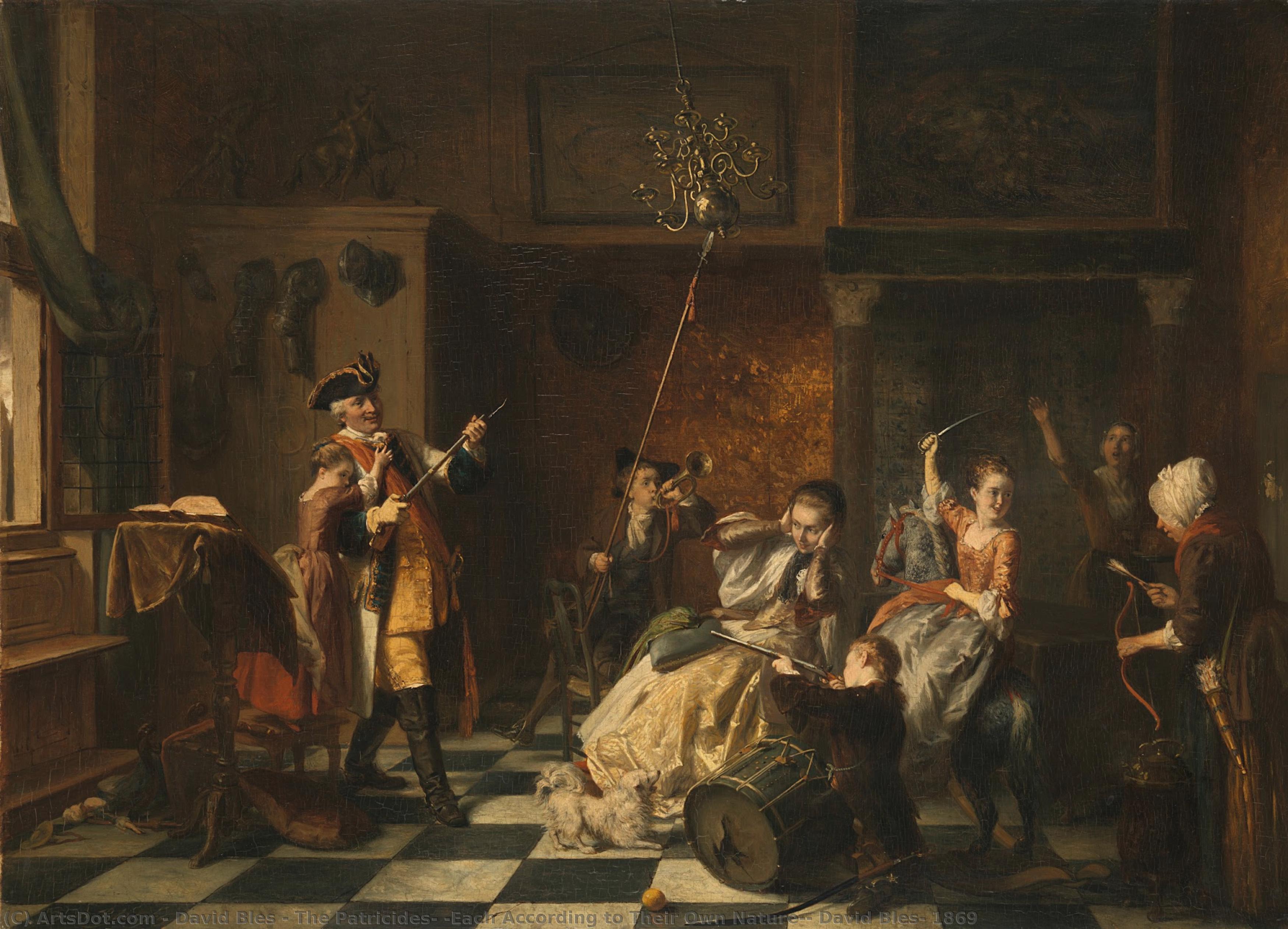
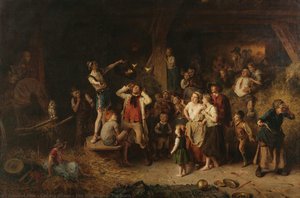
The Patricides, ‘Each According to Their Own Nature’, David Bles, 1869
 1869
1869 49.0 x 67.0 cm
 詳細を見る
詳細を見る




































作品のオリジナル比率に合わせた、当店の規定サイズからお選びください。

特定のフレームやスペースに合わせて、ご希望のサイズをご入力いただけます。選択されたサイズが元の画像の比率と異なる場合、アートワークをトリミングするか、手描きで要素を追加して絵画を拡張いたします。デジタルモックアップ を制作し、制作開始前にご確認(承認)をいただきます。
画面上のプレビューは、実際のトリミングや拡張を正確に反映しているものではありません。最終的な構図は、モックアップによってのみ正確にご確認いただけます。
カスタムサイズもご利用いただけますが、元の比率を維持するためには、あらかじめ用意されたリストからサイズを選択することをお勧めいたします。
ご注文後、ArtsDot.com チームより詳細な指示をお送りするとともに、仕上がりイメージ(モックアップ)をご提供いたします。


 ガラスオプションは、110cm未満のサイズでのみご利用いただけます。

The Patricides, ‘Each According to Their Own Nature’, David Bles, 1869
複製技法
複製画のサイズ
-


合計金額
$ 263
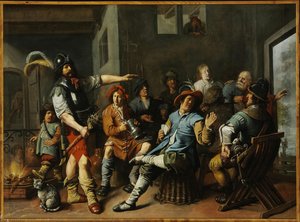
関連作品





アーティストの略歴
The Master of Wit and Wry Observation
In the vibrant landscape of nineteenth-century Dutch art, few painters possessed the sharp, satirical eye of David Bles. Born in The Hague in 1821, Bles emerged during a period when the Northern Netherlands was navigating the transition from Romanticism to a more grounded, observational realism. While many of his contemporaries sought the sublime or the poetic depths of nature, Bles found his inspiration in the delightful complexities of human character and the anecdotal charm of the eighteenth century. His work serves as a window into a bygone era, rendered with a meticulousness that captures not just the elegance of Rococo costumes, but the subtle, often humorous, undercurrents of social interaction.
Bles’s artistic journey was rooted in the prestigious traditions of his homeland. His talent was evident from a young age; by thirteen, he had already been accepted into the Hague Academy. Under the disciplined tutelage of masters such as Cornelis Kruseman and Jan Adam Krusebman, he mastered the foundational rigors of academic drawing and composition. This classical training provided him with the technical prowess necessary to execute his later, more complex genre scenes. Seeking to refine his vision further, Bles traveled to Paris, immersing himself in the cosmopolitan art scene and studying under Joseph-Nicolas Robert-Fleury. This period of international exposure infused his Dutch sensibilities with a certain French elegance, allowing him to blend academic precision with a lighter, more spirited touch.
A Tapestry of Genre and Satire
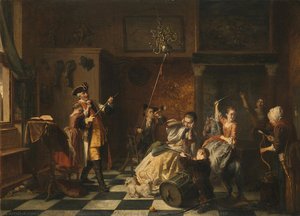
What truly distinguishes the oeuvre of David Bles is his ability to transform a simple scene into a narrative rich with wit. He became a celebrated master of the anecdotal painting, creating small-scale, captivating worlds that invited viewers to lean in closely. His subjects often drew from the middle-class moral life and the "galante" style of the previous century, populated by characters that felt both archetypal and vibrantly alive. He had a particular knack for creating soubrettes—spirited, roguish young women with twinkling eyes and dainty gestures—who acted as the focal points for his comedic or slightly scandalous vignettes.
His technique was far from the "soapy" or overly smoothed methods prevalent in some parts of his era. Instead, Bles employed a clever use of after-touches and powerful shadows to give his figures weight and presence. He understood that for a satire to land, the setting must feel authentic; thus, his attention to the textures of silk, the luster of polished wood, and the intricate details of period interiors was unparalleled. Whether depicting a bustling marketplace or a quiet moment of domestic intrigue, Bles concentrated the action so that the punchline of his visual joke was always unmistakably realized.
Legacy and Historical Significance
Throughout his long career, which spanned until his death in 1899, Bles maintained a position of high regard within the European art community. His membership in the Royal Academy in Amsterdam and his election as an honorary associate of the Imperial Academy of Arts are testaments to his professional standing. His paintings were not merely local curiosities but were exhibited across various European countries, earning him a reputation that transcended the borders of the Netherlands.
While he stood in stark contrast to the more somber, poetic realism of artists like Jozef Israëls or Bosboom, Bles’s contribution to the Dutch tradition is indispensable. He provided a necessary counterbalance to the era's gravity, offering instead a celebration of human foibles and the joy of observation. Today, his work remains a cherished part of the nineteenth-century canon, remembered for its ability to make the viewer smile through the clever, enduring power of visual storytelling.
基本情報
- Artistic Movement Or Style: Genre painting, Humour
- Artists Who Influenced This Artist:
- Cornelis Kruseman
- Jan Adam Kruseman
- Joseph-Fleury
- Date Of Birth: 1821
- Date Of Death: 1899
- Full Name: David Joseph Bles
- Nationality: Dutch
- Notable Artworks:
- The Patricides...
- Savoyard Girl
- Rubens and Teniers
- Place Of Birth: The Hague, Netherlands

