

 プレビュー
プレビュー
 プリントを購入
 シェアする
シェアする シェアする
シェアする
 詳細を見る
詳細を見る

 ダウンロード
 似ている作品
 X線調査
X線調査 スライドショー
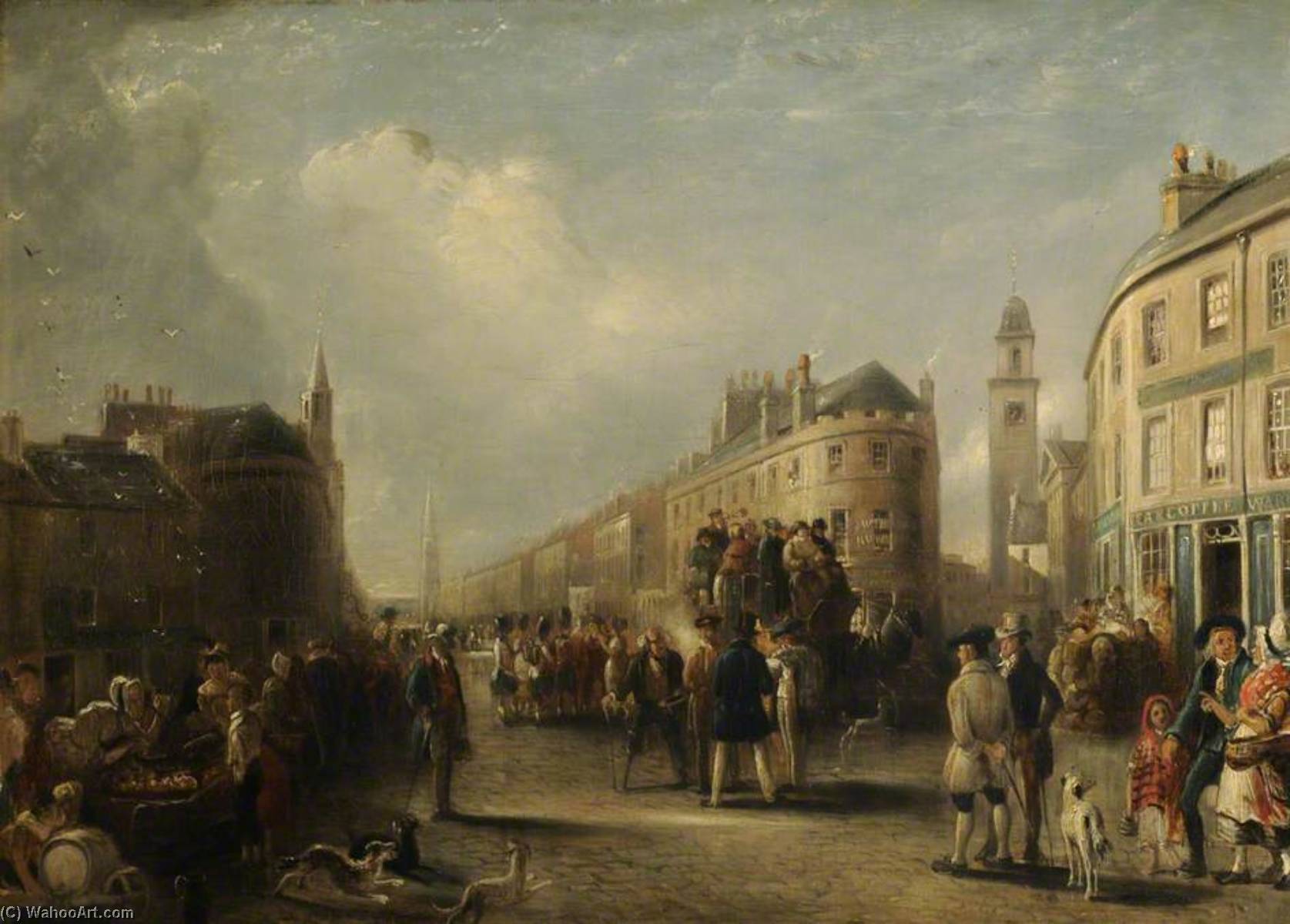
Kilmarnock Cross
 1840
1840 37.0 x 55.0 cm
 The Dick Institute
 詳細を見る
詳細を見る




































作品のオリジナル比率に合わせた、当店の規定サイズからお選びください。

特定のフレームやスペースに合わせて、ご希望のサイズをご入力いただけます。選択されたサイズが元の画像の比率と異なる場合、アートワークをトリミングするか、手描きで要素を追加して絵画を拡張いたします。デジタルモックアップ を制作し、制作開始前にご確認(承認)をいただきます。
画面上のプレビューは、実際のトリミングや拡張を正確に反映しているものではありません。最終的な構図は、モックアップによってのみ正確にご確認いただけます。
カスタムサイズもご利用いただけますが、元の比率を維持するためには、あらかじめ用意されたリストからサイズを選択することをお勧めいたします。
ご注文後、ArtsDot.com チームより詳細な指示をお送りするとともに、仕上がりイメージ(モックアップ)をご提供いたします。


 ガラスオプションは、110cm未満のサイズでのみご利用いただけます。

Kilmarnock Cross
複製技法
複製画のサイズ
-


合計金額
$ 263
作品解説
A Busy Street Scene
The painting depicts a lively street scene with people walking around in the town square. A group of men are standing on the sidewalk near a building, while others are scattered throughout the area. A horse can be seen in the middle of the scene, and there are several dogs present as well. The overall atmosphere appears lively and bustling with activity.Artistic Style and Technique
David Octavius Hill's artistic style is characterized by his attention to detail and ability to capture the essence of everyday life. His use of color and composition creates a sense of depth and dimensionality in the painting. The brushstrokes are bold and expressive, adding to the overall energy of the scene.- View more artworks from The Dick Institute on Discovering the Artworks of The Dick Institute, Kilmarnock, United Kingdom
- Learn more about David Octavius Hill and his partner Robert Adamson on David Octavius Hill, Robert Adamson
- Explore other paintings by David Octavius Hill, such as "Kilmarnock Cross" on Painting by 'David Octavius Hill' | David Octavius Hill:Kilmarnock Cross
The captivating painting "Kilmarnock Cross" by David Octavius Hill is a must-see for art enthusiasts and history buffs alike. Its vivid depiction of everyday life in 19th-century Scotland makes it a valuable piece of cultural heritage.
関連作品









アーティストの略歴
The Visionary Light of David Octavius Hill
In the mid-nineteenth century, as the world stood on the precipice of a technological revolution, David Octavius Hill emerged not merely as a chronicler of reality, but as a poet of light. Born in 1802 in Perth, Scotland, Hill possessed an intellect shaped by the rigorous disciplines of mathematics and natural philosophy at Edinburgh University. This scientific foundation, paired with his early training in lithography and painting, allowed him to approach the nascent medium of photography with a rare duality: the precision of a scientist and the soul of an artist. While many saw the camera as a mere tool for mechanical reproduction, Hill envisioned it as a brush capable of capturing the profound psychological depths of the human condition.
His journey into the heart of photographic history was inextricably linked to his partnership with the engineer Robert Adamson. Together, they established the first photography studio in Scotland in 1843, creating a collaborative sanctuary where chemistry and art converged. Their work was defined by the use of the calotype process, a revolutionary method pioneered by William Henry Fox Talbot. Unlike the sharp, clinical clarity of the daguerreotype, the calotype offered a soft, textured grain that allowed for a more painterly expression. Through this medium, Hill and Adamson achieved a Rembrandtesque mastery of chiaroscuro, using dramatic shadows and luminous highlights to imbue their portraits with an almost spiritual weight.
A Legacy Etched in Shadow and Silver
The partnership of Hill and Adamson was brief but incandescent, lasting only from 1843 until Adamson's untimely death in 1847. Yet, in those few years, they produced a body of work that remains the cornerstone of Scottish photographic art. Their subjects ranged from the rugged, salt-laced faces of Newhaven fishermen to the dignified silhouettes of Edinburgh’s intellectual elite. Hill’s innate ability to put sitters at ease—a skill honed during his years as a prominent painter—allowed him to capture more than just a likeness; he captured an essence. In images such as those featuring Reverend Thomas Chalmers, one can sense the heavy atmosphere of Victorian morality and the quiet dignity of a life dedicated to social reform.
<- The Calotype Revolution: Hill utilized the negative-positive process to create multiple prints, allowing for an artistic consistency that helped establish photography as a fine art.
- Artistic Composition: Drawing from his background in painting, Hill applied classical principles of composition and light to much earlier photographic subjects.
- Cultural Documentation: His work serves as a vital visual archive of 19th-century Scottish landscapes, industry, and social strata.
Beyond the studio walls, Hill’s influence extended into the very fabric of the Scottish art scene. As an arts activist and painter, his contributions to the development of local institutions were as significant as his photographic prints. Even as he moved away from the camera following Adamson's death, the aesthetic principles he helped pioneer—the emphasis on tonal depth, texture, and emotional resonance—continued to ripple through the generations of photographers who followed. Today, the name David Octavius Hill stands as a testament to the moment when the mechanical eye first learned to see with the heart of an artist.
david octavius hill
1802 - 1870
基本情報
- Artistic Movement Or Style: Calotype Photography
- Artists Or Movements Influenced By This Artist: ['Romanticism']
- Artists Who Influenced This Artist: ['Rembrandt']
- Date Of Birth: 1802
- Date Of Death: 1870
- Full Name: David Octavius Hill
- Nationality: Scottish
- Notable Artworks:
- Kilmarnock Cross
- David Octavius Hill & Robert Adamson
- Thomas Hill
- Place Of Birth: Edinburgh, Scotland

