

![Rev. Peter Jones [kahkew?quon?by] — David Octavius Hill & Robert Adamson](/media/artworks/images-full/c2/27/c22782ffa724afe536811ad0de9357e7.jpg)
 プレビュー
プレビュー
 プリントを購入
 シェアする
シェアする シェアする
シェアする
 詳細を見る
詳細を見る

 ダウンロード
 似ている作品
 X線調査
X線調査 スライドショー
Rev. Peter Jones [Kahkew?quon?by]


 詳細を見る
詳細を見る




P118B $10

P118H $10

P118W $10

P438Z $10

P508JH $12

P508YH $12

P805H $10

P805Z $10

P919BZ $10

P919G $10

P919XJ $10

P959ZH $10

P968JZ $12

W106C $8

W218G $10

W218JH $8

W218Y $10

W307PJ $10

W316G $10

W316PJ $8

W316Y $10

W398PJ $8

W4111J $10

W500HY $15

W500JH $15

W692G $12

W849H $8

W940BG $15

W953PJ $8




作品のオリジナル比率に合わせた、当店の規定サイズからお選びください。

特定のフレームやスペースに合わせて、ご希望のサイズをご入力いただけます。選択されたサイズが元の画像の比率と異なる場合、アートワークをトリミングするか、手描きで要素を追加して絵画を拡張いたします。デジタルモックアップ を制作し、制作開始前にご確認(承認)をいただきます。
画面上のプレビューは、実際のトリミングや拡張を正確に反映しているものではありません。最終的な構図は、モックアップによってのみ正確にご確認いただけます。
カスタムサイズもご利用いただけますが、元の比率を維持するためには、あらかじめ用意されたリストからサイズを選択することをお勧めいたします。
ご注文後、ArtsDot.com チームより詳細な指示をお送りするとともに、仕上がりイメージ(モックアップ)をご提供いたします。


 ガラスオプションは、110cm未満のサイズでのみご利用いただけます。

Rev. Peter Jones [Kahkew?quon?by]
複製技法
複製画のサイズ
-


合計金額
$ 263
作品解説
A Window into a Lost World: Rev. Peter Jones (Kahkewaquonaby)
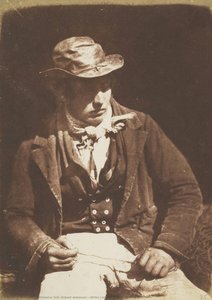
David Octavius Hill and Robert Adamson’s 1845 portrait of Reverend Peter Jones, known as Kahkewāquonāby to the English-speaking world, is far more than a simple likeness; it's a poignant window into a rapidly changing landscape – both geographically and culturally. Captured during a brief but intensely productive partnership, this calotype print transcends mere documentation, offering a glimpse into the life of a pivotal figure in 19th-century Indigenous Canadian history. The photograph, initially conceived as a reference image for a fundraising tour by Jones in Great Britain, instead stands as a powerful testament to his identity and the complex circumstances surrounding it.
The composition itself is subtly arresting. Jones sits on the ground before a plain wall, dressed in attire that speaks of both his religious vocation and his position within a transitional society – a ruffled collar suggesting clerical status, yet the overall simplicity hinting at a life lived between two worlds. His gaze, direct and unwavering, holds an undeniable dignity, conveying resilience and quiet strength. The monochrome palette—a characteristic of early calotypes—amplifies the image’s solemnity, lending it a timeless quality that transcends its specific historical moment.
The Pioneers of Scottish Photography
To fully appreciate this portrait, one must understand the extraordinary circumstances surrounding Hill and Adamson. Operating in the nascent years of photography, they were true innovators, pushing the boundaries of the calotype process – a complex technique that involved creating paper negatives from which multiple prints could be made. Their studio, “Rock House,” on Edinburgh’s Calton Hill, became a hub for experimentation and artistic exploration. Hill, a painter with an eye for composition, combined his artistic sensibilities with Adamson's technical expertise, resulting in images of remarkable sensitivity and detail.
Robert Adamson, a chemist by training, possessed a meticulous approach to the photographic process, striving to capture not just form but also light and texture. His untimely death in 1848 tragically cut short this groundbreaking partnership, leaving Hill to continue their work for several years. Despite the brevity of their collaboration, Hill & Adamson established Scotland’s first photography studio and produced a body of work that profoundly influenced the development of photographic art.
A Complex Figure: Kahkewāquonāby's Story
Reverend Peter Jones (Kahkewāquonāby) was a complex and significant figure in 19th-century Indigenous Canadian history. Born into the Mississauga Ojibwe tribe, he navigated the challenges of assimilation while simultaneously advocating for his people’s rights and preserving their culture. He served as a leader, translator, and fundraiser, playing a crucial role in securing resources for the Mississaugas of the Credit First Nation. The photograph itself offers a rare visual record of this remarkable individual, capturing him at a pivotal moment in his life – during his European tour to raise funds for the Methodist Church.
It’s important to acknowledge the complexities surrounding Jones's identity and legacy. While he embraced Christianity and sought to bridge cultural divides, his actions were often viewed with suspicion by some members of his community. The photograph, therefore, invites us to consider not just Jones as an individual but also the broader context of colonialism and its impact on Indigenous peoples.
Symbolism and Emotional Resonance
Beyond its historical significance, the portrait resonates deeply through its inherent symbolism. The plain background serves to draw attention entirely onto Jones himself, emphasizing his presence and dignity. The act of sitting on the ground suggests humility and connection to the earth – a powerful visual metaphor for his role as a spiritual leader within his community. The photograph’s quiet solemnity evokes a sense of melancholy and reflection, prompting viewers to contemplate the challenges faced by individuals caught between two cultures.
Reproductions of this iconic image offer an opportunity to engage with a pivotal moment in photographic history and to reflect on the enduring legacy of Reverend Peter Jones. It’s a piece that speaks volumes about cultural exchange, identity, and the power of visual representation – a testament to the vision and skill of Hill and Adamson.
関連作品
関連記事

Monochrome Visions: Exploring the Aesthetic & Historical Significance of Black & White Photography
Explore the rich history & artistic power of black and white photography. From early techniques to iconic masters like Ansel Adams, discover why monochrome continues to captivate art lovers today. Expert insights for collectors.
Beyond the Lens: Photography's Enduring Influence on Modern & Contemporary Art
Explore photography's pivotal role in shaping modern & contemporary art. Discover key movements, influential artists like Stieglitz, and expert collecting advice from ArtsDot.
Pictorialism: A Search for Artistic Photography's Soul – Aesthetics, Techniques & Legacy
Explore the captivating world of Pictorialism – a pivotal movement that transformed photography into fine art. Discover key artists like Stieglitz & Käsebier, techniques, and collecting tips from experts.
Witnessing History Through Lens & Light: Documentary Photography's Enduring Legacy
Explore the powerful history of documentary photography – from its origins to contemporary masters like Gordon Parks & W. Eugene Smith. Discover how this art form shapes our understanding of society and witness pivotal moments in time.
Documentary Photography's Defining Moments: 10 Masterpieces for Your Home |
Explore 10 defining documentary photography masterpieces – from Dorothea Lange to Robert Capa. Discover powerful stories, iconic images & timeless art for your home. Museum-quality prints at .

