メニュー
プレビュープレビュー ARで試着ARで試着 Switch to Print Switch to PrintSwitch to Digital Image Switch to Digital Image シェアするシェアする
詳細を見る詳細を見る お気に入りに追加 お気に入りに追加 ダウンロードダウンロード 似ている作品似ている作品 X線調査X線調査 スライドショースライドショー StatsStats

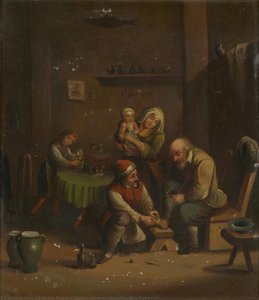
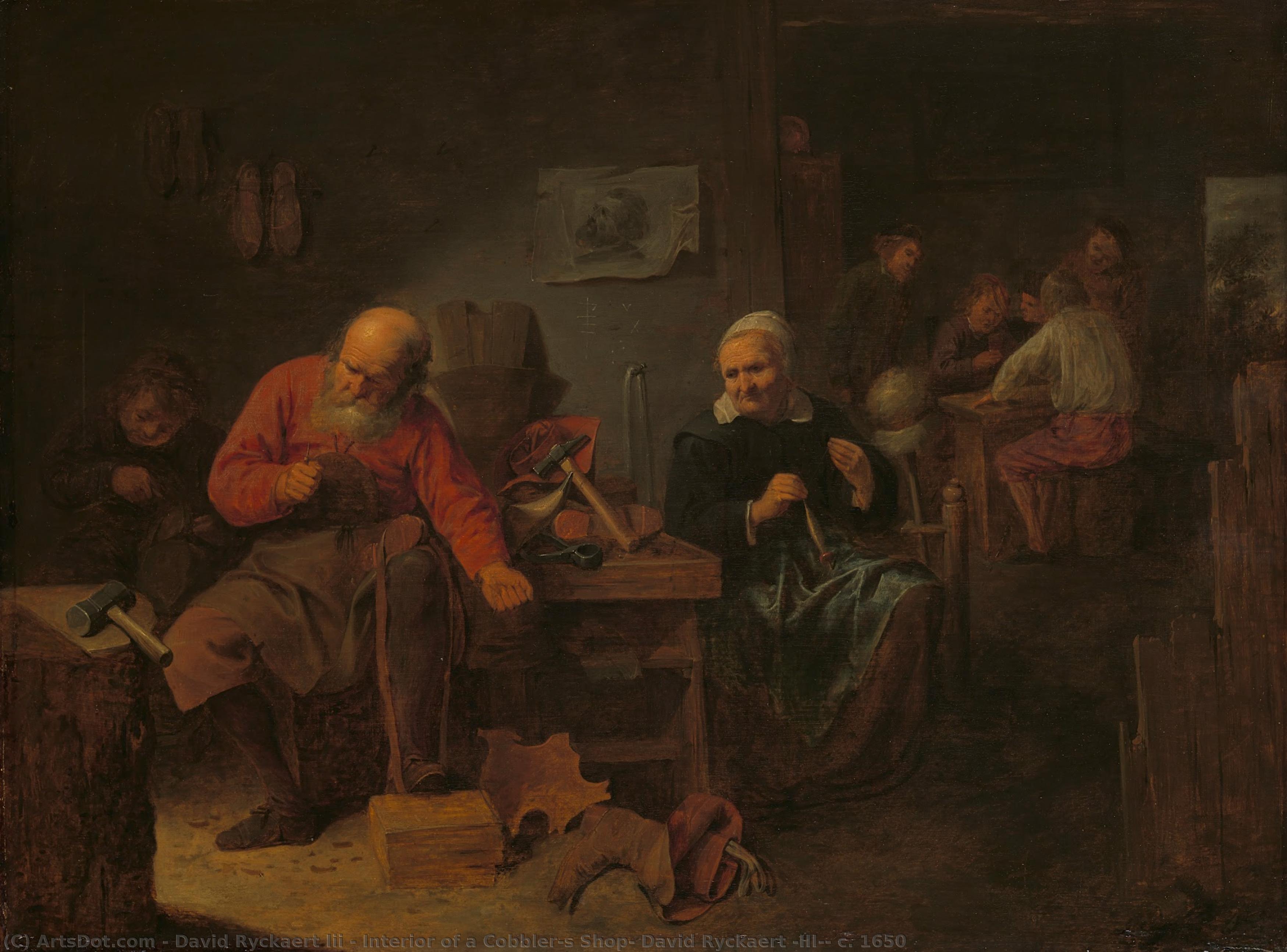
Interior of a Cobbler’s Shop, David Ryckaert (III), c. 1650

David Ryckaert III (1612-1661) was a Flemish genre painter renowned for lively scenes of merry companies, peasants & alchemists. Influenced by Brouwer & Teniers, he served the court of Archduke Leopold Wilhelm. Explore his captivating works!

手描き油彩複製画

当社のアーティストが、お客様のご希望のサイズと額縁に合わせて、キャンバスに手描きで制作する油彩画です。 (Switch to Print Switch to PrintSwitch to Digital Image Switch to Digital Image)

標準サイズ
オーダーメイド
CM
INCH

作品のオリジナル比率に合わせた、当店の規定サイズからお選びください。

高さ

特定のフレームやスペースに合わせて、ご希望のサイズをご入力いただけます。選択されたサイズが元の画像の比率と異なる場合、アートワークをトリミングするか、手描きで要素を追加して絵画を拡張いたします。デジタルモックアップ を制作し、制作開始前にご確認(承認)をいただきます。
画面上のプレビューは、実際のトリミングや拡張を正確に反映しているものではありません。最終的な構図は、モックアップによってのみ正確にご確認いただけます。
カスタムサイズもご利用いただけますが、元の比率を維持するためには、あらかじめ用意されたリストからサイズを選択することをお勧めいたします。

カスタマイズの例:顔をお客様の写真に置き換える、ペットを追加する(例:猫を犬に変更)、背景に隠れたメッセージを入れる、背景の風景や要素を変更するなど。
ご注文後、ArtsDot.com チームより詳細な指示をお送りするとともに、仕上がりイメージ(モックアップ)をご提供いたします。

世界中への配送()は、通常の5週間ではなく、3〜4週間でお届けいたします。(7 9月)。品質には一切妥協いたしません。

why_choose_icon
世界中へ無料エクスプレス配送
why_choose_icon
高品質なリネンキャンバス
why_choose_icon
配送時完全保険付
why_choose_icon
関税・輸入税の払い戻し保証
why_choose_icon
忠実な色彩再現保証
why_choose_icon
100日間返品保証(製造上の欠陥がある場合のみ)
why_choose_icon
100% 全額返金保証
why_choose_icon
まとめ買い割引のご案内

合計金額

$ 263

reproduction

Interior of a Cobbler’s Shop, David Ryckaert (III), c. 1650

複製技法

複製画のサイズ

-

合計金額

$ 263

This painting by David Ryckaert III of the interior of a cobbler’s shop provides a detailed description of the shoemaker’s craft around the middle of the seventeenth century. The theme was popular with the artist; on every occasion he showed the cobbler’s wife preparing twine either with a spindle or distaff, or with a spinning wheel. The twine is for the use of the cobbler who is shown here – as on four other occasions – tightening the thread with which he has fastened the sole to the welt. The shoe is held in place on his knee by the traditional stirrup strap.3 The boot on the work surface beneath the hammer and that on the floor were known in France as ladrines, fashionable during the reign of Louis XIII (r. 1614-43); the cuff of the heavier bottes à chaudron could be pulled up over the knee when riding or otherwise allowed to fall around the calf. Inside the boot are the boot stockings and the straps with which to pull the boot on.4 The present picture was acquired as the work of Adriaen Brouwer (1603/05-1638) and in 1805 it was engraved as such,5 but the attribution was soon changed to Van Arp (sic), i.e. Willem van Herp (c. 1614-1677). David Ryckaert was confusingly but significantly appended to this appellation in the 1832 catalogue; he alone was nominated in the 1880 catalogue. Since then the attribution has been generally accepted, most recently by Van Haute.6 But such unanimity should be qualified as the discoloured varnish may well conceal cursory and less than satisfactory handling, apart that is from in the principal figures. And it may well be that there was a fair degree of studio participation in the execution of this work. Van Haute has argued that the present painting, which is on a support of a single piece of oak timber from the German/Netherlandish region, available for use from 1626 and more plausibly from 1635, should be dated to the last decade of Ryckaert’s activity, in the 1650s.7 Van Manteuffel preferred a dating of 1642-48.8 It would seem that the lighting and composition fits with Ryckaert’s paintings dated 1648 – the Alchemist at Le Havre9 and another at Brussels10 – where the pairing and physiognomies of the bearded old man and toothless old woman are clearly also similar. Possibly Ryckaert worked from drawn prototypes or patterns for these figures; the old man, his head likewise inclined against the light, recurs in the two Concerts of 1650.11 Both models may have made an earlier appearance – looking younger – in the Dresden As the Old Ones Sing, so the Young Ones Pipe of 1639.12 Van Haute lists a dozen extant authentic depictions of cobblers by Ryckaert, the earliest being of 1638.13 Why he should have made a speciality of this particular trade – in which he was followed in Leiden by Quiringh van Brekelenkam (active 1648-died 1668)14 – is unclear. The print of a cobbler’s shop published by Hieronymus Cock’s (1518-1570) widow15 would have been well known to him; but Van Haute’s view,16 that Ryckaert subverted its contemporary message, needs refining. Whereas in the print the laziness of the two main protagonists – Sorgheloos and Verlega – infects the apprentices, the industry of the cobbler and his wife – sewing and spinning – in Ryckaert’s depictions is contrasted with the indulgence of the youthful group in the background. Indeed, perhaps this is a commentary on the waywardness of youth in contrast to the endeavour17 of the older generation (whose example is followed by the infant apprentice to the left). Comparable to this contrast between the behaviour of youth and the elderly is the theme of poor parents and rich children.18 Van Haute has also drawn attention to the likely relevance of emblem xliv in Johan de Brune, Emblemata en Zinnewercke, Amsterdam 1624, illustrated by Adriaen van de Venne (1589-1662), ‘Wat rust en ghewin gheest luttel onderwin’, where an old woman spins beside her husband, with accompanying verses extolling in God’s eyes a mand and woman working to maintain themselves.19 Gregory Martin, 2022

アーティストの略歴

**life and career**

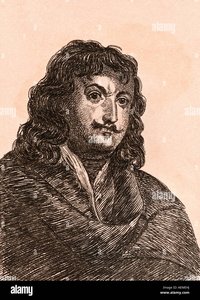
david ryckaert iii, a prominent flemish painter, was born on december 2, 1612, in antwerp, belgium. he was the second of three children to david rijckaert ii and katelijne de meere. as the only son, he was named after his father, following the family's naming tradition. david ryckaert iii's artistic journey began under the guidance of his father, who was also a painter and art dealer. he became a master of the guild of saint luke in antwerp in 1636-37 and later held the position of dean from 1652-53.

**artistic contributions**

david ryckaert iii's work is characterized by his significant contributions to genre painting, particularly through scenes of merry companies and peasants. he also explored hell scenes and images of alchemists. his patrons included prominent figures such as archduke leopold wilhelm of austria, the governor of the southern netherlands.

**notable mentions and collections**

* the museum mauritshuis (netherlands), known for its dutch golden age paintings, is a notable collection that might inspire fans of david ryckaert iii's work. /en/art/show/art-d3bksk-en/ - the museum rockox house (antwerp, belgium), offers a glimpse into the life and art collection of nicolaas rockox. * david ryckaert iii's biography can be further explored on wikipedia: [https://en.wikipedia.org/wiki/david_ryckaert_iii](https://en.wikipedia.org/wiki/david_ryckaert_iii)

**legacy and influence**

as a painter to the court of the governor of the southern netherlands, david ryckaert iii's work reflects the artistic nuances of his time. his influence on genre painting is undeniable, making him a notable figure in flemish art history.

基本情報

  • Artistic Movement Or Style: Genre painting
  • Artists Or Movements Influenced By This Artist: ['Baroque art']
  • Artists Who Influenced This Artist:
    • Adriaen Brouwer
    • Pieter Teniers
  • Date Of Birth: December 2, 1612
  • Full Name: David Ryckaert III
  • Nationality: Flemish
  • Notable Artworks:
    • Interior of a Cobbler’s Shop
    • L
  • Place Of Birth: Antwerp, Belgium