William Merritt Chase: A Study in American Impressionism & Artistic Luminosity
Annie Traquair Lang (September 8, 1885 – November 8, 1918) was an American Impressionist painter, known for experimental impasto brushstrokes and jewel-tone abstracted forms. She exhibited portraits, still lifes and landscapes at two dozen venues in Europe and the U.S., and institutions including the Metropolitan Museum of Art acquired her works. She was acclaimed in publications including the New York Times and the International Studio.
She also earned praise for her collection of paintings by her mentor, William Merritt Chase, with whom she traveled in Europe and California. He considered Lang “who best assimilated his technique and verve.” A frequent model for her teacher, who praised her “remarkable ability,” Lang also painted him numerous times.
In 1918, following a year of Caribbean travels, she fell victim to the Spanish Flu. Posthumously, Lang’s signature was replaced with that of Chase’s in some of her paintings–including this one. This remarkable feat underscores the enduring influence of Chase's artistic vision and Lang’s dedication to capturing its essence.
Subject Matter & Composition
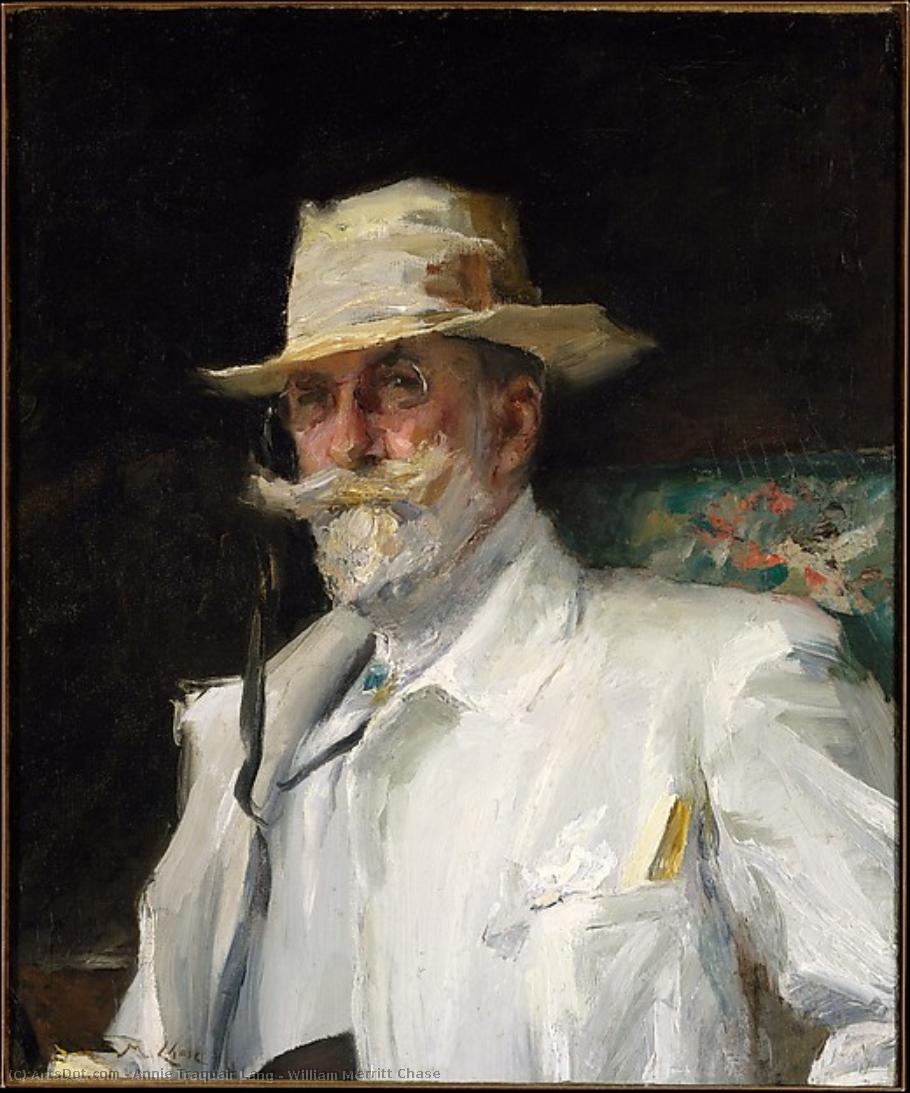
The image depicts a man wearing a hat and glasses, sitting in front of a chair. The man appears to be well-dressed, possibly in a suit or white clothing. He has a mustache and seems to be looking at the viewer with an intense expression. The painting is set against a dark background, which contrasts sharply with the subject’s attire and facial features.
Chase skillfully employed a pyramidal composition—a technique favored by Renaissance masters—to create stability and balance within the artwork. The chair serves as a grounding element, anchoring the figure while directing the viewer's gaze upwards towards his face. This deliberate arrangement emphasizes the man’s presence and conveys a sense of dignified contemplation.
Style & Technique: Impressionistic Brilliance
Lang embraced an impressionist approach to her subjects, mirroring Chase’s stylistic preferences. She skillfully utilized impasto brushstrokes—thickly applied paint—to build up textural surfaces that capture the fleeting effects of light and atmosphere. The artist's masterful manipulation of color contributes significantly to the painting's emotive impact.
Jewel-tone abstracted forms dominate Lang’s palette, reflecting Chase’s fascination with capturing visual sensations rather than precise representations. Vibrant hues—such as crimson, emerald green, and sapphire blue—are blended together in loose washes, creating a luminous quality that evokes the beauty of nature. These bold colors convey emotion and invite contemplation.
Historical Context & Significance
Painted in 1910, this artwork reflects the burgeoning Impressionist movement in America during Chase’s time. Influenced by artists like Claude Monet and Edgar Degas, Impressionists sought to depict scenes from daily life with immediacy and spontaneity—abandoning academic conventions.
Lang's portrait of Chase exemplifies the movement's commitment to capturing psychological nuance alongside visual beauty. It serves as a testament to Chase’s artistic legacy and Lang’s ability to translate his vision onto canvas. The painting’s enduring appeal lies in its evocative portrayal of human emotion and its masterful execution of Impressionistic technique.
Emotional Impact & Legacy
The dark background against which the man is positioned amplifies the intensity of his gaze, creating a palpable sense of drama and introspection. Lang's use of impasto brushstrokes imbues the painting with texture and vibrancy—inviting viewers to engage with its surface on an emotional level.
Ultimately, this artwork stands as a celebration of artistic collaboration and Chase’s profound influence on Lang’s oeuvre. It embodies the spirit of Impressionism—a movement that prioritized feeling over factual accuracy—leaving behind a timeless masterpiece that continues to inspire admiration and contemplation.