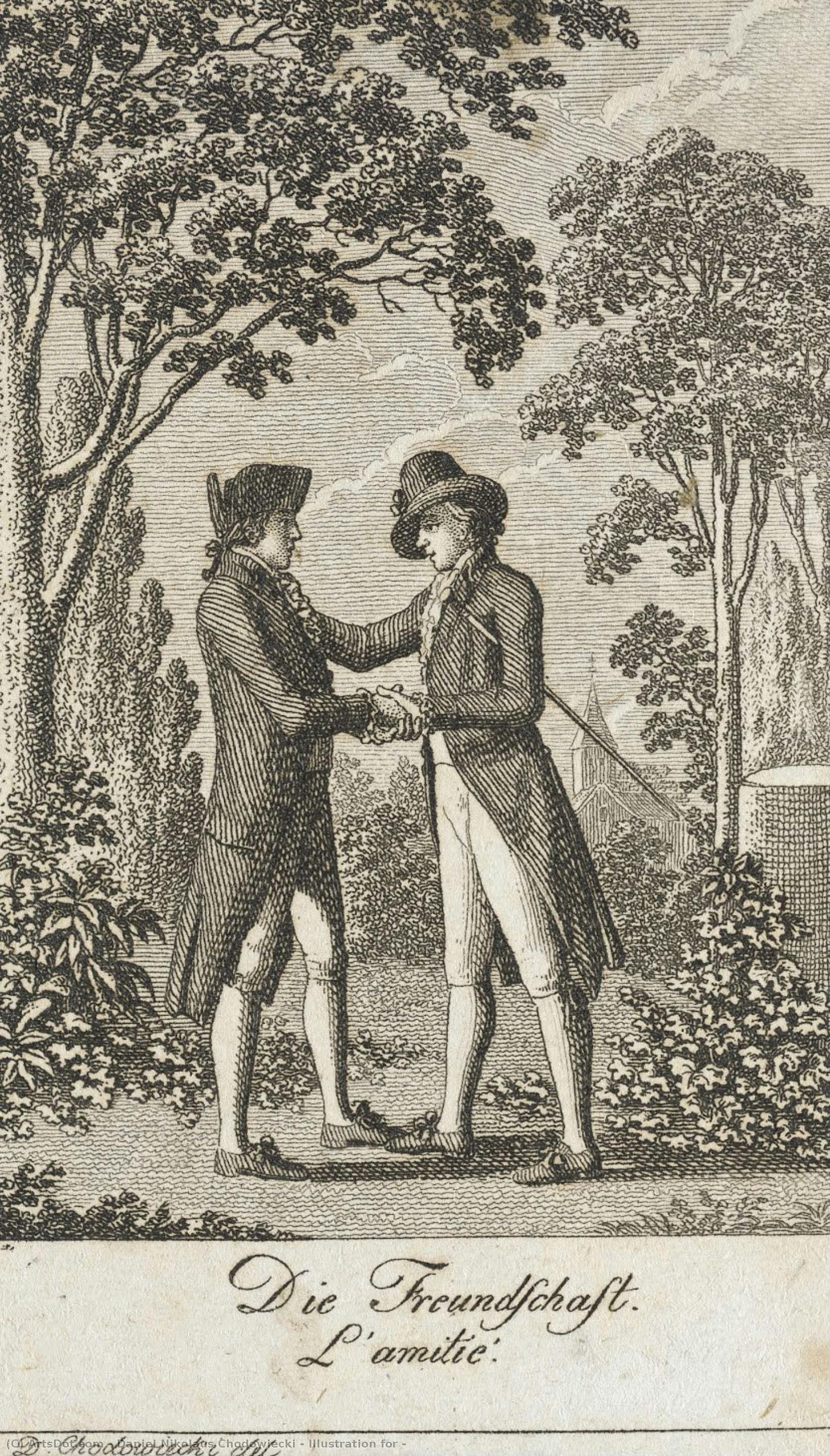
1793 Chodowiecki etching "Friendship." A rare 8x5cm illustration in the Zopfstil period, capturing 18th-century bourgeois life. Own a piece of art history!
ダニエル・ニコラウス・チョドフイェツキ(1726-1801)は、18世紀のブルジョワジーの生活を描いたことで知られるポーランド系ドイツ人のエッチング画家です。緻密な版画、挿絵、肖像画は、ツォップシュティール様式、感性の崇拝、そして初期ドイツ・ナショナリズムを反映しています。
LACMAの数千年にわたる多様な美術コレクションを探訪!古代の工芸品から現代の傑作まで、ロサンゼルスで象徴的な展示と魅力的な展覧会を発見しましょう。
A Moment of Camaraderie Captured in Etching Stone
Daniel Nikolaus Chodowiecki’s “Die Freundschaft” (“Friendship”), executed in 1793, stands as a testament to the elegance and intellectual curiosity of the late Enlightenment. Measuring just 8 x 5 cm, this diminutive etching commands attention not through sheer size but through its masterful depiction of human connection—a theme central to Chodowiecki’s artistic vision and deeply rooted in the cultural landscape of Berlin during his time. Currently residing at the Los Angeles County Museum of Art (LACMA), it offers a glimpse into a pivotal period of European art history, where observation and nuanced representation were prized above grand spectacle.
The Style and Technique: Zopfstil Perfection
Chodowiecki’s etching belongs to the “Zopfstil” (“Braided Style”), a distinctive artistic movement that flourished in Prussia during the Napoleonic era. Characterized by meticulous detail and an emphasis on capturing textures—particularly those of hair, fabric, and wood—the Zopfstil sought to emulate the precision of botanical illustrations. This particular print exemplifies this approach brilliantly; the artist’s painstaking rendering of the men's clothing and hairstyles reveals a dedication to realism that was considered revolutionary for its time. The etching utilizes drypoint technique, where a needle punctures the copper plate before ink is applied, creating fine lines that produce rich tonal variations—a crucial element in conveying the solemnity and sincerity of the depicted friendship.
Historical Context: Berlin’s Intellectual Heart
Berlin in 1793 was at the epicenter of European intellectual life, attracting artists, writers, and philosophers from across the continent. Chodowiecki himself served as director of the Berlin Academy of Art, fostering a climate of experimentation and artistic innovation. The etching's illustration for Cervantes’ “Don Quixote” speaks to the broader humanist concerns prevalent in the period—a fascination with human psychology and an appreciation for idealized representations of virtue and companionship. It reflects the burgeoning interest in portraying everyday life with accuracy and sensitivity, marking a departure from earlier Baroque conventions that favored dramatic grandeur.
Symbolism: Gesture and Connection
The simple yet profound gesture of shaking hands between the two men embodies the core concept of “Die Freundschaft.” This act symbolizes trust, respect, and mutual understanding—values considered paramount in Enlightenment society. The trees flanking the figures serve as visual anchors, representing stability and enduring bonds. Furthermore, the formal attire – ties – underscores the seriousness of the occasion, highlighting the importance placed on social decorum and intellectual discourse within the bourgeois milieu.
Emotional Impact: A Quiet Reflection on Human Relationships
Despite its small scale, “Die Freundschaft” possesses a remarkable emotional resonance. The etching’s subdued palette—primarily shades of grey—contributes to an atmosphere of contemplative solemnity. It invites viewers to contemplate the beauty and significance of genuine human connection—a timeless theme that continues to captivate audiences today. Owning a high-quality reproduction allows one to appreciate this subtle masterpiece and bring its understated elegance into any interior space.