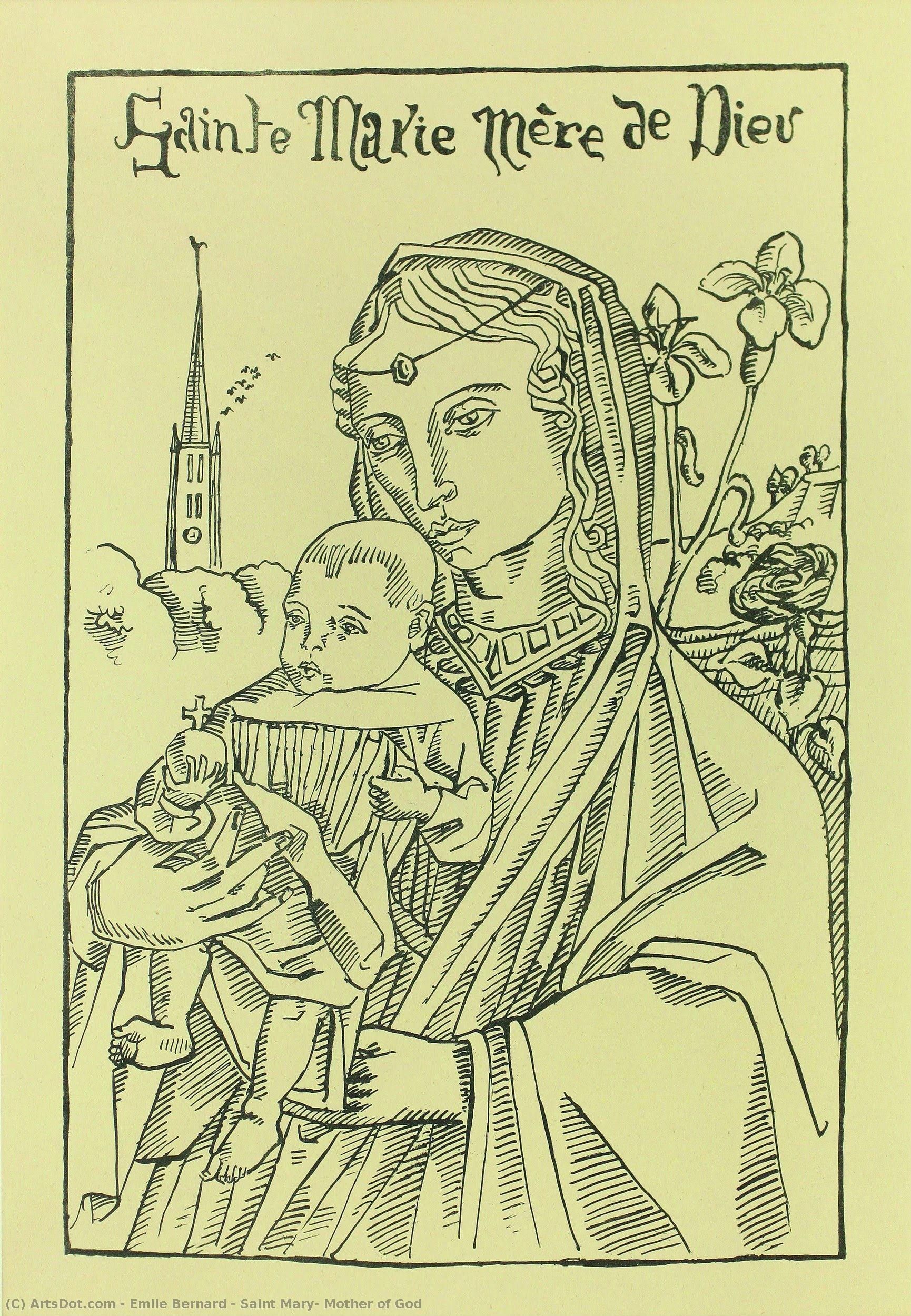
Émile Bernard’s poignant lithograph, Saint Mary, Mother of God (1895), depicts the Virgin Mary holding children amidst intricate details and scattered figures, showcasing a key work by the Post-Impressionist pioneer. Discover this evocative artwork and bring its timeless beauty into your space.
A Reverie in Black and White: Émile Bernard’s Saint Mary
Émile Bernard's "Saint Mary, Mother of God," executed in 1895, is more than simply a depiction of the Virgin; it’s a poignant meditation on faith, motherhood, and the enduring power of nature. This lithograph, measuring 48 x 41 cm, reveals the artist’s distinctive Post-Impressionist style – characterized by a deliberate flattening of perspective and an emphasis on expressive line rather than photographic realism. The stark contrast of black and white amplifies the emotional weight of the scene, drawing the viewer into a world of quiet contemplation.
The Figure of Mary: Symbolism and Expression
At the heart of the composition stands Saint Mary, rendered with a remarkable sensitivity to form and gesture. Her crown, a subtle yet potent symbol of her divine status, is juxtaposed against the humble posture of holding two children – representing Christ and John the Baptist according to tradition. Bernard’s meticulous attention to detail in Mary's face—the furrowed brow suggesting sorrow or perhaps quiet contemplation—elevates her beyond a static religious icon. The positioning of the children, one closer to her left side and the other nearer to her right, subtly emphasizes the duality inherent in motherhood: nurturing love and protective strength.
Technique and Process – A Lithograph’s Legacy
Created as a lithograph, "Saint Mary" showcases Bernard's mastery of this intricate printmaking technique. The process began with a hand-drawn matrix, meticulously etched to transfer the image onto paper. This method allowed for subtle gradations in tone and texture, contributing significantly to the artwork’s expressive quality. The presence of smaller figures scattered throughout – angels, natural elements, perhaps even hints of Breton folklore – adds layers of complexity and reinforces Bernard's interest in exploring themes beyond purely religious iconography. The intricate details are a testament to the labor-intensive nature of lithography, resulting in a remarkably tactile and visually rich piece.
Historical Context and Artistic Influence
Born in Lille in 1868, Émile Bernard emerged as a key figure within the Post-Impressionist movement. His early years were marked by a profound influence from Impressionism and Pointillism, honed during his studies at the École des Arts Décoratifs and the Atelier Cormon. Following a suspension from the École des Beaux-Arts, a transformative journey through Brittany ignited Bernard’s artistic vision, deeply connecting him with local traditions and landscapes. This period profoundly shaped his style, characterized by emotional intensity and a rejection of academic conventions. "Saint Mary" exemplifies this shift – a departure from purely representational art towards a more subjective and emotionally resonant expression.