The Narrative of a Heroine: Johann Liss's "Judith and Holophernes"
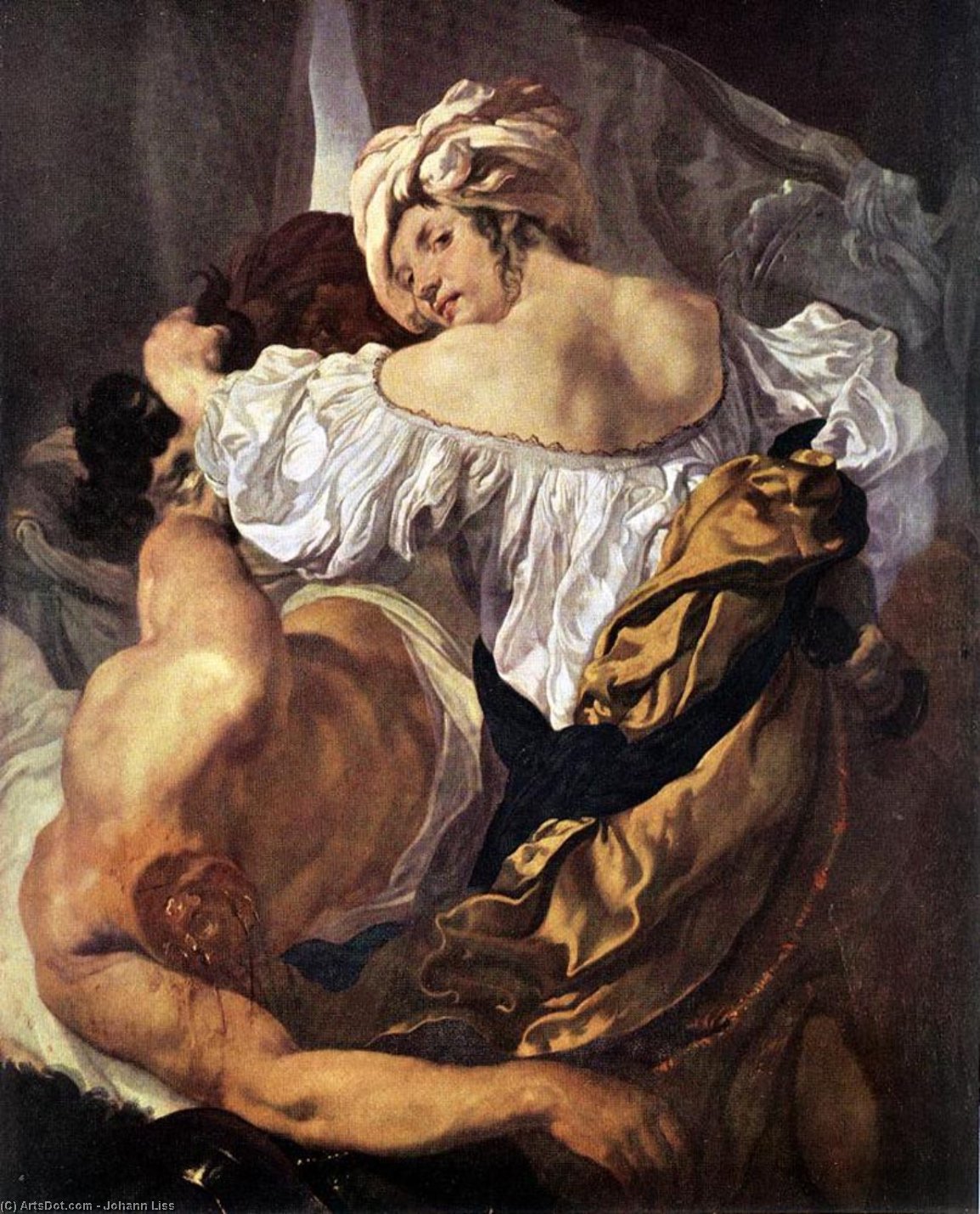
Johann Liss’s “Judith and Holophernes,” painted around 1622, is not merely a depiction of a biblical tale; it’s a carefully constructed tableau brimming with psychological depth and dramatic intensity. The painting immediately commands attention – a woman, starkly illuminated against the shadowed tent interior, wielding a gleaming knife poised over the severed head of Holofernes. This isn't a triumphant victory scene rendered in bright colors; instead, Liss employs a muted palette dominated by browns, ochres, and deep reds, creating an atmosphere of somber contemplation and unsettling realism. The composition is deliberately claustrophobic, emphasizing the vulnerability of Judith within the confines of the Assyrian tent – a space designed to evoke fear and control.
Liss’s skill lies not just in his technical proficiency—the meticulous rendering of fabric folds, the subtle play of light on skin and metal—but also in his ability to imbue the scene with an undercurrent of moral ambiguity. Judith is presented as a figure of both strength and vulnerability; her gaze is resolute, yet there’s a hint of weariness, even apprehension, in her expression. The elderly servant carrying Holofernes' head adds another layer of complexity, suggesting the brutal consequences of her actions and highlighting the cyclical nature of violence. The painting subtly challenges traditional heroic narratives, presenting Judith not as an idealized goddess but as a woman forced to commit a horrific act for the survival of her people.
A Venetian Master at Work: Liss’s Artistic Context
Liss spent a significant portion of his career in Venice, a city renowned for its vibrant artistic community and patronage system. This period profoundly influenced his style, drawing him towards the dramatic chiaroscuro techniques favored by Caravaggio and other masters of the Venetian Baroque. His use of strong contrasts between light and shadow—the brilliant illumination focused on Judith’s face and the knife, while the tent interior remains shrouded in darkness—creates a powerful sense of theatricality and heightens the emotional impact of the scene. Liss's work reflects the broader artistic trends of the time, moving away from the idealized forms of the Renaissance towards a more realistic and emotionally charged representation of human experience.
Furthermore, Liss’s background in Northern Europe—specifically Oldenburg, Holstein—contributes to the painting’s distinctive character. His early training with Hendrick Goltzius in Haarlem exposed him to the influence of Dutch Renaissance art, while his later years in Venice allowed him to absorb the dynamism and sensuality of Venetian painting. This synthesis of influences is evident in “Judith and Holophernes,” which seamlessly blends Northern realism with Southern drama.
Symbolism and Interpretation: Beyond the Biblical Story
The story of Judith and Holofernes, recounted in the deuterocanonical Book of Judith, served as a potent allegory for the struggle between good and evil throughout Christian history. Judith’s bravery and cunning represented the righteous defense of faith against tyranny, while Holofernes symbolized the forces of oppression. Liss masterfully captures this symbolic dimension through his careful selection of details and his evocative use of color and light. The knife itself is not simply a weapon; it's a symbol of Judith’s agency and her willingness to take decisive action in the face of overwhelming odds.
However, Liss doesn’t offer a straightforward moral judgment. The painting invites viewers to contemplate the ethical complexities of Judith’s actions—the justification for violence, the cost of survival, and the blurring of lines between heroism and ruthlessness. The inclusion of the elderly servant, carrying the severed head, serves as a poignant reminder of the human consequences of even the most righteous deeds.
A Legacy of Dramatic Intensity: Liss’s Enduring Appeal
“Judith and Holophernes” remains a compelling work of art due to its masterful composition, dramatic lighting, and profound psychological depth. It's a painting that transcends its biblical subject matter to speak to universal themes of courage, sacrifice, and the enduring struggle between good and evil. Liss’s ability to capture the emotional intensity of this complex narrative continues to resonate with viewers today, solidifying his place as one of the most significant figures in 17th-century Venetian painting. Reproductions of this powerful image offer a glimpse into a world of dramatic virtue—a testament to the enduring legacy of Johann Liss.