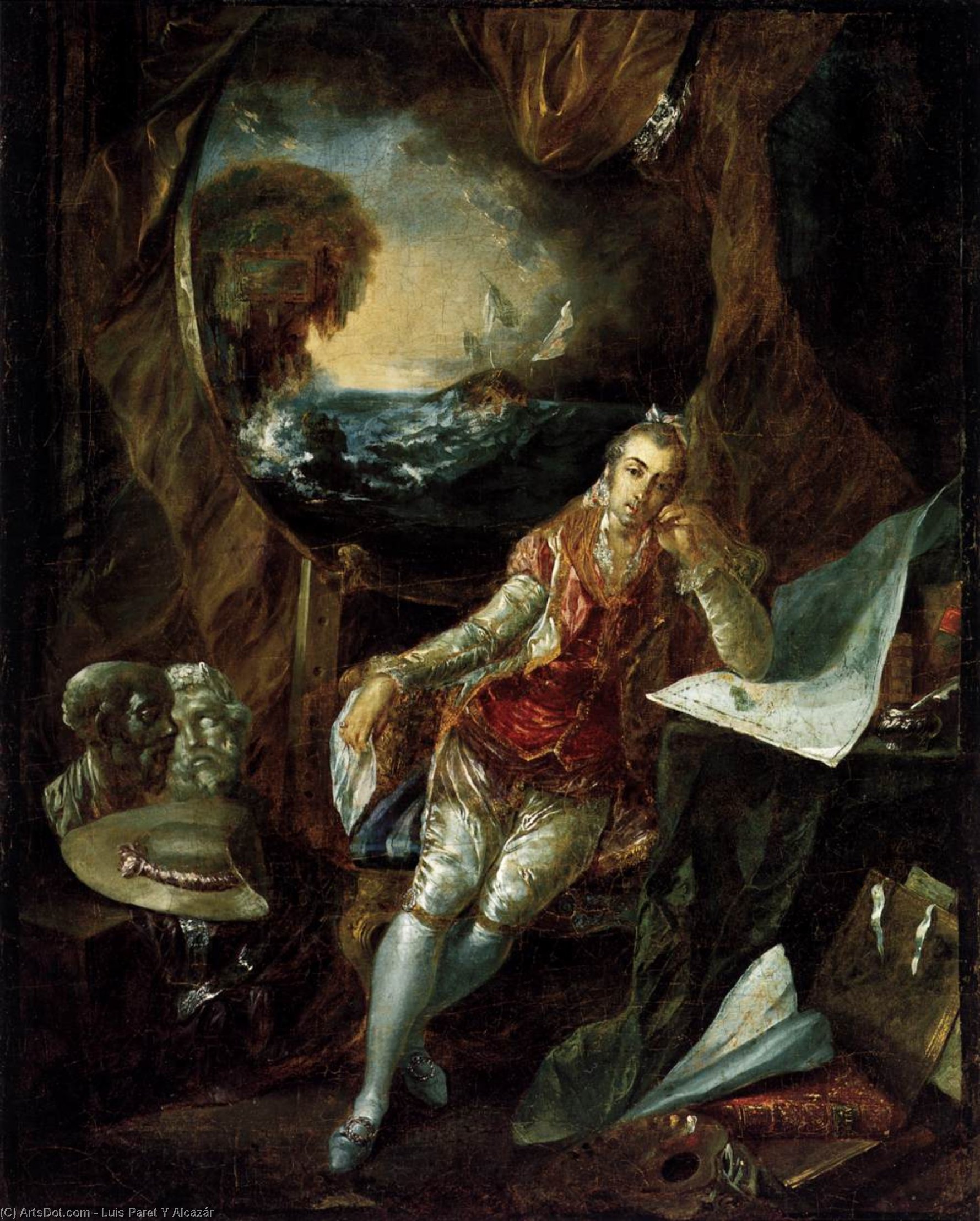
The Quiet Intensity of “Self-Portrait in the Studio” by Luis Paret y Alcázar
Luis Paret y Alcázar’s “Self-Portrait in the Studio,” painted in 1786, isn't merely a depiction of an artist at work; it’s a profound meditation on creativity, solitude, and the burgeoning spirit of the Rococo era. This intimate canvas offers a rare glimpse into the private world of a Spanish master, revealing not just his physical likeness but also a carefully constructed atmosphere brimming with intellectual curiosity and artistic contemplation.
The painting immediately draws the eye to Paret himself, seated in a modestly furnished studio bathed in soft, diffused light. He’s rendered with remarkable detail – the slightly furrowed brow, the attentive gaze directed towards two open books resting on a nearby table, the subtle curve of his lips suggesting both concentration and a hint of amusement. The red jacket he wears, a bold splash of color against the muted tones of the room, speaks to his status and perhaps even a touch of self-conscious vanity – a detail that invites speculation about the artist’s perception of himself.
A Rococo Sanctuary: Setting and Symbolism
The studio itself is meticulously rendered, suggesting a space both familiar and carefully curated. Two volumes—one on the left, the other on the right—sit open before him, hinting at his scholarly pursuits and intellectual engagement. A clock hangs prominently on the wall above, a symbol of time’s relentless passage yet seemingly irrelevant to the artist's current focus. The presence of a dining table with a simple bowl adds a touch of domesticity, grounding the scene in everyday life while simultaneously elevating it through the act of artistic creation.
Crucially, the window behind Paret is not depicted as a source of natural light; instead, it’s shrouded in shadow. This deliberate choice is profoundly symbolic. It represents the artist's internal world—his imagination and inspiration—rather than the external reality. The absence of visible nature suggests a retreat from the outside world, a deliberate isolation necessary for focused creative work. This echoes the Rococo ideal of the *saloon*, a private space dedicated to intellectual pursuits and artistic contemplation.
Technique and Artistic Style: A Masterful Blend
Paret’s technique is characterized by its delicate precision and subtle use of color. He employs a soft, diffused light that creates an atmosphere of intimacy and tranquility. The brushstrokes are smooth and controlled, contributing to the painting's overall sense of refinement and elegance – hallmarks of the Rococo style. The artist skillfully utilizes chiaroscuro—the contrast between light and shadow—to sculpt Paret’s features and create a three-dimensional effect, adding depth and realism to the portrait.
Notably, the painting avoids overt grandeur or dramatic poses, aligning with the Rococo preference for understated elegance. Paret's self-portrait isn't about showcasing power or status; it’s about revealing his artistic process and inviting the viewer into his creative space. The composition is balanced and harmonious, reflecting a sense of intellectual order and aesthetic sensibility.
A Window into the Mind: Emotional Resonance
“Self-Portrait in the Studio” transcends a simple likeness; it’s a poignant portrayal of an artist lost in thought. The quiet intensity of Paret's gaze, combined with the carefully arranged details of his studio, evokes a sense of introspection and creative solitude. It speaks to the universal human experience of seeking inspiration within oneself—a theme that resonates deeply across centuries.
This painting offers a valuable insight into the mind of a significant figure in Spanish art history. It’s a testament to Paret's skill as a painter, his understanding of Rococo aesthetics, and his ability to capture not just an image but also a mood—a quiet moment of artistic contemplation that continues to captivate viewers today. Reproductions of this work offer a beautiful addition to any collection or interior space, inviting the viewer to share in the artist’s private world.